The Philosopher's Stone
 71
71

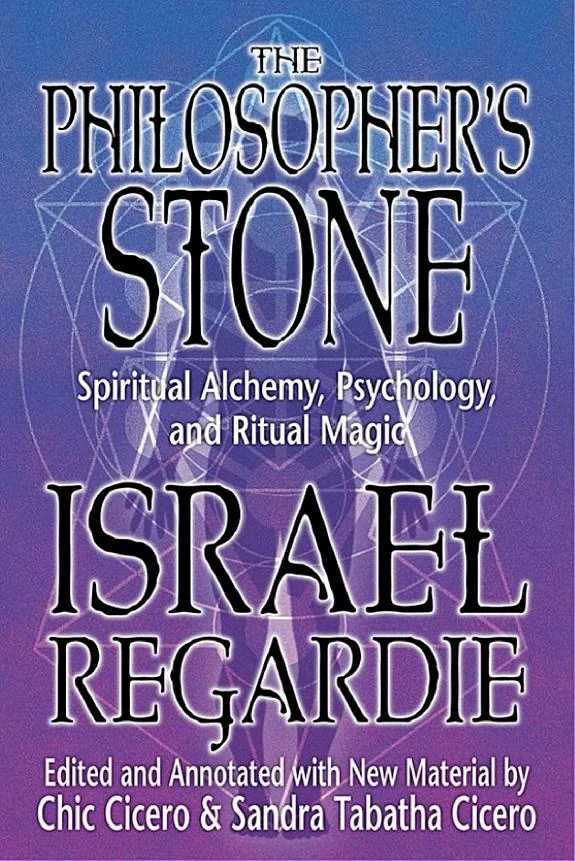
The Philosopher's Stone
Israel Regardie's endeavor to decode the allegorical language of 17th-century alchemy in *The Philosopher's Stone* remains a significant contribution to occult scholarship. His 1930s analysis, presented here in a meticulously updated edition by the Ciceros, offers a compelling framework for understanding alchemical texts as maps of inner transformation. The strength lies in Regardie's ability to synthesize the symbolic, psychological, and energetic dimensions of the Great Work, moving beyond literal interpretations. However, the sheer density of alchemical references, even with modern Hebrew transliterations, can present a steep learning curve for newcomers. A passage discussing the *coniunctio oppositorum* as a representation of the integration of the conscious and unconscious mind vividly illustrates Regardie's psychological acumen. Ultimately, this revised edition makes a dense, important work more accessible to a new generation of esoteric students.
📝 Description
71
Israel Regardie's 1930s analysis of three 17th-century alchemical texts is presented in this edition.
Israel Regardie's 1930s work examines three 17th-century alchemical treatises. He viewed these texts not as literal guides to material transmutation, but as symbolic, psychological, and energetic maps. This edition, updated by Chic and Tabatha Cicero, retains Regardie's original research while making it more accessible to modern students of Western Esotericism.
The book is suited for dedicated practitioners and academics in Western Esotericism, especially those interested in alchemy through psychological and magical perspectives. It will also interest readers of Regardie's prior work and those seeking a deeper understanding of alchemical symbolism beyond simple metallurgy. Prior knowledge of basic Hermetic or Kabbalistic ideas is helpful but not essential.
Published in the mid-1930s, Regardie's analysis appeared during a time of heightened interest in esoteric subjects, influenced by movements like Theosophy and the Hermetic Order of the Golden Dawn. While figures like Carl Jung were concurrently developing psychological views of alchemical symbols, Regardie's focus was more on the practical use of magickal energy and the symbolic systems from earlier occultists. This edition places Regardie's thoughts within the context of the early 20th-century occult revival and psychological inquiry.
⭐ Reader Reviews
Honest opinions from readers who have explored this book.
❓ Frequently Asked Questions
What is the primary focus of Israel Regardie's The Philosopher's Stone?
The book focuses on analyzing three 17th-century alchemical works. Regardie interprets them symbolically, psychologically, and through the lens of magickal energy, viewing the alchemical process as an inner transformation rather than just physical metallurgy.
Who updated this edition of The Philosopher's Stone?
This edition was updated and brought into the 21st century by famed occultists Chic and Tabatha Cicero. They updated Hebrew transliterations and annotated the text for modern readers.
When was the original work by Israel Regardie first published?
Israel Regardie's original text, 'The Philosopher's Stone,' was first published in the mid-1930s. This specific edition was released on August 8, 2013.
What esoteric traditions does Regardie draw upon in his analysis?
Regardie draws heavily on Hermetic and Kabbalistic principles to decode alchemical allegories. He also incorporates psychological interpretations, influenced by contemporary thought, and concepts related to magickal energy.
Is this book a literal guide to making gold?
No, the book's primary aim is not a literal guide to physical transmutation. Regardie interprets alchemical texts as symbolic representations of spiritual, psychological, and energetic development, focusing on the Great Work of inner transformation.
What makes this edition different from the original 1930s publication?
The 2013 edition, curated by Chic and Tabatha Cicero, retains Regardie's original text but updates the Hebrew transliterations to modern standards and includes annotations to enhance clarity for contemporary readers.
🔮 Key Themes & Symbolism
Alchemy as Inner Transformation
Regardie posits that the alchemical *major work* described in 17th-century texts is fundamentally a metaphor for the inner spiritual and psychological evolution of the practitioner. The processes of purification, dissolution, and coagulation are reinterpreted as stages in the development of consciousness and the integration of the self, moving away from a purely materialistic or metallurgical understanding.
Symbolic Language of the Great Work
The book meticulously dissects the allegorical imagery prevalent in alchemical literature. Symbols such as the Philosopher's Stone itself, the Ouroboros, the seven metals, and various planetary correspondences are examined not as literal elements but as carriers of deeper esoteric knowledge. Regardie links these symbols to Hermetic principles and Kabbalistic ideas, revealing a hidden language of spiritual attainment.
Psychological and Energetic Dimensions
Beyond symbolism, Regardie explores the psychological resonance of alchemical processes, anticipating later Jungian interpretations. He also emphasizes the energetic aspect, viewing alchemy as a practice that manipulates subtle forces, aligning the practitioner's inner state with cosmic principles. This many-sided approach highlights alchemy's role as a comprehensive system for self-mastery and spiritual realization.
Regardie's Scholarly Approach
This work showcases Regardie's rigorous academic style applied to occult subjects. His analysis of three specific 17th-century texts demonstrates a method of critical engagement, cross-referencing, and synthesis. The 2013 edition further supports this by updating scholarly apparatus like Hebrew transliterations, making Regardie's original 1930s research more accessible for modern study.
💬 Memorable Quotes
Direct passages from the work, attributed to the author.
“the alchemist's work is not that of the common metallurgist”
— This highlights Regardie's core argument: alchemy's true purpose lies in spiritual and psychological refinement, not mere gold-making. It sets the stage for his symbolic and esoteric interpretations of the alchemical texts.
“every stage of the process has its corresponding psychic state”
— This reflects the psychological dimension Regardie explores. It suggests that the external alchemical operations mirror internal mental and emotional shifts necessary for spiritual development.
“the symbols are keys to understanding the energetic transformations”
— This emphasizes the interconnectedness of symbolism and energy in Regardie's framework. The visual language of alchemy is presented as a means to grasp and direct subtle forces for inner change.
“Regardie analyzes three 17th-century treatises”
— This factual statement points to the specific source material Regardie engages with. It grounds his analysis in concrete historical alchemical literature, providing a foundation for his interpretive methods.
💡 Key Ideas
Editorial paraphrase of the work's core concepts — not direct quotes.
the union of opposites is central to the Great Work
This paraphrase captures the essence of the *coniunctio oppositorum*, a recurring theme in alchemy. Regardie interprets this symbolic union as the integration of dualistic aspects within the practitioner, crucial for wholeness.
🌙 Esoteric Significance
Tradition
This work is deeply rooted in the Western Esoteric Tradition, specifically within the Hermetic and Kabbalistic lineages that informed the Hermetic Order of the Golden Dawn. Regardie synthesizes these streams, applying them to the ancient practice of alchemy. He departs from purely historical or literal interpretations by layering psychological and energetic analyses onto the traditional symbolic frameworks, positioning alchemy as a path of conscious evolution.
Symbolism
Key symbols analyzed include the Philosopher's Stone itself, representing perfected consciousness or spiritual attainment, and the concept of *prima materia*, the chaotic potential from which transformation arises. Regardie also interprets alchemical metals (e.g., lead, gold) and their associated planets not just cosmologically but as correspondences for inner states and stages of spiritual development within the practitioner.
Modern Relevance
Contemporary practitioners of Hermeticism, Kabbalah, and Western magick continue to draw upon Regardie's interpretive methods. His psychological approach to alchemy has influenced modern esoteric psychology and contemplative practices. Schools focusing on ceremonial magic and the integration of consciousness often reference Regardie's work for its systematic approach to understanding complex symbolic systems and their application to personal transformation.
👥 Who Should Read This Book
["• Students of Hermeticism and Kabbalah seeking to understand the alchemical tradition's role within these systems, particularly Regardie's 1930s synthesis.", '• Practitioners of Western Esotericism interested in psychological interpretations of spiritual texts and symbolic languages, moving beyond literal meanings.', '• Scholars of comparative religion and occult history examining the evolution of esoteric thought in the early 20th century, with a focus on alchemical literature.']
📜 Historical Context
Israel Regardie's *The Philosopher's Stone*, originally conceived in the mid-1930s, emerged during a fertile period for Western Esotericism. The Hermetic Order of the Golden Dawn, of which Regardie was a prominent member, had already integrated Kabbalah and ceremonial magic into its teachings, creating fertile ground for symbolic interpretation. Concurrently, figures like Carl Jung were developing their own psychological frameworks, particularly his exploration of alchemical symbolism in works like 'Psychology and Alchemy' (published in the 1940s). Regardie's approach, however, maintained a stronger emphasis on the practical magical and energetic dimensions inherited from the Golden Dawn tradition, distinct from Jung's purely psychological focus. While occult literature faced varying degrees of public scrutiny, Regardie's work aimed to provide a systematic, scholarly interpretation of a complex tradition, making it accessible to a dedicated readership seeking deeper understanding beyond sensationalism.
📔 Journal Prompts
The alchemical *coniunctio oppositorum* and its representation in the texts analyzed by Regardie.
Stages of the alchemical process as symbolic maps of inner development.
Regardie's interpretation of the Philosopher's Stone beyond material substance.
The energetic correspondences Regardie assigns to alchemical metals.
Connecting the psychic states described by Regardie to personal experiences of transformation.
🗂️ Glossary
Major work
Latin for 'Great Work,' referring to the central process of alchemy, understood by Regardie as the spiritual and psychological transformation of the practitioner.
Prima Materia
The first matter or primal substance from which all things are created, often seen as the chaotic potential that the alchemist seeks to refine and perfect.
Coniunctio Oppositorum
Latin for 'union of opposites,' a key alchemical concept symbolizing the integration of dualistic forces (e.g., male/female, spirit/matter) within the self.
Magickal Energy
The subtle forces or animating principles that Regardie believed could be manipulated through alchemical processes and ritual for spiritual or psychological transformation.
Hermeticism
A philosophical and religious tradition based on writings attributed to Hermes Trismegistus, emphasizing the correspondence between the microcosm (human) and macrocosm (universe).
Kabbalah
A system of Jewish mysticism focused on understanding the divine nature and creation through symbolic interpretation, particularly the Tree of Life, heavily influencing Western Esotericism.
17th-century alchemical works
Refers to the specific historical treatises from the 1600s that Israel Regardie selected for his analysis in the original publication.
This book appears in 2 collections
🔮 Readers Also Liked
Browse all →








From the “Ritual Magic” Collection
View all →






More Free Occult Philosophy Books
View all →