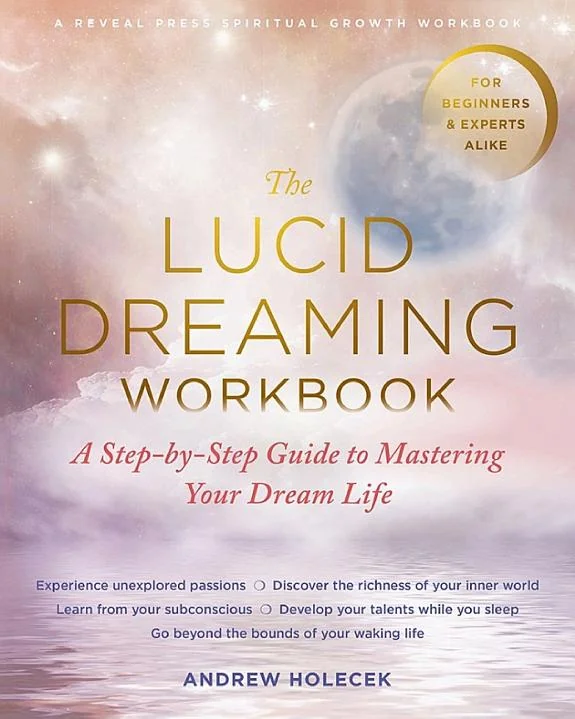
The Lucid Dreaming Workbook
 82
82

The Lucid Dreaming Workbook
Andrew Holecek’s The Lucid Dreaming Workbook is a pragmatic manual, eschewing mystagoguery for actionable steps. It’s commendable how Holecek structures the practice, moving from foundational awareness exercises to more advanced dream manipulation. His direct prose avoids the common pitfall of overly romanticizing the dream state, grounding the practice in tangible techniques. The section detailing "Dream Signs" is particularly effective, offering concrete examples of recurring personal dream elements that can trigger lucidity. However, the workbook’s utility is directly proportional to the reader’s discipline; without consistent engagement, the exercises remain theoretical. A more detailed exploration of potential psychological pitfalls or integration challenges for advanced practitioners might have strengthened its clinical applicability. Ultimately, for the dedicated aspirant, this workbook serves as a reliable, no-nonsense guide to unlocking the dreamscape.
📝 Description
82
Andrew Holecek's 2020 workbook offers structured exercises for achieving conscious awareness during dreams.
This workbook guides readers toward recognizing they are dreaming while asleep. It moves beyond simple dream recall to actively cultivate lucidity, the state of knowing one is dreaming. Holecek includes exercises and advice intended to increase how often and how clearly these lucid experiences occur.
The book suits individuals who want to engage with their subconscious through dreams. It is for those interested in the psychological and spiritual aspects of sleep and who will commit to regular practice. Both newcomers to lucid dreaming and those with some experience looking to improve their skills will find it useful.
The central ideas involve identifying dream signs, developing methods to test reality within dreams, and maintaining the lucid state. It touches on dream incubation, intentional dream exploration, and using dream insights in waking life. The workbook stresses that lucidity is a skill built through consistent effort and specific mental training.
Lucid dreaming research gained momentum in the late 20th century, with Stephen LaBerge developing scientific methods for induction and study. Andrew Holecek's work builds on this scientific foundation while also acknowledging an older lineage of dream exploration. This tradition includes figures like Carl Jung and earlier esoteric practices that viewed dreams as gateways to other realities. Published in 2020, the book appears during a period of renewed interest in consciousness studies, often incorporating digital tools.
💡 Why Read This Book?
• Learn specific techniques for cultivating dream signs, enabling you to recognize the distinct markers of your personal dream world, as detailed in Chapter 3. • Acquire methods for consistent reality testing, a core practice introduced early on, to increase your chances of becoming lucid during sleep. • Gain insight into integrating dream experiences into waking life, a process guided by the workbook's focus on applying dream-derived wisdom, as discussed in the concluding sections.
⭐ Reader Reviews
Honest opinions from readers who have explored this book.
❓ Frequently Asked Questions
What is lucid dreaming according to Andrew Holecek?
Andrew Holecek defines lucid dreaming as the state of being aware that you are dreaming while you are in the dream. It's about achieving consciousness within the dream state, allowing for intentional interaction.
When was The Lucid Dreaming Workbook first published?
The Lucid Dreaming Workbook was first published on December 1, 2020.
What are 'dream signs' in the context of this book?
Dream signs are recurring elements, themes, or unusual occurrences within your dreams that serve as indicators that you are dreaming. Identifying these signs is a key technique taught in the workbook.
Is this book suitable for beginners in lucid dreaming?
Yes, the workbook is designed with a step-by-step approach that makes it suitable for beginners, while also offering depth for those with prior experience.
Does the book cover how to stabilize a lucid dream?
Yes, stabilizing the lucid dream state is a crucial component addressed within the workbook's practical exercises and techniques.
What is the primary goal of practicing lucid dreaming as outlined by Holecek?
The primary goal is to gain conscious control and awareness within dreams, leading to profound insights and personal transformation in waking life.
🔮 Key Themes & Symbolism
Cultivating Dream Awareness
This theme focuses on the fundamental skill of recognizing the dream state. It involves developing a habit of questioning reality, both awake and asleep, to trigger lucidity. The workbook provides specific exercises, such as reality checks and dream sign identification, designed to sharpen this awareness. The goal is to transition from passive dreaming to active, conscious participation within the dream environment, transforming sleep into a fertile ground for exploration and insight.
Dream Sign Identification
A central tenet of the practice is learning to identify personal 'dream signs' – recurring anomalies or peculiar elements that signal the dream state. The workbook guides readers in cataloging these unique indicators within their own dream narratives. By recognizing these signs, practitioners can develop an internal cue system that prompts lucidity, effectively bridging the gap between the dreaming mind and waking consciousness.
Stabilization and Control
Once lucidity is achieved, the challenge often becomes maintaining that awareness without waking up or losing clarity. This theme addresses techniques for stabilizing the dream environment and exerting intentional influence. Readers learn methods to anchor themselves within the dream, interact with its elements, and potentially steer the narrative, thereby maximizing the potential for exploration and personal discovery within the lucid state.
Integration of Dream Insights
The ultimate value of lucid dreaming, as presented in the workbook, lies in its capacity to inform and transform waking life. This theme explores how insights, creative solutions, or emotional processing that occur during lucid dreams can be consciously integrated into daily existence. It emphasizes that the dream world is not separate but a complementary aspect of consciousness, offering wisdom that can enhance self-understanding and personal growth.
💬 Memorable Quotes
Direct passages from the work, attributed to the author.
“The goal is to awaken in the dream.”
— This concise statement captures the essence of lucid dreaming – achieving a state of conscious awareness while the body is asleep and dreaming. It highlights the active, intentional nature of the practice.
“Identify your personal dream signs.”
— This directive points to a core technique: recognizing recurring, often illogical, elements within one's dreams that serve as immediate indicators that you are indeed dreaming.
“Practice reality testing consistently.”
— This emphasizes the importance of regular mental exercises, performed both awake and during dreams, designed to question the nature of reality and trigger lucidity.
“Stabilize the dream once lucid.”
— This refers to the techniques needed to maintain awareness and control within the dream state, preventing premature waking or loss of lucidity.
“Integrate dream insights into waking life.”
— This highlights the practical application of lucid dreaming, suggesting that the experiences and understandings gained in dreams can lead to tangible personal growth and transformation.
🌙 Esoteric Significance
Tradition
While not explicitly tied to a single lineage, Holecek’s work speaks to traditions that view dreams as significant portals for spiritual insight and self-discovery, such as certain schools of Tibetan Buddhism (which have advanced dream yoga practices) and Western esotericism’s interest in exploring consciousness beyond the physical. It adapts these contemplative approaches into a practical, secularized framework for achieving lucidity.
Symbolism
Key symbolic motifs include the 'dream sign' itself, representing an anomaly that breaks the illusion of waking reality, and the concept of the 'dreamscape' as a malleable, internal territory. The act of 'awakening' within the dream serves as a powerful symbol for spiritual awakening and heightened self-awareness, bridging the mundane and the transcendent.
Modern Relevance
This workbook is highly relevant to contemporary practitioners of mindfulness, consciousness exploration, and transpersonal psychology. It provides tools for individuals interested in techniques akin to modern dream yoga or explored in fields like neurofeedback and biofeedback, offering a direct method for subjective experience enhancement and psychological integration.
👥 Who Should Read This Book
• Aspiring lucid dreamers seeking a structured, step-by-step guide to achieving conscious awareness in dreams, with practical exercises and clear instruction. • Individuals interested in exploring the subconscious mind and unlocking creative potential through dreamwork, who value actionable techniques over theoretical discussions. • Practitioners of mindfulness or meditation looking to extend their awareness practices into the sleep state, gaining deeper self-understanding and personal insight.
📜 Historical Context
Published in December 2020, Andrew Holecek's workbook arrived during a period of resurgent interest in consciousness studies and altered states, building upon decades of research into lucid dreaming. The field owes much to pioneers like Stephen LaBerge, whose scientific methodologies in the late 1970s and 1980s brought lucidity into academic discourse. Holecek’s work implicitly engages with this legacy, offering practical applications derived from established principles. It also exists within a broader esoteric landscape where dream interpretation has long been a central practice, from Freudian psychoanalysis to Jungian archetypes, and ancient contemplative traditions. While not directly engaging with contemporaries like Robert Waggoner (author of 'Lucid Dreaming: Gateway to the Inner Self'), Holecek’s manual provides a structured, accessible entry point for a modern audience seeking to harness the potential of their dream lives, distinct from purely theoretical or philosophical dream analysis.
📔 Journal Prompts
Reflect on the potential dream signs identified for yourself, as discussed in Chapter 3.
Describe your personal techniques for reality testing, drawing from the workbook's examples.
Consider the concept of stabilizing the dream state and list methods you might employ.
Explore the integration of a recent dream insight into your waking life.
What is your primary intention for seeking lucidity in your dreams?
🗂️ Glossary
Lucid Dreaming
The state of being aware that one is dreaming while the dream is occurring. This awareness allows for potential control and interaction within the dream environment.
Dream Sign
A recurring element, theme, or peculiarity within a dream that serves as an indicator that the dreamer is currently in a dream state.
Reality Testing
A set of mental exercises or actions performed regularly, both while awake and during dreams, to determine whether one is dreaming or in waking reality.
Dream Incubation
The practice of setting an intention to dream about a specific topic or problem before sleep, often with the goal of receiving insight or solutions.
Stabilization Techniques
Methods used within a lucid dream to maintain awareness and prevent the dream from fading or the dreamer from waking up prematurely.
Dreamscape
The landscape or environment of a dream; the subjective reality experienced during sleep.
Waking Consciousness
The state of awareness experienced when not asleep or in an altered state; ordinary conscious awareness.
This book appears in 1 collection
🔮 Readers Also Liked
Browse all →









From the “Lucid Dreaming” Collection
View all →









More Free Occult Philosophy Books
View all →