Dream Travelers
 71
71

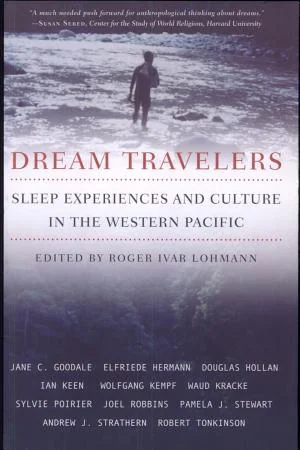
Dream Travelers
Roger Ivar Lohmann's "Dream Travelers" offers a compelling counterpoint to Western psychological interpretations of dreaming. By foregrounding ethnographic evidence, particularly from Melanesian, Aboriginal Australian, and Indonesian societies, Lohmann illustrates a worldview where dreams are literal excursions of the spirit. The strength of the book lies in its meticulous presentation of how these beliefs profoundly shape social structures and religious life, moving beyond mere intellectual curiosity to examine tangible consequences. A limitation, however, is that the focus remains heavily on descriptive ethnography; readers seeking a direct comparison or synthesis with modern psychological theories might find that aspect underdeveloped. A particularly striking passage details how the concept of spirit flight in dreams directly informs justice systems in some communities, demonstrating the practical import of these beliefs. Lohmann's work challenges readers to reconsider the boundaries of perceived reality and the diverse ways human consciousness engages with the world.
📝 Description
71
Roger Ivar Lohmann's 2003 book argues dreams are literal journeys of the spirit, not just psychological events.
Published in 2003, "Dream Travelers" examines how various indigenous societies interpret dreams not as psychological phenomena, but as actual journeys of the spirit. Lohmann investigates how these cultures believe a part of the self or spirit can leave the body during sleep. This perspective significantly shapes their understanding of reality, social structures, and spiritual practices. The book relies heavily on ethnographic accounts, detailing specific cultural groups and their cosmologies surrounding dream activity.
This work is for readers interested in comparative mythology, the anthropology of religion, and the phenomenology of altered states. It will appeal to those who question Western psychological views on dreaming and wish to understand diverse human interpretations of nocturnal experiences. Scholars focusing on Melanesian, Aboriginal Australian, and Indonesian cultures will find specific ethnographic data particularly relevant. The book also addresses individuals interested in the practical and social implications of non-dualistic worldviews.
Roger Ivar Lohmann's "Dream Travelers" emerges from a tradition of anthropological inquiry into non-Western spiritual beliefs and consciousness. It builds upon earlier studies of shamanism and animism that recognized indigenous peoples' distinct understandings of reality. The book engages with post-colonial critiques of ethnography, prioritizing indigenous perspectives on their own experiences. It contributes to a long-standing dialogue about the nature of consciousness, viewing dreams as a valid means of spiritual or existential exploration, distinct from purely psychological models.
💡 Why Read This Book?
• Understand the ethnographic basis for spirit-travel beliefs, as explored in the detailed studies of Melanesian and Aboriginal Australian peoples, which offers a view of consciousness distinct from Western psychology. • Learn how the concept of literal dream journeys, as described in the book, directly impacts social organization and religious practices within indigenous communities, providing concrete examples of belief systems in action. • Gain insight into the acquisition of knowledge and power through spiritual excursions during sleep, a concept central to the cosmology of the Indonesian societies examined, offering a unique perspective on learning and spirituality.
⭐ Reader Reviews
Honest opinions from readers who have explored this book.
❓ Frequently Asked Questions
What cultures are primarily discussed in Roger Ivar Lohmann's "Dream Travelers"?
The book "Dream Travelers" primarily focuses on ethnographic accounts from Melanesian, Aboriginal Australian, and Indonesian peoples, exploring their unique beliefs and practices surrounding dream travel.
When was "Dream Travelers" first published?
Roger Ivar Lohmann's "Dream Travelers" was first published on September 20, 2003, offering its insights into cross-cultural dream interpretations to readers.
Does "Dream Travelers" view dreams as purely psychological?
No, "Dream Travelers" challenges purely psychological interpretations by examining how many cultures believe spirits literally leave the body during dreams to undertake journeys and acquire knowledge.
What are the social consequences of dream travel beliefs discussed in the book?
The book explores how the belief in literal dream journeys dramatically influences relationships, social organization, and religious practices within the studied indigenous societies.
Is "Dream Travelers" an anthropological study or a psychological one?
While touching on consciousness, "Dream Travelers" is primarily an anthropological and ethnographic study, focusing on the cultural beliefs and practices surrounding what people in various societies perceive as literal dream travel.
What kind of knowledge is acquired through dream travel according to the book?
According to "Dream Travelers," valuable knowledge, including insights into the spiritual realm, ancestral wisdom, and practical guidance, is acquired through these literal journeys undertaken by the spirit during dreams.
🔮 Key Themes & Symbolism
Spirit Departure and Return
The core theme is the literal departure of a part of the self or spirit during sleep, as understood by various cultures. This isn't merely a metaphor but a perceived reality where the spirit undertakes journeys. The book details how these perceived departures and subsequent returns are integrated into daily life and cosmology, influencing social interactions and individual identity. The emphasis is on the belief in the tangible presence and agency of the spirit outside the physical body during the dream state.
Knowledge Acquisition via Dreams
A significant aspect explored is the belief that dreams serve as a primary conduit for acquiring vital knowledge. This knowledge can range from practical information for survival and community well-being to esoteric wisdom concerning the spiritual world, ancestral guidance, and cosmic understanding. The work highlights how this perceived channel of information shapes cultural traditions and decision-making processes, positioning dream travelers as crucial conduits of wisdom.
Social and Religious Ramifications
Lohmann meticulously documents how the belief in literal dream travel has dramatic consequences for social organization and religious systems. It influences everything from marriage customs and conflict resolution to healing practices and the maintenance of spiritual order. The book illustrates that these are not isolated spiritual beliefs but foundational elements that structure entire societies and their understanding of reality and the sacred.
Anthropological Perspectives on Consciousness
The work contributes to anthropological discourse by presenting alternative frameworks for understanding consciousness, moving beyond Western psychological models. It emphasizes the importance of ethnographic data in revealing diverse human experiences of reality, particularly concerning altered states like dreaming. By taking indigenous accounts at face value, Lohmann encourages a broader, more inclusive definition of what constitutes conscious experience and reality.
💬 Memorable Quotes
Direct passages from the work, attributed to the author.
“Many peoples take this experience of dreaming at face value, assuming that their spirits literally leave the body to travel.”
— This statement expresses the foundational premise of the book: that for numerous cultures, dreams are not subjective internal events but actual journeys undertaken by the spirit, distinct from the sleeping physical form.
“These dream journeys can involve mundane tasks and marvellous adventures.”
— This highlights the dual nature of perceived dream travel. It's not solely about extraordinary spiritual quests but can also encompass seemingly ordinary activities, suggesting the spirit's engagement with a reality that mirrors or influences the waking world.
“The work focuses on Melanesian, Aboriginal Australian, and Indonesian peoples who hold this assumption.”
— This identifies the specific ethnographic focus of the book, indicating that the detailed analysis of dream travel beliefs will be drawn from these particular cultural groups, providing a geographically and culturally defined scope.
“Anthropologists have found that many peoples assume their spirits literally leave the body to travel.”
— This interpretation underscores the anthropological evidence presented in the book, suggesting that the belief in literal spirit travel during dreams is a widespread phenomenon documented across various human societies.
💡 Key Ideas
Editorial paraphrase of the work's core concepts — not direct quotes.
Dream travelers acquire valuable knowledge with dramatic consequences for relationships, social organization, and religions.
This paraphrase emphasizes the lasting impact of dream-acquired wisdom. It suggests that the insights gained during these spiritual travels are not abstract but have tangible, far-reaching effects on the structure and functioning of societies and their belief systems.
🌙 Esoteric Significance
Tradition
While not explicitly aligning with a single esoteric lineage like Hermeticism or Gnosticism, "Dream Travelers" speaks to animistic and shamanistic traditions, which are foundational to many esoteric practices. It explores the universal concept of soul flight and the perception of a spirit world co-existing with the physical realm. The work departs from Western esoteric traditions by focusing on indigenous cosmologies rather than codified magical systems, instead highlighting the inherent esoteric nature of everyday belief systems in certain cultures.
Symbolism
The primary symbol is the "dream traveler" itself, representing the separable soul or spirit capable of independent journeying. Another significant motif is the "spirit world" or "dream realm" which, as depicted in the book, functions as a distinct plane of existence accessible through dreams. This realm is often populated by spirits, ancestors, or other entities, serving as a locus for knowledge acquisition and spiritual interaction, much like the Astral Plane in Western occultism.
Modern Relevance
Contemporary thinkers and practitioners in fields like consciousness studies, transpersonal psychology, and Neo-shamanism draw upon the ethnographic data presented in "Dream Travelers." The book's emphasis on the validity of non-Western cosmologies and the literal interpretation of spiritual experiences informs modern explorations into altered states, lucid dreaming, and the potential for consciousness to transcend the physical body. It provides a crucial academic counterpoint to purely neuroscientific explanations of subjective experience.
👥 Who Should Read This Book
• Anthropologists and religious studies scholars seeking detailed ethnographic accounts of dream beliefs in Melanesian, Aboriginal Australian, and Indonesian cultures. • Readers interested in comparative mythology and the diverse ways human societies conceptualize consciousness and the spiritual realm beyond Western psychological frameworks. • Individuals exploring altered states of consciousness, shamanism, or soul travel who wish to understand historical and cross-cultural perspectives on these phenomena.
📜 Historical Context
Published in 2003, "Dream Travelers" entered a field already engaged with the works of scholars like Mircea Eliade, whose research on shamanism and the sacred had long highlighted the significance of altered states and spirit journeys in non-Western traditions. The book's approach, taking indigenous interpretations of dreams at face value rather than immediately reducing them to psychological phenomena, aligns with later developments in anthropology that prioritized emic perspectives and challenged colonialist biases. While not engaging directly with a specific contemporary debate in its text, Lohmann's work implicitly responded to ongoing discussions about the validity of subjective experience and the limitations of purely materialist explanations for consciousness. It contributes to a lineage of thought that includes early 20th-century ethnographers and later theorists of comparative religion, offering a specific lens on the universality of spiritual experiences across cultures.
📔 Journal Prompts
The concept of the spirit leaving the body during dreams, as understood by Melanesian peoples.
Acquisition of knowledge through dream journeys and its societal impact.
Consequences of spiritual travel beliefs on social organization.
The literal interpretation of dream experiences across cultures.
Comparing the "dream traveler" concept with personal experiences of altered states.
🗂️ Glossary
Dream Traveler
An individual whose spirit or soul is believed to literally leave the physical body during sleep to undertake journeys in a spiritual or other realm.
Spirit Flight
The perceived phenomenon of the spirit or soul departing from the body while it remains asleep, engaging in activities or traveling to different locations.
Indigenous Cosmologies
The systematic understanding of the structure, origin, and principles of the universe as conceived by indigenous peoples, often including beliefs about spirits, ancestors, and the nature of reality.
Ethnographic Accounts
Descriptive records of the customs, social behaviors, beliefs, and characteristics of a particular cultural group, based on direct observation and study.
Alteration of Consciousness
A state of awareness that deviates from the normal waking state, often induced by dreaming, meditation, or other practices that affect mental perception and cognition.
Animism
The belief that objects, places, and creatures all possess a distinct spiritual essence, often seen as the animating force in nature, which is central to many indigenous worldviews.
Soul
In the context of the book, often refers to a non-physical component of a person believed to be capable of independent existence and travel, particularly during dreams.
This book appears in 1 collection
🔮 Readers Also Liked
Browse all →








From the “Dream Interpretation” Collection
View all →






More Free Occult Philosophy Books
View all →