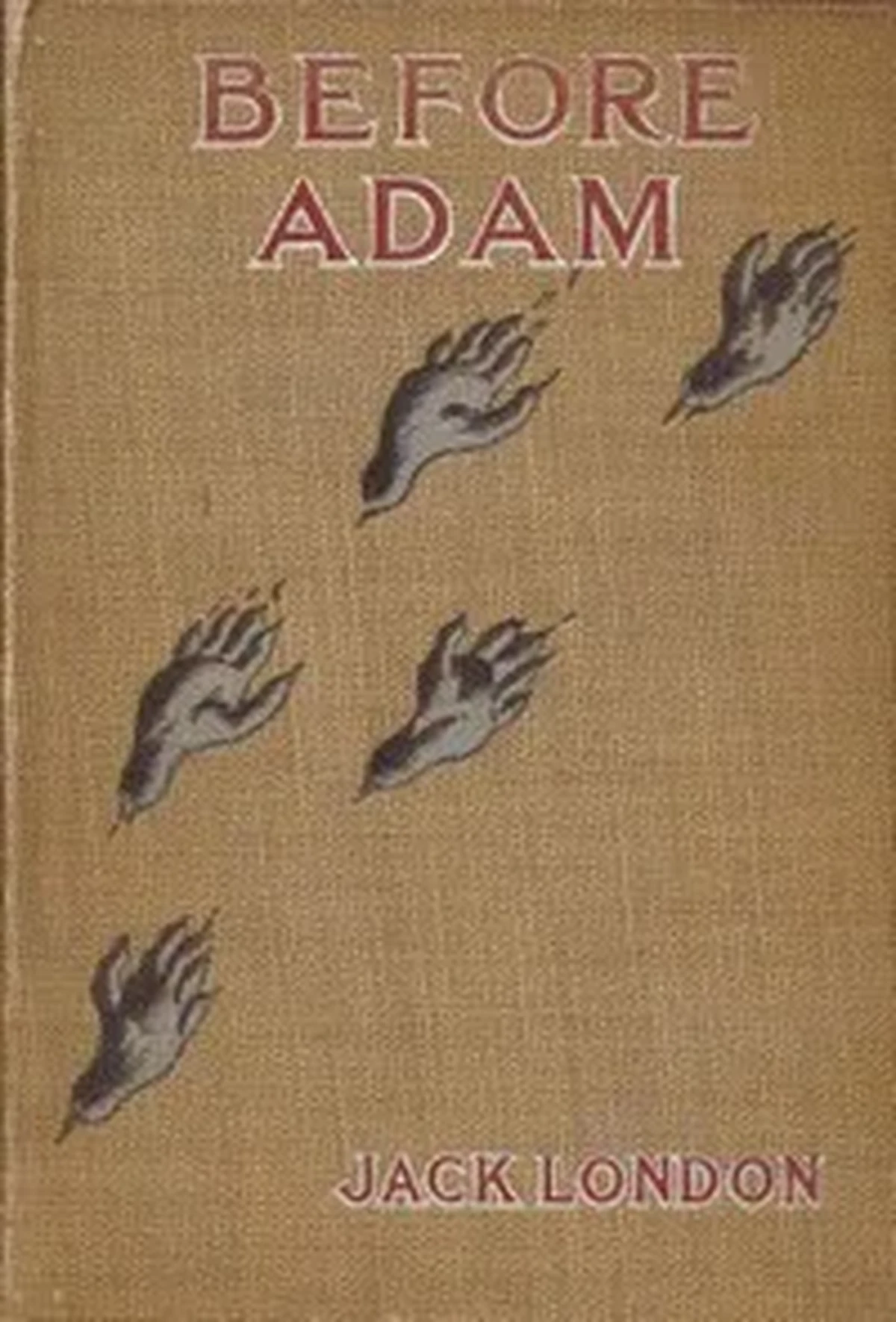
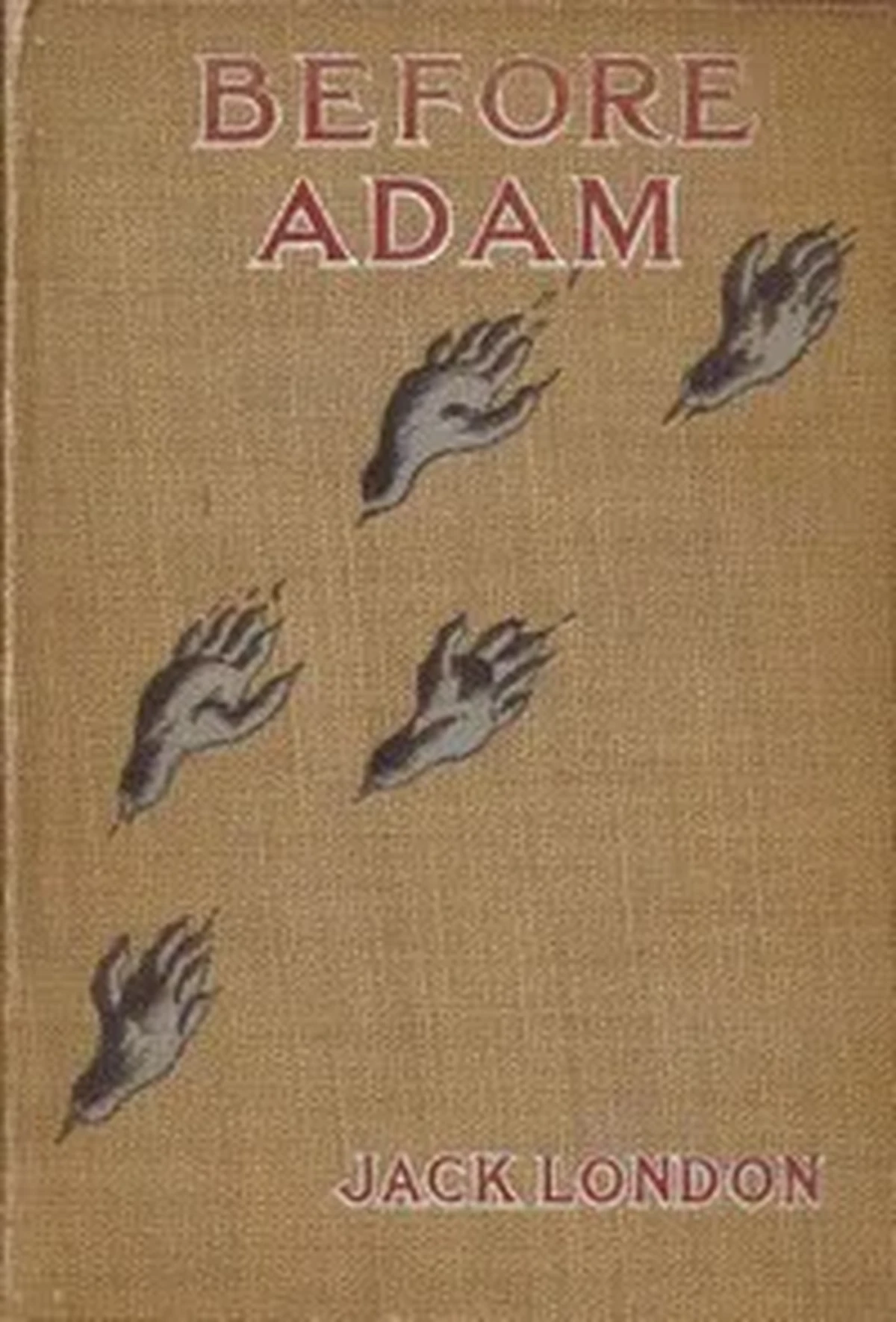
Before Adam
 83
83

Before Adam
London’s "Before Adam" is an ambitious attempt to visualize a pre-human existence, rendered through the lens of a dream-state regression. Its strength lies in its evocative descriptions of a primal world, a stark contrast to the civilized settings London often depicted. The protagonist's journey into ancestral memory, though allegorical, offers a fascinating glimpse into early 20th-century anxieties about human nature and origins. However, the narrative occasionally falters under the weight of its speculative premise; the scientific underpinnings, while imaginative for the time, feel dated and sometimes strained. The depiction of the "Burroughs" tribe, for instance, while serving the narrative’s purpose, lacks the nuanced anthropological consideration that later works would offer. Despite these limitations, the novel’s core idea—that our deepest past resides within us—remains compelling. "Before Adam" serves as a curious artifact of evolutionary thought and literary imagination.
📝 Description
83
Jack London's 1920 novel "Before Adam" imagines humanity's deep evolutionary past through a protagonist's psychic regression.
Published in 1920, Jack London's "Before Adam" offers a speculative look at human origins. The story centers on a protagonist who experiences a mental regression, reliving the existence of early hominids. London frames this descent into the past as a dream or a psychic projection, allowing him to depict a world long before recorded history or even what we understand as full human consciousness.
The narrative is set against the backdrop of early 20th-century scientific and philosophical discussions about evolution and the human psyche. London, influenced by contemporary debates, uses the story to explore ideas of ancestral memory and the primal aspects of existence. It is a literary inquiry into humanity's deep past, leaning more on imaginative speculation than strict scientific accuracy. Readers interested in how authors of that era conceived of prehistory and the subconscious mind will find this work particularly relevant.
Published in 1920, "Before Adam" emerged during a period when evolutionary theory and early psychoanalytic ideas, such as Jung's concept of the collective unconscious, were widely discussed. London's novel taps into this cultural fascination with the deep past and inherited memory. It reflects a growing interest in the subconscious mind and the possibility of accessing ancestral experiences through altered states of awareness. The book aligns with esoteric traditions that explore the layered nature of consciousness and the potential for individuals to connect with a prehistory embedded within their being.
💡 Why Read This Book?
• Gain insight into early 20th-century speculative anthropology by examining London's depiction of the "Niggers" tribe and their ancestral consciousness, offering a unique perspective on human origins. • Experience a literary exploration of atavism and the subconscious mind, as London uses the narrative device of regression to probe primal human instincts. • Understand the cultural impact of Darwinian theory on literature by analyzing how "Before Adam" grapples with evolutionary concepts through its narrative structure and character journey.
⭐ Reader Reviews
Honest opinions from readers who have explored this book.
❓ Frequently Asked Questions
What is the main premise of Jack London's "Before Adam"?
The novel's premise involves a modern man experiencing a psychic regression, reliving the life of an ancestral human from a primitive past, specifically a member of the "Niggers" tribe.
When was "Before Adam" first published?
"Before Adam" was first published in 1920, reflecting the intellectual climate surrounding evolutionary theory and psychology at the time.
Does "Before Adam" align with modern scientific understanding of human evolution?
No, the novel predates much of modern paleoanthropology and evolutionary psychology. It is a work of speculative fiction based on early 20th-century interpretations of Darwinism and nascent psychoanalytic ideas.
What are some key themes explored in the book?
Key themes include atavism, the nature of consciousness, ancestral memory, and the primal instincts of humanity, all explored through the protagonist's regression.
Is "Before Adam" considered a scientific work or fiction?
It is firmly in the realm of fiction. While inspired by scientific ideas prevalent in its time, it uses these as a basis for a narrative exploration of human origins and consciousness.
What is the significance of the "Niggers" tribe in the novel?
The "Niggers" tribe represents a hypothetical early human society, serving as the setting for the protagonist's ancestral regression and allowing London to speculate on primitive human existence.
🔮 Key Themes & Symbolism
Ancestral Memory
The novel posits that deep within human consciousness lies a record of our evolutionary past. The protagonist's regression allows access to this ancestral memory, suggesting that the experiences of prehistoric humans are not entirely lost but are encoded within us. This theme taps into early psychoanalytic ideas about the collective unconscious, where shared, inherited psychic material might exist, influencing modern behavior and thought patterns even from a distant past.
Primal Existence
London attempts to visualize a world devoid of civilization, focusing on the raw survival instincts and sensory experiences of early hominids. The narrative explores the "Niggers" tribe, depicting their social structures, fears, and daily lives as driven by immediate needs and a connection to the natural world. This exploration studies the concept of the 'noble savage' and the inherent wildness that might lie beneath civilized veneers.
Evolutionary Speculation
As a product of the post-Darwinian era, "Before Adam" engages directly with theories of human evolution. It moves beyond mere biological lineage to speculate on the psychological and experiential aspects of early human development. The novel questions a simple linear progression, suggesting a more complex layering of past selves within the present, influenced by the scientific discourse of its time.
Consciousness and Regression
The narrative structure itself, a regression into a past life or state, serves as a primary vehicle for exploring consciousness. London uses this device to examine what constitutes 'human' consciousness by contrasting it with a more instinctual, pre-verbal awareness. The dreamlike quality of the regression highlights the fluid boundaries of the mind and its potential to access non-ordinary states of being.
💬 Memorable Quotes
Direct passages from the work, attributed to the author.
“He was one of the Niggers.”
— This statement signifies the protagonist's complete immersion and identification with his prehistoric ancestors, highlighting the novel's exploration of atavism and the shedding of modern identity.
“The great beast slept within him.”
— This metaphor refers to the primal, instinctual nature that London believed lay dormant within all humans, awakened during the protagonist's regression into a more primitive state of existence.
“The cave was his world.”
— This phrase emphasizes the stark, elemental environment of the protagonist's ancestral life, representing a return to fundamental conditions of existence before the advent of complex civilization.
“He felt the ancient fear.”
— This indicates the direct, visceral connection to the emotional range of early humanity, suggesting that fundamental fears are inherited and can be re-experienced through deep psychological regression.
💡 Key Ideas
Editorial paraphrase of the work's core concepts — not direct quotes.
The past was alive in him.
This line expresses the central theme of ancestral memory, suggesting that our evolutionary history is not merely a historical record but a living, active component of our present being.
🌙 Esoteric Significance
Tradition
While not directly aligned with a formal esoteric tradition like Theosophy or Kabbalah, "Before Adam" appeals to Gnostic ideas concerning the fragmented nature of consciousness and the potential for rediscovering lost or primal states of being. It touches upon themes of spiritual or psychic regression that appear in various mystical paths, suggesting that the divine or essential self might be found by returning to more fundamental, less corrupted origins.
Symbolism
The cave serves as a potent symbol of the womb, the primal dwelling, and the unconscious mind itself—a dark, protective space where the fundamental self can be rediscovered. Fire represents both primal power and the nascent spark of consciousness or civilization. The "Niggers" tribe, though problematic in its naming, symbolizes humanity in its most elemental, instinct-driven form, stripped of societal artifice.
Modern Relevance
Contemporary discussions in transpersonal psychology and consciousness studies, which explore altered states, past-life regressions, and the concept of inherited psychological patterns, find a literary precursor in London's work. Thinkers and practitioners interested in the deep roots of human behavior and the potential for accessing non-ordinary states of consciousness might revisit "Before Adam" as an early, albeit fictionalized, exploration of these enduring mysteries.
👥 Who Should Read This Book
• Readers fascinated by early 20th-century speculative fiction that grapples with human origins and the subconscious, seeking a narrative precursor to modern psychological exploration. • Students of Jack London’s diverse literary output who wish to examine his engagement with scientific ideas and his imaginative ventures beyond naturalism. • Individuals interested in literary interpretations of evolutionary theory and atavism, who appreciate fiction that uses scientific concepts as a springboard for philosophical inquiry.
📜 Historical Context
Published in 1920, "Before Adam" emerged in the wake of significant advancements and debates surrounding evolutionary theory following Charles Darwin’s seminal works. The early 20th century was a fertile ground for exploring human origins, with figures like Sigmund Freud and Carl Jung introducing concepts of the subconscious and collective unconscious, which London’s narrative echoes. This era saw a widespread cultural fascination with prehistory, fueled by archaeological discoveries and anthropological studies. London’s speculative fiction engaged with these currents, presenting a fictionalized account of ancestral life. While not a direct engagement with a specific intellectual rival, the novel implicitly responded to and popularized simplified interpretations of evolutionary biology and nascent psychology for a mass audience, contrasting with more rigorous academic discourse of the time. Its reception was generally within the context of London’s established fame as a writer, viewed as another imaginative exploration of elemental human experience.
📔 Journal Prompts
The protagonist's regression into the "Niggers" tribe.
The recurring symbol of the cave as a primal space.
The concept of ancestral memory influencing present consciousness.
The narrative's depiction of instinct versus learned behavior.
The contrast between the protagonist's modern self and his primal existence.
🗂️ Glossary
Atavism
In biology, the reappearance of a characteristic in an organism that had been absent in the immediately preceding generations. In "Before Adam," it refers to the protagonist regaining traits and instincts of his distant ancestors.
Regression
In psychology, a defense mechanism whereby an individual reverts to an earlier stage of development or a past state. Here, it's a narrative device for exploring ancestral consciousness.
Primal
Relating to the origin or earliest stages of something; fundamental. In the context of the book, it refers to the basic, instinctual state of early human existence.
Ancestral Memory
The idea that the experiences and characteristics of one's ancestors are somehow encoded within an individual's psyche or memory, accessible under certain conditions.
Niggers
The name of the primitive tribe in Jack London's novel, representing a hypothetical early human group. Note: This term is deeply offensive and reflects the problematic language of the era.
Subconscious
The part of the mind of which one is not fully aware and from which memories and desires are retrieved. London explores this as a potential repository of ancestral experience.
Paleolithic
Relating to the early stages of the Stone Age, characterized by the development of the simplest tools. The novel imagines life during such a period.
🔮 Readers Also Liked
Browse all →









More by Jack London
All books →

More Free Occult Philosophy Books
View all →