Dream Interpretation Ancient and Modern
 82
82

Dream Interpretation Ancient and Modern
Jung's 1936-1941 seminar sessions on dream interpretation offer a potent, if occasionally abrasive, glimpse into his clinical mind. The sessions devoted to historical survey and interpretation are particularly illuminating, showing Jung wrestling with predecessors and contemporaries. His impatience with certain historical interpretations, particularly those he deemed overly literal or lacking psychological depth, is palpable. One strength is witnessing his direct application of theory to specific dream examples, often revealing unexpected connections. A limitation, however, lies in the dense, lecture-like format which can make sustained engagement challenging for those unfamiliar with his extensive vocabulary and conceptual framework. The section discussing the historical literature on dream interpretation, where Jung critiques earlier attempts to systematize dream analysis, offers a particularly sharp illustration of his own evolving perspective.
This volume provides an essential, if demanding, insight into the foundations of Jungian dream analysis.
📝 Description
82
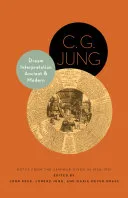
C. G. Jung led seminars on dream interpretation in Zurich from 1936 to 1941.
This volume collects key sessions from C. G. Jung's Zurich seminars held between 1936 and 1941. The book focuses on both the historical background and the clinical application of understanding dreams. It represents the latter portion of a four-part seminar series, where Jung discussed his interactions with ancient and modern writings on dreams, alongside his own analytical methods.
Jung's seminars took place during a time of significant intellectual activity in Europe, as psychoanalysis and his analytical psychology gained attention. The work directly addresses historical figures and texts, placing dream interpretation within a wider intellectual history. This era saw considerable focus on the unconscious mind, influenced by thinkers like Freud and Adler, as well as the developing study of anthropology.
The book details Jung's approach to deciphering dream symbols, moving past simple, direct translations. It considers the concept of the collective unconscious and how it appears in dream images. The text also traces the historical development of dream interpretation across different cultures and time periods, showing Jung's theoretical growth through his engagement with historical material.
This work situates dream analysis within the broader currents of depth psychology and its engagement with historical and philosophical traditions. Jung's approach to dreams connected his clinical practice with an interest in alchemy, mythology, and cross-cultural symbolism. He saw dreams not merely as personal expressions but as manifestations of universal psychic patterns, drawing parallels to ancient wisdom traditions that also sought meaning in visions and the unconscious. This book shows his effort to bridge empirical observation with a wider understanding of the human psyche's symbolic language.
💡 Why Read This Book?
• Learn Jung's method for analyzing dream symbolism by examining his critique of historical dream interpretation texts, revealing how he differentiated his approach from earlier methods. • Understand the historical evolution of dream analysis through Jung's direct engagement with figures and texts from antiquity to his own time, providing context for his theories. • Experience Jung's direct clinical insights by observing his analytical process during the 1936-1941 seminar sessions, offering a practical understanding of his concepts.
⭐ Reader Reviews
Honest opinions from readers who have explored this book.
❓ Frequently Asked Questions
When were C. G. Jung's seminars on dream interpretation originally held?
The seminars presented in this volume were originally conducted by C. G. Jung in Zurich between 1936 and 1941, forming a four-part series.
What is the primary focus of this specific publication of Jung's seminars?
This book focuses on the sessions dedicated to the historical literature of dream interpretation and Jung's clinical approach to analyzing dreams.
Does this book cover Jung's theories on children's dreams?
While the overall seminar series included sessions on children's dreams, this particular volume concentrates on the historical aspects and general principles of dream interpretation.
What kind of reader would benefit most from 'Dream Interpretation Ancient and Modern'?
This book is best suited for serious students of analytical psychology, psychoanalysts, and scholars interested in the history of psychological thought and dream analysis.
What historical context is relevant to Jung's seminars in the late 1930s?
The late 1930s were a period of significant intellectual development in psychology, with psychoanalysis and analytical psychology emerging as distinct schools of thought.
How does Jung approach historical dream interpretation in this work?
Jung critically examines historical texts and methods, often contrasting them with his own developing analytical psychology and highlighting what he saw as limitations.
🔮 Key Themes & Symbolism
Historical Survey of Dream Analysis
The work meticulously traces the lineage of dream interpretation from antiquity through various historical periods, examining how different cultures and thinkers understood the significance of dreams. Jung engages with philosophical, religious, and early psychological texts, critiquing their methodologies and offering his own analytical perspective. This historical grounding is crucial for understanding the evolution of thought leading up to analytical psychology and its unique contributions to the field.
Jung's Clinical Methodology
Central to the book is Jung's demonstration of his analytical approach to dreams. He emphasizes understanding dreams not as mere random occurrences but as meaningful messages from the unconscious. The sessions illustrate his process of deciphering symbols, considering personal associations, and recognizing archetypal patterns, moving beyond a purely reductive or deterministic view often associated with earlier psychoanalytic methods.
The Unconscious and Symbolism
Jung explores the concept of the unconscious as a dynamic psychic reality that communicates through symbolic language in dreams. He discusses how these symbols, often drawn from a collective human heritage, reveal deeper psychological truths and facilitate individuation. The interpretation of these symbols is presented as a vital tool for self-understanding and psychological healing.
Critique of Reductive Interpretation
A recurring theme is Jung's critique of interpretations that reduce dream content to simple, often sexual, significations. He argues for a more comprehensive understanding that acknowledges the compensatory function of dreams and their potential for psychic growth. This involves recognizing the symbolic value and the forward-looking, prospective, or prospective nature of dream imagery.
💬 Memorable Quotes
Direct passages from the work, attributed to the author.
“Dreams are the natural expression of the unconscious.”
— This statement captures Jung's view of dreams as direct, unmediated communications from the deeper psyche, offering essential insights into our inner world that waking consciousness may overlook or suppress.
“The historical study of dreams provides a necessary foundation for contemporary analysis.”
— Jung believed that understanding how dreams were interpreted across different eras and cultures was crucial for developing a robust and nuanced analytical psychology.
“We must not impose our theories onto the dream, but rather allow the dream to speak.”
— This highlights Jung's emphasis on allowing dream material to reveal its own meaning, rather than forcing it into pre-existing theoretical frameworks, advocating for a more open and receptive analytical stance.
“The symbol is not a sign, but a living thing.”
— Jung differentiates between a mere sign (which has a fixed meaning) and a symbol, which is dynamic, complex, and carries a psychological charge, evolving and revealing deeper layers of meaning.
“The historical literature often lacks a true appreciation for the dynamism of the unconscious.”
— Jung felt that many historical approaches to dream interpretation failed to grasp the living, creative, and compensatory nature of the unconscious psyche as expressed in dreams.
🌙 Esoteric Significance
Tradition
Jung's work draws heavily from Western esoteric traditions, including Hermeticism, Gnosticism, and alchemy, reinterpreting their symbolic language through the lens of analytical psychology. He saw these traditions not as mere historical curiosities but as expressions of the collective unconscious and the human drive toward wholeness (individuation). This book fits within this lineage by demonstrating how ancient symbolic systems can be revitalized and understood as psychological maps for inner transformation.
Symbolism
Key symbols explored include the serpent, often representing primal wisdom or transformation; the anima/animus, representing the contra-sexual aspect of the psyche; and various archetypal figures and motifs that emerge in dreams. Jung interprets these not just as personal symbols but as expressions of universal patterns embedded in the collective unconscious, offering insights into the structure of the human psyche and the process of individuation.
Modern Relevance
Contemporary thinkers in depth psychology, mythology, and comparative religion continue to engage with Jung's work on dreams. His concepts influence fields ranging from transpersonal psychology to integral theory. Practices like active imagination and dream analysis, as outlined in his seminars, remain central to many therapeutic modalities and personal development paths seeking to integrate unconscious material and foster psychological growth.
👥 Who Should Read This Book
['• Analysts and psychotherapists: To deepen their understanding of Jungian dream analysis and its historical underpinnings, enhancing their clinical practice.', '• Scholars of mythology and comparative religion: To explore the connections between ancient symbolic systems, religious imagery, and the unconscious psyche as revealed through dreams.', "• Students of C. G. Jung: To gain direct exposure to Jung's teaching style and his critical engagement with the history of psychology and dream interpretation."]
📜 Historical Context
C. G. Jung delivered these seminars between 1936 and 1941, a period shadowed by the looming Second World War and significant intellectual shifts in Europe. Analytical psychology, which Jung developed as a distinct field from Freud's psychoanalysis, was still solidifying its theoretical and clinical foundations. This era saw intense debate within psychology, with competing schools like Freudian psychoanalysis and Adlerian individual psychology vying for influence. Jung's work engaged directly with historical traditions, including classical antiquity and various religious interpretations of dreams, situating his own theories within a broader humanistic and psychological lineage. While Freud's influence was widespread, Jung's emphasis on archetypes, the collective unconscious, and a more positive view of the unconscious's creative potential offered a contrasting perspective. His work was part of a larger cultural fascination with the inner life, exploring consciousness and the unconscious through literature, art, and emerging psychological theories.
📔 Journal Prompts
The historical interpretation of dreams prior to Jung's work.
Jung's critique of reductive dream analysis methods.
Manifestations of the collective unconscious in dream symbolism.
The role of symbols in facilitating psychological transformation.
Jung's contrast between historical and analytical dream interpretation.
🗂️ Glossary
Analytical Psychology
C. G. Jung's school of psychology, distinct from Freudian psychoanalysis, emphasizing the collective unconscious, archetypes, and the process of individuation.
Collective Unconscious
A theoretical layer of the unconscious psyche containing universal patterns, instincts, and archetypes inherited from our ancestors, shared by all humanity.
Archetype
Universal, archaic patterns and images that derive from the collective unconscious and are the psychic counterpart of instinct.
Individuation
The lifelong psychological process of differentiation of the self, by which an individual becomes an individual, whole, and unique being.
Compensation (in dreams)
The principle that dreams often present images or ideas that counterbalance conscious attitudes or omissions, aiming for psychic equilibrium.
Prospective Function
The idea that dreams can not only reflect past experiences but also anticipate future psychological developments or offer solutions to current problems.
Symbol
A term, name, image, or pattern that is not perfectly understood and has a special significance or meaning in the context of one's culture or individual experience.