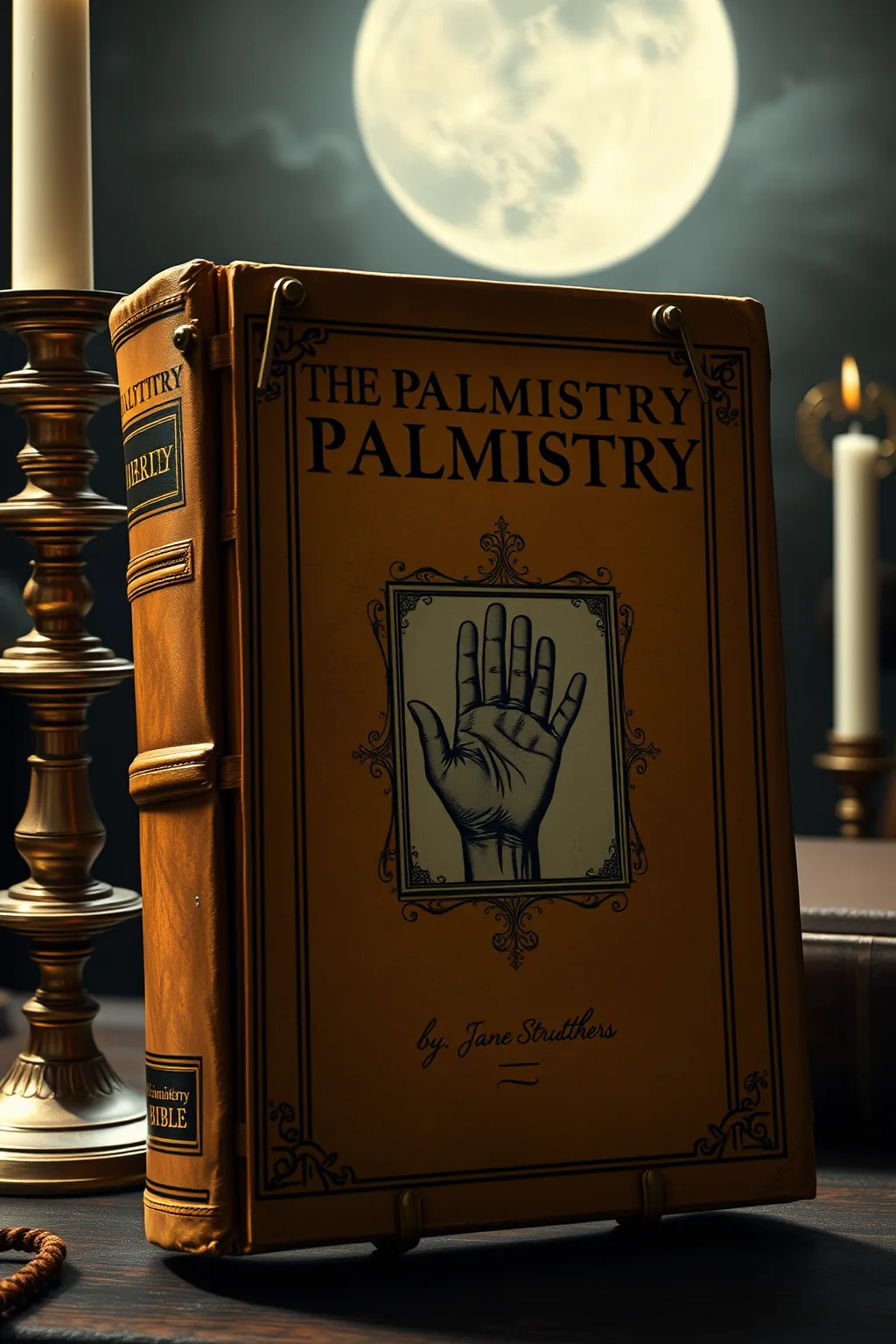
The Palmistry Bible
 74
74

The Palmistry Bible
Jane Struthers' "The Palmistry Bible" offers a grounded approach to a practice often shrouded in mystique. It commendably avoids sensationalism, presenting palmistry as a framework for self-exploration. The book's strength lies in its clear, step-by-step instructions for identifying and interpreting the basic hand features, making it accessible to novices. A particularly useful section details the subtle differences between various heart line formations and their associated emotional landscapes. However, the work sometimes feels overly prescriptive, leaving less room for the intuitive development that many practitioners value. While it covers the standard lines and mounts thoroughly, it could benefit from more detailed exploration of less common markings or the interplay between multiple hand elements. Despite this, "The Palmistry Bible" is a solid, practical introduction for anyone wishing to understand the language of their own hands.
📝 Description
74
Jane Struthers' The Palmistry Bible was published in 2001.
This volume offers a guide to chiromancy, or palmistry. It covers the interpretation of hand lines, mounts, and shapes to understand personality and potential. The book aims to present palmistry as a tool for self-awareness and personal growth, moving beyond simple fortune-telling. It is written for those interested in self-discovery and esoteric practices, suitable for beginners and those with prior knowledge. Readers drawn to psychology, symbolism, and comparative spirituality may find its perspective valuable.
The text systematically addresses the interpretation of the palm. This includes the major lines like Life, Head, and Heart, as well as minor lines. It also details the mounts, such as Venus and Jupiter, and various hand shapes, linking each to specific psychological traits and life events. The significance of finger shapes and nails is also discussed, presenting the hand as a map of the individual.
Palmistry has a history stretching back millennia, with roots in ancient India, China, and Egypt. Its practice has ebbed and flowed through history, experiencing periods of popularity and suppression. This book engages with that long tradition. It provides a modern perspective on established interpretive methods within the broader context of self-awareness and spiritual understanding.
💡 Why Read This Book?
• Learn to interpret the primary hand lines like the Life Line and Heart Line, understanding their connection to personal vitality and emotional expression, as detailed in the chapters on major lines. • Gain insight into the meaning of the mounts, such as the Mount of Venus, and how their prominence can indicate energy levels and personality traits, a concept central to the book's interpretive framework. • Discover the significance of different hand shapes and finger lengths, connecting physical hand characteristics to inherent tendencies and aptitudes, as explored in the sections on morphology.
⭐ Reader Reviews
Honest opinions from readers who have explored this book.
❓ Frequently Asked Questions
When was 'The Palmistry Bible' first published?
Jane Struthers' "The Palmistry Bible" was first published in 2005, making it a relatively modern yet comprehensive guide to the ancient practice of palmistry.
What is the main purpose of 'The Palmistry Bible'?
The book aims to provide readers with a practical understanding of palmistry for self-exploration and personal growth, focusing on interpreting hand features to understand personality and potential.
Does 'The Palmistry Bible' focus only on fortune-telling?
No, while it covers interpretive methods, the primary focus is on using palmistry as a tool for self-awareness and understanding one's psychological makeup and life path.
What specific elements of the hand does the book analyze?
It analyzes major and minor lines, the mounts (e.g., Mount of Venus), hand shapes, finger shapes, and nails, linking each to specific interpretations of character and experience.
Is 'The Palmistry Bible' suitable for absolute beginners?
Yes, the book is structured to be accessible to beginners, offering clear explanations and systematic guidance on interpreting the various aspects of the palm.
What is chiromancy?
Chiromancy is the ancient practice of divination and self-understanding through the examination of the palm of the hand, also commonly referred to as palmistry.
🔮 Key Themes & Symbolism
Interpreting the Major Lines
The book dedicates significant attention to the primary lines of the palm: the Life Line, Head Line, and Heart Line. It details their appearance, variations, and how their length, depth, and breaks can correlate with physical vitality, mental clarity, and emotional disposition. Understanding these lines is presented as foundational to grasping an individual's core constitution and tendencies.
The Significance of Hand Mounts
Beyond the lines, "The Palmistry Bible" explores the fleshy mounds at the base of the fingers and palm, known as mounts. Each mount—such as the Mount of Venus, Jupiter, Saturn, Apollo, Mercury, and Mars—is associated with specific planetary influences and human characteristics like love, ambition, creativity, and intellect. Their development is discussed in relation to the individual's psychological profile.
Hand and Finger Morphology
The work also studies the broader physical characteristics of the hand and fingers. This includes analyzing the overall shape of the palm (e.g., Earth, Air, Fire, Water hands) and the form of individual fingers. These morphological aspects are presented as indicators of inherent temperament and innate abilities, providing a complementary layer to the line and mount readings.
Palmistry as a Tool for Growth
A central theme is the application of palmistry for personal development. Rather than focusing solely on prediction, the book frames palm analysis as a means to gain self-awareness, identify strengths and challenges, and foster personal evolution. It encourages readers to use the insights gleaned from their palms to make informed life choices and cultivate potential.
💬 Memorable Quotes
Direct passages from the work, attributed to the author.
“The lines on your palm are not immutable decrees, but rather maps of your tendencies and energies.”
— This interpretation highlights the book's emphasis on palmistry as a dynamic system. It suggests that hand markings indicate predispositions rather than fixed destinies, empowering the reader to work with their inherent traits.
“The Head Line, when clear and long, often suggests a capacity for focused thought and logical reasoning.”
— This exemplifies a concrete interpretive guideline offered in the text. It links a specific physical feature (a clear, long Head Line) to a defined psychological attribute (focused, logical thinking).
“Your hands are a unique signature, reflecting your life's journey and inner landscape.”
— This interpretation captures the essence of palmistry as presented in the book: a personal, individualistic system of understanding. It frames the hand as a deeply personal and revealing aspect of one's being.
💡 Key Ideas
Editorial paraphrase of the work's core concepts — not direct quotes.
A well-developed Mount of Venus speaks to passion and vitality, but an overly pronounced one may signal excess.
This quote illustrates the nuanced approach to interpreting palm features. It shows how the book balances positive associations (passion, vitality) with potential challenges (excess), reflecting a balanced psychological perspective.
Observe the relative development of the mounts; their prominence offers clues to which traits are most active in your personality.
This paraphrase emphasizes the comparative aspect of palm reading. It guides the reader to assess the interplay and relative strength of different mounts to understand the dominant characteristics of an individual.
🌙 Esoteric Significance
Tradition
This work draws from the Western esoteric tradition of chiromancy, which has been influenced by Hermeticism and various forms of folk magic and divination across Europe. It adapts ancient interpretive frameworks, often linked to planetary correspondences and elemental associations, for a modern audience seeking self-understanding rather than purely predictive outcomes.
Symbolism
Key symbols include the major lines (Life, Head, Heart) representing fundamental aspects of existence, energy, intellect, and emotion. The mounts, named after classical deities like Venus and Jupiter, symbolize archetypal energies and personality drives. Hand shapes, often categorized by elements (Earth, Air, Fire, Water), represent core temperaments and modes of interaction with the world.
Modern Relevance
Contemporary practitioners of mindfulness, somatic psychology, and self-development often find value in Struthers' approach. It provides a tangible, symbolic system for exploring the self, echoing modern interests in embodied cognition and the connection between physical form and psychological state. Its accessibility makes it a gateway for individuals exploring somatic or symbolic approaches to well-being.
👥 Who Should Read This Book
• Individuals interested in Western esoteric traditions seeking a practical, non-dogmatic introduction to chiromancy. • Psychology enthusiasts looking for symbolic frameworks to understand personality traits and behavioral patterns. • Seekers of self-knowledge wanting to explore a method for personal reflection and identifying their inherent strengths and challenges.
📜 Historical Context
Published in 2005, "The Palmistry Bible" arrived at a time when interest in esoteric and self-help practices was gaining significant traction, particularly online. While palmistry itself is an ancient discipline with roots tracing back to Hellenistic Greece and India, Struthers' work positions itself within a contemporary context that blends historical methods with modern psychological interpretation. It emerged in a landscape populated by numerous other spiritual and self-help guides, differentiating itself through its structured approach. The book implicitly engages with the ongoing dialogue between traditional divinatory arts and their reinterpretation through a lens of personal growth, a trend seen in contemporary Western esotericism. It contrasts with more rigid, predictive forms of palmistry that were prevalent in earlier centuries.
📔 Journal Prompts
The shape of your dominant hand and its elemental association.
Variations in your Heart Line and their potential emotional significance.
The development of the Mount of Venus on your palm.
The clarity and trajectory of your Head Line.
A comparison between the major lines on your left and right hands.
🗂️ Glossary
Chiromancy
The practice of interpreting the lines, mounts, and shapes of the hand to understand personality, potential, and life paths; commonly known as palmistry.
Life Line
The arc running from beside the thumb towards the wrist, often interpreted as relating to vitality, physical health, and major life events.
Head Line
The line extending horizontally across the palm, typically interpreted as representing intellectual capacity, communication style, and mental processes.
Heart Line
The line running horizontally across the upper palm, generally interpreted as reflecting emotional nature, relationships, and romantic life.
Mounts
The fleshy, raised pads on the palm, named after classical planets (e.g., Mount of Venus, Mount of Jupiter), each associated with specific personality traits and energies.
Hand Shape
The overall classification of a hand based on the proportions of the palm and fingers, often categorized into elemental types like Earth, Air, Fire, and Water.
Minor Lines
Lines on the palm other than the major three (Life, Head, Heart), such as the Apollo line, Mercury line, or bracelets, which offer supplementary details about specific aspects of life.