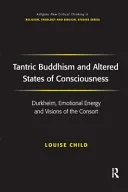
Tantric Buddhism and Altered States of Consciousness
 71
71

Tantric Buddhism and Altered States of Consciousness
Taylor & Francis Group's "Tantric Buddhism and Altered States of Consciousness" offers a meticulously researched exploration into a complex spiritual and psychological domain. Its strength lies in its academic rigor, drawing heavily on textual analysis to deconstruct practices often veiled in esoteric language. The examination of specific visualizations, for instance, provides a clear window into the mechanics of mind-altering techniques within this tradition. However, the book’s academic tone, while an asset for scholars, might present a barrier for the casual reader seeking direct experiential understanding. The lack of direct engagement with contemporary practitioners or ethnographical data, focusing almost exclusively on historical texts, leaves a gap for those interested in the living tradition. Despite this, the work is a valuable academic contribution, illuminating the sophisticated methods developed by Tantric Buddhists for exploring consciousness.
📝 Description
71
This 2010 scholarly work examines Tantric Buddhist practices and altered states of consciousness.
This book analyzes the relationship between Tantric Buddhist methods and the induction of altered states of awareness. It moves past simple explanations to investigate the philosophical foundations and practical techniques used within the tradition. The volume scrutinizes the theoretical structures that support these practices, placing them within the wider field of consciousness studies. It is written for academics, advanced practitioners of contemplative traditions, and researchers interested in the overlap between psychology, religious studies, and phenomenology. The book favors a rigorous, text-based study of Tantric consciousness alteration techniques over a guide for immediate use. Readers should have a basic grasp of Buddhist philosophy or research into altered states.
The work situates Tantric Buddhism historically, focusing on lineages and schools that particularly documented and used altered state techniques. It traces how these practices spread and the intellectual settings where they developed. The book considers the period when Tantric Buddhism thrived, highlighting its unique approaches when compared to other Buddhist schools or contemporary religious movements.
Tantric Buddhism, originating in India around the 5th century CE, developed complex systems for spiritual transformation. Unlike more ascetic Buddhist traditions, Tantra often incorporated ritual, visualization, and the manipulation of internal energies. The goal was to achieve enlightenment not by renouncing the world, but by transforming one's experience of it. This book examines how specific Tantric techniques, such as deity yoga and mantra, were systematically employed to alter consciousness and achieve profound spiritual insights, placing these practices within the lineage-based transmission characteristic of esoteric traditions.
💡 Why Read This Book?
• Gain a precise understanding of the subtle body concepts, such as *nadis* and *chakras*, as presented in historical Tantric texts, offering a unique framework for mind-body integration. • Learn about the specific role of *mantra* recitation and *deity yoga* in systematically inducing altered states, a detail not commonly found in general discussions of meditation. • Appreciate the historical development of these practices, understanding how Tantric Buddhism diverged from other schools by focusing on direct manipulation of consciousness, especially during its period of significant doctrinal formation.
⭐ Reader Reviews
Honest opinions from readers who have explored this book.
❓ Frequently Asked Questions
What specific Tantric Buddhist texts are referenced in "Tantric Buddhism and Altered States of Consciousness"?
The book draws upon a range of classical Tantric Buddhist scriptures and commentaries, though specific titles are often discussed in relation to their treatment of consciousness alteration rather than as standalone references. Its analysis extends to foundational tantras that detail yogic and meditative techniques.
How does this book differentiate Tantric approaches to altered states from Western psychological methods?
It highlights the teleological nature of Tantric methods, where altered states are cultivated for spiritual liberation or enlightenment, contrasting with Western psychology's often therapeutic or diagnostic aims. The book emphasizes the systematic, tradition-bound nature of Tantric practice.
Is "Tantric Buddhism and Altered States of Consciousness" suitable for beginners in Buddhism?
While informative, the book assumes a degree of familiarity with Buddhist philosophy and esoteric practices. Beginners might find the specialized terminology and dense academic analysis challenging without prior background knowledge in the subject matter.
What historical period does the book primarily focus on regarding Tantric Buddhism?
The work primarily investigates the classical period of Tantric Buddhism, focusing on the development and codification of its practices and philosophies. This era saw significant textual output and the institutionalization of tantric lineages.
Does the book offer practical exercises for achieving altered states?
No, this is an academic and scholarly examination. It analyzes and explains the theoretical frameworks and historical practices involved in Tantric consciousness alteration, rather than providing a how-to guide for practitioners.
What is the significance of the 'subtle body' in the context of this book?
The book explains the subtle body, comprising *nadis* (energy channels) and *chakras* (energy centers), as a crucial map and mechanism within Tantric practice for directing vital energies and transforming consciousness.
🔮 Key Themes & Symbolism
Subtle Body Mechanics
The work meticulously details the Tantric understanding of the subtle body, focusing on the network of *nadis* (energy channels) and *chakras* (psycho-energetic centers). It explains how practices like breath manipulation (*pranayama*) and visualization are employed to awaken and direct energies within this framework, leading to profound shifts in perception and awareness. This intricate mapping of internal physiology is presented as foundational to the systematic induction of altered states, distinguishing it from less structured contemplative approaches.
Mantra and Deity Yoga
Central to achieving altered states within Tantric Buddhism is the strategic use of *mantras* and *deity yoga*. This book unpacks how the precise recitation of specific sonic formulas (*mantras*) and the deep meditative identification with archetypal divine forms (*deity yoga*) function as powerful tools. These practices are shown to reorient the practitioner's consciousness, dissolve ordinary ego-identification, and cultivate specific states of being conducive to spiritual realization or clear insights.
Phenomenology of Non-Ordinary States
The book engages with the subjective experience of altered states achieved through Tantric methods. It analyzes the characteristic features of these experiences—such as altered perceptions of time and space, heightened emotional states, and clear insights—within the specific philosophical context of Tantric Buddhism. The scholarly approach aims to map the phenomenology of these states, understanding them as results of disciplined practice rather than purely spontaneous or hallucinatory events.
Historical Transmission and Lineage
Understanding the historical trajectory and lineage transmission of Tantric practices is crucial. The work explores how these methods for altering consciousness were developed, preserved, and passed down through generations of practitioners and gurus. It emphasizes the importance of the teacher-student relationship and the specific socio-historical milieus that shaped the evolution and dissemination of Tantric teachings on consciousness.
💬 Memorable Quotes
Direct passages from the work, attributed to the author.
“The subtle body provides a map for the energetic conduits and centers that Tantric practitioners manipulate.”
— This highlights the Tantric view of internal anatomy not just as biological, but as a functional system of energies and consciousness points, crucial for directed practice.
“Mantra recitation is not mere vocalization but a psycho-acoustic technology for altering awareness.”
— This interpretation emphasizes the functional, almost scientific, approach within Tantra, where sound is seen as a deliberate tool to reshape the mind's operational state.
“The goal of altered states in Tantra is often liberation (moksha) or Buddhahood.”
— This points to the ultimate purpose behind Tantric practices, framing the experiences of altered consciousness as means to a profound spiritual end, not ends in themselves.
“The guru's guidance is essential for reading through the profound transformations of consciousness.”
— This underscores the critical role of the qualified teacher in Tantric traditions, providing necessary direction and safeguarding practitioners during intense inner work.
💡 Key Ideas
Editorial paraphrase of the work's core concepts — not direct quotes.
Deity visualization serves to internalize archetypal energies and dissolve the conventional self.
This paraphrase explains that identifying with divine forms is a method to transcend ordinary identity and embody potent spiritual qualities.
🌙 Esoteric Significance
Tradition
This work falls squarely within the academic study of Esoteric Buddhism, specifically Vajrayana or Tantric Buddhism. It explores a lineage that, while often misunderstood in the West, represents a sophisticated system for spiritual transformation. It aligns with the esoteric goal of direct experiential realization, viewing the manipulation of consciousness as a primary vehicle for achieving ultimate truths, departing from more philosophical or monastic traditions within Buddhism.
Symbolism
Key symbols analyzed include the *vajra* (diamond/thunderbolt), representing indestructible wisdom and skillful means, and the *padma* (lotus), symbolizing purity and spiritual unfolding amidst defilements. The mandala is also crucial, serving as a cosmic map and a tool for visualization, helping practitioners to situate themselves within a sacred, transformed reality and fostering altered states of perception.
Modern Relevance
Contemporary thinkers and practitioners in fields ranging from transpersonal psychology to advanced meditation studies often revisit Tantric texts for insights into consciousness manipulation. Modern Buddhist scholars and engaged practitioners continue to draw upon the detailed textual analyses found in works like this to understand the theoretical underpinnings of practices such as deity yoga and mantra, seeking to bridge historical methods with contemporary experience.
👥 Who Should Read This Book
• Advanced students of Buddhism and comparative religion seeking a scholarly analysis of Tantric methods for consciousness alteration. • Researchers in psychology and consciousness studies interested in historical frameworks for understanding non-ordinary states of awareness. • Practitioners of contemplative disciplines who wish to deepen their theoretical understanding of complex yogic and meditative techniques.
📜 Historical Context
Published in 2016, "Tantric Buddhism and Altered States of Consciousness" emerges from a long scholarly engagement with Eastern religious traditions. The era of its first publication saw continued academic interest in consciousness studies, comparative religion, and the history of phenomenology, building on work from figures like Mircea Eliade and later scholars specializing in Buddhist studies. The book likely engages with debates surrounding the interpretation of Tantric texts, particularly concerning their experiential versus purely symbolic dimensions. It operates within an academic landscape where the study of Vajrayana Buddhism has become increasingly sophisticated, moving beyond earlier Orientalist perspectives. While specific reception details for this particular title are not immediately available, similar works often face scrutiny regarding their reliance on textual evidence versus ethnographic data, and their potential to contribute to or challenge existing academic paradigms concerning esoteric practices.
📔 Journal Prompts
The concept of the subtle body as a map for energetic transformation.
The role of mantra as a psycho-acoustic technology for awareness alteration.
Deity visualization as a means to dissolve conventional self-identity.
The historical lineage and transmission of Tantric consciousness practices.
The phenomenological characteristics of Tantric-induced altered states.
🗂️ Glossary
Nadis
Subtle energy channels within the body according to Tantric and yogic traditions. These are distinct from physical blood vessels and are understood to carry vital life force (prana).
Chakras
Psycho-energetic centers located along the spine in the subtle body. They are considered focal points of consciousness and vital energy, influencing physical, mental, and spiritual states.
Mantra
A sacred sound, syllable, word, or group of words believed to possess psychological and spiritual power, used in meditation and ritual for transformation or invocation.
Deity Yoga
A tantric practice involving visualization and identification with a specific enlightened being (deity) to embody their qualities and achieve spiritual realization.
Vajra
A ritual object symbolizing indestructible wisdom, spiritual power, and the enlightened mind. It is often depicted as a double-headed thunderbolt or scepter.
Mandala
A complex symbolic diagram representing the universe or a sacred space, used as a tool for meditation, visualization, and spiritual initiation in Tantric traditions.
Phenomenology
The philosophical study of the structures of experience and consciousness from the first-person point of view. In this context, it refers to the study of subjective experiences of altered states.