Hatha yoga for total health
 72
72

Hatha yoga for total health
Sue Luby's Hatha Yoga for Total Health, published in 1977, presents a refreshingly direct manual for integrating yoga into daily life. Unlike many contemporary texts that might overemphasize advanced poses or spiritual mysticism, Luby grounds her teachings in practical application for tangible well-being. Her explanation of pranayama, for instance, is clear and emphasizes its role in calming the nervous system, a point often glossed over. The book's primary strength lies in its accessible language and focus on foundational health benefits, making it suitable for newcomers. However, its 1970s perspective means some of the cultural references or assumed prior knowledge might feel dated to a modern reader. A notable section detailing the 'yamas and niyamas' offers a solid introduction to yoga's ethical framework, though it could benefit from more contemporary examples. Ultimately, it remains a valuable, no-nonsense guide for those seeking yoga's therapeutic potential.
📝 Description
72
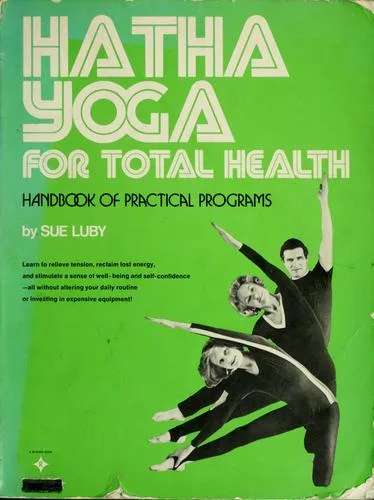
Sue Luby's 1977 book Hatha Yoga for Total Health presents yoga as a complete system for physical and mental well-being.
Published in 1977, Hatha Yoga for Total Health by Sue Luby details a comprehensive approach to yoga. The book goes beyond simple postures, integrating breath control (pranayama), meditation, and ethical guidelines into a holistic system. Luby aims to equip readers with the knowledge and methods needed to foster a balanced and healthy life through regular practice. This work is for anyone seeking a complete path to better health. It welcomes beginners interested in yoga's therapeutic benefits and also offers experienced practitioners a way to deepen their grasp of its core principles. Individuals focused on self-improvement, managing stress, and increasing physical energy will find practical advice here.
The book stresses the connection between mind and body, asserting that physical health is tied to mental and emotional states. It highlights how correct breathing techniques influence energy levels and mental focus. Luby also frames yoga as a way of life. This includes mindful eating, positive thought, and ethical behavior as essential parts of achieving 'total health'.
Hatha Yoga for Total Health emerged in the mid-1970s, a time when Western interest in Eastern thought grew significantly. Yoga, though known, was often reduced to its physical aspects. Luby's book countered this by emphasizing the deeper philosophical roots of yoga, moving beyond mere physical exercise. It aligned with a broader cultural turn toward alternative wellness and spiritual inquiry that defined the decade, presenting yoga as a path to internal balance and a more complete way of living.
💡 Why Read This Book?
• You will learn foundational pranayama techniques, as detailed in Chapter 3, to directly manage stress and improve respiratory function, offering a tangible method for nervous system regulation. • You will gain practical understanding of the 'yamas and niyamas' from Chapter 5, enabling a framework for ethical living that complements physical practice. • You will discover how to integrate simple asanas and meditation, as presented throughout the text, into a daily routine for sustained physical vitality and mental calm.
⭐ Reader Reviews
Honest opinions from readers who have explored this book.
❓ Frequently Asked Questions
When was Hatha Yoga for Total Health first published?
Hatha Yoga for Total Health by Sue Luby was first published in 1977, placing it within the burgeoning period of interest in Eastern wellness practices in the West.
What is the main focus of Sue Luby's book?
The book's main focus is presenting yoga as a holistic system for achieving 'total health,' integrating physical postures, breath control (pranayama), meditation, and ethical principles for overall well-being.
Is this book suitable for complete beginners to yoga?
Yes, the book is designed to be accessible to beginners, offering clear explanations of fundamental yoga concepts and practices suitable for those new to the discipline.
Does the book cover advanced yoga techniques?
While it covers foundational asanas and pranayama thoroughly, the book's primary emphasis is on holistic health and accessibility rather than advanced or purely athletic yoga techniques.
What historical period does the book reflect?
The book reflects the late 1970s, a time when Western interest in yoga was growing, and its broader philosophical and therapeutic applications were being explored beyond simple physical exercise.
Can this book help with stress reduction?
Yes, a significant aspect of the book is dedicated to pranayama (breath control) and meditation techniques, which are presented as direct methods for stress reduction and mental calm.
🔮 Key Themes & Symbolism
Holistic Health Integration
The work posits that true health encompasses physical, mental, and ethical dimensions, not merely the absence of illness. Luby advocates for a unified approach where asanas, pranayama, and mindful living work in concert. This perspective challenges a purely somatic view of well-being, suggesting that cultivating inner balance through practices like controlled breathing (pranayama) directly influences bodily health and resilience, aligning with ancient yogic philosophies that view the body as a microcosm of universal energies.
Pranayama for Vitality
Central to Luby's methodology is the practice of pranayama, or yogic breath control. The book details specific techniques, explaining how conscious manipulation of the breath can regulate the nervous system, increase energy levels, and enhance mental clarity. This emphasis moves beyond simple respiration, presenting breath as a vital force ('prana') that can be consciously directed to promote healing and vitality. The 1977 publication context highlights this focus during a period when Western audiences were beginning to grasp breathwork's therapeutic potential.
Ethical Living and Yoga
Hatha Yoga for Total Health integrates the ethical precepts of yoga, the yamas and niyamas, as fundamental components of a healthy lifestyle. These principles, concerning non-violence, truthfulness, contentment, and self-discipline, are presented not as abstract ideals but as practical guidelines for daily conduct. The book argues that ethical alignment supports physical and mental well-being, creating a foundation of inner harmony that amplifies the benefits of physical and breath practices.
Accessible Asana Practice
The book offers clear instructions for a range of hatha yoga postures (asanas), focusing on their therapeutic benefits for physical health. Luby's approach prioritizes correct alignment and mindful execution over complex or extreme poses. The selection of asanas aims to improve flexibility, strength, and posture, making yoga accessible to a broad audience, including those new to the practice. The descriptions emphasize the bodily sensations and energetic effects of each posture.
💬 Memorable Quotes
Direct passages from the work, attributed to the author.
“Breath is the bridge between the body and the mind.”
— This statement underscores the book's core philosophy: that conscious control of respiration is the primary means to harmonize physical and mental states, facilitating a deeper connection and balance.
“True health is a state of balance, not merely the absence of disease.”
— This interpretation highlights the holistic approach, defining health as an active, integrated state of well-being encompassing physical, mental, and ethical dimensions, as promoted by the yogic practices discussed.
“The yamas and niyamas are the foundation upon which all other yogic practices are built.”
— This emphasizes the essential role of ethical conduct in yoga, framing it as the indispensable groundwork necessary for the effective and beneficial practice of postures and breathing exercises.
“The body is a temple, and its care is a form of devotion.”
— This metaphorical framing elevates the physical body, suggesting that caring for it through yoga is not merely a health regimen but a spiritual practice, aligning physical well-being with a sense of reverence.
💡 Key Ideas
Editorial paraphrase of the work's core concepts — not direct quotes.
Regular practice, even in small doses, yields significant results.
This quote speaks to the book's practical and encouraging tone, advocating for consistency over intensity, suggesting that steady application of yogic principles leads to cumulative improvements in health.
🌙 Esoteric Significance
Tradition
While not strictly adhering to a single esoteric lineage, Hatha Yoga for Total Health draws heavily from the Hatha Yoga Pradipika and classical yogic philosophy, which itself contains numerous esoteric and spiritual dimensions. It fits within the broader Western esoteric interest in Eastern systems that gained momentum in the 20th century, particularly from the late 1960s onwards. The work presents yogic practices as pathways to self-mastery and inner harmony, aligning with the esoteric goal of spiritual evolution through disciplined practice.
Symbolism
The book implicitly engages with the symbolism of 'prana' (life force energy) as channeled through breath, a fundamental esoteric concept in yogic traditions. The concept of the body as a 'temple' serves as a motif for sacredness and disciplined care. Furthermore, the integration of asanas, pranayama, and ethical guidelines can be seen as symbolic of the holistic path to enlightenment, where each component represents a facet of the unified self that requires cultivation.
Modern Relevance
Contemporary mindfulness-based stress reduction (MBSR) programs and various somatic therapies echo Luby's emphasis on breathwork and body awareness for mental and physical health. Modern yoga studios that offer foundational classes focusing on alignment and therapeutic benefits also trace their lineage back to this type of accessible instruction. Thinkers and practitioners exploring the intersection of ancient yogic science and modern psychology continue to find value in foundational texts like this for understanding the roots of holistic wellness practices.
👥 Who Should Read This Book
• Individuals new to yoga seeking a structured introduction to its physical and mental benefits, who want to understand the foundational principles beyond just exercise. • Practicing meditators or wellness enthusiasts looking to incorporate a physical discipline that complements their existing practices, particularly those interested in breathwork (pranayama). • Readers interested in the history of wellness movements in the West, specifically the popularization of Eastern practices like yoga during the 1970s.
📜 Historical Context
Published in 1977, Sue Luby's Hatha Yoga for Total Health emerged during a period of intense Western fascination with Eastern spiritual and wellness traditions. The counterculture movements of the 1960s had paved the way for greater exploration of alternative lifestyles and philosophies. Yoga, previously known primarily within niche spiritual circles, began gaining mainstream traction as a method for physical fitness and stress relief. Luby's work contributed to this trend by presenting yoga in a comprehensive, yet accessible, manner, focusing on its therapeutic potential. This era saw a proliferation of yoga books, but many focused narrowly on asana. Luby's approach, emphasizing pranayama and ethical considerations alongside physical practice, aligned with a growing desire for holistic well-being. While figures like Swami Vivekananda had introduced yoga's philosophical depth earlier in the 20th century, the 1970s saw a broader popularization, with authors like Luby bridging the gap between esoteric knowledge and practical application for the average person.
📔 Journal Prompts
The role of pranayama in regulating nervous system responses.
Integration of the yamas and niyamas into daily routines.
Developing a consistent asana practice for sustained vitality.
Mind-body connection through conscious breathing.
Defining 'total health' based on yogic principles.
🗂️ Glossary
Asana
Refers to the physical postures or exercises practiced in Hatha Yoga. These are designed to strengthen the body, improve flexibility, and prepare the practitioner for deeper meditative states.
Pranayama
The yogic practice of controlling the breath, often through specific techniques. It is believed to regulate vital life force energy (prana) and influence mental and physical states.
Yamas
The ethical restraints or moral disciplines in yoga, representing outward-facing principles such as non-violence (ahimsa) and truthfulness (satya).
Niyamas
The observances or self-disciplines in yoga, representing inward-facing principles such as purity (saucha) and contentment (santosha).
Prana
The vital life force or energy that is believed to permeate all living beings. In yoga, pranayama is the practice of controlling and directing this energy.
Holistic Health
An approach to well-being that considers the interconnectedness of the physical, mental, emotional, and spiritual aspects of a person, rather than focusing solely on disease or specific symptoms.
Mindfulness
The practice of paying attention to the present moment non-judgmentally. In yoga, it involves being aware of bodily sensations, breath, and thoughts during practice.
🔮 Readers Also Liked
Browse all →









More Free Occult Philosophy Books
View all →