Tarot
 61
61

Tarot



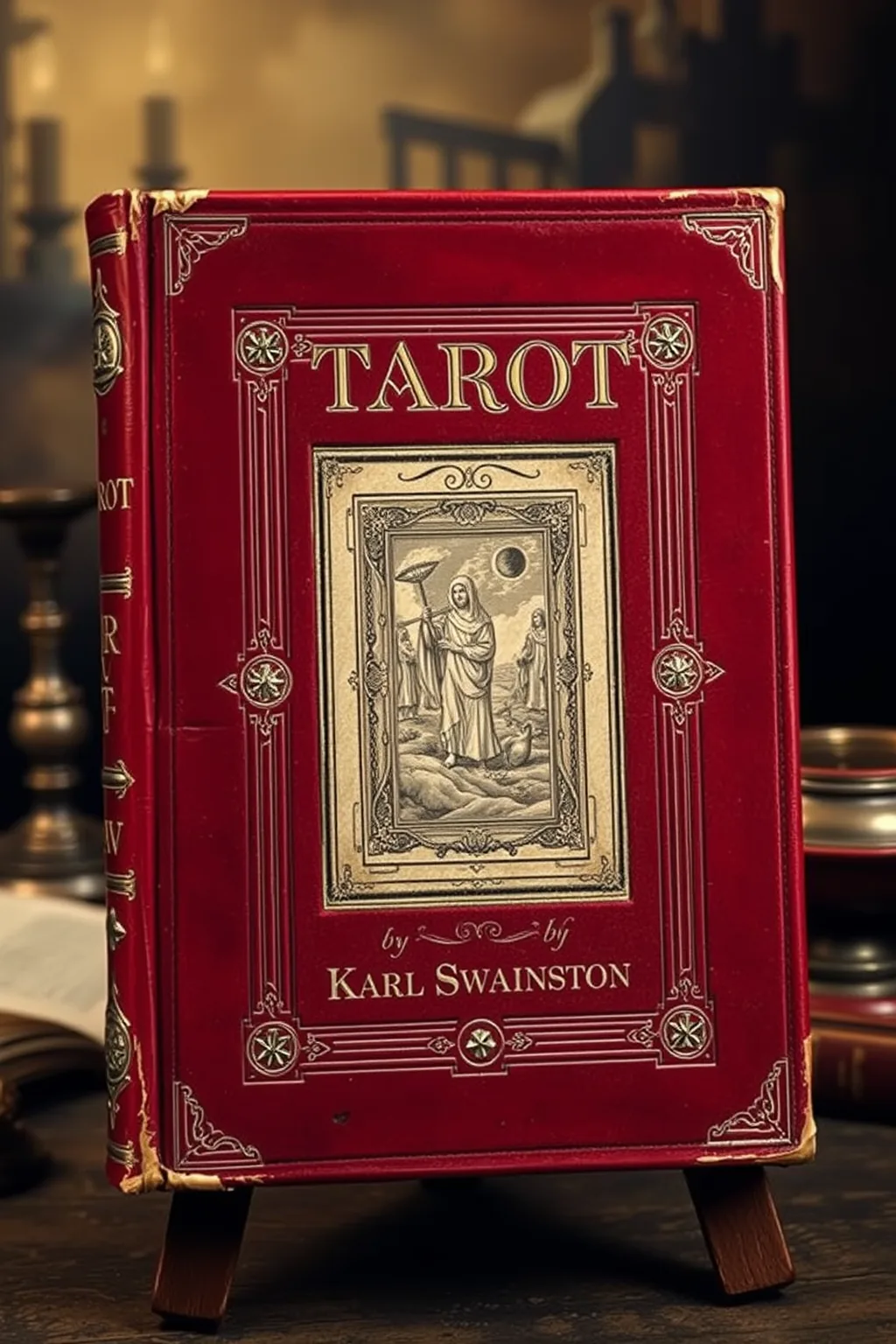
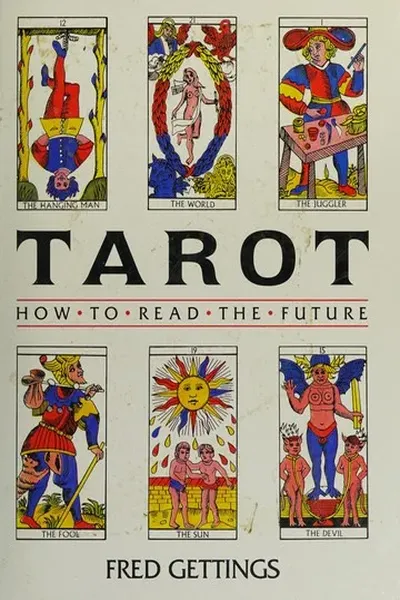
Karl Swainston's "Tarot" is a masterful exposition of this ancient divinatory art, presented with an authority befitting a seasoned practitioner. Eschewing superficial interpretations, Swainston navigates the labyrinthine symbolism of the Major and Minor Arcana, revealing their deep connections to Kabbalistic principles, Hermetic philosophy, and alchemical transformation. His prose is both illuminating and inspiring, making complex esoteric concepts accessible without sacrificing their depth. This is not a book for the casual dabbler, but for the serious seeker ready to engage with the profound spiritual and psychological insights embedded within the Tarot. A truly indispensable addition to any occult library.
📝 Description
61
Karl Swainston's 2023 book examines the Tarot's archetypal energies and symbolic language.
Karl Swainston's Tarot examines the deck not simply as a divination tool, but as a symbolic system reflecting cosmic and psychological currents. The book breaks down each card as a glyph representing ancient philosophies, alchemical processes, and spiritual development. Swainston's prose aims to illuminate these deeper connections for the reader.
This work encourages engagement with the Tarot's underlying principles, suggesting a transformation in how one understands fate, choice, and universal connections. It seeks to expand the reader's perception through an examination of the cards' symbolic depth and philosophical implications. The text moves beyond basic interpretation to a more comprehensive view of the Tarot's structure and meaning.
This book fits within the Western esoteric tradition that views the Tarot as more than a fortune telling device. It aligns with interpretations that see the cards as a map of consciousness, incorporating elements of Hermeticism, alchemy, and psychological archetypes. Such approaches often draw parallels between the Tarot's structure and various spiritual or philosophical systems, aiming to unlock deeper insights into the human condition and the nature of reality. Swainston's work contributes to this lineage of symbolic interpretation.
💡 Why Read This Book?
Uncover the profound mystical dimensions of Tarot beyond simple fortune-telling. Karl Swainston offers a deep dive into its archetypal language and esoteric symbolism, connecting it to ancient wisdom traditions. Ideal for spiritual seekers, occult scholars, and practitioners looking to enrich their understanding and practice with a truly transformative perspective on this sacred art.
⭐ Reader Reviews
Honest opinions from readers who have explored this book.
❓ Frequently Asked Questions
What makes this Tarot book unique?
This book uniquely emphasizes the esoteric, philosophical, and mystical dimensions of the Tarot, viewing it as a profound system of spiritual knowledge and archetypal symbolism rather than solely a divinatory tool.
Is this book suitable for beginners?
While it delves into complex esoteric themes, Swainston's clear and evocative writing style makes it accessible to dedicated beginners willing to engage with deeper meanings. It serves as an excellent foundation for a serious study.
Does this book focus on specific Tarot decks?
The book focuses on the universal archetypes and symbolism inherent in the Tarot system, making its teachings applicable to most traditional decks, such as the Rider-Waite-Smith.
What esoteric traditions are explored?
It intricately weaves connections to Hermeticism, Kabbalah, alchemy, and Jungian psychology, presenting a rich tapestry of esoteric thought as reflected in the Tarot.
Can this book improve my Tarot readings?
Absolutely. By understanding the deeper symbolic and psychological layers, practitioners can develop more intuitive, insightful, and spiritually resonant readings.
🔮 Key Themes & Symbolism
The Tarot as a Hermetic Mirror
Swainston positions the Tarot as a profound hermetic mirror, reflecting the macrocosmic principles of the universe within the microcosm of the human soul. He elucidates how each card embodies specific archetypal energies and correspondences, drawing parallels to the Emerald Tablet and the concept of 'As Above, So Below'. This perspective invites readers to see the Tarot not as a random collection of images, but as a divinely ordered system of knowledge, a map of consciousness and spiritual progression that reveals the interconnectedness of all existence.
Archetypal Symbolism and the Unconscious
This work looks at the deep well of archetypal symbolism that forms the bedrock of the Tarot. Swainston explores how these potent images tap into the collective unconscious, resonating with universal human experiences and psychological truths. He unpacks the Jungian significance of the Fool's journey, the transformative power of the High Priestess, and the alchemical trials represented by the Major Arcana, guiding readers to recognize these patterns within themselves and their own life path.
The Alchemical Journey of the Soul
A central theme is the Tarot's role as a symbolic representation of the alchemical process – the Great Work of spiritual transformation. Swainston illuminates how the progression through the Major Arcana mirrors the stages of dissolution, purification, and re-integration described in classical alchemy. He reveals the hidden alchemical symbolism within the court cards and the suits, offering a framework for understanding personal growth, overcoming challenges, and achieving spiritual enlightenment through the crucible of life experience.
💬 Memorable Quotes
Direct passages from the work, attributed to the author.
“Within each image lies a universe of hidden meaning.”
— Highlights the depth and complexity of Tarot symbolism, encouraging readers to look beyond superficial interpretations to uncover profound esoteric truths.
“The Fool's journey is the journey of every soul.”
— Connects the archetypal narrative of the Major Arcana to the universal human experience of growth, challenge, and spiritual evolution.
“Alchemy is the art of transforming the lead of the self into the gold of spirit.”
— Illustrates the core alchemical metaphor as applied to personal spiritual development, a concept deeply woven into the Tarot's symbolism.
“Wisdom whispers in the silence between the suits.”
— Suggests that useful insights can be found not just in the explicit imagery, but also in the subtler nuances and underlying patterns of the Tarot.
💡 Key Ideas
Editorial paraphrase of the work's core concepts — not direct quotes.
The cards are not mere predictors, but keys to unlock the self.
This quote emphasizes the book's focus on the Tarot as a tool for inner exploration and self-discovery, rather than mere fortune-telling.
🌙 Esoteric Significance
Tradition
This work is deeply rooted in the Western Esoteric Tradition, drawing heavily from Hermeticism, Kabbalah, and Rosicrucianism. Swainston presents the Tarot as a living embodiment of these ancient philosophies, a sacred text that encodes spiritual laws, archetypal patterns, and the principles of divine manifestation. It serves as a powerful lens through which to understand the intricate relationship between the material and spiritual realms, and the potential for human consciousness to ascend.
Symbolism
The book meticulously dissects the profound symbolic language of the Tarot, revealing the universal archetypes that govern human experience and the cosmos. From the numerological significance of each card to the alchemical processes depicted in the Major Arcana, Swainston unveils layers of meaning. Key symbols like the Tree of Life, the four elements, and the alchemical stages are explored, demonstrating how the Tarot acts as a visual key to unlocking the mysteries of creation and personal transformation.
Modern Relevance
In an age often characterized by fragmentation and superficiality, Swainston's "Tarot" offers a vital pathway back to deeper meaning and self-understanding. Its exploration of archetypal psychology and spiritual growth remains profoundly relevant, providing seekers with practical tools for navigating life's challenges and cultivating inner wisdom. The book empowers individuals to engage with the Tarot not just as a divinatory system, but as a profound source of personal evolution and connection to the timeless currents of the universe.
👥 Who Should Read This Book
This profound exploration of the Tarot is essential for the dedicated spiritual seeker yearning for a deeper understanding beyond superficial prognostication. Occult scholars and practitioners will find invaluable insights into the Tarot's rich esoteric connections to Hermeticism and Kabbalah. Beginners with a serious interest in metaphysical studies will gain a robust philosophical framework for their journey. Those interested in Jungian psychology and archetypal symbolism will find the Tarot illuminated as a potent map of the human psyche.
📜 Historical Context
Karl Swainston's "Tarot" emerges from a rich lineage of esoteric scholarship that flourished particularly from the late 19th century onwards, a period of intense interest in occultism, mysticism, and the rediscovery of ancient wisdom traditions. Influenced by figures like Eliphas Lévi, A.E. Waite, and the Hermetic Order of the Golden Dawn, this era sought to synthesize various spiritual philosophies, including Kabbalah, Hermeticism, and Neoplatonism, with practical occult arts like Tarot. Swainston's work builds upon this foundation, offering a contemporary yet deeply traditional interpretation that appeals to the ongoing exploration of consciousness and symbolism within modern metaphysical circles. It bridges the gap between historical esoteric thought and the seeker's personal quest for meaning.
📔 Journal Prompts
Reflect on the symbolism of The Fool in your own life's journey. Where have you embraced the unknown, and what lessons have you learned?
Choose a Major Arcana card that appeals to a current challenge. How might its archetypal energy offer guidance or insight?
Consider the suits (Wands, Cups, Swords, Pentacles) as representing different facets of your existence. How are these energies balanced or imbalanced within you?
Explore the concept of 'As Above, So Below' through the lens of a specific Tarot card. How does its meaning reflect both cosmic principles and personal experience?
How can the alchemical symbolism within the Tarot guide your own process of personal transformation and spiritual refinement?
🗂️ Glossary
Archetype
A universal, archaic pattern or image that is part of the collective unconscious. In Tarot, archetypes represent fundamental human experiences and psychological states.
Hermeticism
An ancient philosophical and religious tradition based on the writings attributed to Hermes Trismegistus, emphasizing the unity of all things and the pursuit of gnosis (spiritual knowledge).
Kabbalah
A complex system of Jewish mysticism that seeks to understand the nature of God and the universe through esoteric interpretation of scripture and the use of the Tree of Life.
Alchemy
An ancient philosophical and proto-scientific tradition that sought to purify, mature, and perfect certain objects. In a spiritual context, it represents the transformation of the soul.
Gnosis
Spiritual knowledge or insight, often understood as a direct apprehension of divine truth, particularly within Gnostic and Hermetic traditions.
This book appears in 3 collections
🔮 Readers Also Liked
Browse all →
![CIA Reading Room cia-rdp84-00022r000200150084-5: ORIENTATION COURSE LECTURE ON 'SERVICES OF [ ] [ ]'](/img/thumb/cia-reading-room-cia-rdp84-00022r000200150084-5-orientation-course-lecture-on-services-of-cia-reading-room.webp)
From the “Tarot” Collection
View all →

More Free Divination & Tarot Books
View all →