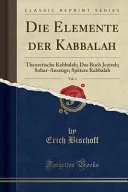
Die Elemente der Kabbalah, Vol. 1
 71
71

Die Elemente der Kabbalah, Vol. 1
Bischoff’s 'Die Elemente der Kabbalah, Vol. 1' offers a commendable, if somewhat dry, introduction to core Kabbalistic texts. The decision to focus on theoretical Kabbalah alongside the Sefer Yetzirah and Zohar excerpts is sound, providing a solid foundation for beginners. Bischoff’s commentary on the Sefer Yetzirah, in particular, aims for clarity, enabling a systematic study of its cryptic pronouncements. However, the translation and analysis, while accurate, sometimes lack the vibrant interpretive spirit found in other commentaries. A particularly striking section involves the detailed examination of the Sefer Yetzirah's creation narrative, which highlights the linguistic and numerical foundations of existence. While comprehensive, the volume might benefit from more direct engagement with the practical or meditative aspects often associated with Kabbalistic study. It serves best as a scholarly resource for understanding the theoretical architecture of Kabbalah.
📝 Description
71
Erich Bischoff's 'Die Elemente der Kabbalah, Vol. 1', first published in 2017, organizes core Kabbalistic texts for modern study.
This volume presents foundational Kabbalistic writings, concentrating on theoretical Kabbalah, the Sefer Yetzirah, and portions of the Zohar. Bischoff structures the material to facilitate a detailed, paragraph-by-paragraph study of the Sefer Yetzirah, acknowledging its origins in early Jewish mysticism. The book aims to make these ancient teachings more accessible.
It is intended for serious students of Kabbalah and esoteric philosophy who prefer a methodical, scholarly approach. Readers will find value in its examination of the historical development of Kabbalistic thought, the principles of creation as outlined in the Sefer Yetzirah, and the mystical interpretations within the Zohar. The work serves as an entry point for individuals with some background in comparative religion or philosophy.
Bischoff's compilation synthesizes these elements for a contemporary audience, engaging with the ongoing study of Kabbalah. It addresses the need for clear translations and analyses of these dense, symbolic works, building upon the efforts of earlier scholars and mystics.
This work situates itself within the tradition of Jewish mysticism, specifically Kabbalah. It engages with texts like the Sefer Yetzirah, which predates the common era, and the Zohar, a 13th-century compilation. Bischoff's approach synthesizes these historical mystical writings, making them available for contemporary study. The book follows a lineage of scholars and practitioners who have sought to codify and interpret the complex symbolic language and cosmological frameworks central to Kabbalistic thought.
💡 Why Read This Book?
• Gain a structured understanding of the Sefer Yetzirah, the ancient text attributed to Abraham, by following Bischoff’s paragraph-by-paragraph approach, revealing its foundational concepts of creation through Hebrew letters and numbers. • Explore key excerpts from the Zohar, the foundational work of Kabbalistic mysticism, to grasp its allegorical interpretations of the Torah and its insights into divine emanations. • Appreciate the historical trajectory of Kabbalistic thought by examining Bischoff's inclusion of later Kabbalistic developments alongside earlier foundational texts like the Sefer Yetzirah.
⭐ Reader Reviews
Honest opinions from readers who have explored this book.
❓ Frequently Asked Questions
What specific Kabbalistic texts are covered in 'Die Elemente der Kabbalah, Vol. 1'?
This volume focuses on theoretical Kabbalah, the Sefer Yetzirah (also known as Das Buch Jezirah), significant excerpts from the Zohar, and later Kabbalistic traditions, providing a comprehensive overview of foundational Kabbalistic literature.
Is 'Die Elemente der Kabbalah, Vol. 1' suitable for absolute beginners in Kabbalah?
While it provides a structured approach, particularly to the Sefer Yetzirah, readers with some background in esoteric philosophy or comparative religion will benefit most. It is a serious academic and mystical study.
What is the significance of the Sefer Yetzirah discussed in this book?
The Sefer Yetzirah is presented as a core text for understanding creation, exploring how the 22 Hebrew letters and the number system serve as the fundamental building blocks of the cosmos, as detailed in Bischoff's analysis.
When was Erich Bischoff's 'Die Elemente der Kabbalah, Vol. 1' first published?
The first publication date for Erich Bischoff's 'Die Elemente der Kabbalah, Vol. 1' is April 25, 2017, making it a contemporary engagement with ancient Kabbalistic sources.
Does this book discuss practical Kabbalistic techniques?
The primary focus is on the theoretical and textual foundations of Kabbalah, including the Sefer Yetzirah and Zohar. While it lays the groundwork, it delves less into practical meditative or ritualistic applications.
What distinguishes Bischoff's approach to the Kabbalah?
Bischoff aims for a methodical, structured exploration, especially with the Sefer Yetzirah, allowing readers to follow the text logically. He bridges ancient mystical literature with modern scholarly analysis.
🔮 Key Themes & Symbolism
The Sefer Yetzirah's Cosmology
This volume meticulously examines the Sefer Yetzirah, presenting it as a foundational text for understanding creation. Bischoff highlights how the 22 Hebrew letters and numerical principles are depicted as the very architecture of the universe. The work explores the concept of '32 Paths of Wisdom' (the ten sefirot and the 22 letters), illustrating how divine energy manifests through these linguistic and mathematical structures, offering a glimpse into the mechanics of existence from a Kabbalistic viewpoint.
Zoharic Mystical Interpretation
Excerpts from the Zohar are presented to showcase the rich, allegorical layer of Kabbalistic interpretation, particularly concerning the Torah. Bischoff guides readers through the Zohar's exploration of divine emanations (sefirot) and the mystical union of divine forces. These passages reveal a profound symbolic language used to describe the ineffable nature of God and the intricate relationships within the divine realm, offering insights into Jewish mystical theology.
Evolution of Kabbalistic Thought
Beyond the primary texts, 'Die Elemente der Kabbalah, Vol. 1' acknowledges the development and diversification of Kabbalistic ideas over time. By including sections on later Kabbalah, Bischoff illustrates how subsequent generations of mystics engaged with, expanded upon, and sometimes reinterpreted the core teachings found in earlier works like the Sefer Yetzirah and the Zohar, demonstrating the dynamic nature of this esoteric tradition.
Theoretical Kabbalah Framework
The volume establishes a theoretical framework for understanding Kabbalah as a system of thought. It moves beyond mere textual analysis to explore the underlying principles and philosophical underpinnings of this mystical tradition. This approach aims to provide readers with a coherent conceptual map of Kabbalistic cosmology, divine emanations, and its place within Jewish thought.
💬 Memorable Quotes
Direct passages from the work, attributed to the author.
“The Sefer Yetzirah allows for a systematic traversal from paragraph to paragraph.”
— This statement highlights Bischoff's pedagogical approach to the Sefer Yetzirah, emphasizing its logical structure and suitability for sequential study, contrasting it with potentially more diffuse texts.
“Insights into divine emanations and Torah interpretations are found within Zohar excerpts.”
— This highlights the thematic content of the Zohar passages included, focusing on its role in explaining the ten sefirot and offering mystical, symbolic readings of Jewish scripture.
“The text acknowledges its origins in pre-15th century Jewish mystical literature.”
— This contextualizes the book's source material, placing it within the historical lineage of Jewish mysticism and emphasizing its connection to ancient traditions before the common era.
“Later Kabbalistic developments show the tradition's ongoing evolution.”
— This indicates that the volume does not confine itself to only the earliest texts but also traces the historical progression and adaptation of Kabbalistic ideas through subsequent centuries.
💡 Key Ideas
Editorial paraphrase of the work's core concepts — not direct quotes.
The work explores the fundamental role of Hebrew letters and numbers in cosmic creation.
This paraphrased concept points to a central theme in the Sefer Yetzirah, where the 22 Hebrew letters and numerical principles are presented not merely as symbolic, but as active forces in the formation of reality.
🌙 Esoteric Significance
Tradition
This work is firmly rooted in the Kabbalistic tradition, a lineage of Jewish mysticism. It specifically draws from the foundational texts that underpin much of Western esoteric thought. Bischoff's compilation seeks to present these core elements—the theoretical underpinnings, the cosmogonic Sefer Yetzirah, and the allegorical depth of the Zohar—in a structured manner, making them accessible to contemporary students of esoteric philosophy.
Symbolism
Central symbols explored include the 22 Hebrew letters and numerical principles as divine tools for creation, as detailed in the Sefer Yetzirah. The ten Sefirot, representing divine emanations or attributes, are also implicitly or explicitly present, particularly when discussing Zoharic excerpts and later Kabbalistic thought. These symbols function not merely as abstract concepts but as active forces shaping reality and offering pathways to understanding the divine.
Modern Relevance
Contemporary esoteric practitioners and scholars continue to draw heavily from the foundational texts Bischoff analyzes. The concepts of divine emanations (Sefirot) and the creative power of language (Hebrew letters) remain influential in Western Hermeticism, New Age spirituality, and various forms of comparative mysticism. Thinkers and groups exploring consciousness, cosmology, and the nature of reality often reference the Sefer Yetzirah and Zohar for their unique perspectives.
👥 Who Should Read This Book
• Students of Jewish mysticism: Those seeking a clear, structured introduction to the foundational texts of Kabbalah, including the Sefer Yetzirah and Zohar, will find this volume important for building a solid theoretical base. • Esoteric philosophy enthusiasts: Individuals interested in the broader range of Western esotericism will gain insight into the origins and core concepts of Kabbalah, a tradition that has significantly influenced Hermeticism and other mystical paths. • Comparative religion scholars: Researchers examining the development of religious and mystical thought will benefit from Bischoff's presentation of key Kabbalistic texts and their historical context.
📜 Historical Context
Erich Bischoff's 'Die Elemente der Kabbalah, Vol. 1', published in 2017, enters a field with centuries of scholarly and mystical engagement. The Sefer Yetzirah, one of its core texts, is believed to have originated between the 3rd and 6th centuries CE, predating the major Kabbalistic works of medieval Spain. The Zohar, another central text, emerged in the late 13th century (around 1280 CE), largely attributed to Moses de León, and became the central to Lurianic Kabbalah and subsequent Hasidic thought. Bischoff's compilation engages with this long history, providing a modern synthesis for students. This era sees Kabbalah studied both within traditional Jewish scholarship and by diverse esoteric movements globally. Unlike purely academic treatises, Bischoff's work aims to illuminate the mystical core, building upon the groundwork laid by figures like Gershom Scholem, who revolutionized the academic study of Kabbalah in the 20th century, and earlier mystics who sought to systematize these profound teachings.
📔 Journal Prompts
The foundational role of Hebrew letters in creation, as presented in the Sefer Yetzirah.
The concept of divine emanations (Sefirot) and their symbolic representation.
Interpreting scriptural passages through the allegorical lens of the Zohar.
The evolution of Kabbalistic ideas from early texts to later developments.
The structural clarity Bischoff brings to the Sefer Yetzirah's teachings.
🗂️ Glossary
Kabbalah
A system of Jewish mysticism focused on understanding the divine nature and the creation of the universe, often through esoteric interpretations of scripture and symbolic language.
Sefer Yetzirah
An ancient Kabbalistic text attributed to Abraham, considered one of the earliest works on Jewish mysticism, detailing the creation of the universe through Hebrew letters and numbers.
Zohar
The foundational work of Kabbalistic mysticism, primarily an allegorical commentary on the Torah, exploring divine emanations, creation, and mystical interpretation.
Sefirot
The ten divine emanations or attributes through which God, the unknowable essence (Ein Sof), interacts with and creates the universe, central to Kabbalistic cosmology.
Theoretical Kabbalah
The branch of Kabbalah concerned with the metaphysical and cosmological doctrines, focusing on the nature of God, divine emanations, and the structure of reality.
Das Buch Jezirah
The German title for the Sefer Yetzirah, indicating its presentation within a German-language context.
Later Kabbalah
Refers to the Kabbalistic traditions and developments that emerged after the primary texts like the Sefer Yetzirah and the Zohar, showing the evolution of the mystical thought.