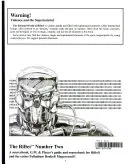
Desert and the City

 72
72

Desert and the City
Frere Ivan’s "Desert and the City" attempts to reconcile the perennial tension between withdrawal and engagement, using environmental metaphor to explore spiritual maturation. The book’s strength lies in its sustained allegorical framework, treating the desert and the city not just as settings but as psychological states. Ivan’s prose, particularly when discussing the stark clarity often found in solitude, possesses a certain austere beauty. However, the central dichotomy, while evocative, occasionally feels oversimplified. The transition from the desert’s introspection to the city’s active spiritual life is presented with less persuasive detail than the initial evocation of asceticism. A passage discussing the "mirages of the marketplace" offers a glimpse into Ivan’s potential for sharp critique, but the exploration of practical integration in the urban sphere feels underdeveloped. Despite this, the work provides a compelling conceptual map for those seeking spiritual grounding in a complex world.
📝 Description
72
Frere Ivan published "Desert and the City" in 1996, contrasting spiritual seeking in arid expanses and urban centers.
"Desert and the City" examines spiritual seeking through the lens of contrasting environments. Frere Ivan posits that the desert, often a site for ascetic practices and introspection, shares a dialectical relationship with the dense, complex urban landscape. The book uses these settings as metaphors for internal states and the challenges inherent in spiritual progression.
This work is intended for readers interested in the phenomenology of spiritual experience, particularly how external environments shape inner landscapes. It will appeal to individuals grappling with the perceived dichotomy between solitude and social engagement, or those seeking to understand the symbolic weight of place in esoteric traditions. It is for the contemplative in modern life and the urban dweller who yearns for stillness.
Emerging in the mid-1990s, "Desert and the City" participated in a period of growing interest in postmodern spirituality and comparative mysticism. Ivan's work aligns with trends in landscape spirituality, though it remains distinctly allegorical and introspective. It focuses on place as a spiritual catalyst, exploring meaning-making outside traditional religious structures.
💡 Why Read This Book?
• Gain a nuanced understanding of how external environments like the desert and the city function as metaphors for inner spiritual states, as explored in the book's central allegory. • Discover practical approaches to finding spiritual stillness and clarity amidst the chaos of modern urban life, drawing on Ivan's concept of "interior landscapes." • Understand the historical niche "Desert and the City" occupies within 1990s esoteric thought, particularly its engagement with themes of asceticism versus engagement.
⭐ Reader Reviews
Honest opinions from readers who have explored this book.
❓ Frequently Asked Questions
When was "Desert and the City" first published?
The book "Desert and the City" by Frere Ivan was first published in 1996, positioning it within the esoteric literature landscape of the late 20th century.
What is the primary theme of "Desert and the City"?
The primary theme is the exploration of spiritual seeking through the contrasting metaphors of the desert (solitude, asceticism) and the city (engagement, complexity), and how these relate to inner states.
Who is the author, Frere Ivan?
Frere Ivan is the author of "Desert and the City." The first publication date is noted as 1996. Further biographical details are not extensively provided within the text itself.
What kind of reader would appreciate "Desert and the City"?
Readers interested in esoteric philosophy, comparative mysticism, the psychology of spiritual experience, and the symbolic use of environment in spiritual development would find this work engaging.
Does the book offer practical spiritual exercises?
While not a manual of exercises, the book implicitly guides readers toward practical application by illustrating how to cultivate inner stillness and awareness within diverse settings, particularly the urban environment.
What is the relationship between the desert and the city in the book?
In the book, the desert symbolizes detachment and introspection, while the city represents worldly engagement and complexity. Ivan uses these as allegorical representations of inner spiritual journeys and states.
🔮 Key Themes & Symbolism
Environmental Allegory
The core of "Desert and the City" lies in its sustained use of the desert and the city as allegorical landscapes for spiritual development. The desert represents asceticism, solitude, and the stripping away of worldly distractions to confront the self. Conversely, the city embodies the complexities of social interaction, sensory overload, and the challenges of maintaining spiritual focus amidst myriad external stimuli. Ivan posits these are not mutually exclusive but represent poles of human experience that must be integrated for wholeness. The work explores how these external settings can manifest as internal psychological and spiritual states.
Interior Landscapes
This theme focuses on the idea that one's internal state can mirror or project onto external environments. The book suggests that the perceived stillness and clarity of the desert can be cultivated within the individual, regardless of their physical location, even within a bustling city. Conversely, the chaotic and illusory nature of the city can seep into the consciousness of someone in physical isolation. Ivan uses this concept to argue for the primacy of inner cultivation over external circumstance in the pursuit of spiritual wisdom, suggesting that true seeking transforms one's perception of any environment.
Asceticism vs. Engagement
"Desert and the City" directly addresses the perennial spiritual dilemma of whether to withdraw from the world or engage with it. The desert symbolizes the path of renunciation and direct confrontation with the divine or the self, often associated with traditional ascetic practices. The city represents the necessity of living and practicing spirituality within the fabric of everyday life, relationships, and societal structures. Ivan doesn't necessarily advocate for one over the other but explores the dynamic interplay and the potential for finding spiritual truth in both withdrawal and active participation.
The Mirage and The Oasis
Within the desert metaphor, Ivan explores the concept of "mirages" as illusions that distract from the true spiritual path, often representing false promises or fleeting desires. These can be physical or mental. The "oasis," conversely, symbolizes moments of genuine spiritual insight, clarity, and sustenance found through disciplined seeking. In the urban context, these concepts are reinterpreted as the "mirages of the marketplace" – the superficial allure of consumerism and social ambition – and the "oases of the spirit" that can be discovered in quiet contemplation or genuine connection within the city.
💬 Memorable Quotes
Direct passages from the work, attributed to the author.
“The desert teaches the soul its own true dimensions.”
— This highlights the desert's role in fostering self-awareness and a deep understanding of one's inner reality, stripped bare of external influences.
“Within the city's clamor, the silent call of the oasis persists.”
— This suggests that even in the most distracting and overwhelming environments, the possibility for spiritual clarity and peace remains accessible if one knows how to listen.
“To mistake the mirage for the water is the first folly of the seeker.”
— This serves as a warning against chasing superficial spiritual experiences or worldly illusions that ultimately offer no lasting sustenance or truth.
“The city is a desert of the soul when its illusions are mistaken for reality.”
— This recontextualizes the urban environment, suggesting that its spiritual barrenness comes not from its density, but from the seeker's attachment to its superficial aspects.
“True seeking is the journey from the perceived desert to the inhabited city.”
— This implies that spiritual maturity involves integrating the lessons of solitude and introspection (desert) into a functional, conscious engagement with the world (city).
🌙 Esoteric Significance
Tradition
The work draws heavily from the contemplative and ascetic traditions found within various esoteric and religious lineages, particularly those emphasizing solitude and introspection. It echoes themes present in Sufi mysticism, Christian monasticism, and Buddhist meditation practices, where the desert or wilderness serves as a crucible for spiritual realization. While not explicitly Gnostic or Kabbalistic, it engages with the universal esoteric principle of the 'ascent of the soul' through overcoming worldly distractions and illusions, aligning with a broader Hermetic worldview focused on spiritual alchemy and transformation.
Symbolism
The primary symbols are the "Desert" and the "City." The Desert symbolizes purity, emptiness, the stripping away of the ego, and direct communion with the divine or the absolute. It is a place of trial and revelation. The City symbolizes the complex, often illusory, world of human interaction, societal constructs, and sensory experience. It can represent both distraction and the potential arena for spiritual practice and ethical living. The "Mirage" symbolizes false spiritual attainments or worldly desires, while the "Oasis" represents genuine spiritual insight and sustenance.
Modern Relevance
Contemporary thinkers and practitioners interested in mindfulness, urban spirituality, and the psychology of spiritual development find resonance in Ivan's work. The concept of cultivating "interior landscapes" is particularly relevant to modern mindfulness-based stress reduction (MBSR) and other secularized contemplative practices. Those exploring eco-spirituality or the philosophical implications of environment on consciousness may also find value. Furthermore, in an increasingly interconnected and digitally saturated world, Ivan's exploration of finding stillness amidst chaos speaks to a persistent modern spiritual hunger for grounding and authenticity.
👥 Who Should Read This Book
• Seekers interested in the philosophical underpinnings of spiritual discipline, who want to understand the symbolic meaning of environments like deserts and cities in esoteric thought. • Individuals experiencing spiritual fatigue or disillusionment with conventional paths, looking for a framework to reconcile inner spiritual life with the demands of modern, often urban, existence. • Students of comparative religion and mysticism who are exploring the universal themes of asceticism, contemplation, and the challenges of spiritual practice across different cultural and historical contexts.
📜 Historical Context
Published in 1996, "Desert and the City" emerged during a fertile period for esoteric and spiritual literature, characterized by a growing interest in comparative mysticism and the integration of Eastern and Western thought. The decade preceding its release saw the continued influence of figures like Joseph Campbell, whose work popularized mythological structures, and the burgeoning New Age movement, which often emphasized personal spiritual experience. Frere Ivan’s work can be seen as a more introspective and philosophically grounded counterpoint to some of the more overtly self-help oriented spiritual texts of the era. While the New Age movement often focused on immediate personal transformation, Ivan’s approach harks back to older traditions of asceticism and contemplation, albeit recontextualized for a modern audience grappling with urban alienation. The book arrived at a time when academic interest in Western Esotericism was also slowly growing, though Ivan’s work remained primarily within the popular esoteric sphere rather than academic discourse.
📔 Journal Prompts
The desert's capacity for self-knowledge: How does the external landscape reflect internal states?
The city's 'mirages': Identify one contemporary illusion you chase.
Cultivating an oasis: Where do you find spiritual sustenance amidst your daily 'city'?
The dialogue between withdrawal and engagement: How do these poles manifest in your life?
Transforming the perceived desert: How can solitude inform your social interactions?
🗂️ Glossary
Desert Allegory
The symbolic representation of the desert as a place of spiritual testing, asceticism, self-confrontation, and purification, used to denote a state of inner withdrawal and focus.
City Allegory
The symbolic representation of the city as a complex environment of social interaction, sensory stimuli, and worldly engagement, representing the challenges and opportunities for spiritual practice within society.
Interior Landscape
The concept that one's internal psychological and spiritual state can be understood as a landscape, which can be cultivated and transformed independently of external physical surroundings.
Mirage
In the context of the book, a mirage represents an illusion, a false spiritual promise, or a worldly distraction that appears desirable but offers no true sustenance or enlightenment.
Oasis
Symbolizing genuine spiritual clarity, peace, and sustenance, an oasis represents moments of clear insights or connection that can be found through dedicated spiritual seeking, even within challenging environments.
Asceticism
A practice of severe self-discipline and abstention from all forms of indulgence, typically for religious or spiritual reasons, often associated with the desert environment in the book.
Spiritual Engagement
The practice of living and expressing one's spiritual path within the context of worldly life, relationships, and societal responsibilities, often symbolized by the city.
🔮 Readers Also Liked
Browse all →





More Free Occult Philosophy Books
View all →