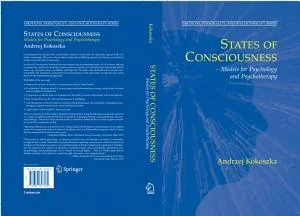
States of Consciousness
 81
81

States of Consciousness
Kokoszka’s "States of Consciousness" presents a systematic approach to a notoriously slippery subject. The strength lies in its clinical framing, offering concrete categories for states ranging from deep sleep to hypnotic trance. This grounded perspective is a welcome counterpoint to more abstract philosophical treatises. However, the book's focus on clinical terms occasionally leaves the more mystical or spiritual dimensions of altered states feeling somewhat underserviced. A particularly insightful section details the physiological markers associated with different phases of sleep, providing a tangible anchor for understanding these fundamental shifts in awareness. While it doesn't shy away from complexity, readers seeking purely experiential accounts might find the clinical terminology dense. Nevertheless, it remains a valuable, if specialized, contribution to the scientific study of awareness.
📝 Description
81
Andrzej Kokoszka's 2007 book examines human awareness, distinguishing normative from altered states.
Published in 2007, Andrzej Kokoszka's "States of Consciousness" offers a structured approach to understanding human awareness. The book moves past simple definitions to categorize consciousness based on clinical observation. Kokoszka differentiates between normal waking awareness and altered states, which he further divides into voluntary forms like meditation and hypnosis, and involuntary ones such as sleep or pathological conditions.
The work builds on earlier neurological concepts, particularly John Hughlings Jackson's ideas on hierarchical organization. It situates itself within a period of renewed scientific interest in consciousness, fueled by advances in cognitive science and neuroimaging. Kokoszka aims to create an observable, structured system for phenomena often considered purely subjective or spiritual. He emphasizes the clinical applicability of his models for classifying these diverse states of awareness.
While grounded in clinical observation, Kokoszka's work interfaces with traditions that explore altered states. Practices like meditation and hypnosis, which he categorizes as voluntary states, have long been central to contemplative and spiritual paths. These traditions often seek to understand or induce non-ordinary awareness for insight or transformation. By providing a scientific framework for these phenomena, the book bridges empirical study with the experiential dimensions found in esoteric practices.
💡 Why Read This Book?
• Gain a clinical framework for understanding altered states, learning to differentiate voluntary states like hypnosis from involuntary ones like sleep, as detailed in its categorization of consciousness. • Understand the foundational neurological concepts that underpin the study of consciousness, referencing the work of pioneers like J.H. Jackson. • Develop a structured approach to observing and analyzing subjective experiences, moving beyond anecdotal accounts to clinically relevant models presented in the text.
⭐ Reader Reviews
Honest opinions from readers who have explored this book.
❓ Frequently Asked Questions
What is the primary focus of Andrzej Kokoszka's 'States of Consciousness'?
The book primarily focuses on defining and clinically categorizing normal and altered states of consciousness, building on neurological foundations.
What historical figures or concepts does the book reference?
It references the pioneering work of neurologist J.H. Jackson, who explored hierarchical organization of the nervous system in relation to consciousness.
What types of altered states are discussed in the book?
The book discusses both voluntary altered states, such as relaxation, meditation, and hypnosis, and involuntary states like sleep and pathological conditions.
Who would benefit most from reading 'States of Consciousness'?
Students of psychology, neuroscience, philosophy, and practitioners of contemplative traditions like meditation and hypnosis would find this book highly beneficial.
When was 'States of Consciousness' first published?
The book was first published on October 25, 2007.
What is the book's approach to studying consciousness?
It employs contemporary models for studying consciousness with a strong emphasis on clinical relevance and observable phenomena.
🔮 Key Themes & Symbolism
Clinical Categorization of Awareness
Kokoszka's central aim is to map the varied field of human consciousness using a clinical lens. This involves distinguishing between baseline 'normal' states and the spectrum of 'altered' states. The text meticulously outlines how these states, whether voluntarily induced through practices like meditation and hypnosis or occurring involuntarily during sleep or in pathological conditions, can be systematically observed and classified. This methodical approach provides a robust framework for researchers and practitioners seeking to understand the objective correlates of subjective experience, moving the study of consciousness towards more empirical grounds.
Neurological Foundations of Consciousness
The work grounds its exploration of consciousness in the established neurological principles, notably referencing the foundational contributions of figures like J.H. Jackson. By connecting states of awareness to the underlying neural structures and their organization, Kokoszka bridges the gap between subjective phenomenology and biological mechanisms. This perspective is crucial for understanding how disruptions or modifications in brain function directly correlate with observable changes in conscious experience, offering a scientific basis for phenomena often relegated to the purely subjective realm.
Models for Studying Subjectivity
Central to Kokoszka's contribution is the development and presentation of contemporary models designed for the study of consciousness. These models are not merely theoretical constructs but are geared towards practical application in clinical and research settings. The book emphasizes the importance of empirical observation and measurable data in understanding states of awareness, whether in healthy individuals engaging in relaxation or in patients experiencing altered mental states. This focus on methodology allows for a more rigorous and reproducible investigation into the nature of the mind.
Bridging Contemplative Practice and Science
While framed clinically, the book implicitly addresses the intersection of scientific inquiry and contemplative practices like meditation and hypnosis. By providing a structured understanding of altered states, Kokoszka offers a scientific validation or at least a framework for interpreting the experiences reported by practitioners. This approach can clarify these states for a broader audience and encourage a more integrated view where subjective spiritual or psychological experiences are considered within a scientifically observable context.
💬 Memorable Quotes
Direct passages from the work, attributed to the author.
“defining normal and altered consciousness in their most relevant clinical terms”
— This phrase expresses the book's core mission: to bring a rigorous, medically-oriented perspective to the complex and often nebulous concept of consciousness.
“expands on the pioneering work of J.H. Jackson”
— Kokoszka positions his contemporary research within a historical lineage, acknowledging the foundational neurological theories that informed his own models of consciousness.
“offering contemporary models for studying consciousness”
— This highlights the book's contribution as providing updated methodologies and frameworks for the scientific investigation of awareness.
“applies to both pathology and normal altered states”
— The book's scope is broad, encompassing both deviations from typical mental functioning and common variations like sleep or meditation.
“relaxation, sleep, meditation, and hypnosis”
— These examples concretely illustrate the range of altered states that the book analyzes through a clinical and scientific lens.
🌙 Esoteric Significance
Tradition
While framed clinically, the work interfaces with esoteric traditions by providing a scientific scaffolding for understanding phenomena traditionally explored through spiritual or mystical paths. It doesn't belong to a single lineage like Hermeticism or Gnosticism but rather offers a neutral, empirical language to discuss states of awareness (like meditation and hypnosis) that are central to many esoteric practices. Its departure lies in its rigorous clinical framing, seeking observable correlates rather than purely subjective or revelatory accounts.
Symbolism
The book itself is less about traditional esoteric symbolism and more about the 'symbols' of neurological and psychological states. For instance, 'sleep' and 'hypnosis' function as symbols for distinct modes of consciousness. The 'clinical terms' themselves act as a new symbolic language, attempting to map the uncharted territories of the mind onto a shared, observable lexicon, thereby creating a new form of symbolic representation for inner experience.
Modern Relevance
Contemporary researchers in neuroscience and psychology studying altered states of consciousness, particularly those investigating meditation, mindfulness, and the effects of psychedelics, find Kokoszka's clinical models highly relevant. His work provides a foundational structure for comparing and contrasting different states, aiding in the design of empirical studies and the interpretation of findings within a consistent theoretical framework.
👥 Who Should Read This Book
• Students of Psychology and Neuroscience: Those beginning their formal study will gain a clear, clinically-oriented introduction to the complex topic of consciousness and its variations. • Practitioners of Meditation and Hypnosis: Individuals engaged in these practices can deepen their theoretical understanding of the states they cultivate, grounding their experience in scientific models. • Clinical Researchers and Therapists: Professionals working with mental states will find valuable frameworks for classifying and understanding altered states in both healthy and pathological contexts.
📜 Historical Context
Andrzej Kokoszka's "States of Consciousness" arrived in 2007, a period marked by renewed scientific interest in the mind, fueled by advances in neuroscience and cognitive psychology. The book directly engages with the ongoing scientific discourse surrounding the definition and study of consciousness, a concept long debated and often difficult to quantify. Kokoszka builds upon the legacy of figures like neurologist John Hughlings Jackson, whose 19th-century work laid crucial groundwork for understanding the hierarchical organization of the brain and its relationship to awareness. In an era where empirical methods were increasingly favored, Kokoszka’s contribution offered structured, clinically relevant models for analyzing phenomena that had previously been explored primarily through philosophy or subjective introspection. This approach sought to bridge the gap between the subjective experience of altered states and objective, observable scientific measurement, positioning itself within the broader cognitive science movement.
📔 Journal Prompts
Reflect on the clinical distinction between voluntary and involuntary altered states as presented by Kokoszka.
Consider the neurological foundations of consciousness referenced, particularly the work of J.H. Jackson.
Analyze the concept of 'normal consciousness' in relation to the varied altered states discussed.
Explore how the clinical models for studying consciousness could be applied to your own meditative experiences.
Examine the implications of defining consciousness through 'clinical terms' versus subjective experience.
🗂️ Glossary
Altered States of Consciousness
Variations in subjective experience and perception that differ significantly from the usual waking state. These can be voluntarily induced (e.g., meditation) or involuntary (e.g., sleep).
Normal Consciousness
The typical state of wakeful awareness characterized by a coherent sense of self, reality, and temporal progression, as generally experienced by most individuals.
Clinical Terms
Language and definitions derived from medical and psychological observation, used to describe and classify phenomena, particularly in relation to health and pathology.
J.H. Jackson
John Hughlings Jackson, a pioneering neurologist known for his theories on the hierarchical organization of the nervous system and its relationship to consciousness.
Meditation
A practice where an individual uses a technique – such as mindfulness or focusing the mind on a particular object, thought, or activity – to train attention and awareness, and achieve a mentally clear and emotionally calm and stable state.
Hypnosis
A state of human consciousness involving focused attention and reduced peripheral awareness, characterized by an enhanced capacity for response to suggestion.
Pathology
The study of the causes and effects of diseases or injuries. In this context, refers to altered states of consciousness resulting from mental or neurological disorders.
This book appears in 1 collection
🔮 Readers Also Liked
Browse all →









From the “Altered States of Consciousness” Collection
View all →









More Free Occult Philosophy Books
View all →