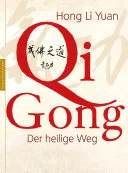
Qi Gong
 75
75

Qi Gong
Hong Li Yuan's "Qi Gong" offers a clear, no-nonsense introduction to a practice often shrouded in mystique. The strength of this work lies in its directness; Grandmaster Hong Li Yuan, with nearly three decades of Western teaching experience, distills complex ideas into actionable steps. His emphasis on the practical application of Qi absorption, particularly the concept of energy flow within meridians as detailed on page 17, is invaluable for beginners. However, the book's brevity leaves one wishing for more detailed exploration of advanced techniques or a deeper dive into the philosophical underpinnings that shape these practices. While accessible, it occasionally feels like a primer rather than a comprehensive treatise. Nevertheless, for those seeking a grounded entry point into Qi Gong, this text provides a solid foundation.
📝 Description
75
Hong Li Yuan's book explains Qi Gong, an ancient Chinese practice for directing vital energy.
This work by Hong Li Yuan details Qi Gong, a traditional Chinese discipline focused on cultivating and guiding the body's vital energy, known as Qi. For centuries, practitioners have developed techniques to draw this energy from the surroundings to boost personal vitality. The central idea is that a clear and unimpeded flow of Qi through the body's energy pathways is crucial for overall health. The methods described are suitable for anyone looking to improve their physical and mental condition, with Grandmaster Hong Li Yuan's teachings designed for straightforward application. This makes Qi Gong an accessible choice for newcomers to energy cultivation or as a supplementary practice for those already engaged in other disciplines. It addresses common health issues that arise from stagnant energy.
The book examines the historical roots of Qi Gong, which extend back millennia in China. This practice developed in parallel with traditional Chinese medicine and martial arts, drawing heavily from Taoist and Buddhist philosophical frameworks. These traditions emphasize living in harmony with the natural world and nurturing one's internal power. Historically, Qi Gong knowledge was transmitted directly from master to student, preserving the authenticity of its methods.
Qi Gong is situated within the broader context of Chinese esoteric traditions, particularly Taoism. It shares with these traditions a focus on the body as a microcosm of the universe and the importance of harmonizing internal energies with external forces. The concept of Qi as a fundamental life force and its circulation through meridians is a core tenet, aligning with other practices aimed at energetic balance and longevity. The emphasis on internal cultivation and the master-disciple relationship further places it within a lineage of spiritual and health practices transmitted through direct instruction.
💡 Why Read This Book?
• Learn specific methods for absorbing environmental Qi, as detailed in the "Qi Absorption" section, enabling you to actively boost your personal energy reserves. • Understand the meridian system and how blockages, as explained by Grandmaster Hong Li Yuan, can lead to fatigue and illness, providing a framework for self-diagnosis. • Gain practical exercises directly from Hong Li Yuan's nearly thirty years of Western teaching, ensuring techniques are adapted for accessible learning and immediate application.
⭐ Reader Reviews
Honest opinions from readers who have explored this book.
❓ Frequently Asked Questions
What is the primary goal of Qi Gong as taught by Hong Li Yuan?
The primary goal is to enhance one's energy potential by absorbing Qi from the environment and ensuring its free flow through the body's meridians, thereby promoting health and vitality.
How long has Qi Gong been practiced?
Qi Gong has been refined over thousands of years in China, with its roots stretching back into ancient history, predating many other energetic practices.
What happens if Qi is blocked in the meridians?
According to the principles of Qi Gong, blocked Qi in the meridians can lead to symptoms like fatigue and weakness, and over the long term, can contribute to the development of various illnesses.
Is Hong Li Yuan's Qi Gong difficult to learn?
No, Grandmaster Hong Li Yuan's approach to Qi Gong is specifically designed to be easily understandable and applicable for everyone, regardless of prior experience.
Where did Hong Li Yuan first begin teaching Qi Gong in the West?
Grandmaster Hong Li Yuan has been teaching Qi Gong and Tai Chi in the West for nearly thirty years, indicating a significant presence and impact on Western practitioners.
What is the relationship between Qi Gong and health?
Qi Gong posits a direct correlation between the unobstructed flow of Qi in the meridians and the state of one's health; a healthy flow means a healthy person.
🔮 Key Themes & Symbolism
Qi and Energy Cultivation
The central theme revolves around Qi, the vital life force inherent in all things. The book elucidates the ancient Chinese practice of Qi Gong as a method for consciously absorbing and cultivating this energy from the surrounding environment. This process is not merely passive but an active engagement designed to increase one's internal energetic potential, leading to greater vitality and resilience. The work details how this cultivated Qi circulates within the body.
Meridians and Health Flow
A fundamental concept explored is the network of meridians within the body, through which Qi is understood to flow. The book emphasizes that a continuous and unobstructed flow is synonymous with good health. Conversely, blockages within these energetic pathways are identified as the root cause of fatigue, lack of strength, and the eventual manifestation of physical ailments. Techniques are presented to clear these obstructions.
Accessibility of Practice
A significant aspect highlighted is the deliberate design of Hong Li Yuan's Qi Gong teachings for broad accessibility. After nearly thirty years of instructing practitioners in the West, Grandmaster Hong Li Yuan has refined his methods to be easily understood and applied by individuals from all backgrounds, irrespective of prior esoteric knowledge or physical conditioning. This makes the profound benefits of Qi Gong available to a wider audience.
Environmental Energy Absorption
The book examines the specific techniques for drawing Qi from the external environment. This is presented not as a mystical concept but as a practical skill that can be learned and honed. By mastering the art of absorbing ambient energy, practitioners can supplement their innate reserves, offering a pathway to sustained well-being and a robust energetic constitution, particularly relevant in modern, often energy-depleted, environments.
💬 Memorable Quotes
Direct passages from the work, attributed to the author.
“The energy in the meridians must flow freely for a person to be healthy.”
— This core statement expresses the book's central thesis: health is directly linked to the unobstructed circulation of Qi through the body's energetic pathways, known as meridians.
“Through Qi Gong, one learns to absorb energy from the environment to increase personal potential.”
— This highlights the active nature of Qi Gong, emphasizing its role in drawing external Qi to enhance one's own vital force and capabilities.
“When energy is blocked, fatigue and weakness can arise.”
— This succinctly explains the negative consequences of energetic stagnation, linking common physical complaints directly to the principles of Qi flow within the body.
“Grandmaster Hong Li Yuan's Qi Gong is easy for anyone to learn.”
— This emphasizes the pedagogical success of Hong Li Yuan's approach, designed for broad accessibility and ease of practice, making profound techniques available to beginners.
“Long-term blockages can lead to illness.”
— This extends the concept of energetic disruption, positing that persistent impediments to Qi flow can manifest as chronic health issues over time.
🌙 Esoteric Significance
Tradition
Qi Gong belongs to the Taoist tradition, a major pillar of Chinese esoteric and philosophical thought. Within this lineage, it is understood as a method for harmonizing the individual with the Tao (the fundamental principle of the universe) by cultivating and balancing vital energy (Qi). It shares common ground with concepts found in Traditional Chinese Medicine (TCM) and Buddhist contemplative practices, but its core focus remains the direct manipulation and enhancement of Qi for personal cultivation and longevity.
Symbolism
While not explicitly detailed with extensive symbolic language in the provided blurb, the core symbols are fundamental: 'Qi' itself represents the invisible, animating force of existence, akin to *prana* in Indian traditions. The 'Meridians' function as symbolic energetic pathways, mapping the energetic topography of the body, analogous to subtle body concepts in other esoteric systems. The act of 'absorption' symbolizes the practitioner's active connection and communion with the universal energetic field.
Modern Relevance
Contemporary wellness movements, integrated healthcare approaches, and various martial arts schools continue to draw from Qi Gong principles. Thinkers and practitioners in fields like somatic psychology, bioenergetics, and even certain branches of quantum consciousness studies find parallels in Qi Gong's emphasis on subtle energy and interconnectedness. Its practical, health-oriented applications make it relevant to anyone seeking non-pharmacological methods for stress reduction, physical vitality, and mental clarity in the modern age.
👥 Who Should Read This Book
• Individuals new to energy work or traditional Chinese practices seeking a clear, practical introduction to Qi cultivation. • Practitioners of Tai Chi or Traditional Chinese Medicine looking to deepen their understanding of Qi and its energetic flow through the meridians. • Those experiencing fatigue, low vitality, or seeking complementary methods for physical and mental well-being through accessible, ancient techniques.
📜 Historical Context
Published in July 2016, Hong Li Yuan's "Qi Gong" emerges in an era where Western interest in traditional Eastern practices, including energy cultivation and mind-body disciplines, has become mainstream. Qi Gong, with its roots stretching back millennia in China, evolved alongside Taoist philosophy, traditional Chinese medicine, and martial arts. Its historical development saw it passed down through monastic and familial lineages before its dissemination to the West, particularly gaining traction from the mid-20th century onwards. While Western academic engagement with such practices was growing, the popular reception often focused on wellness and self-improvement. Hong Li Yuan's own nearly thirty-year teaching career in the West signifies this ongoing integration. This work arrives at a time when practices like yoga and Tai Chi are widely recognized, positioning Qi Gong as a related yet distinct path focused specifically on the cultivation and circulation of Qi, distinct from the more meditative or purely physical aspects sometimes emphasized in other traditions.
📔 Journal Prompts
The free flow of Qi through the meridians as a basis for health.
Methods for absorbing environmental Qi to increase personal energy potential.
The relationship between Qi blockages and symptoms like fatigue and weakness.
Grandmaster Hong Li Yuan's emphasis on the ease of learning his Qi Gong.
Personal energy cultivation through directed practice.
🗂️ Glossary
Qi
The fundamental vital life force or energy that animates all living beings and permeates the universe, according to traditional Chinese philosophy and medicine.
Gong
In Qi Gong, 'Gong' refers to cultivation, skill, or achievement gained through diligent practice and effort over time.
Qi Gong
A traditional Chinese practice combining slow movements, deep breathing, and meditation to cultivate and balance Qi for health, vitality, and spiritual development.
Meridians
Specific pathways or channels within the body through which Qi is believed to flow, forming an intricate network essential for maintaining health and function.
Energy Potential
The capacity of an individual to absorb, store, and utilize vital energy (Qi), which can be enhanced through practices like Qi Gong.
Blockage
An obstruction or stagnation in the flow of Qi within the meridians, believed to be a primary cause of physical and mental discomfort or illness.
Grandmaster
A title of high respect awarded to a master who has attained a superior level of skill, knowledge, and experience in a particular art or discipline, often with decades of practice.