The Little Book of Shadow Work
 79
79

The Little Book of Shadow Work
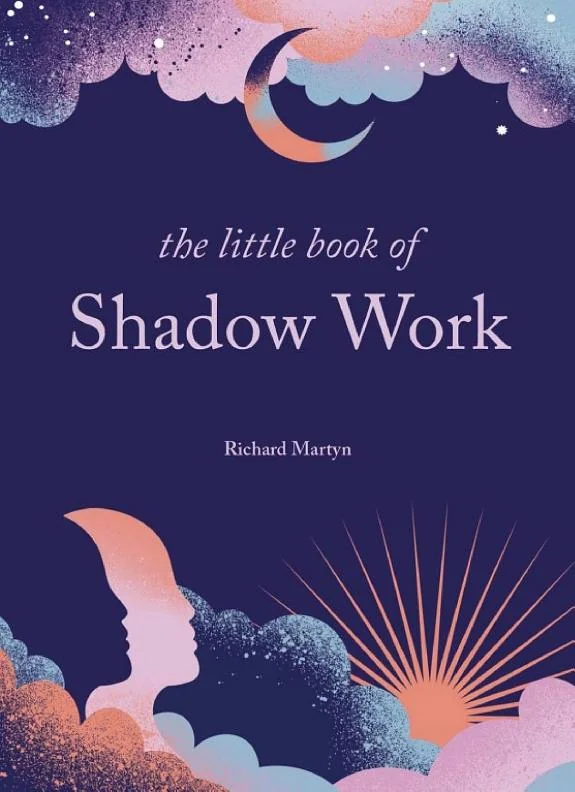
Martyn’s 'The Little Book of Shadow Work' presents a refreshingly direct examination of the Jungian shadow. Rather than cloaking the subject in arcane metaphor, the book offers clear, actionable steps for identifying personal shadow aspects. The strength lies in its grounded approach, particularly the section on recognizing projections, which articulates common pitfalls with stark clarity. A limitation, however, is the brevity; while accessible, some readers might desire a more expansive exploration of the theoretical underpinnings, especially concerning the historical development of shadow work beyond Jung. The discussion on how repressed memories influence present behavior, though brief, serves as a potent reminder of the shadow's pervasive influence. It’s a concise, practical guide for those ready to face their inner darkness.
📝 Description
79
Richard Martyn's 2024 book, 'The Little Book of Shadow Work,' offers practical methods for integrating repressed personality aspects.
Published in 2024, Richard Martyn's 'The Little Book of Shadow Work' presents accessible techniques for acknowledging and working with the 'shadow self.' This concept, drawing from Carl Jung's psychology, identifies the unconscious parts of ourselves that society, shame, or fear lead us to repress. Martyn's guide helps readers recognize these hidden elements, understand how they affect current behavior, and move toward a more unified sense of self.
The book is aimed at individuals pursuing personal development and a clearer grasp of their inner world. It is particularly useful for those who experience seemingly irrational emotional responses, which often point to unresolved inner conflicts. Readers interested in psychology, self-improvement, and spiritual studies, especially those who engage with Jungian ideas or seek greater self-awareness, will find practical advice within its pages.
Martyn's work engages with the concept of the shadow, a term popularized by Carl Jung in the mid-20th century. Jung's shadow represented a departure from earlier psychoanalytic thought, stressing the importance of confronting and integrating the darker, repressed aspects of the psyche for psychological completion. This book situates Jung's ideas within a modern context, making them available for contemporary self-exploration and healing practices.
💡 Why Read This Book?
• Gain concrete methods for identifying how your repressed shadow aspects influence daily decisions and relationships, a concept central to Martyn's 2024 publication. • Learn to recognize projections – seeing your own unacknowledged traits in others – a key technique discussed in the book’s practical exercises. • Understand the necessity of integrating, rather than eradicating, your 'shadow self' for psychological wholeness, a core tenet explored throughout the text.
⭐ Reader Reviews
Honest opinions from readers who have explored this book.
❓ Frequently Asked Questions
What is the 'shadow self' as described in 'The Little Book of Shadow Work'?
The 'shadow self' refers to the unconscious parts of your personality that you repress due to fear or shame, often containing aspects that don't conform to societal norms or your perceived ideal self. Martyn's book explores how these hidden elements shape behavior.
When was 'The Little Book of Shadow Work' first published?
The book was first published on September 5, 2024, making it a contemporary exploration of psychological concepts.
Is shadow work related to Carl Jung's theories?
Yes, the concept of the shadow self is directly rooted in the work of psychologist Carl Jung, who identified it as a crucial aspect of the unconscious psyche that needs integration for personal growth.
What are the benefits of practicing shadow work?
Practicing shadow work, as outlined by Martyn, can lead to increased self-awareness, improved emotional regulation, healthier relationships, and a more integrated sense of self by acknowledging and processing repressed aspects.
How does 'The Little Book of Shadow Work' differ from other self-help books?
Martyn's book distinguishes itself with its direct, practical approach to a complex psychological concept, avoiding overly academic jargon and focusing on actionable steps for readers seeking tangible self-understanding.
Can shadow work help with anxiety or depression?
By bringing unconscious fears, traumas, and repressed emotions into conscious awareness, shadow work can be a valuable component in addressing the roots of anxiety and depression, as the work explores the impact of past experiences.
🔮 Key Themes & Symbolism
The Shadow Self
This theme centers on the unconscious aspects of personality, often perceived as negative or undesirable, which individuals repress. Martyn defines the shadow as containing instincts, desires, and experiences that conflict with one's conscious identity or societal expectations. The book emphasizes that these repressed elements do not disappear but actively influence behavior, leading to projection, self-sabotage, and emotional distress. Understanding the shadow is presented as the first step toward integrating these parts and achieving greater psychological wholeness.
Repression and Its Effects
Martyn details how fear and shame compel individuals to push certain memories, emotions, and traits into the unconscious. This act of repression, while seemingly protective, creates internal divisions. The book illustrates how these suppressed aspects resurface, often indirectly, through disproportionate emotional reactions, interpersonal conflicts, and recurring patterns of behavior. Recognizing the link between repressed experiences and present-day struggles is a core focus, highlighting the pervasive impact of the unconscious.
Integration and Self-Awareness
The ultimate aim of shadow work, as presented in the book, is not to eliminate the shadow but to integrate it. This involves acknowledging, understanding, and accepting the shadow aspects of oneself. Martyn outlines processes for confronting projections and examining the origins of repressed material. Achieving greater self-awareness through this integration is presented as a pathway to more authentic living, improved psychological health, and a more balanced and complete sense of self.
Practical Application
Beyond theoretical exploration, 'The Little Book of Shadow Work' offers practical guidance. Martyn provides exercises and reflection prompts designed to help readers actively engage with their shadow. The emphasis is on tangible self-discovery and behavioral change, moving from abstract understanding to concrete application in daily life. This practical dimension makes the book accessible to those seeking actionable tools for personal transformation and psychological healing.
💬 Memorable Quotes
Direct passages from the work, attributed to the author.
“Our emotional reactions in the present are often influenced by past experiences we have repressed.”
— This statement underscores the core premise that unresolved issues from the past, buried in the unconscious, continue to shape our present-day responses and behaviors, often in ways we don't consciously understand.
“The shadow self includes aspects repressed out of fear and shame.”
— This highlights the emotional drivers behind repression, suggesting that the 'darker' parts of ourselves are often those we deem unacceptable due to societal judgment or personal guilt.
“Repressed memories do not simply go away.”
— This points to the persistence of unconscious material, emphasizing that suppression is not eradication and that these buried aspects will likely manifest in other forms if not addressed.
“Shadow work involves confronting and healing the 'darker side' of your personality.”
— This defines the practice as an active process of facing difficult or hidden parts of the self, with the goal of psychological healing and unification.
“Aspects repressed do not conform to the environment around you.”
— This explains how external societal pressures and expectations contribute to the formation of the shadow, forcing individuals to conceal parts of themselves that don't fit in.
🌙 Esoteric Significance
Tradition
While rooted in Jungian psychology, the practice of shadow work resonates strongly with esoteric traditions that emphasize inner transformation and the integration of opposing forces. It aligns with Hermetic principles of 'As Above, So Below,' suggesting that understanding the inner 'darkness' is key to understanding the outer world. Esoteric alchemy, which seeks to transmute base metals into gold, can be seen metaphorically in shadow work's aim to transform repressed psychic material into conscious wisdom and strength.
Symbolism
The 'shadow' itself functions as a potent symbol representing the hidden, the repressed, and the unknown within the psyche. Other potential symbols within the practice might include mirrors (representing projection and self-reflection), labyrinths (symbolizing the complex journey into the unconscious), or the alchemical concept of the 'nigredo' or blackening phase, signifying dissolution and confrontation with darkness before transformation.
Modern Relevance
Contemporary thinkers and practitioners in fields ranging from transpersonal psychology to modern witchcraft and self-development frequently draw upon the concept of the shadow. Figures like Robert Bly (in 'Iron John') popularized aspects of shadow work for men, and its principles are often integrated into therapeutic modalities like Gestalt therapy and internal family systems (IFS). The book's accessible format makes these profound psychological concepts relevant to a wide audience seeking practical tools for personal growth in the 21st century.
👥 Who Should Read This Book
• Individuals experiencing recurring patterns of self-sabotage or unexplained emotional volatility, seeking to understand the root causes within their psyche. • Students of Jungian psychology or depth psychology interested in practical applications of the 'shadow' concept beyond theoretical texts. • Practitioners of personal development and mindfulness seeking to enhance self-awareness and achieve greater psychological integration.
📜 Historical Context
Richard Martyn's 'The Little Book of Shadow Work' (2024) emerges in an era where psychological self-exploration is increasingly destigmatized and accessible. Its conceptual foundation rests heavily on Carl Jung's pioneering work on the unconscious, particularly his concept of the 'shadow,' first articulated in the 1920s and elaborated throughout his career. Jung introduced the shadow as a crucial component of the psyche that must be integrated for individuation. Martyn's approach can be seen as democratizing Jungian psychology, making its complex ideas digestible for a broad audience. This contrasts with the more academic and often dense presentations of Jung's theories by contemporaries like Erich Neumann or Marie-Louise von Franz. While Jung himself faced skepticism from some quarters of the medical establishment, his ideas found fertile ground in various esoteric and spiritual circles, influencing depth psychology and personal development movements that continue to this day.
📔 Journal Prompts
Reflect on the 'shadow self' as a repository of repressed fears and desires.
Identify a recent projection and trace it back to a repressed aspect.
Consider how societal conditioning contributed to repressing certain traits.
Examine the influence of repressed memories on current emotional reactions.
Explore the potential benefits of integrating a specific shadow aspect.
🗂️ Glossary
Shadow Self
The unconscious aspect of the personality that the conscious ego does not identify in itself. It contains repressed desires, instincts, and experiences deemed unacceptable.
Repression
The psychological process of unconsciously blocking thoughts, feelings, memories, or desires from entering conscious awareness, often due to them being perceived as threatening or unacceptable.
Projection
A defense mechanism where individuals unconsciously attribute their own unacceptable thoughts, feelings, or motives to another person. Recognizing projections is key to shadow work.
Integration
The process of acknowledging, understanding, and accepting repressed or unconscious aspects of the self, bringing them into conscious awareness to achieve greater psychological wholeness.
Conscious Ego
The part of the psyche that is aware of itself and its surroundings; the center of conscious identity and decision-making.
Unconscious
The part of the mind of which one is not aware, containing repressed feelings, desires, memories, and instincts that influence behavior.
Psychological Wholeness
A state of being where all aspects of the psyche, including conscious and unconscious elements like the shadow, are acknowledged and integrated, leading to a more complete and balanced self.
This book appears in 1 collection
🔮 Readers Also Liked
Browse all →









From the “Shadow Work” Collection
View all →





More Free Occult Philosophy Books
View all →