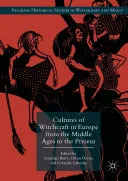
Cultures of Witchcraft in Europe from the Middle Ages to the Present
 84
84

Cultures of Witchcraft in Europe from the Middle Ages to the Present
The collaborative effort honoring Willem de Blécourt presents a dense but rewarding exploration of European witchcraft. Its strength lies in the breadth of disciplinary approaches, offering perspectives from history, anthropology, and literary studies. The opening chapter by de Blécourt himself, establishing a methodological agenda, is particularly illuminating, setting a high bar for the subsequent contributions. However, the collection's academic rigor, while a virtue, can also be a barrier for the uninitiated, demanding a familiarity with existing scholarship. The discussion surrounding the legal codification of witchcraft in the late medieval period, particularly the shift from local custom to more centralized, inquisitorial processes, stands out as a well-articulated section. Overall, 'Cultures of Witchcraft' serves as a valuable academic resource for understanding the evolution of its subject matter.
📝 Description
84
This 2017 collection centers on Willem de Blécourt's influential framework for studying European witchcraft.
Cultures of Witchcraft in Europe from the Middle Ages to the Present is a scholarly compilation honoring the work of Willem de Blécourt. The book begins with de Blécourt himself, who lays out a method for analyzing witchcraft cultures across Europe from medieval times onward. The following essays, written by historians, anthropologists, literary scholars, and folklorists deeply familiar with de Blécourt’s research, build on these initial ideas.
This volume is for academics and serious students of history, anthropology, folklore, and religious studies, especially those interested in the history of magic, belief systems, and European cultural practices. Readers who value careful academic discussion and interdisciplinary methods for grasping complex historical topics will find it rewarding. Those acquainted with or curious about Willem de Blécourt's methodological contributions will particularly appreciate this work.
The collection engages with the academic re-evaluation of witchcraft studies, which has been ongoing since the mid-20th century. Moving past older demonological viewpoints, scholars like de Blécourt have concentrated on the social, cultural, and local aspects of witchcraft beliefs and practices. This volume connects with scholarship from the late 20th and early 21st centuries, extending the work of figures such as Keith Thomas and Carlo Ginzburg to foster a more detailed understanding of European witchcraft across various historical eras and regions.
This collection situates the study of witchcraft within a broader academic tradition that shifted focus from demonology to social and cultural history in the latter half of the 20th century. It follows scholars like Willem de Blécourt, Keith Thomas, and Carlo Ginzburg who examined witchcraft not as a monolithic evil, but as a complex set of beliefs, practices, and social dynamics tied to specific historical and local contexts. The volume contributes to an ongoing scholarly conversation about how to understand magic and belief systems in Europe through interdisciplinary analysis.
💡 Why Read This Book?
• Gain specific insights into the evolution of European witchcraft studies from the Middle Ages to the present, understanding the methodological shift championed by Willem de Blécourt in the early 21st century. • Explore the interdisciplinary approaches employed by historians, anthropologists, and literary scholars, as demonstrated in essays examining local beliefs and practices across various European regions. • Understand the concept of 'witchcraft cultures' as defined by de Blécourt, moving beyond simplistic accusations to analyze the complex social, legal, and belief systems involved.
⭐ Reader Reviews
Honest opinions from readers who have explored this book.
❓ Frequently Asked Questions
What is the primary focus of 'Cultures of Witchcraft in Europe'?
The book focuses on the study of witchcraft cultures in Europe from the Middle Ages to the present, exploring the methodological and conceptual frameworks for this research, primarily through the work of Willem de Blécourt.
Who is Willem de Blécourt and why is this book dedicated to him?
Willem de Blécourt is a significant scholar in witchcraft studies. The volume is dedicated to him in recognition of his contributions and methodological agenda, which sets the direction for many of the essays within the book.
What academic disciplines are represented in this collection?
The collection features contributions from historians, anthropologists, literary scholars, and folklorists, reflecting an interdisciplinary approach to the study of witchcraft.
Does the book cover specific historical periods or regions in detail?
Yes, it covers Europe from the Middle Ages to the present, with essays that likely delve into specific periods and regional variations of witchcraft beliefs and practices.
Is this book suitable for beginners interested in witchcraft?
This book is primarily aimed at academics and advanced students due to its scholarly nature and focus on methodological debates within witchcraft studies, rather than introductory narratives.
What is the significance of the term 'cultures of witchcraft' as used in the book?
The term 'cultures of witchcraft' broadly defines the subject, encompassing beliefs, practices, social dynamics, and legal contexts related to witchcraft, as conceptualized by Willem de Blécourt.
🔮 Key Themes & Symbolism
Methodological Frameworks
The volume's core is Willem de Blécourt's proposed methodology for studying witchcraft cultures. This involves moving beyond simple demonology to analyze the social, cultural, and local contexts in which beliefs about witchcraft operated from the Middle Ages onward. The essays explore how to define and investigate 'witchcraft cultures' through interdisciplinary lenses, integrating historical records, anthropological perspectives, and literary analysis to build a more nuanced understanding of European practices.
Evolution of European Witchcraft
This collection traces the historical trajectory of witchcraft beliefs and practices across Europe, from medieval understandings to more modern manifestations. It examines how these 'cultures' shifted in response to legal changes, social structures, and intellectual currents over centuries. The book provides a comparative perspective, highlighting regional differences and shared characteristics in the European experience with witchcraft accusations and beliefs.
Interdisciplinary Approaches
Highlighting the collaborative spirit honoring Willem de Blécourt, the book showcases a fusion of academic disciplines. Historians, anthropologists, literary scholars, and folklorists contribute their unique insights, demonstrating how a combined approach can illuminate the many-sided nature of witchcraft. This synthesis allows for a richer exploration of folklore, legal histories, and cultural expressions associated with witchcraft phenomena.
Defining Witchcraft Cultures
A central theme is the conceptualization of 'witchcraft cultures.' This involves understanding witchcraft not just as a crime or heresy, but as a complex cultural system. The book explores the beliefs, rituals, social roles, and the very perception of witches and magic within different European societies from the medieval period onwards, emphasizing the local and varied nature of these phenomena.
💬 Memorable Quotes
Direct passages from the work, attributed to the author.
“Witchcraft studies has evolved from demonological interpretations to socio-cultural analyses.”
— This highlights a key shift in academic research, moving from earlier focus on the Devil and heresy to examining the social dynamics, local beliefs, and cultural contexts of witchcraft in Europe since the Middle Ages.
“Interdisciplinary collaboration is crucial for understanding European witchcraft.”
— This statement emphasizes the value of bringing together historians, anthropologists, folklorists, and literary scholars to provide a comprehensive view of witchcraft phenomena, acknowledging that no single discipline can fully capture its complexity.
“The medieval period laid the groundwork for later European witchcraft prosecution.”
— This interpretation points to the importance of the medieval era in establishing legal and theological frameworks that would influence and shape the understanding and persecution of witchcraft in subsequent centuries across Europe.
“Local beliefs and practices formed distinct witchcraft cultures.”
— This concept underscores the idea that witchcraft was not a monolithic phenomenon but varied significantly across different regions and communities in Europe, each developing its own unique set of beliefs and social dynamics.
💡 Key Ideas
Editorial paraphrase of the work's core concepts — not direct quotes.
The study of witchcraft requires a broad definition of 'witchcraft cultures'.
This paraphrased concept suggests that understanding witchcraft necessitates looking beyond accusations to encompass the entire social and belief system surrounding it, including practices, perceptions, and legal frameworks across different European societies.
🌙 Esoteric Significance
Tradition
While not strictly belonging to a single esoteric lineage like Hermeticism or Kabbalism, this work intersects with the study of historical belief systems that often underpin esoteric traditions. It examines the cultural and social contexts from which magical beliefs and practices, including those later adopted or adapted by esoteric practitioners, emerged and evolved in Europe.
Symbolism
The book likely explores motifs associated with folk magic and popular conceptions of witchcraft, such as the sabbat, pacts with the devil, familiars, and curses. These elements, while viewed historically and anthropologically, often carry symbolic weight that speaks to archetypal themes found in various esoteric systems, representing transgression, hidden knowledge, or pacts with otherworldly forces.
Modern Relevance
Contemporary practitioners of Neo-Paganism, Wicca, and various forms of modern witchcraft draw heavily on historical understandings of witchcraft. This volume provides crucial academic context for understanding the roots of these practices, offering scholarly perspectives on the historical evolution of beliefs and rituals that inform modern traditions, enabling a more informed engagement with historical sources.
👥 Who Should Read This Book
• Academic researchers in history, anthropology, and religious studies seeking rigorous scholarship on European witchcraft, particularly those interested in the methodological contributions of Willem de Blécourt. • Students of folklore and cultural studies needing to understand the historical development and social context of magical beliefs and practices across different European societies. • Practicing Wiccans or Neopagans interested in the historical roots and academic discourse surrounding witchcraft, providing a scholarly counterpoint to more popular histories.
📜 Historical Context
Published in 2017, 'Cultures of Witchcraft in Europe' emerged within a vibrant academic field that had been significantly reshaped by scholars like Keith Thomas and Carlo Ginzburg, who moved witchcraft studies away from purely theological debates towards social and anthropological analyses. The volume builds upon this foundation, particularly influenced by the work of Willem de Blécourt, who championed specific methodological approaches in the late 20th and early 21st centuries. The collection engages with a broad European scope, spanning from the Middle Ages (when early legal and theological frameworks were developing) to the present day. It implicitly contrasts with earlier, more sensationalist or purely demonological accounts of witchcraft, advocating for a nuanced understanding of local beliefs and social dynamics. The collaboration of historians, anthropologists, and literary scholars reflects a contemporary trend in humanities research towards interdisciplinary synthesis.
📔 Journal Prompts
Willem de Blécourt's methodological agenda for studying witchcraft cultures.
The evolution of European witchcraft from the Middle Ages to the present.
Comparing regional variations in 'witchcraft cultures' discussed in the essays.
The interdisciplinary fusion of historical, anthropological, and literary approaches.
Analyzing the social and legal contexts of medieval witchcraft beliefs.
🗂️ Glossary
Witchcraft Cultures
A conceptual framework, championed by Willem de Blécourt, for studying witchcraft that moves beyond accusations to encompass the broader social, cultural, belief systems, and practices associated with witchcraft in specific historical and geographical contexts.
Demonological Interpretation
An approach to understanding witchcraft that emphasizes its connection to the Devil, heresy, and supernatural evil, often prevalent in earlier historical and theological writings on the subject.
Anthropological Approach
A method of study that examines witchcraft through the lens of cultural beliefs, social structures, rituals, and the lived experiences of individuals within a community, focusing on the human and societal dimensions.
Medieval Period
The historical era in Europe generally spanning from the 5th to the 15th century, during which early legal and theological frameworks concerning magic and witchcraft began to take shape.
Legal Codification
The process by which laws and legal principles related to witchcraft were formally written down and established within European legal systems, evolving over centuries.
Inquisitorial Process
A judicial procedure, particularly associated with the medieval and early modern Church, characterized by the court actively investigating alleged offenses, often involving torture, contrasting with more adversarial systems.
Folklore Studies
The academic study of the traditions, customs, beliefs, and stories of a community or nation, often including oral traditions, rituals, and folk magic, relevant to understanding witchcraft beliefs.