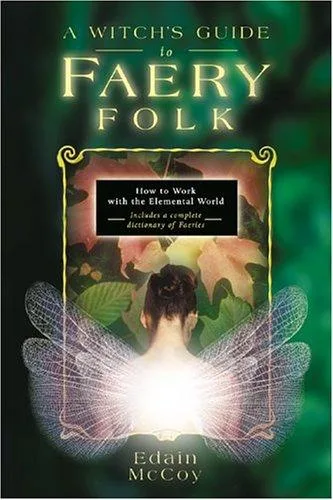
A witch's guide to faery folk
 71
71

A witch's guide to faery folk
Edain McCoy's 2002 volume, *A Witch's Guide to Faery Folk*, attempts to bridge the gap between folkloric accounts of faeries and practical magical engagement. McCoy’s strength lies in her structured approach, presenting a taxonomy of fae beings and outlining protocols for interaction that emphasize respect and clear boundaries. This is particularly useful in the chapter discussing the 'Faerie Pact,' where the author candidly addresses the potential seriousness and long-term implications of such agreements, moving beyond whimsical notions. However, the book occasionally leans into a somewhat prescriptive tone, presenting its classifications and methods as definitive. While practical, this can sometimes feel limiting for those whose personal experiences with faery phenomena don't neatly fit McCoy's established categories. Despite this, the work remains a valuable resource for practitioners seeking a grounded, ethical framework for approaching the Otherworld.
📝 Description
71
Edain McCoy's 2002 book offers a practical framework for understanding and interacting with faery folk.
This work moves beyond simplistic folklore to present a structured approach for practitioners interested in establishing a relationship with faery beings. It details various faery entities, their perceived domains, and the ethical considerations for working with them. McCoy aims to demystify the fae, presenting them as distinct energetic forces with their own agendas and laws.
The guide is for solitary practitioners, coven members, and researchers of Western esoteric traditions who seek engagement with faery energies in a ritualistic or devotional manner. It provides guidance on safety, respect, and effective communication with these beings. While individuals with a background in witchcraft or nature-based spirituality will find the concepts accessible, newcomers will benefit from its clear approach to establishing boundaries and respectful interaction.
Published in 2002, this book emerged during a period of renewed interest in animistic and nature-based spiritualities within Pagan and Wiccan movements. It contributed to a diversification of witchcraft practices by exploring European folklore for contemporary magical work. McCoy's approach offered a systematic, practitioner-focused view of faery beings, differentiating it from more purely folkloric or romanticized interpretations. It aligns with a lineage of authors who have documented or worked with the fae, such as Robert Kirk's 17th-century writings.
💡 Why Read This Book?
• Learn a structured methodology for identifying and categorizing faery entities based on elemental associations, as detailed in the book's fae taxonomy, which offers a practical framework absent in general folklore. • Understand the ethical considerations and practical steps for establishing respectful communication with faery beings, including methods for creating sacred space and offering appropriate gifts, as outlined by McCoy. • Gain insight into the concept of a 'Faerie Pact,' exploring its potential implications and responsibilities, a nuanced discussion that moves beyond superficial portrayals of fae relationships found elsewhere.
⭐ Reader Reviews
Honest opinions from readers who have explored this book.
❓ Frequently Asked Questions
What is the primary goal of Edain McCoy's *A Witch's Guide to Faery Folk*?
The book's primary goal is to provide practitioners with a practical, structured, and ethical framework for understanding and interacting with faery beings, moving beyond folklore to offer actionable guidance for magical engagement.
When was *A Witch's Guide to Faery Folk* first published?
Edain McCoy's *A Witch's Guide to Faery Folk* was first published in 2002, positioning it within a contemporary surge of interest in practical applications of esoteric and nature-based traditions.
Does the book discuss different types of faery beings?
Yes, the book systematically categorizes various faery beings, often associating them with elemental domains like earth, water, air, and fire, and outlines their perceived characteristics and roles.
What are the ethical considerations mentioned regarding faery interaction?
The guide stresses the importance of respect, clear intent, and reciprocity. It advises practitioners on how to approach fae beings ethically to foster positive relationships and avoid potential misunderstandings or negative consequences.
Can this book help someone make a pact with faeries?
Yes, the book dedicates discussion to the concept of a 'Faerie Pact,' detailing the potential responsibilities, implications, and ethical considerations involved in forming a more formal relationship with faery entities.
Is this book suitable for beginners in witchcraft?
While it assumes some familiarity with magical concepts, the book's clear structure and practical advice make it accessible to beginners interested in faery lore and practice, particularly those with an interest in nature-based spirituality.
🔮 Key Themes & Symbolism
Faery Taxonomy and Domains
McCoy presents a structured system for categorizing faery beings, moving beyond generic folklore. This taxonomy often aligns fae with elemental forces—earth, air, fire, and water—and specific geographical or energetic domains. The book details how these classifications inform an understanding of faery nature, behavior, and appropriate interaction methods. By providing distinct roles and associations, such as the 'Seelie' and 'Unseelie' courts or specific elemental courts, McCoy equips practitioners with a framework to recognize and approach different faery types with informed intent and respect, crucial for building relationships.
Ethical Interaction and Reciprocity
Central to the guide is a strong emphasis on ethical conduct when dealing with the fae. McCoy outlines principles of respect, clear communication, and reciprocity, asserting that these non-human intelligences operate under their own laws and customs. The book details practical advice on offering suitable gifts, maintaining boundaries, and understanding the consequences of one's actions. This focus on ethical engagement is presented as essential for fostering positive relationships and avoiding potential pitfalls or misunderstandings, treating the fae as sovereign beings rather than mere spirits.
The Faerie Pact
The concept of a 'Faerie Pact' is explored in depth, addressing the serious nature of forming binding agreements with faery entities. McCoy discusses the potential benefits and significant responsibilities that come with such pacts, differentiating them from casual interactions. This section provides a grounded perspective on the transformative potential and inherent risks involved, urging practitioners to approach such commitments with full awareness and consideration. It highlights the long-term implications and the need for careful negotiation and understanding of mutual obligations.
Establishing Sacred Space
The creation of appropriate sacred space is presented as a foundational practice for any interaction with the fae. McCoy details methods for consecrating an area, making it conducive to faery visitation while also establishing protective boundaries for the practitioner. This involves considerations of timing, natural elements, and the energy of the location. By preparing the space, practitioners can signal their intent and respect, creating a more harmonious environment for communication and communion with the faery realms, aligning the human and non-human worlds.
💬 Memorable Quotes
Direct passages from the work, attributed to the author.
“The Fae are not merely spirits of nature; they are distinct peoples with their own societies and laws.”
— This statement reframes the common perception of faeries as elemental forces or nature spirits, positioning them as sovereign beings with complex social structures and their own unique ethical codes, requiring a more respectful and nuanced approach.
“Respect and clear intent are paramount when approaching the fae.”
— This emphasizes that successful and safe interaction with faery beings hinges on the practitioner's attitude. Genuine respect for their autonomy and clear, honest intentions are presented as the primary tools for communication and relationship building.
“A Faerie Pact is a serious undertaking with long-term consequences.”
— This highlights the gravity of formal agreements with faery entities, cautioning against casual or ill-considered pacts. It suggests that such bonds carry significant responsibilities and can profoundly impact one's life, demanding careful consideration.
“Categorizing faery beings helps in understanding their nature and how to approach them.”
— The work proposes that a structured classification system, often based on elemental associations, aids practitioners in discerning the characteristics and likely behaviors of different faery types, thereby facilitating more effective and appropriate interaction.
“Reciprocity is key: what you receive from the fae, you should be prepared to give in return.”
— This principle underscores the importance of balance in relationships with the fae. It suggests that exchanges should be equitable, and practitioners must be willing to offer something of value—be it offerings, respect, or service—in return for any benefits or interactions received.
🌙 Esoteric Significance
Tradition
This work fits within the broad spectrum of contemporary Western Esotericism, particularly its animistic and nature-based branches, often associated with Neo-Paganism and modern witchcraft. It departs from strictly Hermetic or Kabbalistic traditions by focusing on a different class of non-human intelligences, drawing inspiration more directly from indigenous European folklore and perceived elemental consciousness. McCoy's approach emphasizes a direct, experiential relationship with the fae, aligning with a more immanent, immanent divinity found in nature, rather than a transcendent, hierarchical divine structure.
Symbolism
Key symbols include elemental associations (earth, air, fire, water) which represent not just physical forces but distinct faery courts and their characteristics. The concept of the 'Faerie Pact' symbolizes a binding agreement, representing a formalized relationship and commitment between human and fae, akin to covenants in other traditions. Offerings, often natural items like milk, honey, or crafted goods, symbolize reciprocity and respect, acting as tangible bridges of communication and acknowledgment of the fae's sovereignty and needs.
Modern Relevance
McCoy's work continues to influence contemporary practitioners and authors interested in faery craft, spirit work, and animism. Modern witchcraft communities and solitary practitioners often reference her structured approach to faery interaction, particularly her emphasis on ethics and clear boundaries. Thinkers and practitioners exploring animistic paradigms, ecological spirituality, and the idea of non-human personhood find resonance in her work, which predates and informs some current discussions on interspecies communication and relational spirituality.
👥 Who Should Read This Book
• Aspiring practitioners of faery-focused witchcraft seeking a structured guide to ethical interaction and understanding faery beings. • Students of comparative folklore and mythology interested in how ancient tales are applied in contemporary magical practice and spiritual traditions. • Experienced witches and occultists looking to expand their practice into animistic or nature-based work, particularly concerning the fae realms and their inhabitants.
📜 Historical Context
Published in 2002, *A Witch's Guide to Faery Folk* emerged during a period of significant growth and diversification within contemporary Paganism and witchcraft. The early 2000s saw practitioners increasingly exploring pre-Christian European folklore and animistic traditions, seeking to integrate them into modern magical practice. Edain McCoy's work contributed to this trend by offering a structured, practitioner-focused approach to the fae, distinguishing itself from earlier, more folkloric or romanticized accounts. While figures like Robert Kirk in the 17th century attempted to document the 'Secret Commonwealth,' McCoy's 2002 guide provided a contemporary framework for ethical engagement. This era also witnessed a broader scholarly and popular interest in comparative mythology and folklore, influenced by figures like Mircea Eliade, which indirectly fueled the exploration of such topics within esoteric circles. The book entered a field where authors like Doreen Valiente had already explored witchcraft's roots, but McCoy focused specifically on the practicalities of faery interaction, filling a niche for those seeking direct, ethical engagement.
📔 Journal Prompts
Faery classification: How might the elemental domains described in the book relate to your local environment?
Ethical engagement: Reflect on the principles of respect and reciprocity when interacting with unseen forces.
The Faerie Pact: Consider what commitment means when engaging with non-human intelligences.
Sacred space: Design a personal space for faery communion, noting its symbolic elements.
Signs of presence: Document any subtle signs or synchronicities that might indicate faery awareness.
🗂️ Glossary
Faerie Pact
A formal agreement or covenant between a human practitioner and faery beings, involving mutual responsibilities, promises, and potential long-term consequences for both parties.
Elemental Domains
The classification of faery beings based on their association with primary natural forces such as earth, air, fire, and water, influencing their characteristics and habitats.
Reciprocity
The principle of mutual exchange and balance in interactions, emphasizing that what is received from faery beings should be met with appropriate offerings or respectful actions from the practitioner.
Seelie Court
Refers to the traditional grouping of faery beings often associated with light, order, and benevolent or neutral interactions, though still requiring respect and caution.
Unseelie Court
Traditionally represents faery beings associated with darkness, chaos, and potentially more mischievous or dangerous interactions, demanding heightened awareness and careful approach.
Sacred Space
A consecrated or prepared area, often outdoors or ritually cleansed indoors, designated for spiritual work, communication with deities or spirits, and creating a focused energetic environment.
Intent
The focused will and purpose behind a magical action or interaction; in faery work, clear, honest intent is considered crucial for respectful and effective communication.
🔮 Readers Also Liked
Browse all →







More by Edain McCoy
All books →



More Free Witchcraft & Paganism Books
View all →