Crystal Ball Reading for Beginners
 71
71

Crystal Ball Reading for Beginners
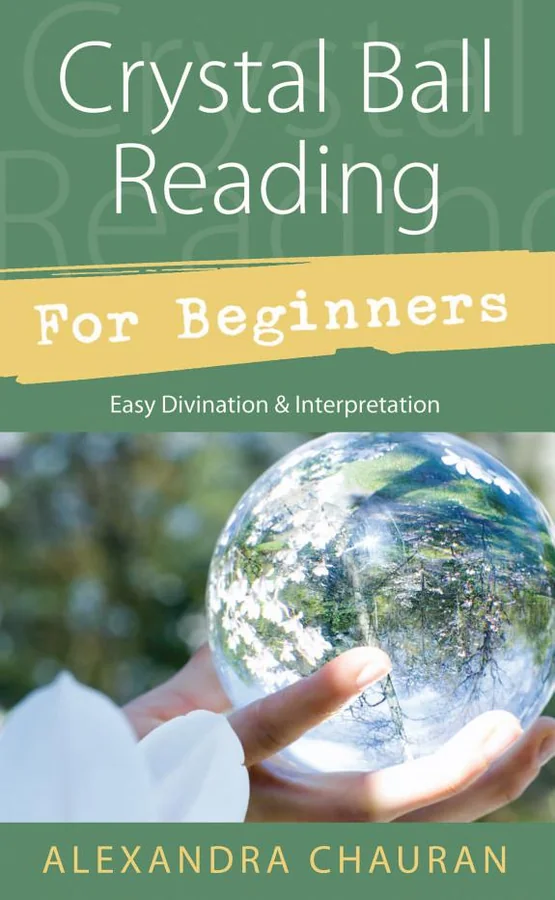
Alexandra Chauran’s Crystal Ball Reading for Beginners bypasses the usual esoteric fluff, delivering a remarkably grounded introduction to scrying. The strength lies in its no-nonsense approach, guiding the reader from selecting a ball to interpreting initial visions with clear, actionable steps. It avoids the pitfalls of many beginner texts by focusing on practical execution rather than abstract theory. A particularly valuable section details how to clear your mind and prepare the space, a crucial but often overlooked element. However, the book’s directness might leave some yearning for deeper historical or philosophical context. While it mentions the practice’s long history, it doesn't deeply explore the various traditions or the theoretical underpinnings that have shaped scrying over millennia. Despite this, for anyone wanting to start scrying without extensive preamble, Chauran offers a clear and efficient path. It’s a functional primer, prioritizing doing over knowing.
📝 Description
71
Alexandra Chauran's 2011 guide offers a direct entry into crystal ball reading.
Crystal Ball Reading for Beginners is a practical manual for individuals new to scrying. Author Alexandra Chauran, drawing on her family's background in divination, aims to simplify the process of using a crystal ball for personal insight. The book covers essential steps, including how to choose and prepare a scrying tool. It emphasizes immediate practice over lengthy theory, making it accessible for immediate engagement.
This book is written for those drawn to scrying who need a clear starting point. It serves as an actionable guide for beginners seeking to receive visions or symbolic messages through a crystal sphere. Chauran's approach is direct, catering to the earnest student eager to learn the mechanics of this practice.
Scrying, or crystal ball reading, has a long history across cultures, from ancient Greece's katoptromancy to its use in medieval Europe and later occult traditions. This book connects to that lineage, offering a contemporary presentation of techniques that echo historical methods. Chauran positions the practice within this tradition of seeking visual prophecy.
💡 Why Read This Book?
• Learn to select your first crystal ball, understanding the subtle differences in materials and sizes as detailed in Alexandra Chauran’s guidance, a step crucial for establishing a connection. • Gain practical, step-by-step instructions for preparing yourself and your scrying sphere, directly from the methods presented in the book, ensuring a focused session. • Develop the ability to interpret the visual symbols that appear, moving beyond simple prediction to understanding the symbolic language of the subconscious as taught by the author.
⭐ Reader Reviews
Honest opinions from readers who have explored this book.
❓ Frequently Asked Questions
What is the best type of crystal to use for a beginner's scrying ball?
Alexandra Chauran suggests that for beginners, a clear quartz sphere is often recommended due to its clarity and energetic properties. However, the book emphasizes that personal connection and intuition play a larger role than the specific material.
How do I prepare my crystal ball before a reading?
The book provides guidance on cleansing your crystal ball, often through methods like smudging with sage or rinsing with water, to remove residual energies before focusing your intent for divination.
What if I can't see anything in my crystal ball?
Crystal Ball Reading for Beginners addresses this common issue, suggesting that initial sessions might involve seeing mists or colors before distinct images form. Patience and regular practice are key, as the book explains.
How long does it typically take to learn crystal ball reading?
While Alexandra Chauran aims for immediate use, developing proficiency takes time. The book indicates that consistent practice, as outlined in its chapters, is more important than a fixed learning period.
Can I use a regular glass ball instead of a crystal?
The book explores the use of various reflective surfaces, including glass, for scrying. While crystal is traditional, the core principles of focus and interpretation apply, making a glass ball a potential starting point.
What is the difference between scrying and fortune-telling?
Scrying, as presented in this book, is a method of divination using a reflective surface to access inner vision or subconscious information, which can then be interpreted for guidance or 'fortune-telling'.
🔮 Key Themes & Symbolism
The Practice of Scrying
This book centers on the practical execution of scrying, specifically using a crystal ball. It explains the process, presenting it as an accessible skill rather than an innate talent. Readers are taught to view the crystal ball as a tool for focusing the mind and accessing subconscious or intuitive insights. The emphasis is on developing the ability to observe and interpret the visual phenomena that arise within the sphere, moving from initial mists and colors to more coherent symbolic imagery, as outlined by Chauran.
Choosing Your Scrying Tool
A significant aspect covered is the selection of an appropriate crystal ball. The author guides beginners on what to look for, considering factors like material, size, and clarity. The book suggests that while traditional materials like quartz are often favored, the energetic connection between the user and the scrying device is paramount. This section helps the novice make an informed choice, ensuring the chosen tool supports rather than hinders their nascent scrying practice.
Interpreting Symbolic Visions
Beyond simply looking into the ball, the book provides foundational techniques for interpreting the visions that may appear. It frames these images as symbolic language from the subconscious or higher self, offering guidance and insight. Readers learn to approach these symbols with an open mind, documenting their impressions and seeking patterns. The goal is to translate the visual information gained through scrying into actionable understanding for personal growth and decision-making.
Meditation and Focus
Crystal ball reading is presented as a meditative practice. The book emphasizes the importance of mental preparation, relaxation, and focused attention to achieve a receptive state. By learning to quiet the conscious mind and enter a state of deep concentration, practitioners can enhance their ability to perceive subtle visual cues within the crystal. This meditative aspect is crucial for establishing the clear channel required for effective scrying.
💬 Memorable Quotes
Direct passages from the work, attributed to the author.
“The crystal ball is a mirror for your inner sight.”
— This interpretation suggests the sphere acts as a focal point, reflecting not external events, but the intuitive and subconscious perceptions of the user. It's a tool for self-discovery and accessing inner knowledge.
“Don't expect lightning bolts; start with clouds.”
— This highlights the gradual nature of developing scrying abilities. It encourages beginners to be patient and recognize that initial visions may be subtle, like mists or indistinct shapes, before clearer images emerge.
“Choose a ball that feels right in your hands and your spirit.”
— This emphasizes the importance of personal connection and intuition when selecting a scrying tool, rather than relying solely on material specifications or traditional recommendations.
💡 Key Ideas
Editorial paraphrase of the work's core concepts — not direct quotes.
Cleansing the ball clears the channel for your vision.
This paraphrased concept stresses the necessity of energetic hygiene for the scrying tool. It posits that removing prior energies creates a pure medium for the user's own psychic impressions and insights to manifest.
Your intention sets the stage for the reading.
This paraphrased concept underscores the role of the practitioner's focused purpose in guiding the scrying process. A clear intention helps direct the psychic energy and influences the type of insights received.
🌙 Esoteric Significance
Tradition
This work fits within the broader Western esoteric tradition, particularly drawing from practices related to divination and psychic development that have persisted through various occult revivals. While not strictly Hermetic, Gnostic, or Kabbalistic, it carries the age-old human quest for divine or subconscious knowledge through visionary means, a thread common across these lineages. It offers a practical, non-denominational approach to accessing inner perception, similar to how meditative practices in various traditions aim to cultivate heightened awareness.
Symbolism
The primary symbol is, of course, the crystal ball itself. In esoteric contexts, spheres often represent wholeness, the cosmos, or a portal to other realms. The clear or semi-clear nature of the medium symbolizes clarity of vision or the potential for revelation. Within the book, the emerging images – often described as mists, clouds, or symbolic figures – represent the subconscious mind and intuitive guidance manifesting visually.
Modern Relevance
Contemporary practices in mindfulness, meditation, and intuitive development often overlap with the principles of scrying. Thinkers and practitioners focused on accessing subconscious wisdom, developing psychic intuition, or engaging in self-discovery through symbolic interpretation find resonance with Chauran’s approach. The book’s accessible format makes it relevant for modern spiritual seekers who may not identify with specific historical esoteric orders but are interested in practical tools for personal insight.
👥 Who Should Read This Book
• Aspiring diviners seeking a straightforward, practical introduction to scrying without complex theoretical frameworks. • Individuals curious about enhancing their intuition and exploring subconscious symbolism through a visual medium. • Practitioners of meditation or mindfulness looking for a structured method to deepen their focus and inner awareness.
📜 Historical Context
Crystal ball reading, or scrying, has a deep and varied history, predating many formalized esoteric systems. Its practice can be traced back to ancient civilizations, including its documented use in Greece as *katoptromancy*. By the Renaissance, figures like John Dee were famously engaging in scrying, often with angelic communications as their goal, integrating it into a broader Hermetic framework. The 19th and early 20th centuries saw a resurgence of interest in divination practices during the occult revival, with organizations like the Theosophical Society exploring various methods of psychic development. While Dee worked within a complex system involving Enochian magic, Chauran’s 2025 work positions itself as a modern, accessible entry point, diverging from the more elaborate ceremonial magic often associated with historical scrying practitioners. The book’s direct, beginner-focused approach contrasts with the more theoretical and ritualistic texts that proliferated during movements like Spiritualism.
📔 Journal Prompts
The initial clarity or mist observed in your crystal ball.
Symbols that appeared during your first scrying session.
Your intention for using the crystal ball.
The feeling of the crystal ball in your hands.
Interpreting the symbolic language of your visions.
🗂️ Glossary
Scrying
The practice of looking into a reflective surface, such as a crystal ball or water, to gain visions, insights, or information.
Divination
The practice of seeking knowledge of the future or the unknown by supernatural means.
Katoptromancy
An ancient form of divination using mirrors or reflective surfaces, a historical precursor to crystal ball reading.
Inner Sight
The ability to perceive intuitive or psychic impressions, often visualized as images or symbols, distinct from ordinary physical sight.
Symbolic Language
The use of images, metaphors, or allegories to convey deeper meanings, particularly from the subconscious mind during practices like scrying.
Psychic Hygiene
Practices aimed at clearing and maintaining the energetic purity of oneself and one's tools used for psychic or divinatory work.
Focusing
The act of concentrating one's attention and intention, essential for preparing the mind and the scrying tool for a reading.
This book appears in 1 collection
🔮 Readers Also Liked
Browse all →








From the “Crystal Ball Gazing” Collection
View all →





More Free Occult Philosophy Books
View all →