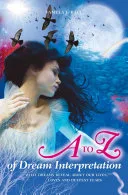
The A to Z of Dream Interpretation
 83
83

The A to Z of Dream Interpretation
Pamela Ball’s "The A to Z of Dream Interpretation" is an ambitious attempt to codify dream symbolism with an unusual tripartite interpretive structure. The inclusion of spiritual, psychological, and everyday meanings for each symbol is a significant strength, offering a richer understanding than many single-focus guides. For instance, the entry on 'Falling' moving from a spiritual message of letting go, to a psychological fear of failure, and an everyday sensation of physical imbalance, demonstrates this methodology effectively. However, the book sometimes feels less like a critical analysis and more like an extensive compilation. While the "fourth interpretation by gender" is an interesting idea, its application can occasionally feel generalized and less nuanced than the other three layers. The work provides a solid framework but doesn't always push into the deeper subjective experience that dreams often demand. It serves as an excellent reference manual for those beginning to systematically analyze their dreams.
📝 Description
83
Pamela Ball's 2010 book, The A to Z of Dream Interpretation, presents over 1,000 dream symbols with multiple interpretive angles.
Published in 2010, The A to Z of Dream Interpretation by Pamela Ball functions as a detailed dictionary for dream imagery. Unlike basic symbol guides, Ball's work assigns several interpretive frameworks to each entry. This method aims to give readers tools for personal understanding derived from their dreams.
The book is for anyone interested in subconscious exploration through dream analysis. It suits those who want structured ways to decode dream narratives, whether their curiosity is spiritual, psychological, or personal. It helps individuals find deeper meaning in their dreams.
Ball's core idea is the multi-layered interpretation of dream symbols. Each symbol is examined through spiritual, psychological, and common experience perspectives. The addition of gender-based interpretation acknowledges how personal and social roles influence dream content. This systematic method promotes a complete grasp of dream messages, avoiding single meanings for symbols.
Ball's 2010 work arrived during a time of ongoing popular interest in Jungian psychology and a renewed focus on esoteric studies. While Carl Jung had done significant work on dream analysis earlier in the 20th century, Ball's approach in The A to Z of Dream Interpretation integrates later research. It offers layered interpretations, differing from earlier, more singular methods. The book shows an effort to combine psychological and spiritual views on dreams.
💡 Why Read This Book?
• Gain a multi-faceted understanding of dream symbols, as the book offers distinct spiritual, psychological, and everyday interpretations for each entry, unlike more narrowly focused guides. • Learn to interpret your dreams with a structured approach informed by the 2010 publication date, incorporating contemporary research and perspectives beyond older Freudian or Jungian analyses. • Explore gender-specific dream meanings, providing unique insights into how personal identity influences dream content, a feature not commonly found in dream dictionaries.
⭐ Reader Reviews
Honest opinions from readers who have explored this book.
❓ Frequently Asked Questions
What makes Pamela Ball's dream interpretation method unique?
Pamela Ball's method is unique because each dream symbol is analyzed on three distinct levels: spiritual, psychological, and everyday. This multi-layered approach, presented in her 2010 book, allows for a comprehensive understanding beyond single interpretations.
Can 'The A to Z of Dream Interpretation' help with understanding a partner's dreams?
Yes, the book includes a fourth layer of interpretation based on gender, which can offer insights into how your partner's societal roles and personal experiences might shape their dream symbols, aiding in mutual understanding.
Is this book based on Freudian or Jungian psychology?
While it incorporates psychological interpretations, similar to those explored by Carl Jung, Pamela Ball's 2010 work expands beyond these by adding spiritual and everyday contexts, as well as gender-specific considerations.
How comprehensive is the 'A to Z' section?
The 'A to Z' section is extensive, providing interpretations for a wide range of symbols. Each entry is designed to be thoroughly explored through the book's multi-level interpretive framework.
When was 'The A to Z of Dream Interpretation' first published?
The book was first published on October 18, 2010, making it a relatively contemporary guide to dream analysis that incorporates modern research.
What kind of esoteric knowledge does this book offer?
It offers insights into the spiritual dimensions of dreams, viewing them as potential messages or guidance from higher consciousness or the subconscious, integrated alongside psychological and mundane interpretations.
🔮 Key Themes & Symbolism
Layered Symbolism
The core of Ball's work is the systematic layering of interpretations for dream symbols. Each image encountered in a dream is not treated as having a single meaning but is explored through distinct spiritual, psychological, and everyday perspectives. For example, the symbol of 'water' might represent emotional states (psychological), spiritual purification (spiritual), or a literal need for hydration (everyday). This approach encourages a richer, more nuanced understanding of subconscious messages, acknowledging the complex nature of human experience.
Gendered Dream Analysis
A distinctive feature of this 2010 publication is the inclusion of a fourth interpretive layer based on gender. This acknowledges that societal roles, personal identity, and biological factors can influence how dream symbols manifest and are understood. It allows readers to consider how a dream might be experienced or perceived differently by men and women, fostering greater empathy and insight when analyzing dreams of oneself or others.
Practical Application of Dreams
Beyond theoretical exploration, Ball emphasizes the practical application of dream interpretation for personal growth. The book aims to empower readers to use their dreams as a tool for self-discovery, problem-solving, and spiritual development. By providing accessible frameworks, it explains the process of dream analysis, making it a functional aspect of daily life rather than an arcane practice.
Integration of Esoteric and Psychological Views
The work bridges the gap between traditional esoteric interpretations of dreams and modern psychological theories. It respects the spiritual significance often attributed to dreams in various traditions while also grounding interpretations in psychological concepts. This synthesis provides a balanced perspective, appealing to those interested in both the mystical and the scientific dimensions of the dreaming mind.
💬 Memorable Quotes
Direct passages from the work, attributed to the author.
“Each entry offers three levels of interpretation: spiritual, psychological, and everyday.”
— This statement highlights the book's foundational methodology. It signifies a departure from single-meaning dictionaries, proposing a more holistic and adaptable approach to understanding the complex language of dreams.
“A fourth interpretation by gender helps you understand more fully the dreams of partners and friends.”
— This points to a unique feature designed to enhance interpersonal understanding through dream analysis. It recognizes the influence of gendered experiences on subconscious expression.
“The most authoritative, comprehensive and up to date book available on dreams and dreaming.”
— While a claim from the original blurb, it sets the book's ambitious scope. It positions the work as a definitive resource for dream interpretation as of its 2010 publication.
“Tap into a whole new level of knowledge and understanding.”
— This suggests that engaging with the book's interpretive frameworks can unlock deeper self-awareness and cognitive abilities related to dream comprehension.
“Uniquely, each entry within the extensive A to Z section offers three levels of interpretation.”
— Emphasizing its distinctiveness, this highlights the structured, multi-perspective approach to symbol analysis as a key selling point and innovative aspect of the book.
🌙 Esoteric Significance
Tradition
This work fits broadly within the Western Esoteric tradition, particularly drawing from psychological interpretations influenced by Jungian thought, which itself has deep roots in Hermeticism and Gnosticism. While not strictly adhering to a single lineage like Theosophy or Kabbalah, it acknowledges the spiritual dimension of dreams as messages or insights from the psyche or a higher source, a common theme in esoteric thought. Ball's approach synthesizes these spiritual potentials with psychological understanding, offering a modern esoteric perspective on an ancient human practice.
Symbolism
Key symbols explored in the book, such as 'falling,' 'flying,' or 'water,' are interpreted through multiple lenses. Esoterically, 'flying' might symbolize spiritual liberation or transcendence, while 'water' could represent the subconscious, emotional purity, or even psychic waters. The book encourages readers to see these symbols not just as psychological manifestations but as potential conduits for spiritual awareness or guidance, aligning with the esoteric view of dreams as a form of divine or intuitive communication.
Modern Relevance
Contemporary practitioners in fields like transpersonal psychology, depth psychology, and various spiritual self-help movements continue to find value in Ball's multi-layered approach. Thinkers and authors focusing on integrating psychological well-being with spiritual exploration often draw upon frameworks like Ball's that acknowledge the symbolic language of the subconscious. The emphasis on practical application makes it relevant for modern individuals seeking personal insight and meaning in their dream experiences within a complex world.
👥 Who Should Read This Book
• Individuals interested in Jungian psychology and archetypal dream analysis seeking to expand their interpretive toolkit beyond purely psychological frameworks. • Spiritual seekers and practitioners who view dreams as having divine or intuitive messages and wish to understand their symbolic content within a broader esoteric context. • Beginners in dream interpretation looking for a structured, comprehensive, and accessible guide that offers multiple perspectives on common dream imagery.
📜 Historical Context
Pamela Ball's "The A to Z of Dream Interpretation," published in 2010, arrived at a time when popular interest in Jungian psychology and esoteric studies remained strong, yet distinct from the mid-20th century peak of figures like Carl Jung. While Jung had deeply explored archetypes and the collective unconscious through dreams, Ball's work differentiates itself by incorporating a more contemporary synthesis. It adds layers of spiritual and everyday interpretation alongside psychological frameworks, moving beyond the more singular focus found in some earlier psychoanalytic texts. The early 21st century saw a proliferation of self-help and spiritual guidance books, and Ball's work occupied a space aiming to be both authoritative and accessible. It engaged with the ongoing evolution of dream analysis, seeking to provide a comprehensive guide that reflected both psychological research and esoteric traditions, distinguishing itself from purely academic or purely mystical approaches.
📔 Journal Prompts
Reflect on the spiritual interpretation of the symbol 'light' as presented in the book.
Consider the psychological meaning of a recurring dream symbol you've experienced.
Analyze a recent dream using the everyday interpretation framework provided for 'food.'
Explore how the gendered interpretation of 'clothing' might apply to a dream you recall.
Document a dream and attempt to assign spiritual, psychological, and everyday meanings to its primary symbols.
🗂️ Glossary
Spiritual Interpretation
Understanding dream symbols through the lens of higher consciousness, intuition, divine guidance, or metaphysical principles, viewing dreams as potentially sacred messages.
Psychological Interpretation
Analyzing dream symbols based on psychological theories, such as those concerning the subconscious mind, archetypes, personal experiences, and emotional states.
Everyday Interpretation
Decoding dream symbols by relating them to literal, mundane aspects of waking life, such as physical sensations, daily events, or practical concerns.
Gendered Interpretation
A specific interpretive layer that considers how personal identity, societal roles, and biological factors associated with gender might influence the meaning or manifestation of dream symbols.
Symbol
An image, figure, or concept in a dream that represents something else, often a deeper idea, emotion, or aspect of the psyche, requiring interpretation to understand its meaning.
Lexicon
A vocabulary of terms related to a specific subject, in this case, the symbols and concepts used in dream interpretation.
Subconscious
The part of the mind of which one is not fully aware but which influences one's actions and feelings; often seen as the source of dream imagery.