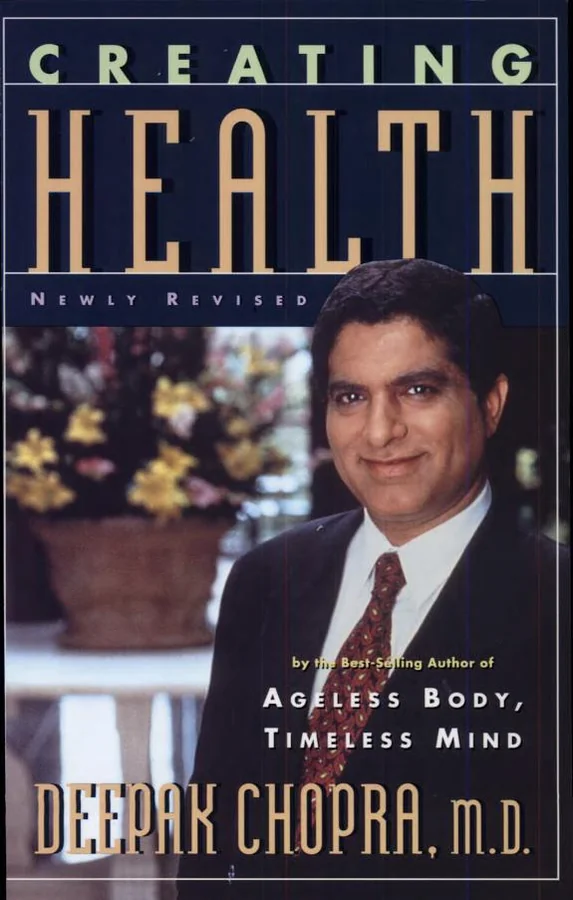
Creating health
 80
80

Creating health
Chopra’s 1985 text, *Creating Health*, attempts to bridge the gap between spiritual potentiality and physical well-being, a commendable but often challenging endeavor. The book’s strength lies in its persistent advocacy for the mind’s role in healing, particularly its exploration of intention as an active force. Chopra posits that our thoughts and beliefs aren't passive observers but architects of our physiology. However, the work suffers from a tendency towards broad pronouncements that can feel unsubstantiated by rigorous empirical evidence, even within its chosen framework. For instance, the discussion around the "quantum self" often leans into metaphor without providing concrete, testable mechanisms. While Chopra’s exploration of intention is compelling, the leap from subtle energetic influence to direct biological impact requires more nuanced explanation than is offered. Ultimately, *Creating Health* serves as an accessible, if sometimes speculative, primer on the mind's potential in health, best approached as a philosophical inquiry rather than a definitive medical guide.
📝 Description
80
Deepak Chopra's 1985 book *Creating Health* argues that our internal states actively shape physical reality.
Published in 1985, *Creating Health* engages with the emerging field of mind-body medicine. Deepak Chopra proposes that consciousness, beliefs, and emotions directly influence physiological processes. He frames health not as the absence of disease, but as a dynamic, holistic phenomenon shaped by our internal states. The book is for individuals seeking to understand the connection between their mental state and physical well-being. It appeals to those interested in alternative health perspectives, meditation, consciousness studies, and the psychosomatic aspects of illness. Readers questioning conventional medical approaches or seeking tools for a more proactive health strategy will find value. The work is especially relevant for those who have found purely physical interventions insufficient for chronic conditions.
Chopra's book arrived during a period of growing interest in the mind-body connection, coinciding with popularizations of relaxation techniques and early academic work in psychoneuroimmunology. *Creating Health* synthesized Eastern philosophical concepts with Western scientific inquiry, making complex ideas accessible to a broad audience. It tapped into a public desire for holistic health models.
Emerging in the mid-1980s, *Creating Health* contributed to a growing discourse on the mind-body connection by integrating Eastern philosophical traditions with Western scientific inquiry. Chopra's work brought concepts often found in esoteric or spiritual traditions, such as the influence of consciousness on physical matter, into a more accessible format for a general audience. It aligns with traditions that view the body and mind as interconnected, inseparable aspects of a larger whole, moving beyond purely materialistic or reductionist views of health and illness.
💡 Why Read This Book?
• Learn how the concept of the "quantum self" suggests that your deepest identity is a field of pure potential, offering a new lens for understanding how your inner state affects your physical form. • Understand the role of "intention" as explored by Chopra, moving beyond simple desire to a subtle force that can influence your physiological experience and outcomes. • Grasp the significance of "memory" in perpetuating health or illness patterns, as detailed in the book, enabling you to identify how past experiences might be shaping your current well-being.
⭐ Reader Reviews
Honest opinions from readers who have explored this book.
❓ Frequently Asked Questions
What is the core message of Deepak Chopra's *Creating Health*?
The core message of *Creating Health* is that our consciousness, intentions, and beliefs are not separate from our physical bodies but actively participate in shaping our health. It posits that true well-being arises from understanding and influencing these inner states.
When was Deepak Chopra's *Creating Health* first published?
*Creating Health* was first published in 1985, positioning it within the early wave of popular literature on mind-body medicine and holistic health.
What is the 'quantum self' as discussed in *Creating Health*?
The 'quantum self,' as explored in the book, refers to the idea that our fundamental identity exists at the level of quantum potentiality – a field of pure consciousness and possibility, from which our perceived reality, including our health, emerges.
Does *Creating Health* offer practical advice for improving physical health?
Yes, while rooted in philosophical concepts, the book offers practical guidance by encouraging readers to cultivate awareness of their thoughts, emotions, and intentions. It suggests that by consciously working with these inner aspects, one can foster a healthier physical state.
What esoteric or spiritual traditions influence Chopra's ideas in *Creating Health*?
Chopra's ideas in *Creating Health* are influenced by a blend of Vedanta philosophy, quantum physics concepts (as interpreted for popular understanding), and the broader New Age movement's emphasis on consciousness and self-healing.
How does *Creating Health* relate to modern concepts of psychosomatic illness?
*Creating Health* predates some of the more formalized research in psychoneuroimmunology (PNI) but aligns with its core tenets by asserting a direct link between psychological states (psycho) and the nervous and immune systems (neuroimmunology), influencing physical health outcomes.
🔮 Key Themes & Symbolism
The Quantum Self
The concept of the 'quantum self' posits that our deepest identity resides not in the physical body but in a field of pure consciousness and potentiality, akin to the observer effect in quantum mechanics. Chopra suggests this fundamental self is not bound by the limitations of the material world and possesses the inherent ability to influence and manifest our physical reality. This perspective challenges the conventional materialist view of the self and health, proposing that by accessing this deeper level of being, individuals can tap into a source of profound healing and creative power. It implies that our perceived limitations are often constructs of the mind rather than inherent truths.
Intention as Creative Force
Chopra elevates 'intention' from a mere wish or goal to a subtle, energetic force capable of directing consciousness and shaping events, including physiological processes. This is not simply about positive thinking, but about the directed focus of awareness that can influence outcomes. The book explores how our intentions, when clearly defined and aligned with our deepest self, can act as a blueprint for physical well-being. This concept draws parallels with the idea of the observer in quantum physics influencing the outcome of an experiment, suggesting a participatory role for consciousness in the unfolding of reality and health.
Memory and Embodiment
This theme addresses how stored 'memory' – encompassing not just recall of events but also ingrained emotional patterns and subconscious beliefs – profoundly impacts our physical state. Chopra argues that these memories, held within the body-mind complex, can perpetuate cycles of illness or health. By becoming aware of and consciously working with these ingrained patterns, individuals can release limiting predispositions and create space for new, healthier physiological expressions. This involves understanding that the body is a living archive of our experiences, constantly interpreting and responding based on this stored information.
Consciousness as the Ground of Being
At the heart of *Creating Health* lies the idea that pure consciousness is the fundamental reality underlying all existence, including the physical body and the mind. The material world, including our health, is seen as a manifestation or expression of this deeper, non-dual awareness. This perspective suggests that by shifting our identification from the ego or the physical body to this underlying consciousness, we can access a state of effortless being and natural healing. It implies that illness is a disruption of this natural harmony, and true health is a return to this fundamental state of wholeness.
💬 Memorable Quotes
Direct passages from the work, attributed to the author.
“The body is not a machine; it is a manifestation of consciousness.”
— This statement challenges the reductionist, mechanistic view of the body prevalent in some medical models. It posits that our physical form is intrinsically linked to, and perhaps even a projection of, our awareness, suggesting that healing requires addressing consciousness itself.
“Intention is the subtle force that shapes reality.”
— Here, intention is presented as more than a mere thought or desire. It's framed as a potent, active energy that can influence physical processes and external circumstances, acting as a fundamental principle in the creation of our experienced world.
“Our memories hold the blueprint for our future health.”
— This highlights the wide impact of past experiences and ingrained patterns on our present and future well-being. It suggests that understanding and transforming these stored memories is crucial for achieving lasting health.
“Accessing pure consciousness is the ultimate source of healing.”
— This points to a non-dualistic understanding where true healing originates not from external interventions but from reconnecting with the fundamental, unified field of awareness that underlies all existence.
“The quantum self is the field of infinite possibilities.”
— This concept suggests that our true identity exists beyond the limitations of the physical and egoic self, residing in a area of pure potential from which our reality, including our health, can be dynamically shaped.
🌙 Esoteric Significance
Tradition
Chopra’s work in *Creating Health* draws heavily from the Advaita Vedanta tradition of Hinduism, particularly its concept of non-dualism and the primacy of consciousness. It also engages with modern interpretations of quantum physics, attempting to align scientific findings with ancient spiritual insights. While not strictly adhering to a single Western esoteric lineage like Hermeticism or Kabbalah, it taps into the universal esoteric theme of consciousness as the fundamental reality and the power of the mind to shape the material world, aligning with New Age philosophies.
Symbolism
A key symbolic motif is the 'quantum self,' representing the observer and the field of pure potentiality from which all manifest reality arises. This symbolizes the idea that our true nature is boundless and capable of influencing our physical form. Another significant symbol is 'intention,' which acts as a subtle yet powerful force, akin to a directed wave function in quantum mechanics, guiding the manifestation of health and experience. The body itself can be seen as a symbol, not just of biological processes but of consciousness made visible.
Modern Relevance
The ideas presented in *Creating Health* continue to influence contemporary wellness culture, mindfulness practices, and integrative medicine. Thinkers and practitioners in fields like positive psychology, somatic experiencing, and energy healing often echo Chopra's emphasis on the mind-body connection and the power of consciousness. His work laid groundwork for a generation of authors and speakers who explore the intersection of spirituality, science, and personal well-being, making it a foundational text for many seeking alternative paths to health.
👥 Who Should Read This Book
• Individuals exploring the mind-body connection: Those curious about how thoughts, emotions, and beliefs influence physical health will find a foundational exploration of these concepts. • Seekers of alternative wellness paradigms: Readers dissatisfied with conventional approaches or looking to integrate spiritual perspectives into their health practices can gain new frameworks. • Students of consciousness studies: Anyone interested in philosophical explorations of consciousness, its relationship to reality, and its potential role in healing will find valuable insights.
📜 Historical Context
Published in 1985, Deepak Chopra's *Creating Health* emerged during a period of significant burgeoning interest in mind-body medicine and holistic healing. The intellectual landscape was increasingly influenced by works like Herbert Benson's *The Relaxation Response* (1975) and the nascent field of psychoneuroimmunology (PNI), which explored the links between the brain, immune system, and behavior. Chopra’s contribution was to synthesize these Western scientific inquiries with Eastern philosophical traditions, particularly Vedanta, and interpret concepts from quantum physics for a popular audience. This era saw a growing skepticism towards purely materialistic explanations for health and a desire for more integrated approaches. While not facing overt censorship, the book's ideas were part of a broader cultural shift challenging established medical paradigms, resonating with a public seeking self-empowerment in health.
📔 Journal Prompts
The body as a manifestation of consciousness: Explore this idea in relation to a current health concern.
Reflecting on intention: How have your past intentions shaped your physical state?
The role of memory: Identify a memory pattern that may be influencing your well-being.
Pure consciousness and healing: Consider what it means to access this state for restoration.
The quantum self and its possibilities: How might embracing this concept alter your perception of health limitations?
🗂️ Glossary
Quantum Self
The concept that one's fundamental identity exists at the level of quantum potentiality, a field of pure consciousness and infinite possibilities, rather than being solely defined by the physical body or ego.
Intention
In Chopra's framework, intention is not merely a desire but a subtle, active force of consciousness that can direct energy and influence physiological processes and external reality.
Memory
Refers to stored information within the mind-body system, encompassing conscious recollections, subconscious beliefs, and emotional imprints that can perpetuate patterns of health or illness.
Pure Consciousness
The fundamental, non-dual ground of all existence; the underlying awareness from which the mind and body, and indeed all reality, are perceived to arise.
Mind-Body Medicine
An approach to health that recognizes the intricate connection between mental, emotional, and spiritual factors and physical well-being, emphasizing the role of consciousness in healing.
Psychosomatic
Relating to physical diseases or conditions that are principally caused by mental or emotional factors, such as stress or anxiety.
Vedanta
A school of Hindu philosophy concerned with the theory of knowledge, based on the Upanishads, which emphasizes the unity of the individual soul (Atman) and the supreme spirit (Brahman).
🔮 Readers Also Liked
Browse all →









More by Deepak Chopra
All books →

More Free Spiritual Development Books
View all →