Contemporary Korean Shamanism
 72
72

Contemporary Korean Shamanism
Liora Sarfati’s examination of contemporary Korean shamanism moves beyond simplistic categorizations of 'superstition' to reveal a vibrant, evolving spiritual landscape. The book excels in demonstrating how shamanic traditions, once marginalized, are now demonstrably present in Korean film, museums, and online spaces. Sarfati's analysis of the theatrical elements within staged rituals offers a particularly sharp perspective, linking performance theory to religious practice. A limitation, however, lies in the occasional density of academic jargon, which might deter casual readers. The description of the 'dan' ritual, for instance, provides a vivid, if complex, glimpse into the ecstatic dimensions of shamanic trance. Ultimately, Sarfati presents a compelling case for understanding Korean shamanism not as a relic, but as a living, adaptable force in modern culture.
📝 Description
72
Liora Sarfati's 2017 book examines how Korean shamanism lives on in modern culture.
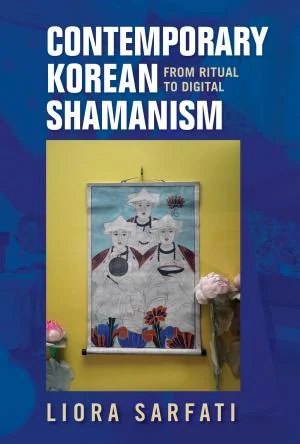
Contemporary Korean Shamanism by Liora Sarfati details the continuing evolution of a spiritual tradition once pushed to the margins of Korean society. The book shows how shamanic rituals, which include spirit communication, divination, and trance states, are now part of mainstream cultural life. It emphasizes the sensory aspects of these ceremonies, noting the use of altars and altered states for spiritual connection. Sarfati traces this practice's historical path, recognizing periods of suppression and suspicion. Despite this, shamanism has endured and changed, finding new ways to be expressed in the late 20th and early 21st centuries. This revival aligns with a broader global interest in indigenous spiritual forms.
The work looks at key ideas like the role of the shaman, known as a mudang, the phenomenon of spirit possession, and the purpose of ritual. These rituals function both as spiritual tools and as cultural events. Sarfati analyzes how Korean shamanism blends with other beliefs, drawing from Buddhism and local folk traditions. The book also discusses the visual elements and objects tied to these practices, such as ritual items and symbolic imagery.
This work situates itself within the study of shamanism as a global phenomenon, focusing on its Korean manifestation. It approaches shamanism not merely as a historical relic but as a living tradition that adapts to contemporary social and cultural shifts. The book engages with the ways spirit communication, ritual action, and altered states of consciousness are understood and enacted in a modern context. It contributes to an understanding of how indigenous spiritual practices persist and transform, often interacting with dominant religious and secular systems.
💡 Why Read This Book?
• Understand the modern resurgence of Korean shamanism by exploring its integration into staged rituals and media, a phenomenon Sarfati details as a shift from superstition to mainstream cultural visibility. • Gain insight into the specific practices of Korean shamans, such as the sensory rituals utilizing laden altars, providing a concrete example of how ancient spiritual technology is maintained. • Appreciate the academic discourse surrounding shamanism by referencing its exploration within museum exhibitions and academic analyses, showcasing how scholarly attention has reframed its public perception.
⭐ Reader Reviews
Honest opinions from readers who have explored this book.
❓ Frequently Asked Questions
When was Contemporary Korean Shamanism first published?
Liora Sarfati's "Contemporary Korean Shamanism" was first published on August 3, 2021, marking a recent contribution to the study of this dynamic spiritual tradition.
What is the role of the shaman in Korean practice?
In Korean shamanism, shamans, often called mudang, act as intermediaries. They communicate with spirits, divine the future, and can enter ecstatic states, facilitating spiritual communication and healing for the community.
How has Korean shamanism changed in recent times?
Contemporary Korean shamanism has transitioned from being viewed as mere superstition to appearing in mainstream cultural forms like films, television, museums, and online platforms, reflecting a changing societal perception.
What are some key elements of Korean shamanic rituals?
Key elements include sensory rituals, the use of elaborately laden altars, and ecstatic practices where shamans may become possessed, all serving to bridge the human and spirit worlds.
What academic fields benefit from studying this book?
Scholars of religious studies, anthropology, Korean cultural history, and those interested in comparative shamanism or altered states of consciousness will find this work particularly valuable.
Does the book discuss specific shamanic terms?
Yes, the book explores specific terms and concepts within Korean shamanism, offering definitions and contextual explanations of its unique vocabulary and practices.
🔮 Key Themes & Symbolism
Shamanism in Pop Culture
The work meticulously documents the increasing visibility of Korean shamanism within contemporary popular culture. It details how elements of shamanic rituals, spirit communication, and possession narratives are being adapted and presented in films, television programs, and online content. This section explores the implications of this mainstreaming, examining how it reshapes public perception and understanding of a tradition previously considered fringe or archaic.
Sensory Ritual and Ecstasy
Sarfati emphasizes the visceral and sensory dimensions of Korean shamanic practice. The book describes the use of laden altars, rich with symbolic offerings, and the ecstatic states achieved by shamans during rituals. These practices are presented not merely as performance, but as crucial mechanisms for interacting with the spirit world, facilitating divination and healing.
Vernacular Religion and Adaptation
This theme focuses on Korean shamanism as a 'vernacular religion,' emphasizing its grassroots origins and continuous adaptation. The book illustrates how the practice evolves, incorporating new elements while retaining core functions. It highlights the resilience of these traditions in the face of modernization and societal change, demonstrating their capacity to remain relevant.
Changing Societal Perceptions
The study contrasts past attitudes, where Korean shamanism was often viewed as an embarrassing superstition, with current trends. Sarfati analyzes the shift towards greater acceptance and academic interest, evidenced by its presence in museums and scholarly research. This transformation reflects a broader global re-evaluation of indigenous spiritual systems.
💬 Memorable Quotes
Direct passages from the work, attributed to the author.
“Shamanic traditions appear in staged rituals, museums, films, and television programs, as well as on the internet.”
— This observation underscores the pervasive and many-sided presence of Korean shamanism in contemporary society, moving from private practice to public spectacle and digital dissemination.
“The theatrical religious performances of Korean shamans—who communicate with the dead, divine the future, and become possessed—are going mainstream.”
— This highlights the dramatic shift in how Korean shamanism is perceived and presented, emphasizing its performative aspects and its transition from marginalized belief to a visible cultural phenomenon.
“Contemporary Korean Shamanism explores this vernacular religion and practice, which includes sensory rituals using laden altars, ecstatic dan”
— This points to the book's focus on the lived experience and material culture of shamanism, specifically mentioning key ritual components like sensory engagement and trance states.
“Once viewed as an embarrassing superstition...”
— This phrase expresses the historical stigma associated with Korean shamanism, setting the stage for the book's exploration of its modern resurgence and changing societal acceptance.
“...divine the future, and become possessed...”
— These actions represent core functions attributed to shamans, illustrating their perceived abilities to access supernatural knowledge and experience altered states of consciousness for community benefit.
🌙 Esoteric Significance
Tradition
While not strictly adhering to a single Western esoteric lineage like Hermeticism or Theosophy, "Contemporary Korean Shamanism" engages with themes common to many esoteric traditions: spirit communication, divination, altered states of consciousness, and the role of a spiritual intermediary. It offers a non-Western perspective on practices that resonate with shamanic elements found across various global spiritual systems, providing a valuable comparative lens for esoteric practitioners interested in diverse forms of spiritual technology.
Symbolism
The book highlights the detailed symbolism inherent in Korean shamanic rituals, particularly through the use of 'laden altars.' These altars, adorned with specific offerings, colors, and symbolic objects, serve as focal points for invoking spirits and channeling energies. The ecstatic trance states ('dan') described represent a direct engagement with non-ordinary reality, a common motif in esoteric practices aiming for spiritual communion or knowledge acquisition.
Modern Relevance
Contemporary thinkers and practitioners exploring embodied spirituality, performance studies in religion, and comparative shamanism draw upon works like Sarfati's. The book's examination of how ancient practices adapt to digital media and popular culture offers crucial insights for understanding the evolution of spiritual expression in the 21st century. It informs discussions on the intersection of tradition, technology, and belief in a globalized world.
👥 Who Should Read This Book
• Students of comparative religion and anthropology seeking to understand the evolution of indigenous spiritual practices in a modern context. • Researchers of Korean culture and history interested in the societal role and representation of shamanism beyond historical stereotypes. • Practitioners of esoteric or spiritual disciplines curious about non-Western shamanic traditions, their ritual structures, and altered state phenomena.
📜 Historical Context
Liora Sarfati's "Contemporary Korean Shamanism" was published in 2021, emerging within a period of increased global academic and popular interest in indigenous spiritual traditions. The work arrives after decades of scholarly engagement, building upon foundational studies in Korean folklore and religious practice. While shamanism in Korea faced periods of suppression, particularly during colonial rule and rapid modernization, its persistence is notable. Sarfati's analysis implicitly engages with the legacy of figures like Kwak Chung-hwan, who contributed significantly to early ethnographic studies of Korean shamanism, and contrasts with more syncretic or Westernized spiritual movements that gained traction in the late 20th century. The book's focus on mainstreaming and media representation distinguishes it, reflecting a contemporary understanding of how religious practices adapt and are perceived in the digital age.
📔 Journal Prompts
The transition of Korean shamanism from superstition to mainstream cultural presence.
Sensory rituals and the function of laden altars in spiritual practice.
The concept of the 'mudang' as an intermediary between worlds.
Ecstatic states and their role in contemporary shamanic divination.
The representation of shamanic possession in modern Korean media.
🗂️ Glossary
Mudang
A term for a female shaman in Korea, though male shamans also exist. Mudang traditionally act as intermediaries between humans and the spirit world, performing rituals for healing, divination, and appeasement.
Vernacular Religion
Religious beliefs and practices that originate from and are sustained by ordinary people within a specific community or culture, often distinct from formalized or institutionalized religious doctrines.
Laden Altar
A ritualistic table or platform in Korean shamanism, heavily decorated with symbolic offerings, food, drink, and ritual objects intended to attract and appease spirits during ceremonies.
Possession
In the context of Korean shamanism, this refers to the state where a shaman allows a spirit to temporarily inhabit their body, often to convey messages, offer guidance, or perform a divine action.
Divination
The practice of seeking knowledge about the future or the unknown through supernatural means. In Korean shamanism, shamans divine the future through various methods, often involving spirit communication.
Dan
Refers to ecstatic or trance states experienced by shamans during rituals, often characterized by intense physical movements and vocalizations, facilitating communication with the spirit world.
Syncretism
The blending of beliefs and practices from different religious or cultural systems. Korean shamanism often exhibits syncretism, incorporating elements from Buddhism and folk traditions.
This book appears in 1 collection
🔮 Readers Also Liked
Browse all →








From the “Shamanism” Collection
View all →






More Free Occult Philosophy Books
View all →