Living with Kundalini
 73
73

Living with Kundalini
Gopi Krishna’s *Living with Kundalini* is less a guide and more a raw, unfiltered report from the front lines of spiritual awakening. The author’s stark honesty about the physical and psychological turmoil accompanying his unbidden Kundalini experience, which began in 1937, is both compelling and cautionary. He meticulously documents the sensations, the visions, and the existential shifts with a clarity that cuts through conventional spiritual jargon. A particular strength lies in his persistent attempt to reconcile these experiences with his own physiological understanding, resisting easy mystical explanations. However, the narrative can sometimes feel repetitive in its descriptions of suffering, and the lack of structured guidance, while authentic to his experience, offers little solace to readers seeking practical advice. The book’s value is in its unflinching portrayal of an extreme phenomenon, serving as a vital, if disquieting, document for those who may encounter similar energies. It is a testament to the untamed power of consciousness.
📝 Description
73
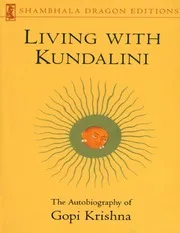
Gopi Krishna's 1993 book details his 1937 spontaneous Kundalini awakening.
Gopi Krishna's *Living with Kundalini* recounts his personal, unguided experience with Kundalini energy, which began in 1937. This is not a theoretical manual but a direct report of the intense physiological and psychological changes he underwent. He describes the raw, often overwhelming phenomena that arose when this powerful force activated within him without the guidance of a guru or established spiritual path.
The book chronicles the physical sensations, altered mental states, and spiritual implications of this uncontrolled process. It speaks to individuals experiencing similar spontaneous awakenings or those curious about the unmediated reality of Kundalini activation. Krishna's narrative offers a stark contrast to more structured or purely theoretical accounts of spiritual awakening. Readers seeking an unvarnished testimony of a challenging inner transformation will find this work particularly resonant.
Published in 1993, *Living with Kundalini* appeared as Western interest in Eastern spirituality grew. Gopi Krishna's account, detailing his 1937 awakening, offered a rare firsthand look at experiences often kept secret or confined to specific yogic lineages. His narrative contrasts sharply with the more systematized Kundalini yoga approaches popular at the time, exemplified by figures like Paramahansa Yogananda. Krishna's work highlights the potential for intense, uncontrolled spiritual phenomena, implicitly questioning the safety of pursuing such states without proper grounding.
💡 Why Read This Book?
• Gain an unvarnished understanding of spontaneous Kundalini phenomena, distinct from theoretical texts, by reading Gopi Krishna's personal account that began in 1937. • Learn about the physiological and psychological effects of Kundalini ascent through detailed descriptions of the Sushumna and chakras, as experienced by the author. • Comprehend the potential challenges and dangers of uncontrolled spiritual awakening, as chronicled in Gopi Krishna's own difficult journey, providing a crucial counterpoint to idealized narratives.
⭐ Reader Reviews
Honest opinions from readers who have explored this book.
❓ Frequently Asked Questions
When did Gopi Krishna's Kundalini experience begin?
Gopi Krishna's spontaneous Kundalini awakening commenced in 1937, a pivotal year that marked the beginning of his profound and often challenging personal journey into the depths of this powerful spiritual energy.
What is the Sushumna mentioned in Living with Kundalini?
The Sushumna is described in the book as the central channel within the subtle body through which Kundalini energy ascends, a key concept in understanding the energetic pathways of spiritual awakening.
Is Living with Kundalini a practical guide to awakening Kundalini?
No, the book is primarily a personal narrative detailing an unguided and often difficult spontaneous awakening, rather than a step-by-step manual for initiating or controlling the process.
What is the significance of the 'serpent power' in Gopi Krishna's work?
The 'serpent power' refers to the dormant Kundalini energy at the base of the spine, which, when awakened, is depicted as a potent force capable of transforming consciousness and physiology.
What makes Gopi Krishna's account unique compared to other books on Kundalini?
Its uniqueness lies in the raw, firsthand, and unmediated nature of his experience, which began without a guru or established practice, offering a stark portrayal of the phenomenon's intensity.
What historical period does the book's initial experience relate to?
Gopi Krishna's experiences detailed in the book began in 1937, offering a perspective from a time when such personal accounts were less common in public discourse.
🔮 Key Themes & Symbolism
The Unmediated Awakening
This theme centers on Gopi Krishna's experience of Kundalini awakening spontaneously in 1937, without the guidance of a teacher or established tradition. The narrative emphasizes the raw, often overwhelming, physical and psychological manifestations that arise when this potent energy is activated without preparation. It highlights the contrast between controlled, gradual spiritual practices and a sudden, unbidden surge of spiritual force, detailing the wide impact on the author's nervous system and consciousness.
Physiology of Spiritual Energy
A core aspect of the book is Gopi Krishna's persistent attempt to understand the physiological underpinnings of his spiritual experiences. He describes the ascent of Kundalini through the Sushumna, its interaction with the chakras, and the resulting sensory and cognitive shifts in detailed, often visceral, terms. This focus on the body's role in spiritual transformation distinguishes the work, presenting Kundalini not merely as a metaphor but as a powerful, palpable force with direct biological consequences.
The 'Serpent Power' Phenomenon
The book directly addresses the concept of the 'serpent power,' representing the dormant Kundalini energy coiled at the base of the spine. Gopi Krishna's account illustrates the immense potential and inherent risks associated with its awakening. He portrays the energy's dynamic ascent and its capacity to induce altered states, heightened perception, and profound inner changes, while also cautioning about the potential for distress and imbalance if not properly managed.
Spiritual Crisis and Integration
Living with Kundalini chronicles the author's struggle to integrate the extraordinary experiences into his everyday life. It depicts the phases of intense spiritual crisis, including altered perceptions, emotional volatility, and existential questioning, that often accompany such profound awakenings. The narrative underscores the arduous process of coming to terms with these transformative energies and finding a new equilibrium, offering a realistic perspective on the challenges of spiritual evolution.
💬 Memorable Quotes
Direct passages from the work, attributed to the author.
“The awakening of Kundalini is not a matter of choice but a process that can overwhelm the unprepared.”
— This highlights the author's central thesis: Kundalini's activation is a powerful, often involuntary force. It suggests that unprepared individuals may face significant difficulties, emphasizing a need for caution and awareness regarding this potent spiritual energy.
“My own experience, which began in 1937, was a spontaneous eruption of this primal energy.”
— This statement anchors the book in a specific personal history, establishing the year 1937 as the commencement of the author's unguided Kundalini journey and underscoring its sudden, natural onset.
“The serpent power ascends the Sushumna, activating the chakras in its wake.”
— This concisely explains the core mechanism of Kundalini's movement within the subtle body according to the author's understanding, referencing the central channel (Sushumna) and energy centers (chakras).
“Without proper grounding, the Kundalini experience can lead to profound disorientation.”
— This reflects the cautionary aspect of the book, warning that the intense spiritual energy, if not integrated with a stable physical and mental foundation, can result in significant psychological distress and confusion.
💡 Key Ideas
Editorial paraphrase of the work's core concepts — not direct quotes.
The physiological effects were as intense as the spiritual revelations.
This paraphrase captures the dual nature of the author's experience, emphasizing that the profound spiritual shifts were inextricably linked to equally powerful and demanding physical sensations and transformations.
🌙 Esoteric Significance
Tradition
While Gopi Krishna's work draws heavily on concepts from Hindu Tantra and Yoga, particularly the idea of Kundalini Shakti and the energy channels (nadis) like Sushumna, his experience is presented as largely unguided by a specific lineage. This departure from traditional teacher-student dynamics positions his account within a broader, more modern context of spontaneous spiritual awakenings that seek to understand these phenomena through a blend of physiological observation and direct subjective experience, rather than strict adherence to a pre-defined script.
Symbolism
The primary symbol is **Kundalini** itself, often referred to as the 'serpent power,' representing dormant, primal spiritual energy coiled at the base of the spine. The **Sushumna** is the central channel, the pathway for Kundalini's ascent, symbolizing the core axis of spiritual transformation. **Chakras** are depicted as energy centers along this pathway, which are stimulated and potentially transformed by the rising Kundalini, representing stages or aspects of consciousness and psychic development.
Modern Relevance
Gopi Krishna's work remains relevant for contemporary practitioners and researchers exploring the non-dualistic intersection of consciousness and physiology. Thinkers and groups interested in subtle energy bodies, spontaneous spiritual awakenings, and the neurological correlates of mystical experiences often reference his account. His emphasis on the physical manifestations of Kundalini speaks to modern somatic approaches to spirituality and psychological healing, providing a historical anchor for discussions on the embodied nature of spiritual evolution.
👥 Who Should Read This Book
• Individuals experiencing or curious about spontaneous Kundalini phenomena, seeking a firsthand, unvarnished account of its physiological and psychological effects. • Students of comparative religion and esoteric traditions, particularly those interested in Yoga, Tantra, and the diverse manifestations of spiritual awakening beyond prescribed methodologies. • Researchers and practitioners in consciousness studies and somatic psychology, looking for detailed subjective reports that bridge the gap between inner experience and observable biological changes.
📜 Historical Context
Published in 1993, *Living with Kundalini* arrived at a time when Western interest in Eastern mysticism, yoga, and esoteric practices was well-established, yet detailed personal accounts of unmediated Kundalini awakenings were still relatively rare. Gopi Krishna’s own experiences, which began in 1937, predate much of this mainstream interest. His narrative stands in contrast to the more structured, guru-led approaches to Kundalini yoga popularized by figures like Paramahansa Yogananda in the mid-20th century. Krishna’s unvarnished depiction of the physical and psychological intensity, and the potential for distress, offered a counterpoint to more idealized portrayals. The book implicitly raised questions about the safety and accessibility of Kundalini experiences, a topic that continued to be debated within spiritual communities throughout the late 20th century.
📔 Journal Prompts
The physiological manifestations of Kundalini described by Gopi Krishna.
The role of the Sushumna and chakras in Gopi Krishna's 1937 awakening.
The author's attempts to integrate his Kundalini experiences.
The 'serpent power' as a force of transformation versus potential disruption.
The contrast between guided and unguided spiritual awakenings as presented in the book.
🗂️ Glossary
Kundalini
A powerful, dormant spiritual energy believed to reside at the base of the spine, often symbolized as a coiled serpent. Its awakening is associated with profound spiritual and physiological transformation.
Sushumna
The central channel within the subtle body, through which Kundalini energy is said to ascend towards the higher centers of consciousness (chakras).
Chakras
Energy centers located along the Sushumna, each associated with different aspects of consciousness, psychological states, and physical functions. Kundalini's ascent stimulates these centers.
Serpent Power
A common metaphor for Kundalini energy, emphasizing its latent, coiled, and potentially powerful, transformative nature when awakened.
Nadis
Subtle energy channels within the body through which life force (prana) flows. The Sushumna, Ida, and Pingala are considered the most important.
Prana
The vital life force or energy that flows through the nadis. The awakening of Kundalini is often described as a massive surge and transformation of prana.
Spiritual Awakening
A profound shift in consciousness characterized by heightened awareness, altered perception of reality, and often intense inner experiences, such as those described in relation to Kundalini.
🔮 Readers Also Liked
Browse all →









More by Gopi Krishna
All books →





More Free Occult Philosophy Books
View all →