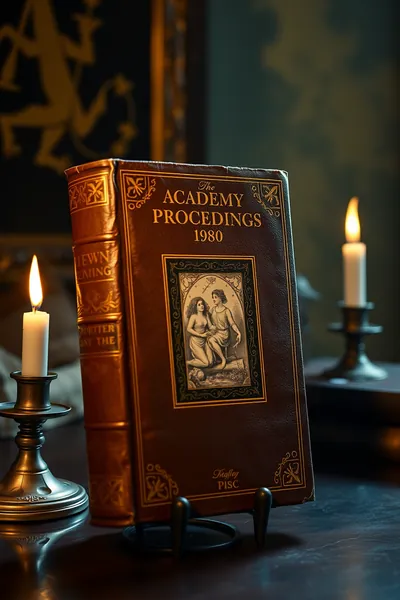
Mi-'Baʻal shed' le-Vaʻal Shem'

 75
75

Mi-'Baʻal shed' le-Vaʻal Shem'
Michal Oron’s Mi-'Baʻal shed' le-Vaʻal Shem' presents a scholarly dissection of the 'Ba'al Shem' figure, moving beyond common hagiography to explore the complex historical and textual layers. Oron’s strength lies in her meticulous research, particularly in tracing the lineage of the concept through various Kabbalistic texts and movements. The book shines when it examines the Sabbatean context, offering a nuanced perspective on how the figure of the Ba'al Shem was understood and utilized in that volatile period.
However, the work’s academic rigor can also be its limitation for a general audience. The prose, while precise, occasionally becomes dense, requiring sustained concentration. A specific passage that stands out is the detailed analysis of the attribution of certain magical practices to figures like Rabbi Shimon bar Yochai, challenging simplistic interpretations. While not a casual read, Oron delivers a rigorous, scholarly treatment of a significant esoteric archetype.
📝 Description
75
Mi-'Baʻal shed' le-Vaʻal Shem' by Michal Oron, published in 2002, examines the 'Ba'al Shem' concept in Jewish mysticism.
Michal Oron's 2002 work, Mi-'Baʻal shed' le-Vaʻal Shem', offers an academic examination of esoteric traditions, specifically at the intersection of Kabbalistic thought and its practical application. This is not an introductory text; it assumes some prior knowledge of mystical concepts.
The book is designed for serious students of esotericism. It will appeal to those interested in the historical development and theoretical underpinnings of Kabbalah and related mystical systems. Scholars of comparative religion, Jewish mysticism, and occult history will find valuable material. Practitioners seeking a deeper grasp of the theoretical framework behind their practices may also benefit.
Oron's study emerged during a time of renewed academic and popular interest in Kabbalah. It speaks to an ongoing scholarly conversation, building on the work of figures like Gershom Scholem and Moshe Idel. The book focuses on the 'Ba'al Shem' concept, contributing a specific lens to the study of Jewish mystical history and theory.
This book situates itself within the long tradition of Jewish mysticism, focusing on the figure of the 'Ba'al Shem' or 'Master of the Name.' This archetype represents individuals who wielded spiritual authority through their knowledge and application of divine names and mystical practices. Oron traces the historical and textual evolution of this figure, connecting it to specific movements like Sabbateanism and Hasidism. The work addresses the theoretical justifications and societal roles associated with such mystics within the broader Kabbalistic framework.
💡 Why Read This Book?
• Gain a precise understanding of the 'Ba'al Shem' concept, tracing its evolution from early Kabbalistic texts to its manifestations within the Sabbatean movement, offering a scholarly depth unavailable in popular accounts. • Explore the intersection of practical Kabbalah and theoretical mysticism, learning how the authority of the 'Ba'al Shem' was legitimized through textual interpretation and spiritual lineage, a core theme in the book's analysis. • Understand the historical milieu of 2002 in esoteric studies, recognizing how Michal Oron's work engaged with established scholarship by figures like Gershom Scholem and contributed to the ongoing academic discourse on Jewish mysticism.
⭐ Reader Reviews
Honest opinions from readers who have explored this book.
❓ Frequently Asked Questions
What is the primary focus of Mi-'Baʻal shed' le-Vaʻal Shem'?
The book primarily focuses on the historical and textual analysis of the 'Ba'al Shem' (Master of the Name) figure within Jewish mystical traditions, examining their role, practices, and the theoretical underpinnings of their authority.
Who is Michal Oron and what is her background?
Michal Oron is an academic researcher specializing in Jewish mysticism and Kabbalah. Her work is characterized by rigorous textual analysis and historical contextualization.
What specific historical periods or movements does the book cover regarding the Ba'al Shem?
The work explores the concept's presence through various Kabbalistic periods, with particular attention paid to its understanding and utilization within the Sabbatean movement.
Is this book suitable for someone new to Kabbalah?
No, the book is intended for readers with a foundational understanding of Kabbalistic concepts and terminology, as it delves into complex textual and historical analyses.
What distinguishes Oron's approach to the Ba'al Shem figure?
Oron's approach is distinguished by its scholarly depth and focus on textual evidence, moving beyond anecdotal accounts to critically examine the historical evolution and theoretical justifications for the Ba'al Shem's role.
Where does the title 'Mi-'Baʻal shed' le-Vaʻal Shem'' originate from?
The title is Hebrew and translates roughly to 'Who is a Master of the Name?' or 'What constitutes a Master of the Name?', directly addressing the central inquiry of the book regarding this specific esoteric figure.
🔮 Key Themes & Symbolism
The Ba'al Shem Archetype
The central theme is the figure of the 'Ba'al Shem' (Master of the Name), exploring their historical emergence and evolution within Jewish mysticism. Oron examines the textual basis for their authority, often linked to the manipulation of divine names, and their perceived ability to effect change in the physical world. This includes analyzing the responsibilities and societal perceptions of such individuals, moving beyond simple definitions to understand their complex role and the esoteric framework that supported it.
Kabbalistic Textual Analysis
A core component of the book involves meticulous examination of various Kabbalistic texts. Oron demonstrates how the concept of the Ba'al Shem is constructed and reinforced through specific passages and interpretations, tracing its development across different schools of thought. This analytical approach highlights the importance of textual exegesis in shaping esoteric traditions and understanding the transmission of mystical knowledge.
Sabbateanism and Mystical Power
The work pays significant attention to the Sabbatean movement, a critical period in Jewish mystical history. Oron investigates how the figure of the Ba'al Shem was integrated into or understood within the heterodox doctrines and practices of Sabbateanism. This section explores the often controversial ways mystical power and spiritual authority were claimed and exercised during this era, providing crucial context for the Ba'al Shem's broader significance.
Practical Kabbalah
Mi-'Baʻal shed' le-Vaʻal Shem' engages with the practical dimensions of Kabbalah, contrasting them with purely theoretical or contemplative aspects. Oron addresses the application of divine names, amulets, and incantations as tools wielded by the Ba'al Shem. This theme underscores the functional role of mysticism and its perceived efficacy in mediating between the divine and mundane realms.
💬 Memorable Quotes
Direct passages from the work, attributed to the author.
“The authority of the Ba'al Shem is deeply rooted in the textual tradition.”
— This interpretation highlights that the power and legitimacy attributed to a 'Master of the Name' were not arbitrary but were systematically derived from and justified by specific interpretations of sacred Jewish texts.
“Examining the Sabbatean context reveals a complex understanding of the Ba'al Shem.”
— This suggests that the period of Sabbateanism, often seen as a departure from mainstream mysticism, offered unique and perhaps unconventional interpretations of the Ba'al Shem's role and capabilities.
“The manipulation of divine names formed a core practice.”
— This points to the practical aspect of Kabbalah discussed in the book, where the sacred names of God were not just objects of contemplation but were utilized as active agents in mystical workings.
“The Ba'al Shem acted as an intermediary between the human and divine.”
— This signifies the functional role of the Ba'al Shem within the esoteric framework, emphasizing their ability to bridge the gap between the earthly realm and the celestial powers.
“Textual exegesis was crucial for legitimizing esoteric claims.”
— This underscores the scholarly method employed in the book, showing that the validity of mystical practices and figures was historically established through rigorous interpretation of religious and mystical literature.
🌙 Esoteric Significance
Tradition
This work sits firmly within the academic study of Jewish Kabbalah, specifically focusing on the historical development and textual underpinnings of practical Kabbalah. It engages with the lineage of esoteric thought that emphasizes the manipulation of divine names and symbolic systems to affect the material world, tracing its roots and manifestations through various historical periods and movements within Jewish mysticism.
Symbolism
Key symbols explored include the 'Divine Names' themselves, understood not merely as linguistic units but as potent forces capable of shaping reality. The concept of the 'Ba'al Shem' functions as a symbolic archetype of spiritual mastery and intermediary power. The book likely studies the symbolic significance of lineage and textual authority as crucial elements in the construction and transmission of esoteric knowledge.
Modern Relevance
Contemporary practitioners of Kabbalah, particularly those interested in historical magical systems and the practical application of mystical texts, draw upon the kind of detailed historical and textual analysis Oron provides. Scholars of religion and comparative mysticism continue to reference such works for their rigorous engagement with the evolution of Jewish esoteric traditions and the complex history of figures wielding spiritual authority.
👥 Who Should Read This Book
• Students of Jewish mysticism and Kabbalah seeking a scholarly examination of the 'Ba'al Shem' figure, moving beyond popular interpretations to understand its textual and historical foundations. • Researchers in comparative religion and occult history interested in the development of practical Kabbalah and the role of spiritual intermediaries in various esoteric traditions. • Advanced practitioners of Western Esotericism who wish to deepen their understanding of the historical context and theoretical frameworks behind the manipulation of divine names and esoteric authority.
📜 Historical Context
Michal Oron’s Mi-'Baʻal shed' le-Vaʻal Shem' was published in 2002, entering a field already significantly shaped by the groundbreaking work of scholars like Gershom Scholem, whose seminal studies in the 20th century revitalized the academic study of Kabbalah and Jewish mysticism. The early 2000s saw a notable surge in popular interest in Kabbalah, partly fueled by celebrity endorsements and a broader cultural fascination with esoteric traditions. Oron's work contributed to this discourse by offering a focused, scholarly examination of the 'Ba'al Shem' figure, a concept explored by other contemporaries like Moshe Idel, who also engaged deeply with the practical dimensions of Kabbalah. The book's reception likely resonated with both academic circles seeking nuanced textual analysis and practitioners looking for deeper historical roots, working through the existing scholarly framework while potentially challenging some established narratives regarding the Sabbatean influence.
📔 Journal Prompts
Reflect on the textual foundations of the Ba'al Shem's authority as presented by Oron.
Consider the implications of the Ba'al Shem's role within the Sabbatean movement.
Analyze the concept of 'practical Kabbalah' in relation to the Ba'al Shem figure.
How does the manipulation of divine names, as discussed in the book, differ from modern forms of ritual?
Evaluate the historical lineage of the Ba'al Shem archetype as detailed in the text.
🗂️ Glossary
Ba'al Shem
A Hebrew term meaning 'Master of the Name.' In Jewish mysticism, it refers to an individual believed to possess profound knowledge of God's divine names, enabling them to perform miracles, heal, and influence the physical world.
Kabbalah
The esoteric system of Jewish mysticism concerned with the nature of God, the creation of the universe, and the spiritual significance of the Torah, often involving complex symbolism and meditative practices.
Divine Names
In Kabbalistic and esoteric traditions, the names of God are considered powerful entities imbued with divine energy, capable of influencing cosmic forces and the material world when invoked correctly.
Sabbateanism
A messianic movement centered around the 17th-century figure Shabbetai Zevi, which profoundly impacted Jewish mystical thought and practice, often leading to controversial interpretations and practices within Kabbalah.
Practical Kabbalah
A branch of Kabbalah focused on the application of mystical knowledge and divine names for practical purposes, such as healing, protection, or divination, as distinct from purely theoretical or contemplative Kabbalah.
Textual Exegesis
The critical explanation or interpretation of a text, particularly religious or philosophical texts. In Kabbalah, it involves deep analysis of sacred writings to uncover hidden meanings and esoteric truths.
Gershom Scholem
A highly influential scholar of Jewish mysticism, considered the founder of the modern academic study of Kabbalah. His works provided foundational scholarship on the history and development of these traditions.
🔮 Readers Also Liked
Browse all →





More by Michal Oron
All books →

More Free Mysticism & Contemplation Books
View all →
![[Bat i le-gani] =](/img/thumb/bat-i-le-gani-joseph-isaac-schneersohn-604811.webp)