Compendium of the Occult

 73
73

Compendium of the Occult
Liz Williams’s Compendium of the Occult presents a broad, visually driven survey of esoteric history. Its strength lies in its presentation; the compendium format makes it an engaging artifact in itself, akin to a cabinet of curiosities. The sections on 19th-century occultism, particularly the Hermetic Order of the Golden Dawn, offer a solid, if brief, introduction to a complex period. However, the work’s ambition to cover such a vast historical and thematic range leads to a certain superficiality in places. For instance, the discussion of ancient Egyptian artifacts, while visually striking, lacks the depth needed to satisfy a seasoned Egyptologist or occult scholar. The book excels as an accessible entry point, offering a delightful visual feast for the neophyte. It is a well-curated introduction, though it does not claim to be an exhaustive academic study.
📝 Description
73
Liz Williams' Compendium of the Occult, published in 2025, catalogs occult history and artifacts.
This richly illustrated directory traces occult practices and beliefs from antiquity to the late 19th century. It features a curated selection of objects and historical periods, offering a broad overview rather than an exhaustive academic study. The book is designed as an accessible introduction for those curious about esoteric subjects.
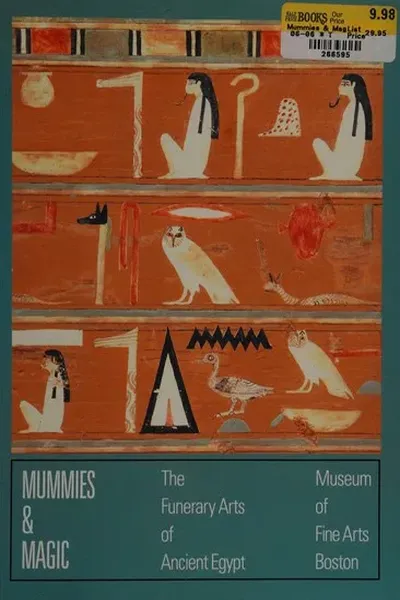
It is a reference for students of Western esotericism, providing context for historical movements and their associated paraphernalia. Readers interested in the intersection of art, history, and the supernatural will find its visual presentation particularly appealing. The compendium situates its content within a historical sweep that includes ancient Egyptian rituals and the milieu of 19th-century London occult societies.
Central to the book are ritual objects, symbols, and historical figures associated with occultism. It examines how these elements were understood and utilized across different eras, from ancient amulets to the ceremonial tools of magical orders. The work highlights the continuity and evolution of esoteric ideas and practices, illustrating their material culture.
The compendium situates occultism within the late Victorian fascination with spiritualism and esoteric revival. It connects ancient practices with the milieu of 19th-century magical orders and figures like Helena Blavatsky. The book illustrates the material culture and evolving ideas within Western esotericism.
💡 Why Read This Book?
• Gain a visual understanding of specific occult artifacts, such as the ceremonial tools used by the Hermetic Order of the Golden Dawn in the 19th century, illustrating the material culture of magic. • Explore the historical trajectory of occult practices, tracing their presence from ancient Egypt to late Victorian London, revealing continuities and transformations. • Discover the symbolic language embedded in esoteric objects and traditions, providing context for understanding symbols like the Ankh or the pentagram.
⭐ Reader Reviews
Honest opinions from readers who have explored this book.
❓ Frequently Asked Questions
What time periods does Compendium of the Occult cover?
The book spans a significant historical range, beginning with ancient Egypt and extending through to the late 19th century, with a notable focus on the occult revival in Victorian London.
Is Compendium of the Occult suitable for beginners?
Yes, its visual compendium format and broad overview make it an excellent starting point for individuals new to the study of occult history and esoteric subjects.
Does the book feature specific occult organizations?
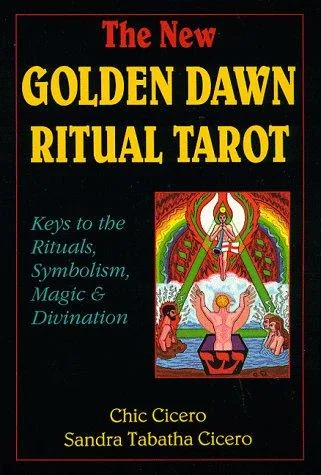
It prominently features historical occult groups, including a detailed look at the Hermetic Order of the Golden Dawn, prominent in 19th-century London.
What kind of content can I expect regarding occult artifacts?
You can expect a directory-style presentation of various occult artifacts, exploring their historical context and symbolic significance across different eras and traditions.
Who is the author, Liz Williams?
Liz Williams is an author known for her work in the esoteric and occult fields, bringing a knowledgeable perspective to the historical exploration presented in this compendium.
Can I find information on ancient occult practices?
The compendium includes sections dedicated to ancient occult traditions, notably featuring content related to ancient Egypt and its associated rituals and symbolism.
🔮 Key Themes & Symbolism
Material Culture of Esotericism
The compendium emphasizes the tangible objects associated with occult practices. From ancient Egyptian amulets believed to confer protection or power, to the intricate ceremonial tools employed by 19th-century groups like the Hermetic Order of the Golden Dawn, the book illustrates how material culture serves as a vessel for esoteric knowledge and ritual efficacy. It showcases how symbols and artifacts are not merely decorative but integral to the transmission and enactment of magical traditions across history.
Evolution of Occult Symbolism
This work traces the enduring and evolving nature of occult symbolism. It examines how ancient symbols, such as the Ankh from Egyptian traditions, are reinterpreted or carried forward into later esoteric systems. The compendium highlights the consistent use of certain motifs, like geometric patterns and planetary correspondences, within diverse occult frameworks, demonstrating a lineage of shared symbolic language that connects disparate historical periods and magical philosophies.
Historical Occult Movements
A significant focus is placed on key historical movements that shaped modern Western esotericism. The book dedicates attention to the late 19th-century occult revival, particularly the rise of influential organizations like the Hermetic Order of the Golden Dawn. It contextualizes these groups within the broader intellectual and spiritual currents of the Victorian era, exploring their doctrines, practices, and the societal fascination with the occult at the time.
Ancient Roots of Esotericism
The compendium anchors its exploration in ancient civilizations, beginning with ancient Egypt. It explores the early forms of ritual, belief, and symbolic representation that laid foundational elements for later esoteric traditions. By examining these origins, the work suggests a deep historical continuity for occult philosophies, linking contemporary mystical interests to practices and cosmologies that are millennia old.
💬 Memorable Quotes
Direct passages from the work, attributed to the author.
“The Ankh represented life, not merely existence, but vitality and enduring spirit.”
— This highlights the profound symbolic meaning attributed to ancient Egyptian artifacts, moving beyond simple representation to encompass core philosophical concepts of existence and spiritual energy.
“By 1890, London was a nexus for those seeking hidden knowledge, forming societies like the Golden Dawn.”
— This points to the specific historical context of the late 19th century as a fertile ground for organized occultism, emphasizing London's role as a center for esoteric societies.
“Ceremonial tools were crafted not just for use, but as foci for intent and power.”
— This underscores the functional and symbolic importance of ritual objects within occult traditions, suggesting they are imbued with energetic or spiritual significance beyond their physical form.
“The Hermetic Order of the Golden Dawn synthesized diverse magical traditions into a coherent system.”
— This interpretation emphasizes the syncretic nature of influential occult orders, showing how they actively drew upon and integrated various historical streams of esoteric thought.
“Ancient rituals sought to align human experience with cosmic cycles.”
— This reflects a core tenet found in many ancient spiritual systems: the desire to harmonize earthly existence with celestial or universal order through ritual practice.
🌙 Esoteric Significance
Tradition
This compendium draws heavily from the Western Esoteric Tradition, encompassing Hermeticism, Kabbalah, and ceremonial magic, with a particular emphasis on the late 19th-century revival. It functions as a bridge, presenting historical currents and artifacts to a contemporary audience. While not a grimoire or a system of practice itself, it contextualizes the material culture and historical development of these traditions, fitting within the broader scholarly and enthusiast interest in tracing esoteric lineages.
Symbolism
Key symbols explored include the Ankh, representing life and vitality in ancient Egyptian cosmology, and the pentagram, a fundamental symbol in Western magic often denoting the elements and the human microcosm. The book likely details the ceremonial tools of orders like the Hermetic Order of the Golden Dawn, such as wands, cups, and swords, explaining their symbolic correspondence to specific spiritual forces or planes of existence.
Modern Relevance
Contemporary practitioners of ceremonial magic, students of Western esotericism, and enthusiasts of spiritual history find value in this work. It provides a visual and historical grounding for modern magical orders and individual practices that continue to draw inspiration from 19th-century occultism and earlier traditions. Thinkers and artists exploring themes of mysticism, symbolism, and historical spiritual movements also find resonance with its curated content.
👥 Who Should Read This Book
['• Aspiring occult historians and students of esoteric traditions: They will gain a broad overview of key historical periods and the material culture associated with occult practices, from ancient Egypt to the Hermetic Order of the Golden Dawn.', '• Collectors and enthusiasts of historical artifacts: This book offers a visually rich directory of occult objects, providing context and appreciation for their design, symbolism, and historical significance.', '• General readers curious about mysticism and the supernatural: Those seeking an accessible, visually engaging introduction to the world of occult history and its fascinating artifacts will find this compendium an inviting starting point.']
📜 Historical Context
Published in 2025, Liz Williams' Compendium of the Occult emerges in an era where interest in esoteric subjects continues to find new audiences, often driven by online communities and a renewed appreciation for historical artifacts. The book’s focus on the late 19th century, specifically the rise of organizations like the Hermetic Order of the Golden Dawn, places it within a rich historical set of occult revival. This period, influenced by figures like Helena Blavatsky and the Theosophical Society, saw a significant re-engagement with Hermeticism, Kabbalah, and ceremonial magic. While the compendium itself is contemporary, its subject matter directly engages with this historical moment, a time when spiritualism and diverse occult philosophies were gaining traction, often in reaction to scientific materialism. The work implicitly acknowledges this milieu, presenting a curated visual history that reflects a modern interpretation of these historical currents, without direct engagement with specific contemporaneous critics or rival schools beyond the general context of Victorian spiritualism.
📔 Journal Prompts
The Ankh as a symbol of life in ancient Egypt: reflect on its broader meanings.
The Hermetic Order of the Golden Dawn's synthesis of magical traditions: consider its lasting impact.
The role of ceremonial tools in ritual practice: how do artifacts shape intent?
The continuity of occult symbolism across millennia: identify patterns.
Victorian London's fascination with the occult: what societal factors fueled this interest?
🗂️ Glossary
Occultism
Practices, beliefs, or studies concerning supernatural, mystical, or magical powers and phenomena, often distinct from mainstream religious or scientific understanding.
Hermeticism
A philosophical and religious tradition based on writings attributed to Hermes Trismegistus, emphasizing esoteric knowledge, alchemy, astrology, and the interconnectedness of the cosmos.
Hermetic Order of the Golden Dawn
A late 19th-century magical order that significantly influenced modern Western esotericism, known for its complex system of ceremonial magic, Kabbalistic teachings, and initiation rituals.
Ankh
An ancient Egyptian hieroglyphic symbol that was most commonly used in writing and in Egyptian art to represent the word for 'life' and, by extension, as a symbol of life itself.
Compendium
A collection of concise but detailed information about a particular subject, especially in a book or other publication.
Esotericism
Belief systems and practices that are on the fringes of mainstream culture, often involving hidden knowledge, spiritual initiation, and non-rational approaches to understanding reality.
Artifact
An object made by a human being, typically an item of cultural or historical interest, especially one from ancient times.
This book appears in 2 collections
🔮 Readers Also Liked
Browse all →








From the “Grimoires” Collection
View all →





More Free Magic & Ritual Books
View all →