Global Ritualism

 76
76

Global Ritualism
Sargent's "Global Ritualism" offers a commendable comparative framework for understanding ritual, a subject often approached with an overly devotional or narrowly anthropological lens. The strength of the 1993 text lies in its meticulous cataloging of practices and its attempt to discern universal patterns in seemingly disparate rites. For instance, the section detailing the structural similarities between initiation rites across indigenous African cultures and early Christian catechism provides a compelling example of the book's analytical reach. However, the work's primary limitation is its occasional detachment; while it excels at describing *what* is done and *how*, it sometimes struggles to fully convey the lived, subjective experience of the ritual participant. The discussion of shamanic drumming, while informative on its mechanics, could benefit from a deeper engagement with the altered states it induces. Despite this, "Global Ritualism" remains a significant scholarly contribution for its systematic approach to a fundamental human activity.
📝 Description
76
Denny Sargent's 1993 book, Global Ritualism, examines ritual practices across cultures.
Denny Sargent's Global Ritualism, published in 1993, offers a comparative analysis of ritualistic actions across various cultures and spiritual paths. It moves beyond surface-level descriptions to investigate the underlying structures, purposes, and symbolic significance of these acts. The book aims to identify shared patterns and distinct ways humanity has engaged with the sacred, community, and personal transformation through formal ceremonies. It is a scholarly work that remains accessible, detailing how societies and individuals have historically organized their connections to the divine, the cosmos, and their internal lives.
This book is for those deeply interested in comparative religion, anthropology, and esoteric studies. Readers will appreciate its focus on the mechanics, psychology, and historical development of ritual, rather than devotional aspects. Academics and practitioners looking to grasp the core principles of ritual across different belief systems will find it a useful resource. It is especially helpful for individuals wanting to place their own spiritual practices within a wider historical and cross-cultural context.
Published in 1993, Global Ritualism appeared during a time of growing interest in global connections and the exchange of ideas. While foundational work on religious phenomenology existed, Sargent's study provided a more specific, detailed look at ritual itself, separate from broader mythic narratives. It emerged as the internet began to facilitate access to diverse cultural information, yet academic treatments often remained within disciplinary boundaries. Sargent's comparative method sought to connect observations that might otherwise be isolated within regional or academic studies, offering a unique synthesis.
💡 Why Read This Book?
• Gain a comparative understanding of ritual structures, learning how initiation rites, like those explored in Chapter 3, share common symbolic stages across diverse indigenous and ancient religious practices. • Understand the functional roles of ritual beyond mere ceremony, recognizing how practices described in the context of purification rituals can serve vital social cohesion and psychological release functions. • Appreciate the historical evolution of ritual forms, as demonstrated by the book's analysis of how formalized ceremonies, such as those from the early Christian era, adapted older practices.
⭐ Reader Reviews
Honest opinions from readers who have explored this book.
❓ Frequently Asked Questions
What is the primary focus of Denny Sargent's "Global Ritualism"?
Published in 1993, "Global Ritualism" is a comparative study of ritual practices across various cultures and spiritual traditions, analyzing their structures, functions, and symbolic meanings.
Who would benefit most from reading "Global Ritualism"?
Students of comparative religion, anthropology, and esoteric studies will find the book valuable. It's ideal for those interested in the mechanics and historical evolution of ritual rather than solely its devotional aspects.
Does the book discuss specific historical examples of rituals?
Yes, the work examines various historical examples, including initiation rites, purification ceremonies, and invocations, drawing parallels between ancient tribal practices and more formalized religious observances.
What is the publication year of "Global Ritualism"?
The book was first published in 1993, positioning it within a time of growing global information exchange and interest in cross-cultural studies.
Are there any specific concepts highlighted in the book?
Key concepts include liminality, initiation, purification, invocation, the use of sacred objects, and altered states of consciousness as facilitated by ritual actions.
What is the author's approach to ritual studies in this book?
Denny Sargent employs a scholarly, comparative approach, seeking to identify common underlying structures and symbolic meanings in rituals from diverse global traditions.
🔮 Key Themes & Symbolism
Ritual as Structure and Function
Sargent's work meticulously dissects the architecture of ritual, moving beyond mere description to reveal the functional imperatives behind these formalized actions. The book posits that rituals are not arbitrary performances but are deeply embedded in societal needs for order, meaning, and transition. It explores how elements like rhythmic chanting, specific gestures, and the manipulation of symbolic objects create a structured experience. This structure, in turn, serves crucial functions: reinforcing communal bonds, marking significant life passages, and mediating existential anxieties about life, death, and the unknown. The 1993 publication date places this analysis within a context of increasing global interconnectedness, highlighting the persistent human need for structured meaning-making.
The Symbolism of Sacred Objects and Space
Central to "Global Ritualism" is the examination of how objects and designated spaces become imbued with sacred power through ritual. Sargent illustrates how mundane items can be transformed into potent symbols through consecration and use, acting as conduits for spiritual energy or as focal points for collective intention. The demarcation of sacred space—whether a temple, a natural site, or a ritual circle—is analyzed as a fundamental act of creating a liminal zone separate from ordinary reality. This spatial and material symbolism is not arbitrary; it draws upon deep psychological archetypes and cultural narratives, as explored in the book's comparative analyses of various traditions.
Ritual and Altered States of Consciousness
The book critically examines the role of ritual in inducing and managing altered states of consciousness. Sargent investigates how specific ritualistic techniques—such as prolonged chanting, repetitive movements, sensory deprivation or overload, and the use of psychoactive substances (where applicable and documented)—can shift an individual's or group's perception of reality. These altered states are presented not as mere psychological phenomena but as essential components of transformative ritual experiences, facilitating spiritual insight, communion with deities, or the reception of divine messages. The work traces this aspect from ancient shamanism to more formalized ecstatic traditions.
Comparative Analysis of Initiation and Transition
A significant portion of "Global Ritualism" is dedicated to the comparative study of rites of passage and initiation ceremonies. Sargent details how these rituals, spanning diverse cultures from indigenous tribes to established religions, follow recurring patterns. These often involve a phase of separation from the old status, a liminal period of transition and ordeal, and a reintegration into society with a new role or understanding. The book analyzes the symbolic death and rebirth often inherent in these processes, highlighting their an important role in individual development and the perpetuation of cultural knowledge and social order.
💬 Memorable Quotes
Direct passages from the work, attributed to the author.
“Ritual acts, whether elaborate or simple, serve to anchor the ephemeral into the concrete.”
— This concept suggests that ritual provides a tangible form for abstract spiritual concepts or emotional states. By performing specific actions, individuals and communities create solid, observable events that represent and interact with intangible realities, solidifying their significance.
“The space defined by ritual is a space where the ordinary rules do not apply.”
— This highlights the concept of liminality. Ritual creates a temporary, sacred enclosure or timeframe that exists outside the mundane world, allowing for transformation, revelation, or direct experience of the divine or altered consciousness.
“Initiation signifies not just a change of status, but a reshaping of perception.”
— This interpretation emphasizes that rites of passage are profoundly transformative. They aim to alter not only a person's social role but also their fundamental way of seeing and interacting with the world, often involving symbolic death and rebirth.
“The repetition of form breathes life into ancient meaning.”
— This points to the power of tradition and consistent practice in ritual. By faithfully recreating established forms, the potency and significance of the original ritual act are renewed and transmitted across generations.
“Purification rites cleanse not only the body but the social fabric.”
— This suggests that rituals of cleansing have a dual function: they address individual spiritual or physical impurities while simultaneously reinforcing communal purity and social order, reaffirming group identity and boundaries.
🌙 Esoteric Significance
Tradition
While not explicitly aligning with a single esoteric lineage, "Global Ritualism" draws heavily on comparative mythology and phenomenology of religion, fields that have historically informed esoteric studies. Its analytical framework, focusing on universal structures and symbolic meanings, complements traditions like Hermeticism and Theosophy, which often seek unifying principles across diverse spiritual expressions. The book's emphasis on ritual as a transformative practice aligns with the esoteric goal of spiritual evolution and direct experience of the sacred.
Symbolism
The work frequently engages with the symbolism of sacred space, often represented by circles or consecrated grounds, signifying a boundary between the mundane and the divine. Another key motif is the symbolism of purification, which transcends mere cleanliness to represent spiritual renewal and the shedding of old states. The book also explores the symbolism inherent in specific ritual objects, such as wands, chalices, or amulets, as conduits for focused intention and spiritual energy transfer.
Modern Relevance
Contemporary practitioners of Western Esotericism, comparative religion scholars, and even secular ritual designers find value in Sargent's foundational work. Modern therapeutic ritual practices and contemporary pagan traditions often echo the structural analyses of initiation and transition presented in the book. Thinkers exploring embodied cognition and the psychology of belief continue to reference the functional aspects of ritual behavior detailed in "Global Ritualism."
👥 Who Should Read This Book
• Students of comparative religion and anthropology seeking a structured overview of ritual practices across cultures. • Esoteric practitioners interested in understanding the mechanics and historical underpinnings of ritual forms used in various traditions. • Academics and researchers exploring the functional and symbolic roles of ritual in social cohesion, psychological transformation, and meaning-making.
📜 Historical Context
Denny Sargent's "Global Ritualism," released in 1993, appeared at a crucial juncture in academic and popular engagement with religious and cultural practices. The late 20th century saw a growing interest in globalization and cross-cultural exchange, yet scholarly analyses of ritual often remained confined within specific disciplinary silos. While figures like Mircea Eliade had extensively explored the phenomenology of religion and myth, Sargent's work offered a more focused, comparative examination of ritual as a distinct phenomenon. It moved beyond Eliade's archetypal approach to dissect the structural and functional elements of ritual across a wider array of documented practices. The book emerged in a landscape where anthropological studies were increasingly scrutinized for Western bias, prompting a need for more nuanced comparative methodologies. Sargent's contribution sought to synthesize observations from diverse traditions, providing a coherent framework for understanding ritual's enduring role in human societies, distinct from the then-burgeoning New Age interpretations of spirituality.
📔 Journal Prompts
The demarcation of sacred space as described in the book.
Your personal experience with liminal periods in life.
The symbolic function of specific objects in personal or communal rituals.
Ritual actions that induce altered states of consciousness.
The process of personal transformation through initiation-like experiences.
🗂️ Glossary
Liminality
A state of transition, in-betweenness, or ambiguity, often experienced during rites of passage. It refers to the threshold between one state or identity and another, where normal social rules may be suspended.
Initiation Rites
Ceremonies or rituals marking a person's passage from one stage of life or status to another, often involving symbolic death and rebirth, instruction, and testing.
Purification Ceremonies
Rituals designed to cleanse individuals, objects, or spaces of perceived impurity, contamination, or negative influences, often involving water, smoke, or symbolic gestures.
Invocation
The act of calling upon a deity, spirit, or sacred power, often through prayer, chant, or ritualistic means, typically to seek presence, aid, or blessing.
Sacred Objects
Items imbued with religious or spiritual significance through consecration, ritual use, or association with divine beings or events, serving as focal points for devotion or spiritual power.
Altered States of Consciousness (ASC)
Any mental state significantly different from normal waking consciousness, often induced by ritual practices, meditation, or other means, characterized by changes in perception, cognition, and emotion.
Comparative Ritual Studies
An academic discipline that analyzes and compares ritual practices across different cultures, religions, and historical periods to identify common patterns, functions, and meanings.
🔮 Readers Also Liked
Browse all →








More by Denny Sargent
All books →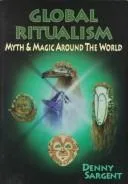

More Free Magic & Ritual Books
View all →