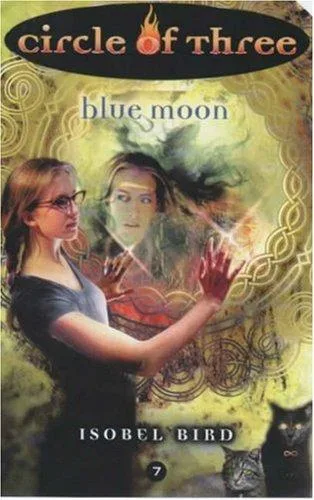
Circle of Three
 83
83

Circle of Three
Michael Thomas Ford’s "Circle of Three" presents a refreshingly grounded look at a coven’s formation. Unlike many occult narratives that lean into melodrama, Ford focuses on the interpersonal dynamics and the quiet, often mundane, work of building a magical community. The strength here lies in its relatable characters, whose struggles with self-doubt and external pressures feel authentic. However, the pacing occasionally falters, with certain plot points feeling slightly underdeveloped. A notable passage is the description of the initial formation of the circle, where the tentative steps towards shared power are depicted with a delicate realism. The book ultimately offers a sincere portrayal of finding connection through shared esoteric practice.
Ford's "Circle of Three" succeeds in portraying the human element of witchcraft.
📝 Description
83
Michael Thomas Ford's 2001 novel, Circle of Three, examines a coven's formation.
Circle of Three, published in 2001, follows a group of individuals drawn into a world where ancient practices meet modern life. The narrative centers on their experiences as they confront personal challenges and the mysteries of the occult.
Readers interested in contemporary fiction with pagan and witchcraft elements will find this story appealing. It suits those who enjoy character-focused narratives with a supernatural touch, particularly stories that explore the building of connections and the search for belonging within alternative spiritual paths.
The book emerged in 2001, a time when neopaganism and witchcraft saw increased cultural visibility, influenced by figures and dialogues in feminist spirituality. Ford's novel reflects a growing interest in witchcraft beyond sensationalized portrayals, offering a fictional look at covens and magical practice. It treats the 'circle' as both a ritual space and a symbol of shared power, where isolated individuals find strength collectively. The work also addresses integrating personal desires with magical responsibilities and how tradition adapts to modern life.
💡 Why Read This Book?
• Gain insight into the practicalities of coven formation, as depicted in the book's exploration of establishing a "circle" after 2001, moving beyond ritual to community building. • Understand the personal journeys of characters seeking belonging, learning how "Circle of Three" portrays the integration of individual aspirations with group dynamics. • Explore how contemporary witchcraft narratives, like this one, represent the evolution of magical practice outside of older, established traditions.
⭐ Reader Reviews
Honest opinions from readers who have explored this book.
❓ Frequently Asked Questions
When was Michael Thomas Ford's "Circle of Three" first published?
"Circle of Three" by Michael Thomas Ford was first published in 2001, placing it within a period of growing interest in contemporary witchcraft narratives.
What are the main themes explored in "Circle of Three"?
The novel primarily explores themes of community building, self-discovery, and the practice of witchcraft. It focuses on how individuals form connections and find empowerment through shared esoteric pursuits.
Does "Circle of Three" require prior knowledge of witchcraft?
While prior knowledge can enhance understanding, "Circle of Three" is written to be accessible to a general audience. It introduces concepts and practices within the narrative itself.
What kind of reader would enjoy "Circle of Three"?
Readers who appreciate character-driven fiction with elements of the supernatural, particularly those interested in modern paganism, community dynamics, and personal growth narratives, would likely enjoy this book.
Is "Circle of Three" part of a series?
As of its original publication in 2001, "Circle of Three" was a standalone novel, focusing on a self-contained story arc for its characters.
How does "Circle of Three" represent the concept of a coven?
The book portrays a coven not just as a ritualistic group but as a chosen family, emphasizing the emotional bonds, shared responsibilities, and mutual support among its members.
🔮 Key Themes & Symbolism
The Power of Community
The novel emphasizes that true magical power is often cultivated not in isolation, but within a supportive group. The "circle" itself becomes a symbol of this collective strength, where individual members contribute their unique energies and perspectives. Ford illustrates how shared intention and mutual reliance can amplify personal capabilities, transforming scattered efforts into cohesive force. This theme appeals to the historical development of covens as social and spiritual units, moving beyond solitary practice to communal ritual and mutual aid.
Personal Transformation Through Esotericism
Central to "Circle of Three" is the idea that engaging with esoteric practices can catalyze profound personal change. The characters often enter the narrative seeking something more, grappling with dissatisfaction or a sense of incompleteness. Their involvement with witchcraft and the coven provides a framework for self-examination, healing, and the development of latent potentials. The book suggests that the journey into the occult is intrinsically linked to the journey inward, demanding honesty and commitment.
Modernizing Witchcraft
Ford's work positions witchcraft within a contemporary setting, moving it away from archaic stereotypes. Published in 2001, the novel reflects a generation of practitioners integrating ancient wisdom with modern life, concerns, and social structures. It portrays a witchcraft that is adaptable, personal, and accessible, challenging older notions of rigid dogma. The narrative showcases how these practices can evolve and find new relevance for individuals working through the complexities of the 21st century.
The Nature of Initiation
The book subtly explores the concept of initiation, not necessarily through formal, rigid rites, but through the organic process of joining and participating within the coven. It depicts how individuals are drawn into the esoteric path, often through serendipity or personal seeking, and how their commitment deepens over time. This gradual immersion highlights the learning curve and the internal shifts required to embrace a new spiritual identity and community.
💬 Memorable Quotes
Direct passages from the work, attributed to the author.
“Sometimes the hardest magic is just showing up.”
— This interpretation points to the narrative's emphasis on commitment and consistent effort in both magical practice and community building. It suggests that the most significant challenges are often internal – overcoming inertia, doubt, or fear – rather than external magical opposition.
“We don't always choose the path, but we choose how we walk it.”
— This statement reflects the book's focus on agency and personal responsibility within a seemingly destined or guided spiritual journey. It implies that while external forces or circumstances might draw individuals to witchcraft, their personal growth and spiritual development depend on their conscious choices and actions.
“The old ways whisper, but we must learn to listen in new voices.”
— This interpretation emphasizes the book's engagement with contemporary witchcraft, suggesting a need to adapt and reinterpret ancient traditions for modern understanding. It highlights the dynamic nature of esoteric knowledge, which requires active engagement and personal interpretation rather than passive adherence.
💡 Key Ideas
Editorial paraphrase of the work's core concepts — not direct quotes.
The circle isn't just for casting spells; it's for holding each other up.
This paraphrased concept highlights the dual nature of the magical circle as presented in the book: a space for ritual and a metaphor for communal support. It underscores that the strength of a coven lies not only in its magical workings but also in its ability to provide emotional and spiritual anchorage for its members.
Finding your people is its own kind of spell.
This paraphrased idea captures the profound sense of belonging and empowerment that forming community provides. It equates the deep connection found within a coven to a potent magical act, suggesting that social cohesion and mutual understanding have transformative power.
🌙 Esoteric Significance
Tradition
While not explicitly tied to a single historical lineage like Gardnerian Wicca or Traditional Craft, "Circle of Three" draws from the broader contemporary resurgence of witchcraft and neopaganism. It reflects the evolution of these practices in the late 20th and early 21st centuries, emphasizing personal experience and community over strict adherence to ancient dogma. The work aligns with a more modern, eclectic approach to witchcraft, where individuals synthesize various influences to create their own spiritual paths.
Symbolism
The central symbol is the "circle" itself, representing not only the ritual space but also unity, protection, and collective energy. The number three, prominent in the title, often signifies balance, creation, and interconnectedness across various esoteric traditions, hinting at the dynamics within the coven. The book may also implicitly reference natural cycles and elements, common motifs in witchcraft, as grounding forces for the characters' spiritual development.
Modern Relevance
Contemporary practitioners and students of witchcraft continue to find relevance in "Circle of Three" for its realistic portrayal of coven dynamics and the challenges of community building. It speaks to modern spiritual seekers looking for authentic connections and practical approaches to esoteric practice. The novel's focus on personal growth through collective work remains a pertinent aspect for many contemporary pagan and witchcraft circles exploring their identities and practices.
👥 Who Should Read This Book
• Beginners interested in contemporary witchcraft narratives who want to understand coven dynamics beyond sensationalized media portrayals. • Readers seeking character-driven fiction that explores themes of community, belonging, and personal transformation through spiritual practice. • Individuals curious about modern interpretations of paganism and esoteric traditions, particularly those published around the turn of the millennium.
📜 Historical Context
Published in 2001, "Circle of Three" arrived during a period of increasing mainstream awareness of neopaganism and witchcraft, fueled by popular culture and academic interest. The late 20th century saw figures like Margot Adler and Starhawk popularizing more accessible forms of Wicca and witchcraft, moving beyond the more secretive traditions documented by Gerald Gardner. Ford's novel fits into this milieu, offering a fictional exploration of coven life that resonated with a growing audience seeking spiritual alternatives outside of conventional religions. It was a time when authors like Philip Pullman were also engaging with spiritual themes in literature, albeit from a different perspective, and the internet was beginning to democratize access to esoteric information, fostering new communities and interpretations of older practices. The work engaged with the burgeoning interest in immanent divinity and personal spiritual authority.
📔 Journal Prompts
The formation of the circle and its members' initial hesitations.
Reflect on the balance between personal desires and communal responsibilities within a spiritual group.
The significance of "showing up" in the context of magical practice and community.
How the characters integrate esoteric learning into their everyday lives.
The concept of finding one's "people" as a transformative experience.
🗂️ Glossary
Coven
A group of witches or practitioners who meet regularly for shared magical practice, ritual, and community. In "Circle of Three," it represents a chosen family and a source of mutual support and power.
Esoteric
Relating to or accessible only by a select group of people initiated into special knowledge. In this context, it refers to spiritual or mystical practices and beliefs that are not part of mainstream religion.
Neopaganism
A modern religious movement based on the polytheistic and nature-centered religions of ancient Europe. Witchcraft is a prominent subset of contemporary neopaganism.
Witchcraft
A broad term encompassing various spiritual practices often associated with nature worship, spellcasting, and ritual. In "Circle of Three," it is depicted as a path of personal empowerment and community connection.
Circle Casting
A ritual act, common in many forms of witchcraft, used to create a sacred space for magical work. It symbolizes protection, focus, and the gathering of energy.
Personal Transformation
A significant internal change or evolution in an individual's personality, beliefs, or outlook. The book suggests that engaging with witchcraft can be a catalyst for such change.
Community Building
The process of fostering a sense of connection, belonging, and mutual support among a group of people. This is a core theme in "Circle of Three."
🔮 Readers Also Liked
Browse all →








More by Michael Thomas Ford
All books →


More Free Witchcraft & Paganism Books
View all →