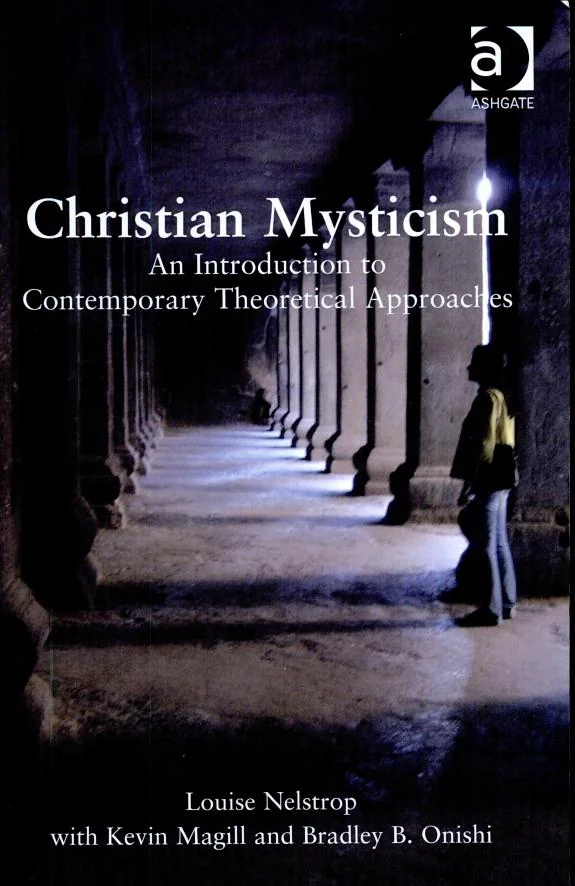
Christian Mysticism
 83
83

Christian Mysticism
Kevin Magill, Louise Nelstrop, and Bradley B. Onishi's *Christian Mysticism* presents a solid academic survey, commendable for its structured approach to a sprawling subject. The authors effectively map the trajectory of mystical thought from the desert ascetics to the high Middle Ages, offering accessible explanations of complex theological concepts. Their strength lies in delineating the various theoretical frameworks used to interpret mystical phenomena, moving beyond simple hagiography. However, the work occasionally feels more like an exhaustive catalog than a deeply felt exploration, particularly in its treatment of later periods. A section discussing the influence of figures like Meister Eckhart on subsequent Protestant and Catholic contemplative traditions could have added further depth. Nonetheless, it serves as a reliable academic primer on the subject.
📝 Description
83
Kevin Magill, Louise Nelstrop, and Bradley B. Onishi detail Christian mysticism's historical and theoretical underpinnings.
This volume provides a scholarly look at Christian mysticism, covering its historical growth and theoretical structures. The authors trace these traditions from the early Church Fathers into the medieval era. They examine how mysticism, once primarily theological, became recognized as an important spiritual heritage for today's seekers. The book also engages with modern critical views on the subject.
It is written for students and academics in religious studies, theological history, and comparative mysticism. It will also interest those who want to understand the historical background and intellectual basis of current Christian spirituality and contemplative practices. The work focuses on core mystical experiences, the nature of divine encounters within Christianity, and how these have been understood throughout different periods. It analyzes the theoretical methods used for studying Christian mystical theology, offering a critical viewpoint.
Christian mysticism, as presented here, is situated within a long tradition of seeking direct, personal experience of the divine. This path, distinct from purely intellectual or dogmatic theology, emphasizes contemplative prayer, inner transformation, and a union with God. The book examines figures and movements that embodied this pursuit, from the desert fathers to medieval mystics, showing how their practices and writings shaped a spiritual current within Christianity that continues to resonate.
💡 Why Read This Book?
• Gain an understanding of the core theoretical approaches used to analyze Christian mysticism, as presented by the authors, allowing for critical engagement with historical texts. • Explore the historical emergence of Christian mystical theology, tracing its development from the early Church Fathers through the medieval period, as detailed in the book's historical sections. • Discover how Christian mysticism is recognized today as a relevant spiritual heritage, bridging historical contemplative practices with the needs of modern spiritual seekers.
⭐ Reader Reviews
Honest opinions from readers who have explored this book.
❓ Frequently Asked Questions
When was Christian Mysticism first published?
The initial publication date for Christian Mysticism by Magill, Nelstrop, and Onishi was June 28, 2013, making it a relatively contemporary academic introduction to the subject.
What are the main periods covered in Christian Mysticism?
The book traces the tradition from the early Church Fathers through the flourishing period of the Middle Ages, highlighting its resurgence as a recognized Christian heritage.
Who are the authors of Christian Mysticism?
The authors are Dr. Kevin Magill, Dr. Louise Nelstrop, and Mr. Bradley B. Onishi, who collaborated to produce this academic study.
What kind of theoretical approaches does the book discuss?
It sets out to provide readers with access to the main theoretical approaches used to understand Christian mystical theology and experiences.
Is Christian Mysticism suitable for beginners?
Yes, the book is designed to introduce students and other interested readers to the subject, providing a foundational understanding of Christian mysticism.
Does the book cover modern interpretations of Christian mysticism?
Yes, it includes modern critical responses to Christian mysticism and discusses its relevance for today's spiritual seekers.
🔮 Key Themes & Symbolism
Evolution of Mystical Theology
The work charts the significant development of Christian mystical theology, beginning with the foundational writings of the early Church Fathers. It meticulously details how this contemplative tradition matured and flourished, particularly during the medieval era, becoming a distinct and influential branch of Christian thought and practice. The book examines the theological underpinnings and experiential dimensions that defined these early and medieval expressions of Christian mysticism.
Theoretical Frameworks of Analysis
A core focus is the presentation and analysis of various theoretical approaches employed to understand Christian mysticism. The authors introduce readers to the critical methodologies used to interpret mystical experiences and theological writings. This analytical lens allows for a deeper comprehension of the patterns, concepts, and spiritual goals inherent in the tradition, moving beyond anecdotal accounts to scholarly interpretation.
Contemporary Relevance
The book underscores the enduring significance of Christian mysticism as a vital spiritual heritage for contemporary individuals. It argues that understanding this historical tradition offers valuable insights for modern spiritual seekers. By bridging historical contemplative practices with present-day concerns, the work demonstrates the ongoing applicability and richness of mystical Christianity.
Christian Heritage and Practice
Christian Mysticism is presented not merely as a historical phenomenon but as an integral part of the Christian legacy. The work explores how mystical traditions have shaped Christian spirituality and practice across centuries. It aims to foster an appreciation for this heritage, encouraging readers to recognize its value in contemporary religious life and personal spiritual development.
💬 Memorable Quotes
Direct passages from the work, attributed to the author.
“Christianity has a rich tradition of mystical theology.”
— This statement highlights the deep historical roots and established nature of mystical thought within Christianity, suggesting it's not a fringe element but a significant, ongoing thread.
“It first emerged in the writings of the early church fathers.”
— This points to the foundational sources of Christian mysticism, locating its origins in the influential theological and spiritual works of figures from the earliest centuries of Christianity.
“The tradition flourished during the Middle Ages.”
— This emphasizes a peak period for Christian mystical development, indicating a time when these practices and theological explorations were particularly vibrant and widespread within the Church.
“Christian mysticism is increasingly recognised as an important Christian heritage.”
— This signifies a modern re-evaluation and appreciation of mystical traditions, positioning them as valuable and relevant components of Christianity today, not just historical artifacts.
“The book sets out to provide access to the main theoretical approaches.”
— This frames the work as an educational tool, focused on equipping readers with the critical and analytical frameworks necessary to engage with the complex subject matter of Christian mysticism.
🌙 Esoteric Significance
Tradition
While rooted in a specific Abrahamic religion, Christian mysticism shares common ground with broader esoteric traditions through its emphasis on direct, unmediated experience of the divine. It aligns with contemplative lineages found in Hermeticism and Neoplatonism, which often seek inner transformation and gnosis. This work fits within the Esoteric Library's scope by exploring the hidden, experiential dimension of a major world religion, often perceived as exoteric.
Symbolism
Key symbols explored would likely include the 'Cloud of Unknowing,' representing the apophatic path and the ineffability of God, and the 'Divine Spark' or 'Inner Light,' a Neoplatonic motif suggesting an inherent divine presence within the human soul, accessible through mystical ascent.
Modern Relevance
Contemporary Christian contemplative movements, spiritual directors, and scholars of lived religion draw upon the historical and theological foundations discussed in this book. Thinkers exploring interfaith dialogue and the universality of mystical experience also find resonance, as do practitioners of mindfulness and meditation seeking to understand the Christian antecedents of such practices.
👥 Who Should Read This Book
• Students of theology and comparative religion seeking a structured academic overview of Christian mystical traditions and their historical development. • Spiritual seekers interested in understanding the contemplative heritage within Christianity, moving beyond surface-level devotionalism to explore historical practices and theological underpinnings. • Researchers of esoteric traditions who wish to examine the specific mystical expressions within a major world religion and their relationship to broader contemplative paths.
📜 Historical Context
Published in 2013, *Christian Mysticism* emerged during a period of renewed academic and popular interest in contemplative practices and historical theology. It addressed a scholarly landscape where Christian mysticism was increasingly being reclaimed from purely historical or niche theological interest into mainstream religious studies. The work engages with modern critical responses, implicitly situating itself against both devotional interpretations and overly secularized analyses. While the book focuses on the historical trajectory, it implicitly dialogues with contemporary scholars like Bernard McGinn, whose extensive work on Christian mysticism had already set significant academic precedents. The intellectual currents it navigates include post-Reformation Catholic reformations and the ongoing academic debate concerning the definition and boundaries of mysticism itself.
📔 Journal Prompts
Early Church Fathers' writings on mystical theology as a foundation.
The medieval flourishing of Christian mysticism: historical significance.
Modern critical responses to the Christian mystical tradition.
The concept of Christian mysticism as a spiritual heritage for today.
Theoretical approaches to understanding mystical experience in Christianity.
🗂️ Glossary
Mystical Theology
A branch of theology focused on the direct, experiential knowledge of God, often involving altered states of consciousness, divine union, and ineffable experiences, as distinct from purely intellectual or doctrinal approaches.
Apophatic Theology
Also known as 'via negativa' or the way of negation, this approach to theology emphasizes what God is *not*, focusing on God's transcendence and ineffability rather than using positive descriptions.
Early Church Fathers
Influential theologians and writers of the first several centuries of Christianity (roughly 1st to 8th centuries), whose works laid the groundwork for Christian doctrine, spirituality, and mystical thought.
Medieval Period
The historical era in Europe spanning roughly from the 5th to the 15th century, a time of significant development and flourishing for Christian mystical theology and literature.
Spiritual Seekers
Individuals actively searching for meaning, purpose, and connection to the divine or transcendent, often exploring various religious, philosophical, or contemplative paths.
Contemplative Practices
Spiritual disciplines designed to foster deep reflection, meditation, and direct experience of the divine or ultimate reality, often involving quietude and interior focus.
Esoteric
Relating to or accessible only by a small number of people with a specialized knowledge or interest; inner, hidden, or secret teachings.
This book appears in 1 collection
🔮 Readers Also Liked
Browse all →








From the “Christian Mysticism” Collection
View all →
![The Conference Of The Birds Penguin Classics [download]](/img/thumb/the-conference-of-the-birds-penguin-classics-download.webp)




More Free Mysticism & Contemplation Books
View all →