Teresa of Avila
 72
72

Teresa of Avila
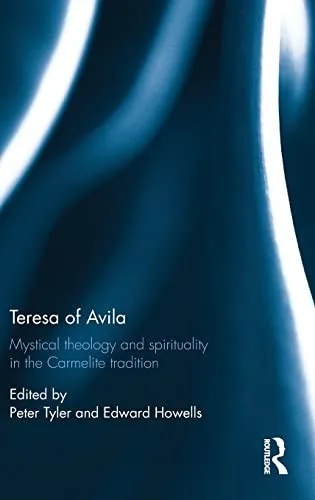
Peter Tyler and Edward Howells' edited volume, *Teresa of Avila*, offers a compelling re-examination of the saint's legacy, moving beyond hagiography to engage with her through the eyes of contemporary scholars and practitioners. The inclusion of essays by figures like Julia Kristeva and Rowan Williams provides a sophisticated intellectual framework, while chapters from living Carmelites ground the discussion in lived experience. A particular strength lies in the way the book bridges academic discourse and practical spirituality, demonstrating how Teresa's insights remain operative. However, the juxtaposition of highly theoretical analyses with more devotional accounts can occasionally feel uneven; the transition between Kristeva's psychoanalytic approach and a nun's reflections on silence, for instance, requires significant reader effort. The exploration of Teresa's concept of the "Interior Castle" as a map for spiritual progress is handled with particular nuance, showing its continued applicability. This collection is a valuable, if demanding, resource for understanding a foundational figure of Western mysticism.
📝 Description
72
This 2020 collection examines Teresa of Avila's life and influence through modern scholarly and lived perspectives.
Published in 2020, this volume analyzes Teresa of Avila's life and enduring significance, a key figure in 16th-century Catholic reform and mystical theology. The work moves beyond simple biography, examining her importance through contemporary scholarly viewpoints and the practical spiritual experiences of Carmelite friars and nuns. It integrates academic analysis with insights drawn from lived spiritual practice, presenting a range of perspectives on her legacy.
The book places Teresa of Avila within the volatile religious and political climate of 16th-century Spain, a period marked by the Counter-Reformation, close theological examination, and substantial changes within religious orders. It addresses her part in revitalizing the Carmelite Order and her difficult interactions with the Spanish Inquisition, which closely watched religious expression at the time. The text is intended for readers interested in the convergence of mysticism, history, and current spirituality, including scholars of religious history, theology students, and those involved with contemplative traditions.
This collection situates Teresa of Avila within the Christian mystical tradition, specifically her contributions to the contemplative life and the reform of the Carmelite Order. Her writings, particularly the "Interior Castle," are understood within a lineage of Christian mysticism that maps the soul's progression toward divine union through stages of prayer and spiritual discipline. The book considers these concepts not only historically but also in their application within contemporary Carmelite practice, connecting the historical pursuit of interiority with modern spiritual engagement.
💡 Why Read This Book?
• Gain a nuanced understanding of Teresa of Avila's "Interior Castle" concept, exploring its metaphorical structure and application to the soul's journey, as presented through historical and contemporary analyses. • Appreciate the practical challenges and spiritual charism of the Carmelite Order today, drawing on direct insights from friars and nuns living out Teresa's reforms. • Engage with St. Teresa's relevance through the perspectives of leading thinkers such as Julia Kristeva and Rowan Williams, offering a modern intellectual interpretation of her 16th-century mystical theology.
⭐ Reader Reviews
Honest opinions from readers who have explored this book.
❓ Frequently Asked Questions
What was Teresa of Avila's primary contribution to religious life?
Teresa of Avila (1515–1582) was instrumental in reforming the Carmelite Order, emphasizing a return to stricter contemplative practices and founding numerous discalced (shoeless) convents across Spain.
Which prominent scholars contribute to the discussion on Teresa of Avila in this book?
The book features contributions from leading academics and theologians including Professor Julia Kristeva, Professor Rowan Williams, and Professor Bernard McGinn, alongside members of the Carmelite Order.
What historical period does the book situate Teresa of Avila within?
The book places Teresa of Avila within the context of 16th-century Spain, a period marked by the Counter-Reformation, intense religious reform, and significant theological developments.
What is the 'Interior Castle' concept?
The 'Interior Castle' is a central metaphor used by Teresa of Avila in her spiritual autobiography, representing the soul as a castle with multiple mansions, through which the soul journeys towards union with God.
Does the book only focus on historical aspects of Teresa of Avila?
No, while it explores her historical context and writings, the book also examines her contemporary relevance and how her teachings are lived out by the Carmelite Order today.
What kind of spiritual practices are associated with Teresa of Avila?
Teresa of Avila is associated with contemplative prayer, mental prayer, asceticism, and the pursuit of mystical union with God, all central to the reformed Carmelite way of life.
🔮 Key Themes & Symbolism
The Interior Castle Metaphor
This theme centers on Teresa of Avila's most famous work, *The Interior Castle*, which uses the analogy of a castle with multiple mansions to describe the soul's progressive journey towards divine union. The book examines how this complex inner landscape is navigated through prayer, contemplation, and self-knowledge. It explores the stages of spiritual development, from initial conversion to mystical union, and its significance within the Carmelite tradition and broader Christian mysticism.
Carmelite Reform and Charism
The volume examines Teresa of Avila's important role in reforming the Carmelite Order in the 16th century. It investigates her efforts to establish stricter, more contemplative communities, emphasizing poverty, prayer, and community life. The book contrasts the historical reform with the contemporary practice of the Carmelite charism, featuring insights from friars and nuns who live and work within this tradition today.
Mystical Experience and Theology
A core theme is the nature of mystical experience as articulated by Teresa. The book explores her writings on prayer, divine union, and the role of grace. It positions her within the history of Christian mysticism, analyzing her unique theological insights and their reception. Contributions from scholars like Bernard McGinn offer historical and theological perspectives on her place in mystical theology.
Contemporary Relevance of Teresa's Thought
This theme addresses why Teresa of Avila continues to be relevant centuries after her death. The book explores her appeal to modern thinkers, including psychoanalysts and theologians, who find her writings offer clear insights into the human psyche and spiritual life. It examines how her emphasis on interiority and disciplined spiritual practice speaks to contemporary seekers.
💬 Memorable Quotes
Direct passages from the work, attributed to the author.
“Prayer is not an exchange of words, but a closeness of friendship.”
— This interpretation highlights Teresa's view of prayer as an intimate relationship with God, emphasizing connection and communion over mere verbal recitation. It suggests a spiritual practice rooted in love and mutual understanding.
“True reform begins with a return to foundational principles and fervent prayer.”
— This captures Teresa's approach to revitalizing the Carmelite Order. It suggests that significant change stems from adhering to core spiritual tenets and dedicating oneself to a deep, personal prayer life.
“Humility is the foundation of all virtues.”
— This essential tenet emphasizes Teresa's belief that a proper understanding of oneself in relation to God is paramount. Without humility, spiritual growth and the practice of other virtues are compromised.
“The Carmelite charism calls for a life of solitude, fraternity, and contemplation.”
— This captures the essence of the Carmelite way of life as envisioned by Teresa. It points to a balance between individual spiritual pursuit and communal support within a contemplative framework.
💡 Key Ideas
Editorial paraphrase of the work's core concepts — not direct quotes.
The soul's journey through the 'Interior Castle' involves overcoming self-deception and illusion.
This paraphrased concept underscores Teresa's focus on self-awareness and spiritual discipline. It implies that progress toward God requires confronting one's own limitations and the distractions of the external world.
🌙 Esoteric Significance
Tradition
Teresa of Avila's work is firmly rooted in the Christian mystical tradition, specifically within the lineage of contemplative prayer that traces back through figures like Pseudo-Dionysius and Bernard of Clairvaux. While not typically categorized within Western Esotericism in the same vein as Hermeticism or Kabbalah, her exploration of direct, unmediated experience of the divine and her detailed mapping of the soul's ascent align with broader esoteric interests in inner transformation and gnosis. The book examines how her specific Carmelite path offers a structured, yet deeply personal, route to spiritual realization.
Symbolism
The primary symbol explored is the "Interior Castle," representing the soul as a multi-chambered dwelling. Each chamber signifies a stage of spiritual progress, from the outer courts where one begins to turn inward, to the innermost chambers of union with God. Other recurring motifs include the "fountain of living water," symbolizing divine grace and spiritual nourishment, and the "dark night of the soul," representing periods of purification and spiritual dryness necessary for growth.
Modern Relevance
Contemporary thinkers and practitioners across various disciplines engage with Teresa's legacy. Her writings on the interior life and psychological states appeal to depth psychologists and existentialists. Within spiritual circles, her methods of prayer and discernment are studied by those seeking structured paths to contemplative experience, often drawing parallels with Eastern meditation techniques. The book highlights how figures like Julia Kristeva interpret her work through a modern lens, demonstrating its continued capacity to inform discussions on subjectivity, faith, and the human condition.
👥 Who Should Read This Book
• Students of Christian mysticism and contemplative prayer seeking a deeper understanding of Teresa of Avila's foundational texts and their historical context. • Scholars of religious history interested in the Counter-Reformation period and the role of women in religious reform movements in 16th-century Spain. • Contemporary spiritual seekers and practitioners, particularly those within or interested in the Carmelite tradition, looking for insights into lived spirituality and the journey of the soul.
📜 Historical Context
Teresa of Avila (1515–1582) lived and worked during a tumultuous period in 16th-century Spain, marked by the Counter-Reformation's fervor and the Spanish Inquisition's pervasive influence. This era demanded strict adherence to Catholic orthodoxy, making Teresa's spiritual writings and reformist activities subject to intense scrutiny. Her efforts to revitalize the Carmelite Order by establishing discalced convents, emphasizing poverty and contemplative prayer, represented a significant departure from established norms and often met resistance. The intellectual currents of the time included a resurgence of Neoplatonism and a strong focus on the spiritual life, but also a suspicion of mystical experiences that deviated too far from Thomistic theology. Contemporary figures like Ignatius of Loyola were also engaged in religious renewal, though with different methodologies. The book situates Teresa's work against this backdrop, acknowledging both her wide impact and the challenges she faced within a highly controlled religious environment.
📔 Journal Prompts
Teresa's concept of the 'Interior Castle' as a structured journey.
The Carmelite charism as lived experience versus historical ideal.
Reflections on divine union as described by Teresa.
The role of humility in spiritual progress.
Working through the 'dark night of the soul' in contemporary life.
🗂️ Glossary
Discalced Carmelites
A branch of the Carmelite Order, reformed by Teresa of Avila and John of the Cross, emphasizing stricter observance, poverty, and contemplative prayer, distinguished by their simple, often shoeless, footwear.
Interior Castle
Teresa of Avila's allegorical work describing the soul as a castle with seven mansions, representing stages of spiritual development and the journey toward union with God.
Mystical Theology
The branch of theology concerned with the direct, intuitive knowledge of God, often achieved through contemplation and spiritual experience, as distinct from doctrinal or scholastic theology.
Counter-Reformation
The period of Catholic revival and reform initiated in response to the Protestant Reformation, beginning in the mid-16th century and lasting into the early 17th century.
Asceticism
Severe self-discipline and avoidance of all forms of indulgence, typically for religious reasons. Involves practices like fasting, prayer, and renunciation of worldly comforts.
Charism
A spiritual gift or grace conferred by the Holy Spirit for the good of the Church or the world. In this context, it refers to the distinctive spirit and mission of the Carmelite Order.
Contemplative Prayer
A form of prayer characterized by quiet reflection and focused attention on God, seeking a deep, loving union rather than petition or meditation on specific doctrines.