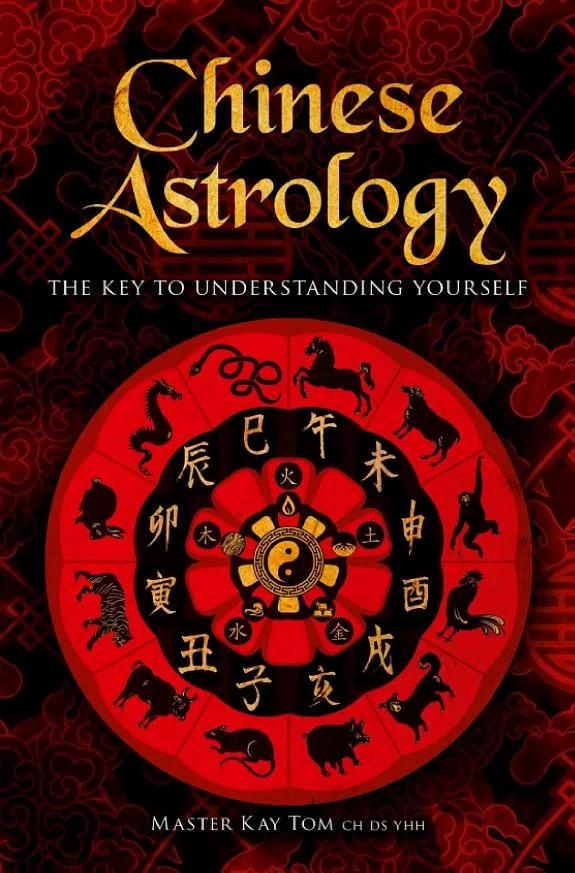
Chinese Astrology
 79
79

Chinese Astrology
Kay Tom's "Chinese Astrology" offers a clear entry point into a system often perceived as arcane. The author successfully demystifies the 60-year Sexagenary Cycle, explaining its mechanics without resorting to jargon. A particular strength lies in the methodical breakdown of how the five elements—Metal, Wood, Water, Fire, Earth—interact with the twelve animal signs, moving beyond superficial associations. However, the book occasionally feels like an extended primer; readers seeking advanced predictive techniques or deep philosophical exegesis might find it introductory. The explanation of the elemental interactions, for instance, while accurate, could benefit from more illustrative case studies. Overall, "Chinese Astrology" serves as a solid, well-organized foundation for understanding this complex Eastern astrological tradition.
📝 Description
79
Kay Tom's 2011 book details Chinese astrology's 60-year calendar, blending animal signs and the five elements.
This book examines the system of Chinese astrology, which maps human lives to celestial cycles. It goes beyond the familiar twelve animal signs to explain the interplay between these animals, the five elements (Metal, Wood, Water, Fire, Earth), and the 60-year calendar. The author shows how these components combine to form unique astrological profiles. This offers a framework for understanding personality, destiny, and fortune.
Kay Tom's work is for anyone interested in non-Western astrology. It suits practitioners of Western astrology looking for comparisons, students of Eastern philosophy, or individuals seeking self-discovery through symbolic systems. The book provides accessible yet detailed information for those wanting to understand the cyclical nature of time and its influence on human lives. It explains the Twelve Earthly Branches, represented by animals, and their dynamic influence from the Heavenly Stems, which embody the five elements in Yin and Yang phases. The interaction between animal signs and elemental influences creates specific astrological profiles.
Chinese astrology's origins are ancient, developing alongside early Chinese astronomy and cosmology. The system is deeply connected to traditional Chinese philosophy, particularly Taoism, and its concepts of Yin and Yang. It evolved independently of Western astrology, creating its own principles and calendar systems. The Sexagenary Cycle, integrating animal signs with elemental phases over 60 years, is a core component. This independent development highlights a distinct cosmological view centered on cyclical time and elemental interactions.
💡 Why Read This Book?
• Gain a concrete understanding of the Sexagenary Cycle, learning how the 12 animal signs interact with the five elements and Yin/Yang phases over a 60-year period, a concept central to the book's structure. • Discover how your birth year's animal sign is further refined by elemental influences, providing a nuanced personal profile beyond the basic animal association, as detailed in the elemental interaction sections. • Appreciate the cyclical worldview embedded in Chinese culture, recognizing the 60-year calendar as a microcosm of cosmic rhythms and their influence on human lives, a perspective emphasized throughout the book.
⭐ Reader Reviews
Honest opinions from readers who have explored this book.
❓ Frequently Asked Questions
What is the significance of the 60-year calendar in Chinese Astrology?
The 60-year calendar, or Sexagenary Cycle, is fundamental. It combines the 12 animal signs with the 10 Heavenly Stems (representing Yin/Yang of the five elements), creating 60 unique combinations that mark years, months, days, and hours, offering a highly specific astrological signature.
How do the five elements influence Chinese animal signs?
Each animal sign is associated with a specific element (Metal, Wood, Water, Fire, Earth) based on the year of its creation. The element's phase (Yin or Yang) further refines the sign's characteristics, creating a more complex personality profile than the animal alone suggests.
When was Chinese Astrology first developed?
While precise dating is difficult, the foundations of Chinese astrology, including the animal zodiac and elemental theories, are believed to have developed over centuries, with significant integration occurring by the Han Dynasty (206 BCE – 220 CE).
Is Chinese Astrology the same as Western Astrology?
No, they are distinct systems. Chinese Astrology is based on lunar cycles and a 12-animal zodiac combined with elements and a 60-year cycle, whereas Western Astrology is largely solar-based and uses the 12 zodiac constellations with different planetary influences.
What does the Dragon symbolize in Chinese Astrology?
The Dragon is a powerful symbol of good fortune, strength, and success. People born in the Year of the Dragon are often seen as charismatic, intelligent, and ambitious, embodying leadership qualities within the Chinese zodiac.
Can Chinese Astrology predict specific future events?
While Chinese Astrology provides insights into personality traits, potential strengths, weaknesses, and auspicious or challenging periods, its primary focus is on understanding inherent tendencies and life patterns rather than predicting precise events.
🔮 Key Themes & Symbolism
The Sexagenary Cycle
The work meticulously details the 60-year Sexagenary Cycle, a core component of Chinese Astrology. This cycle is formed by the combination of the twelve Earthly Branches (animal signs) and the ten Heavenly Stems (representing the five elements in Yin and Yang states). Understanding this cycle is crucial for accurately interpreting the nuanced influences that shape an individual's destiny and the character of specific years, months, days, and even hours.
Elemental Harmony and Conflict
A central theme is the dynamic interplay of the five elements: Metal, Wood, Water, Fire, and Earth. Kay Tom explains how these elements interact with each other in cycles of creation and destruction, and how their specific presence in a person's birth chart, dictated by the Heavenly Stems, influences their personality, relationships, and fortune. The balance or imbalance of these elements is key to astrological interpretation.
Animal Sign Personalities
The book offers detailed profiles for each of the twelve animal signs, from the Rat to the Pig. These descriptions go beyond simple stereotypes, exploring the inherent traits, strengths, weaknesses, and potential life paths associated with each sign. The work emphasizes that while the animal sign provides a foundational understanding, it is the elemental combinations that truly differentiate individual astrological makeup.
Cyclical Time and Destiny
Underpinning the entire system is the concept of cyclical time. Chinese Astrology views time not as linear but as a series of repeating cycles – daily, monthly, yearly, and sexagenary. The book illustrates how understanding these cycles, particularly the 60-year calendar, provides a framework for comprehending destiny, recognizing patterns in life events, and navigating periods of fortune and adversity.
💬 Memorable Quotes
Direct passages from the work, attributed to the author.
“The year is devoted to a particular animal, but this is only the beginning of the story.”
— This highlights that the common knowledge of the 12 animal years is a superficial understanding. The book promises to unveil the deeper layers of influence, particularly the elemental interactions and the 60-year cycle, which provide a more complete astrological picture.
“Twelve signs are combined with a 60-year calendar and the five elements.”
— This succinctly describes the core mechanics of the Chinese astrological system as presented in the book. It emphasizes the complexity beyond just the animal year, pointing to the integration of the Sexagenary Cycle and the elemental forces.
“These components form a fascinating and unique system that gives insight into people's lives.”
— This statement serves as an invitation, suggesting that the intricate combination of animal signs, the 60-year calendar, and the five elements offers a powerful tool for self-understanding and insight into personal destiny.
“As with the more commonly known form of astrology, there are 12 signs.”
— This draws a parallel to Western astrology to establish a relatable starting point for the reader. It acknowledges the familiarity of a 12-sign system before introducing the unique complexities of the Chinese zodiac.
“Chinese New Year usually towards the end of January or beginning of February.”
— This provides a concrete temporal anchor, connecting the abstract concept of astrological years to the tangible cultural event of Chinese New Year, making the system feel more accessible and grounded in observable tradition.
🌙 Esoteric Significance
Tradition
This work fits within the broad tradition of East Asian esoteric sciences, specifically Chinese cosmology and divination. It draws heavily on Taoist principles, particularly the concept of the Tao (the Way) as a natural order governing the universe through cycles and elemental interactions. While not directly tied to Hermeticism or Kabbalah, it shares a fundamental belief in sympathetic resonance between the macrocosm (cosmos) and the microcosm (human life), a commonality across many esoteric lineages.
Symbolism
Key symbols include the twelve animals of the zodiac (Rat, Ox, Tiger, etc.), each embodying specific archetypal energies and characteristics. The five elements (Metal, Wood, Water, Fire, Earth) are also crucial, representing fundamental forces and their cyclical relationships of creation and destruction. Their interaction with the animal signs, often through Yin and Yang polarities, generates the nuanced interpretations central to the system.
Modern Relevance
Contemporary practitioners of holistic wellness, mindfulness, and comparative spirituality often engage with Chinese Astrology. Thinkers in fields like Jungian psychology sometimes draw parallels between the animal archetypes and universal symbols. It remains relevant for individuals seeking non-Western frameworks for self-understanding and for those interested in the cyclical philosophies underpinning traditional East Asian cultures.
👥 Who Should Read This Book
• Individuals interested in comparative astrology seeking to understand systems beyond the Western zodiac, particularly those curious about the influence of lunar cycles and elemental theory. • Students of East Asian philosophy and culture looking for practical applications of concepts like Yin/Yang and the Five Elements in a personal context. • Anyone seeking a framework for self-reflection and understanding personal strengths, challenges, and life patterns through a sophisticated, cyclical astrological model.
📜 Historical Context
The system explored in "Chinese Astrology" by Kay Tom is rooted in ancient Chinese cosmology, developing over millennia. Its foundations lie in observations of celestial movements and philosophical concepts like Yin and Yang and the Five Elements (Wu Xing), which were formalized during the Spring and Autumn period (771–476 BCE) and the Warring States period (475–221 BCE). The integration of the twelve animal signs, likely originating from nomadic cultures, with the 60-year Sexagenary Cycle, a calendrical system, became prominent by the Han Dynasty (206 BCE – 220 CE). This development occurred concurrently with the flourishing of early Chinese astronomy and divination practices. Unlike the Hellenistic astrological tradition that emerged in the West around the same periods, Chinese astrology developed independently, focusing on terrestrial influences and cyclical time rather than planetary aspects in the same manner. Its reception has historically been integrated within Chinese culture, serving as a framework for understanding personality, fortune-telling, and calendar management, rather than being a subject of external academic debate or censorship in the way some Western esoteric movements faced.
📔 Journal Prompts
The interplay of your birth year's animal sign and its associated element.
Personal reflections on the cyclical nature of time as represented by the 60-year calendar.
How the characteristics of your animal sign manifest in daily interactions.
Identifying potential elemental imbalances in your life based on the Five Elements theory.
The symbolism of the Dragon or another specific animal sign in your personal narrative.
🗂️ Glossary
Animal Signs
The twelve zodiac animals (Rat, Ox, Tiger, Rabbit, Dragon, Snake, Horse, Goat, Monkey, Rooster, Dog, Pig) that represent years in a cyclical pattern, each with associated characteristics and energies.
Five Elements
The fundamental forces of Metal, Wood, Water, Fire, and Earth, which interact in cycles of creation (sheng) and destruction (ke), influencing the characteristics of animal signs and astrological periods.
Sexagenary Cycle
A 60-year cycle formed by the combination of the twelve Earthly Branches (animal signs) and the ten Heavenly Stems (representing Yin/Yang phases of the five elements), used for calendrical and astrological purposes.
Heavenly Stems
Ten cyclical signs (Jia, Yi, Bing, Ding, Wu, Ji, Geng, Xin, Ren, Gui) representing the Yin and Yang phases of the Five Elements, which modify the influence of the animal signs.
Earthly Branches
The twelve signs of the Chinese zodiac, each associated with an animal and a specific period of time within the larger cycles.
Yin and Yang
The Taoist concept of complementary, interconnected opposites. In Chinese Astrology, Yin and Yang apply to the elements and animal signs, indicating their passive/receptive or active/assertive nature.
Wu Xing
The Chinese term for the Five Elements, representing the fundamental energies and processes that shape the universe and human experience.
This book appears in 1 collection
🔮 Readers Also Liked
Browse all →![Mrs. Davis, (no. 7.) Crown Court, Little Poultney Street, Wardour Street, Soho, ... name and clock face on the door. Who has studied the occult sciences under the most learned sages after many years studious application; answers all adimssable [sic] questions in astrology, ... 1780](/img/thumb/mrs-davis-no-7-crown-court-little-poultney-street-wardour-street-soho-name-and-clock-face-on-the-door-who-has-studied-the-occult-sciences-under-the-most-learned-sages-after-many-years-studious-applica.webp)








From the “Chinese Astrology” Collection
View all →







More Free Astrology & Cosmology Books
View all →