Thirteen orphans

 61
61

Thirteen orphans


By Aurelia Blackwood (Occult Philosophy Critic) — Jane M. Lindskold's "Thirteen Orphans" is a masterful alchemical blend of Eastern mysticism and compelling fantasy. Lindskold expertly navigates the intricate symbolism of the Chinese zodiac, imbuing each orphan with the potent energies of their celestial totem. The narrative resonates with the deep currents of Taoist philosophy and the hidden lore of shamanic traditions. The author's evocation of a world where astrology is not mere divination but a tangible, magical force is particularly striking. This work is a profound exploration of destiny, heritage, and the arduous yet rewarding path of self-discovery for the discerning seeker and practitioner of esoteric arts.
📝 Description
61
Jane M. Lindskold's "Thirteen Orphans" was published in 2007, weaving Chinese cosmology with hidden magic.
Brenda finds herself drawn into a secret society of orphans after her father is attacked. Each orphan represents an animal from the Chinese zodiac. She learns that destiny is a tangible force, capable of great protection and terrible revelation.
The narrative unfolds with unseen energies and the guidance of ancestral spirits. The novel focuses on fate, the formation of a chosen family, and the emergence of latent spiritual abilities. It encourages contemplation of universal connections, the cyclical flow of time, and the impact of celestial events on human existence.
This novel engages with East Asian esoteric traditions, particularly those rooted in Chinese cosmology and astrology. It uses the zodiac animals not just as symbols but as conduits of inherent power and destiny. The concept of ancestral spirits acting as guides also aligns with animistic and shamanistic elements found in various folk traditions of the region. The magic depicted is often tied to these cosmic and spiritual forces, suggesting a worldview where the celestial and the earthly are deeply intertwined and influence mortal lives.
💡 Why Read This Book?
Embark on a mystical odyssey where the wisdom of the Chinese zodiac breathes life into a fantastical world. 'Thirteen Orphans' offers a unique exploration of ancestral magic, destiny, and the profound bonds formed in the crucible of shared adversity. Ideal for seekers of esoteric knowledge, fans of richly detailed fantasy, and those fascinated by the interplay of astrology and folklore.
⭐ Reader Reviews
Honest opinions from readers who have explored this book.
❓ Frequently Asked Questions
What is the central premise of "Thirteen Orphans"?
The book follows Brenda, who discovers her magical heritage and joins a group of orphans, each representing a Chinese zodiac animal, after an attack on her father.
What kind of magic is featured in the novel?
The magic is deeply rooted in ancient Chinese lore and cosmology, with each orphan's abilities intrinsically linked to their zodiac animal's symbolic essence.
Who are the "Thirteen Orphans"?
They are a group of children, each representing one of the twelve animals of the Chinese zodiac, plus potentially a thirteenth figure or concept, who share a common magical destiny.
Is this book suitable for readers new to Chinese astrology?
Yes, the novel introduces the concepts in an accessible and engaging manner, weaving them seamlessly into the narrative for both entertainment and education.
What are the primary themes explored?
Key themes include destiny, found family, ancestral magic, the symbolism of the Chinese zodiac, and the journey of self-discovery and empowerment.
🔮 Key Themes & Symbolism
The Living Zodiac: Cosmic Embodiment
This theme explores the profound concept of the Chinese zodiac not merely as a calendrical system or astrological tool, but as a dynamic, living force. Each orphan embodies the inherent qualities, strengths, and potential challenges of their respective animal sign. The narrative explores how these archetypal energies manifest in their personalities, abilities, and destinies, illustrating a universe where celestial influence is a tangible, potent magic that shapes individual and collective fates. It examines the intricate dance between innate predisposition and the freedom to forge one's own path.
Ancestral Echoes and Hidden Lineages
The story pulsates with the resonance of ancient wisdom and the secrets of hidden bloodlines. Brenda's awakening to her magical ancestry serves as a gateway to understanding the profound connection between past and present. The novel explores how ancestral knowledge, often suppressed or forgotten, can resurface with transformative power, guiding and challenging the protagonists. It highlights the importance of heritage, not as a rigid constraint, but as a source of strength, identity, and a profound understanding of one's place within a larger, mystical continuum.
The Crucible of Orphans: Found Family and Shared Destiny
Beyond the mystical elements, "Thirteen Orphans" is a powerful proof of the strength of found family. These disparate individuals, brought together by circumstance and a shared mystical heritage, forge an unbreakable bond. The narrative emphasizes how adversity and the pursuit of a common goal can transcend individual differences, creating a unit greater than the sum of its parts. Their shared destiny, intertwined with the fate of their world, underscores the idea that true belonging can be found in unexpected places, and that collective action fueled by love and loyalty can overcome even the darkest omens.
💬 Memorable Quotes
Direct passages from the work, attributed to the author.
“In the set of fate, each thread is vital.”
— This highlights the interconnectedness of all beings and events, emphasizing that every individual, like a single thread, plays an important role in the grand design of destiny.
“Our heritage is not a cage, but a compass.”
— This speaks to the empowering nature of ancestry in the novel, portraying it as a guide for navigating life's challenges rather than a restrictive force.
“The strongest magic is found not in spells, but in shared hearts.”
— This emphasizes the theme of found family and camaraderie, suggesting that the bonds of love and loyalty are the most potent magical force within the narrative.
“Where shadows lengthen, the zodiac's light shines brightest.”
— This evokes the novel's atmosphere of peril and mystery, implying that in times of darkness, the inherent power and guidance of the celestial signs become most crucial.
💡 Key Ideas
Editorial paraphrase of the work's core concepts — not direct quotes.
The stars whisper secrets only the brave can hear.
This quote expresses the novel's blend of astrology and mysticism, suggesting that celestial knowledge is not passively received but actively sought through courage and inner fortitude.
🌙 Esoteric Significance
Tradition
The esoteric traditions underpinning "Thirteen Orphans" are primarily rooted in Chinese cosmology and astrology. This includes the system of the Chinese Zodiac, which assigns specific animal archetypes with distinct characteristics and influences to each year. It draws upon Taoist philosophy, which emphasizes the natural order of the universe (Tao), the interplay of Yin and Yang, and the concept of vital energy (Qi). Elements of folk religion, such as the veneration of ancestors and spirits, also likely inform the narrative, creating a rich, multi-layered esoteric framework.
Symbolism
The novel is steeped in potent symbolism, with the Chinese zodiac animals serving as central icons. Each animal represents not only personality traits but also elemental forces, directional energies, and specific archetypal roles within the cosmic order. The concept of thirteen, often considered a number of transformation or completion in various esoteric traditions, also suggests a deeper layer of meaning beyond the standard twelve. The narrative likely uses these symbols to explore themes of destiny, balance, transformation, and the cyclical nature of existence, imbuing the characters and their journey with profound allegorical weight.
Modern Relevance
In contemporary society, there is a growing fascination with ancient wisdom, mindfulness, and understanding one's place in the universe. "Thirteen Orphans" taps into this desire by offering a mystical lens through which to view personal identity and destiny. The exploration of found family and overcoming adversity speaks to modern challenges of belonging and resilience. Furthermore, the novel's integration of astrology and folklore provides an accessible entry point for readers interested in esoteric studies, demonstrating the enduring relevance of these ancient systems in providing guidance, meaning, and a sense of connection in an increasingly complex world.
👥 Who Should Read This Book
This enchanting novel is a treasure for a diverse readership. For the **beginner seeker**, it offers an accessible and captivating introduction to the detailed symbolism of the Chinese zodiac and Chinese mystical traditions, woven into an engaging fantasy plot. **Scholars of comparative mythology and esoteric studies** will appreciate Lindskold's nuanced integration of folklore and cosmology. **Practitioners of astrology or those interested in Eastern spiritual practices** will find a wealth of symbolic resonance and thematic depth. Ultimately, anyone drawn to stories of hidden magic, destined journeys, and the profound power of found family will be captivated by the world of "Thirteen Orphans."
📜 Historical Context
Jane M. Lindskold's "Thirteen Orphans" draws inspiration from the collection of ancient Chinese lore, a civilization with a history spanning millennia that deeply integrated cosmology, philosophy, and folklore. The Chinese zodiac, with its twelve animal signs and cyclical timekeeping, has been a central to Chinese culture for over two thousand years, influencing everything from personal character assessment and marital compatibility to agricultural practices and imperial decision-making. The novel likely also taps into the broader tradition of Chinese mysticism, including concepts like Qi (vital energy), Yin and Yang, and the influence of spirits and ancestral veneration, which were prevalent in Taoism and folk religions. By setting her story in an alternate world steeped in these traditions, Lindskold connects her narrative to a profound and enduring cultural legacy, offering a modern interpretation of ancient wisdom.
📔 Journal Prompts
Reflect on your own birth year's Chinese zodiac animal. What qualities do you most identify with, and how might they influence your life path?
Consider a time you felt like an 'orphan' – disconnected or alone. How did you find your sense of belonging or build your own 'found family'?
If you discovered a hidden magical lineage, what kind of powers or responsibilities do you imagine you would inherit?
Explore the concept of destiny versus free will in your own life. To what extent do you believe your path is predetermined, and where do you exercise your agency?
How does the symbolism of the Chinese zodiac animals resonate with archetypes or characters you've encountered in other stories or in your own life?
🗂️ Glossary
Chinese Zodiac
A cyclical system of twelve animal signs (Rat, Ox, Tiger, Rabbit, Dragon, Snake, Horse, Goat, Monkey, Rooster, Dog, Pig) associated with specific years, each possessing unique characteristics, strengths, and influences within Chinese astrology and culture.
Cosmology
The study of the origin, evolution, and ultimate fate of the universe. In this context, it refers to the ancient Chinese understanding of the celestial order and its influence on earthly affairs.
Qi (Chi)
In Chinese philosophy, the vital life force or energy that flows through all living things and the universe. It is a fundamental concept in traditional Chinese medicine, martial arts, and spiritual practices.
Lineage
A line of descent from an ancestor. In a magical or esoteric context, it refers to inherited magical abilities, knowledge, or spiritual connections passed down through generations.
Archetype
A recurring symbol, character type, or motif that is universally understood and present in the collective unconscious, often derived from mythology and folklore, such as the zodiac animals in this novel.
This book appears in 2 collections
🔮 Readers Also Liked
Browse all →





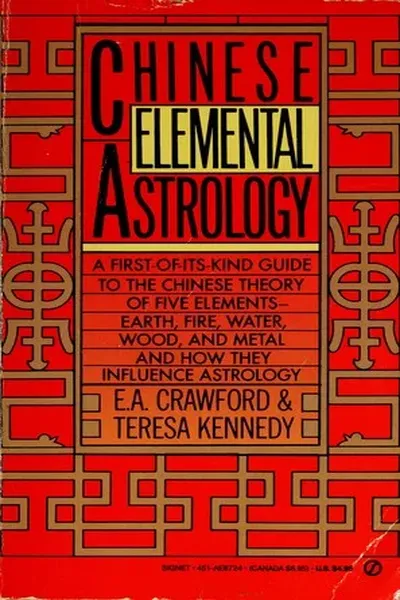


From the “Astrology” Collection
View all →



![Mrs. Davis, (no. 7.) Crown Court, Little Poultney Street, Wardour Street, Soho, ... name and clock face on the door. Who has studied the occult sciences under the most learned sages after many years studious application; answers all adimssable [sic] questions in astrology, ... 1780](/img/thumb/mrs-davis-no-7-crown-court-little-poultney-street-wardour-street-soho-name-and-clock-face-on-the-door-who-has-studied-the-occult-sciences-under-the-most-learned-sages-after-many-years-studious-applica.webp)

![[Medical and astrological texts : in English].](/img/thumb/medical-and-astrological-texts-in-english.webp)


More Free Astrology & Cosmology Books
View all →