Understanding Occult Sciences
 71
71

Understanding Occult Sciences
Nandlal Vanvari’s "Understanding Occult Sciences" presents a commendable effort to consolidate a range of esoteric disciplines under one cover. The book’s primary strength lies in its accessible presentation of complex subjects like phrenology and moleosophy, making them digestible for the uninitiated. Vanvari’s approach is methodical, breaking down each science with clear examples. However, the work occasionally feels more like an encyclopedia entry than a critical analysis. For instance, the section on physiognomy, while informative, could benefit from a more nuanced discussion of its historical controversies and ethical implications, particularly given its past association with pseudoscientific racial theories. The inclusion of graphology alongside more ancient practices like astrology offers a valuable juxtaposition of historical and modern symbolic systems. Ultimately, "Understanding Occult Sciences" serves as a solid, if somewhat dry, primer for those seeking an overview of these fascinating fields.
📝 Description
71
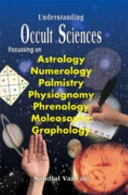
Nandlal Vanvari's 'Understanding Occult Sciences' examines seven divinatory disciplines in detail.
Nandlal Vanvari's 'Understanding Occult Sciences' systematically analyzes seven distinct fields: astrology, numerology, palmistry, physiognomy, phrenology, moleosophy, and graphology. The book aims to show how these practices, both ancient and modern, interpret personality, character, and destiny. Vanvari presents these subjects not as simple superstition, but as structured methods for self-understanding and comprehending others.
This volume is for anyone curious about esoteric sciences that link external human attributes to internal disposition and future possibilities. It serves as a structured introduction for beginners in areas like palmistry and graphology. Readers with some existing knowledge will also find material to deepen their grasp of the symbolic language found in birth dates, names, facial features, handwriting, and body marks.
The book traces these occult sciences through history, noting their presence across cultures and eras. It acknowledges traditions that have sought to decipher natural order or divine will through observable phenomena. By grouping these disciplines, Vanvari highlights a shared lineage of inquiry into human potential and fate, a pursuit evident since antiquity.
Vanvari's work is grounded in the principle of correspondence, a core concept in many esoteric traditions. This principle posits that macrocosmic patterns, such as planetary influences or numerical vibrations, mirror microcosmic realities like personality traits and life events. Similarly, physical forms—hand lines, facial structure, handwriting—are seen as reflections of inner states and future potential. The book connects these divinatory arts to a long historical arc of seeking meaning through observable phenomena, a pursuit shared by figures like Agrippa and many Renaissance hermeticists.
💡 Why Read This Book?
• Gain a foundational understanding of how astrology and numerology interpret birth-related attributes, a concept explored extensively in the book's early chapters. • Learn to analyze handwriting through the principles of graphology, as detailed in Vanvari's specific examples, to understand personality nuances. • Discover the symbolic meanings of moles on the body, a practice known as moleosophy, a unique subject covered with illustrative detail.
⭐ Reader Reviews
Honest opinions from readers who have explored this book.
❓ Frequently Asked Questions
When was Nandlal Vanvari's 'Understanding Occult Sciences' first published?
The book 'Understanding Occult Sciences' by Nandlal Vanvari was first published in January 2004, making it a relatively modern compilation of traditional esoteric knowledge.
What specific occult sciences are covered in Nandlal Vanvari's book?
The book covers seven specific occult sciences: astrology, numerology, palmistry, physiognomy, phrenology, moleosophy, and graphology, offering insights into personality and fate.
Does 'Understanding Occult Sciences' provide practical examples?
Yes, Nandlal Vanvari's work includes easy-to-understand examples to illustrate how each science explains aspects of human character, mind, and potential destiny.
Is the book suitable for beginners in esoteric studies?
Absolutely. The book is structured to provide deeper insights into personality and fate through accessible explanations, making it ideal for those new to occult sciences.
What is the primary focus of 'Understanding Occult Sciences'?
The primary focus is on birth- and name-related attributes, bodily features, and writing styles as keys to understanding human beings through various esoteric disciplines.
Who is the author of 'Understanding Occult Sciences'?
The author is Nandlal Vanvari, who first published this comprehensive work on occult sciences in 2004.
🔮 Key Themes & Symbolism
Divination and Physiognomy
The work meticulously examines disciplines that seek to divine future events or reveal character through physical attributes. This includes analyzing celestial bodies' influence (astrology), the significance of numbers (numerology), palm lines (palmistry), facial features (physiognomy), skull contours (phrenology), bodily marks (moleosophy), and handwriting (graphology). Vanvari emphasizes how these seemingly disparate fields share a common goal: to decode the human condition and its predetermined path, offering a structured framework for self-understanding.
Birth and Name Attributes
A core theme is the examination of how elements associated with an individual's birth and identity, such as their birth date and given name, are believed to hold intrinsic meaning. The book explores how astrology links birth times to planetary positions and numerology assigns vibrational values to names and birth dates. This highlights a fundamental esoteric concept: that our very existence, from inception, is encoded with information accessible through symbolic interpretation.
Body as a Symbolic Map
Vanvari presents the human body as a canvas of symbolic information. Physiognomy interprets the face, phrenology the skull, and moleosophy the skin's markings, all as indicators of personality and destiny. Palmistry further details this by reading the lines and mounts of the hand. The underlying principle is that our physical form is not arbitrary but a direct expression of our inner nature and life's trajectory, a concept central to many ancient wisdom traditions.
Writing as Character Revelation
Graphology, the study of handwriting, is explored as a science that reveals psychological traits. Vanvari likely details how the slant, pressure, size, and formation of letters can be interpreted to understand a person's emotional state, intellect, and disposition. This theme underscores the esoteric belief that even our most mundane actions, like writing, leave an imprint of our inner self, providing another avenue for self-discovery and analysis.
💬 Memorable Quotes
Direct passages from the work, attributed to the author.
“The Book Examines The Occult Sciences That Deal With The Birth- And Name-Related Attributes Of Human Beings”
— This foundational statement sets the scope of Vanvari's inquiry, highlighting the book's focus on divinatory systems that derive meaning from core aspects of an individual's identity and genesis.
“Astrology, Numerology, Palmistry, Physiognomy, Phrenology, Moleosophy And Graphology For Deeper Insights Into Personality And Fate.”
— This lists the specific disciplines covered, framing them as tools for profound self-knowledge and understanding one's predetermined life path, as explored within the text.
“With Easy-To-Understand Examples, It Reveals The Way In Which These Sciences Explain Aspects Of Human Character And Mind.”
— This emphasizes the book's pedagogical approach, promising practical illustrations that explain complex esoteric concepts and make them relatable to the reader's experience of human psychology.
“Bodily Features And Their Style Of Writing”
— This phrase points to two major categories of analysis within the book: interpreting physical characteristics (like facial structure or moles) and analyzing the personal expression found in handwriting.
“Deeper Insights Into Personality And Fate”
— This captures the ultimate promise of studying the occult sciences presented: achieving a more profound comprehension of one's own character and the unfolding of their life's destiny.
🌙 Esoteric Significance
Tradition
This work aligns broadly with the Hermetic tradition, which posits that "As Above, So Below," implying a correspondence between the celestial, the terrestrial, and the human. It also touches upon Neoplatonic ideas regarding the soul's connection to cosmic forces and the potential for divination. Vanvari’s approach synthesizes various streams of esoteric thought, presenting them as interconnected methods for understanding the human microcosm within the larger macrocosm, rather than strictly adhering to a single lineage.
Symbolism
Key symbols explored include planetary archetypes in astrology, where celestial bodies represent fundamental forces influencing human affairs. Numbers in numerology act as symbolic representations of universal energies and personality traits. In palmistry, the lines and mounts on the hand are symbolic maps of life experiences and character. Physiognomy reads facial features as symbolic expressions of inner disposition, while graphology interprets handwriting strokes as symbolic manifestations of psychological states.
Modern Relevance
Contemporary interest in self-help, personal development, and mindfulness practices often intersects with the principles explored in Vanvari’s book. Fields like positive psychology sometimes incorporate aspects of personality assessment that echo older divinatory systems. Furthermore, the resurgence of interest in astrology and numerology via social media platforms demonstrates a continued human desire to find meaning and guidance through symbolic interpretation, keeping the spirit of Vanvari's work relevant today.
👥 Who Should Read This Book
• Aspiring practitioners of divination seeking a foundational text that introduces multiple symbolic systems like astrology, palmistry, and numerology. • Individuals interested in comparative esotericism who wish to understand the connections and distinctions between physiognomy, phrenology, and graphology. • Personal development enthusiasts looking for alternative frameworks to explore personality traits and life paths beyond conventional psychological models.
📜 Historical Context
Nandlal Vanvari's "Understanding Occult Sciences," first published in 2004, emerged during a period of renewed interest in esoteric knowledge and alternative spiritualities, often termed the New Age movement. This era saw a resurgence of interest in practices that had been marginalized by mainstream science and academia. The book draws upon a lineage of inquiry that stretches back centuries, with figures like Heinrich Cornelius Agrippa in the 16th century compiling similar compendiums of occult knowledge. Vanvari's work can be seen as part of a broader intellectual current that seeks to synthesize ancient wisdom with modern understanding. While not directly engaging with specific critics, the book implicitly addresses the skepticism of rationalist traditions by presenting these disciplines as structured systems, rather than mere folklore. Its compilation of diverse practices—from ancient astrology to 19th-century phrenology—reflects a holistic approach to understanding human potential prevalent in late 20th and early 21st-century esoteric thought.
📔 Journal Prompts
Birth date and name significance in astrology and numerology: initial reflections.
Palmistry analysis: mapping key lines to personal life events explored.
Physiognomy and phrenology: perceived correlations with character traits.
Moleosophy: identifying significant mole placements and their interpretations.
Graphology: analyzing personal handwriting for self-discovery.
🗂️ Glossary
Astrology
The study of the movements and relative positions of celestial bodies interpreted as having an influence on human affairs and the natural world.
Numerology
The belief in the divine or mystical relationship between a number and one or more coinciding events, often involving assigning numerical values to letters.
Palmistry
The practice of fortune-telling and character analysis through the study of the palm, including its lines, mounts, and shape.
Physiognomy
A system of character assessment based on the facial features of a person, believing that these features reveal aspects of their personality.
Phrenology
A pseudoscience that claimed to determine character, personality traits, and mental abilities by measuring and examining the skull's shape and indentations.
Moleosophy
The practice of interpreting the significance of moles on the body as indicators of personality traits and future destiny.
Graphology
The analysis and interpretation of handwriting to understand personality traits, emotional states, and psychological characteristics.
This book appears in 1 collection
🔮 Readers Also Liked
Browse all →









From the “Palmistry” Collection
View all →







More Free Astrology & Cosmology Books
View all →