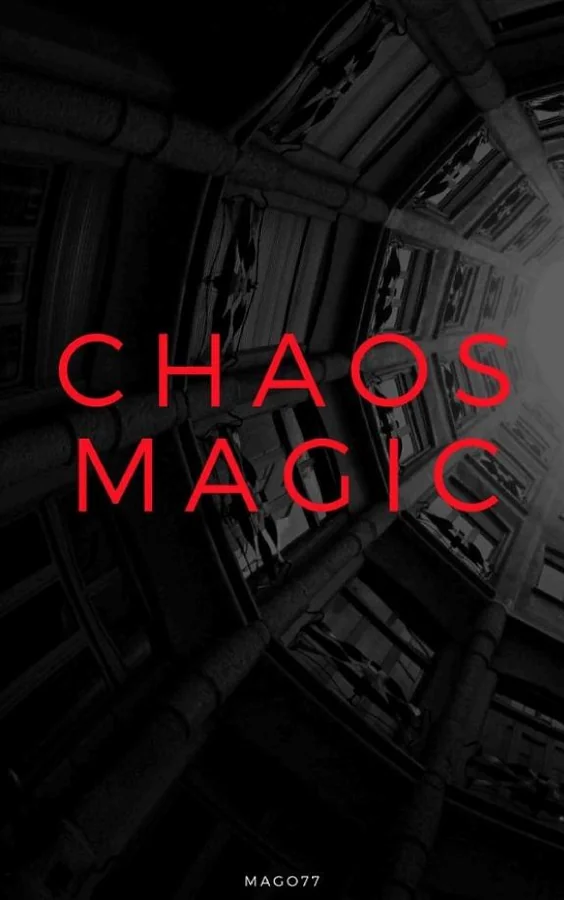
Chaos Magic
 71
71

Chaos Magic
Juan Miguel Dominguez's "Chaos Magic" presents a pragmatic, almost utilitarian, view of magical practice. The book’s strength lies in its direct, exercise-driven format, particularly evident in sections like "Exercise one: Bring attractive people to your life for sexual encounters." This no-nonsense approach strips away much of the esoteric ornamentation that can obscure the mechanics of manifestation for some. However, its brevity and the sometimes-blunt presentation of exercises might leave seasoned practitioners wanting more theoretical depth or historical nuance. The 'almost-inverse sigil' concept, while intriguing, feels underdeveloped within the text’s scope. Ultimately, "Chaos Magic" serves as a functional primer for those eager to experiment with results-oriented spellcraft, even if it sacrifices extensive philosophical exploration for expediency.
📝 Description
71
Juan Miguel Dominguez's Chaos Magic, published in 2023, presents magic as a practical art focused on results.
This book offers a practical framework for chaos magic, emphasizing its adaptability and effectiveness rather than adherence to strict doctrines. Dominguez positions magic as an art form that practitioners can shape to their own needs, making it accessible to anyone interested in experimental occultism. The work aims to demystify the practice, showing how personal belief can be a powerful tool for achieving desired outcomes.
The book is suited for individuals seeking tangible results from their magical or spiritual work. It appeals to those who prioritize the efficacy of their personal methods over historical lineage. Readers will find exercises designed for self-directed manifestation, covering areas from personal relationships to financial improvement. Specific techniques discussed include sigilization and the 'quantic method,' all grounded in the idea that belief itself is a malleable element.
Chaos magic draws from a variety of esoteric traditions but largely rejects rigid dogma in favor of pragmatic results. This book situates itself within that lineage, acknowledging its evolution and connection to broader magical thought. It engages with concepts like the Kybalion's seven principles, suggesting a continuity of intent across different magical systems even as methodologies diverge. The work highlights how focused belief and mental states are central to magical practice.
💡 Why Read This Book?
• Learn practical techniques for altering your reality, as demonstrated through specific exercises like the 'quantic method' for financial gain, offering a direct path to results-oriented practice. • Understand the role of belief as a malleable tool, as explored in the sections discussing consciousness levels and the constant activity of the mind, providing a framework for personal magical efficacy. • Engage with foundational esoteric concepts, such as the "7 principles of Kibalyon," contextualizing modern magical practices within a longer tradition and offering a basis for personal synthesis.
⭐ Reader Reviews
Honest opinions from readers who have explored this book.
❓ Frequently Asked Questions
What is the core philosophy behind Chaos Magic as presented by Juan Miguel Dominguez?
The core philosophy is that belief is a tool that can be manipulated to achieve desired results. Chaos Magic emphasizes practical application and personal experience over adherence to any single dogma or tradition, focusing on the efficacy of magical acts.
How does "Chaos Magic" by Juan Miguel Dominguez differ from traditional magical systems?
It differs by prioritizing adaptability and personal results over established rituals or historical lineages. While it references concepts like the "7 principles of Kibalyon," its focus is on creating and utilizing personal magical systems that work for the individual practitioner.
What kind of exercises are included in the book?
The book includes practical exercises designed for manifestation. Examples include attracting specific types of people, influencing games of chance, and various unconventional methods for earning money using techniques like sigilization and the 'quantic method'.
Is "Chaos Magic" suitable for beginners?
Yes, the book is structured to be accessible to beginners interested in practical magic. It breaks down complex ideas into actionable steps and provides clear exercises that do not require extensive prior knowledge of esoteric traditions.
What is the 'almost-inverse sigil' mentioned in the book?
The 'almost-inverse sigil' appears to be a specific technique for creating magical symbols. While not fully detailed in the blurb, it suggests a method for constructing sigils that deviates from standard practices, likely for enhanced efficacy or unique applications.
When was "Chaos Magic" by Juan Miguel Dominguez first published?
The book "Chaos Magic" by Juan Miguel Dominguez was first published on September 7, 2018.
🔮 Key Themes & Symbolism
Belief as a Tool
The work posits that belief is not a passive state but an active force that can be deliberately shaped and directed. Dominguez explores how conscious manipulation of belief systems, often discussed in relation to "Conscience Levels," is fundamental to achieving magical outcomes. This perspective challenges conventional notions of faith, framing it as a programmable mechanism for influencing reality. The book encourages practitioners to adopt temporary beliefs necessary for specific workings, divorcing the efficacy of magic from personal conviction.
Practical Manifestation Exercises
A significant portion of the book is dedicated to actionable exercises designed to produce tangible results. These range from interpersonal goals, such as attracting specific individuals for relationships, to financial objectives, including success in games of chance and unconventional earning methods. Techniques like sigilization, and the 'quantic method' are presented as direct means to bypass conventional limitations and manifest desires.
Mind and Consciousness
Dominguez examines the nature of the mind, particularly its constant activity ('Our minds never rest'), as a key element in magical practice. Understanding and harnessing this mental energy is crucial. The book discusses different "Conscience Levels" and how shifting between them can facilitate magical operations. This focus on internal states underscores the idea that the practitioner's own consciousness is the primary locus of magical power and transformation.
Esoteric Principles Integration
While championing a flexible approach, the work does not ignore established esoteric frameworks. It references foundational texts and concepts, such as the "7 principles of Kibalyon," suggesting that Chaos Magic can be seen as a modern, results-oriented interpretation or synthesis of older magical traditions. This integration allows practitioners to draw from a wider pool of knowledge while maintaining a focus on personal efficacy.
💬 Memorable Quotes
Direct passages from the work, attributed to the author.
“Our minds never rest.”
— This highlights the constant, often subconscious, mental activity that can either hinder or aid magical practice. Dominguez suggests understanding and directing this flow is key to harnessing psychic energy for manifestation.
“The 7 principles of Kibalyon.”
— Referencing these principles suggests an underlying order or set of universal laws that Dominguez's Chaos Magic seeks to leverage, albeit through unconventional, personalized methods rather than strict adherence.
“Bring attractive people to your life for sexual encounters.”
— This exercise exemplifies the results-oriented nature of Chaos Magic, demonstrating its application to personal desires without moralistic judgment, focusing purely on the mechanics of manifestation.
“Others ways to earn money.”
— This indicates a practical focus on material manifestation, exploring financial gain through methods that may fall outside conventional societal norms or economic systems.
“The almost-inverse sigil.”
— This points to a specific, potentially novel, sigil creation technique presented in the book, suggesting an exploration of advanced or alternative methods within sigil magic.
🌙 Esoteric Significance
Tradition
Chaos Magic, as represented by Dominguez, departs significantly from established esoteric lineages like Hermeticism or Kabbalism. While it may borrow conceptual tools, such as the principles from the Kybalion, its core is antinomian – it rejects fixed dogma and tradition in favor of pragmatic efficacy. It can be seen as a modern, post-modern evolution of Western esotericism, focusing on the individual practitioner's will and belief as the primary magical agents.
Symbolism
The book's symbolism is less about fixed, traditional symbols and more about the creation and activation of personal symbols (sigils). The "almost-inverse sigil" technique likely represents a novel approach to symbol creation, emphasizing the practitioner's intent and the sigil's function over adherence to archetypal meanings. The concept of "Conscience Levels" itself acts as a symbolic map of the practitioner's internal landscape, guiding their magical operations.
Modern Relevance
Chaos Magic continues to influence contemporary magical practice, particularly online communities and younger practitioners seeking accessible, results-oriented systems. Thinkers and practitioners exploring concepts of belief-hacking, psychological manipulation for self-transformation, and experimental spirituality often draw upon its principles. Its emphasis on adaptability makes it relevant for individuals navigating rapidly changing social and technological landscapes.
👥 Who Should Read This Book
['• Aspiring practitioners of experimental magic seeking direct methods for achieving personal goals, who will benefit from the practical exercises and focus on results.', "• Individuals interested in the psychological underpinnings of belief and consciousness, who can explore concepts like 'Conscience Levels' and mental discipline.", '• Occult researchers interested in the evolution of Western esotericism, who will find value in understanding the post-modern, results-driven approach of Chaos Magic.']
📜 Historical Context
Published in 2018, Juan Miguel Dominguez's "Chaos Magic" emerged during a period of resurgence and mainstreaming for occult practices, heavily influenced by the internet and accessible digital publishing. This era saw a proliferation of practical magic guides, moving beyond the more academic or ritualistic approaches prevalent in earlier 20th-century esoteric movements like the Hermetic Order of the Golden Dawn or Aleister Crowley's Thelema. Chaos Magic itself, originating in the UK in the 1970s with figures like Peter J. Carroll and Ray Sherwin, represented a radical departure from traditional occultism by emphasizing the subjective nature of belief and results over adherence to specific deities or cosmologies. Dominguez's work fits within this lineage, offering a Spanish-language perspective on a movement that gained traction globally. While not directly engaging with specific contemporaries in this text, its publication implicitly responded to and contributed to the ongoing discourse around practical, results-driven magical systems, often contrasted with more structured esoteric traditions.
📔 Journal Prompts
Reflect on the concept of 'Our minds never rest' and its implications for focused magical intent.
Analyze the '7 principles of Kibalyon' and consider how they might be applied through Chaos Magic techniques.
Experiment with the 'almost-inverse sigil' method, documenting your process and perceived efficacy.
Consider how 'Conscience Levels' could be intentionally shifted to facilitate personal goals.
Evaluate the ethical implications of using magic for 'sexual encounters' as proposed in Exercise One.
🗂️ Glossary
Chaos Magic
A contemporary magical practice emphasizing results and personal belief over rigid dogma or tradition. It encourages practitioners to adapt techniques from various sources or invent their own for specific goals.
Sigil
A symbol created to represent a magical intention. In Chaos Magic, sigils are often formed by condensing statements of intent into abstract designs and then charging them with energy.
Kibalyon
Refers to 'The Kybalion,' a 1908 book that claims to present the core teachings of Hermes Trismegistus, outlining seven universal principles of mental alchemy and esoteric philosophy.
Conscience Levels
A concept explored in the book, likely referring to different states or modes of consciousness that can be accessed and utilized for magical purposes, influencing perception and reality manipulation.
Quantic Method
A term used in the book for a specific method of manifestation, possibly drawing analogies from quantum physics to describe how focused intent can influence probability and outcomes.
Pop Present
Likely refers to the contemporary cultural landscape and its influence on or interaction with magical practices, suggesting how magic operates within modern society.
Almost-inverse sigil
A specific sigil creation technique mentioned in the book, suggesting a variation or modification of standard sigil-making processes for potentially unique effects.
This book appears in 1 collection
🔮 Readers Also Liked
Browse all →








From the “Chaos Magic” Collection
View all →



More Free Magic & Ritual Books
View all →