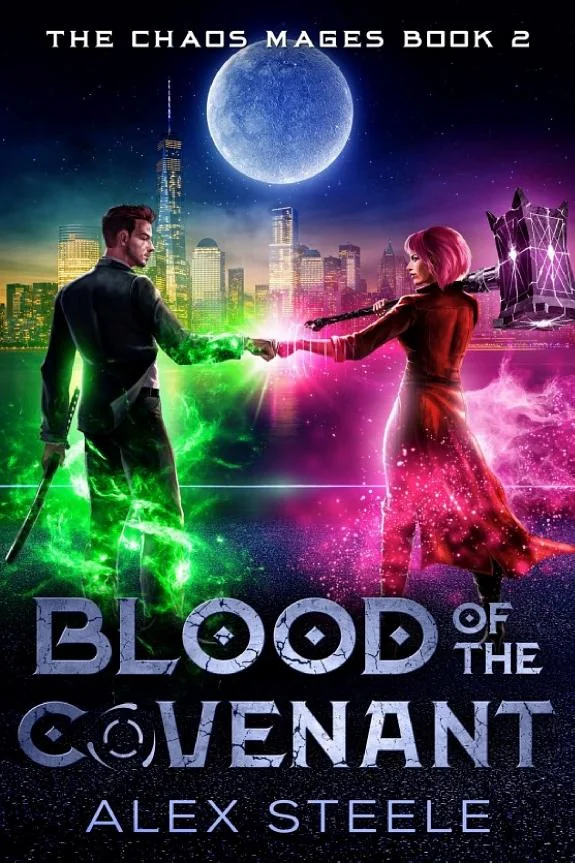
Blood of the Covenant
 81
81

Blood of the Covenant
Alex Steele’s "Blood of the Covenant" presents a familiar trope: the solitary magic-user thrust into a world-saving conflict. Logan Blackwell’s initial reluctance and abrasive nature are intended to signal his independence, but at times, it borders on sheer unlikeability, making his eventual heroic turn feel less earned and more circumstantial. The antagonist's grand scheme—sacrificing cities to a destructive deity—is a potent, if somewhat archetypal, threat. Steele's depiction of the cult's ritualistic activities, particularly in chapter 7, offers a glimpse into the dark mechanics of their plan, which is a narrative strength. However, the pacing falters in the middle sections, becoming bogged down in exposition that could have been streamlined. The novel's resolution feels somewhat abrupt, leaving the broader implications of the 'covenant' itself underdeveloped. Ultimately, "Blood of the Covenant" delivers a serviceable supernatural conflict, but its character dynamics and thematic depth could have been more fully realized.
📝 Description
81
In 2018, Alex Steele's Blood of the Covenant introduced a warlock fighting a cult seeking to awaken an ancient god.
Blood of the Covenant follows Logan Blackwell, a warlock drawn into a global conflict. He must use his abilities against a destructive cult intent on summoning an ancient deity to devastate major cities. The story builds tension as the cult's plans advance and the stakes increase. This supernatural thriller appeals to readers who favor urban fantasy with a darker tone. It features protagonists who grapple with their moral choices, often in isolation. Those interested in occult thrillers, tales of powerful magic users, and narratives where the world's safety is threatened will find this book compelling. The story's hero is flawed, and its villains are driven by an apocalyptic vision.
The book delves into the nature of pacts and covenants, examining their literal and metaphorical forms. It considers how power can corrupt and the sacrifices needed to oppose chaotic forces. The narrative also touches on the potential return of ancient gods in contemporary times. This theme connects to various esoteric traditions and occult revivals from the late 19th and early 20th centuries.
Published in 2018, Blood of the Covenant emerged during a period of renewed interest in occult and dark fantasy. This era saw a blend of traditional mythologies with modern settings, often featuring complex protagonists. The growth of digital publishing allowed authors to explore esoteric themes, finding audiences for works like Steele's. The book's focus on ancient gods and pacts resonates with themes found in late 19th and early 20th-century occult revival movements, which sought to re-engage with older spiritual and magical systems.
💡 Why Read This Book?
• Gain insight into the internal struggles of a reluctant warlock, Logan Blackwell, and his confrontation with apocalyptic cults, a central conflict unique to this narrative. • Explore the concept of 'covenants' in occult fiction, understanding how pacts, both divine and infernal, drive the plot and character motivations. • Experience a modern dark fantasy thriller that builds tension around the threat of ancient gods and their potential return, as depicted in the narrative's climax.
⭐ Reader Reviews
Honest opinions from readers who have explored this book.
❓ Frequently Asked Questions
What is the main conflict in Blood of the Covenant?
The central conflict involves Logan Blackwell, a warlock, battling a destructive cult that seeks to sacrifice major world cities to appease a god of destruction.
Who is the author of Blood of the Covenant?
The author is Alex Steele, with the book first published in September 2018.
What genre does Blood of the Covenant belong to?
It is classified as an esoteric thriller or dark urban fantasy, focusing on supernatural elements and occult themes.
Does Blood of the Covenant involve ancient mythology?
Yes, the plot revolves around a cult's attempt to summon an ancient god of destruction, drawing on themes of mythological deities.
What is the primary motivation of the antagonists?
The antagonists are driven by a desire to sacrifice major cities to a god of destruction, aiming to unleash chaos and anarchy.
Is Logan Blackwell a typical hero?
No, Logan Blackwell is portrayed as a warlock who does not work well with others, suggesting a complex and potentially anti-heroic character.
🔮 Key Themes & Symbolism
The Reluctant Protector
Logan Blackwell embodies the archetype of the solitary magic-user thrust into a role he never sought. His internal conflict stems from his antisocial nature clashing with the necessity of collective action against a global threat. This theme explores the personal cost of wielding power and the burden of responsibility when the fate of civilization rests on one individual's shoulders.
Apocalyptic Ritual and Divine Sacrifice
The antagonists' plot to offer major cities as sacrifices to a god of destruction forms the narrative's engine. This theme studies the dark side of esoteric practices, where ritual is twisted for malevolent ends. It highlights the dangers of unchecked ambition and the terrifying potential of ancient, destructive deities seeking to manifest in the modern world.
Covenants and Cosmic Balance
The title itself, 'Blood of the Covenant,' points to the significance of pacts and agreements, both mortal and divine. The narrative explores how such covenants, when broken or perverted, can lead to catastrophic consequences. It questions the nature of cosmic balance and the forces that maintain or disrupt it, suggesting that equilibrium often requires immense sacrifice.
Urban Occultism
Steele places potent magical conflict within contemporary urban landscapes, transforming familiar cityscapes into battlegrounds for supernatural forces. This theme grounds the esoteric elements in a recognizable reality, emphasizing how ancient powers and occult struggles can manifest amidst modern life, often unseen by the general populace.
💬 Memorable Quotes
Direct passages from the work, attributed to the author.
“A warlock hell-bent on offering up the major cities of the world as a sacrifice to a god of destruction.”
— This phrase defines the antagonist's terrifying agenda. It clearly states the scale of the threat and the extreme, destructive nature of the entity they seek to appease, setting the stakes for the narrative.
“Will justice prevail over anarchy?”
— This rhetorical question frames the central thematic struggle of the book. It pits the forces of order and righteousness against widespread chaos, inviting the reader to consider the ultimate outcome of the conflict.
“Logan Blackwell does not work well with others.”
— This early characterization immediately establishes Logan's primary flaw and the internal obstacle he must overcome. It foreshadows the challenges he will face in uniting with others against the common enemy.
“Find out in Blood of the Covenant.”
— This concluding line from the original blurb serves as a direct call to action, urging readers to engage with the narrative to discover the resolution of the depicted conflict.
💡 Key Ideas
Editorial paraphrase of the work's core concepts — not direct quotes.
He’s going to have to learn…or more cities will burn.
This line captures the core dilemma of the protagonist, Logan Blackwell. His inability or unwillingness to cooperate directly threatens urban centers, highlighting the immediate and devastating consequences of his isolation.
🌙 Esoteric Significance
Tradition
The work draws heavily on contemporary urban fantasy traditions, which often synthesize elements from various occult and mythological sources without adhering strictly to a single lineage. It echoes themes found in modern occultism concerning pacts, demonic entities, and the manifestation of ancient powers in the mundane world, akin to concepts explored in some ceremonial magic traditions but adapted for a popular thriller format.
Symbolism
The 'covenant' itself functions as a primary symbol, representing binding agreements often sealed with blood, implying sacrifice and deep commitment. The 'god of destruction' symbolizes primal chaos or a force of entropy that threatens established order, a recurring motif in dualistic mythologies. The urban settings, transformed into sites of magical conflict, symbolize the modern world's vulnerability to ancient, hidden forces.
Modern Relevance
Contemporary practitioners of chaos magic or those interested in modern interpretations of demonology might find resonance in the book's portrayal of entities and rituals. Readers exploring the intersection of mythology and contemporary fiction, particularly within the dark fantasy genre, often engage with works like Steele's to see how ancient concepts are recontextualized for a modern audience.
👥 Who Should Read This Book
• Fans of dark urban fantasy seeking narratives with morally gray protagonists and high-stakes supernatural conflicts. • Readers interested in explorations of occult themes, particularly those involving pacts, ancient deities, and ritualistic magic in contemporary settings. • Enthusiasts of fast-paced thrillers who enjoy a blend of action, magic, and apocalyptic scenarios.
📜 Historical Context
Published in 2018, "Blood of the Covenant" emerged during a period marked by a robust resurgence in popular occult fiction and dark fantasy. Authors like Jim Butcher (with his Dresden Files series, ongoing since 2000) and V.E. Schwab had already paved the way for complex magical systems and morally ambiguous protagonists in contemporary settings. Steele's work fits within this landscape, where urban environments serve as stages for ancient conflicts. The early 21st century saw increased interest in esoteric traditions, fueled partly by online communities and a desire for narratives that explore darker, more complex mythologies beyond mainstream fantasy. While not directly engaging with academic discourse, the book taps into a broader cultural fascination with apotropaic magic and the potential return of forgotten deities, themes explored in esoteric circles since the late 19th-century occult revival, notably by figures like Aleister Crowley.
📔 Journal Prompts
Logan Blackwell's reluctance to work with others: how does this character trait impact the narrative's progression?
Reflect on the concept of a 'god of destruction' and its symbolic representation within the story's context.
Analyze the implications of 'covenants' as depicted in the book, considering both literal and metaphorical interpretations.
Consider the transformation of urban environments into supernatural battlegrounds and its effect on the story's atmosphere.
Explore the balance between justice and anarchy as presented through the actions of the protagonist and antagonists.
🗂️ Glossary
Warlock
In this context, a male magic-user, often associated with powerful, sometimes dark or pact-based, sorcery. Logan Blackwell possesses such abilities.
Covenant
A formal agreement or pact, often implied to be sealed with blood or significant sacrifice, as suggested by the book's title.
God of Destruction
A deity or entity embodying destructive forces, sought by the antagonists to be appeased or unleashed upon the world.
Sacrifice
The act of offering something valuable, in this case, major cities, to a higher power or entity, typically for appeasement or to achieve a ritualistic goal.
Anarchy
A state of disorder due to absence or non-recognition of authority; the opposite of justice in the context of the book's conflict.
Occult
Relating to supernatural, mystical, or magical powers, practices, or phenomena; a key element driving the plot and character abilities.
Cult
A system of religious veneration with a devoted following directed toward a particular figure or object, here used for a group with destructive aims.
This book appears in 1 collection
🔮 Readers Also Liked
Browse all →









From the “Chaos Magic” Collection
View all →






More Free Magic & Ritual Books
View all →