Tarot Talk
 61
61

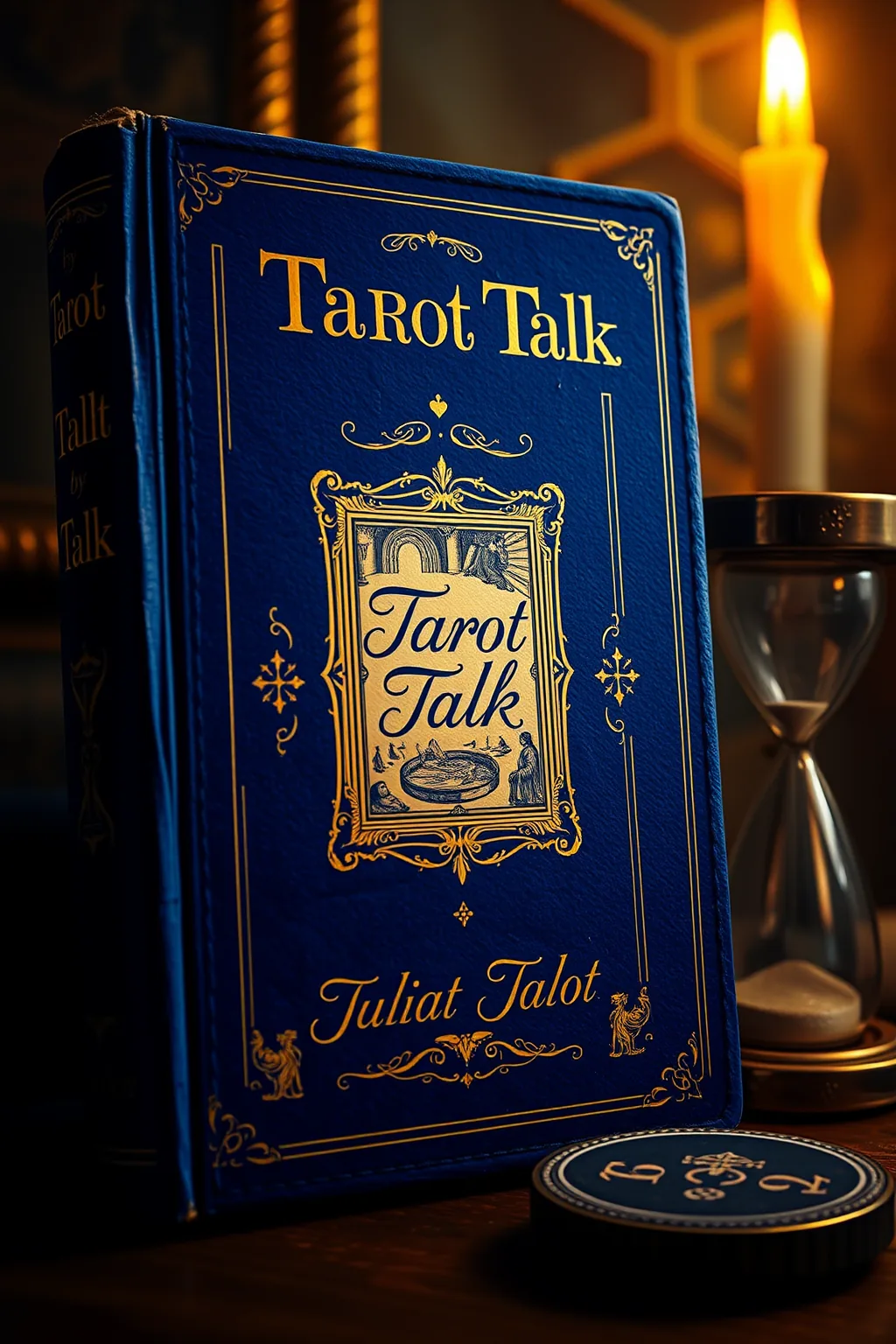
Tarot Talk



Aurelia Blackwood (Occult Philosophy Critic) — 'Tarot Talk' is a breath of fresh, esoteric air in the often-crowded field of Tarot literature. Julia from Julia Tarot Reads possesses a rare gift for articulating complex metaphysical concepts with clarity and reverence. Her exploration of the cards moves beyond simple divinatory interpretations, illuminating their profound connection to Hermetic principles and Jungian archetypes. The book serves as an indispensable companion for serious students of the occult, offering insights that resonate deeply with practitioners seeking to integrate Tarot wisdom into their spiritual practice. It’s a testament to the enduring power of this ancient art form and a vital resource for anyone committed to unlocking its deeper secrets.
📝 Description
61
'Tarot Talk' by Julia from Julia Tarot Reads clarifies the 78 cards of the Tarot.
This book examines the Rider-Waite-Smith Tarot imagery. Julia from Julia Tarot Reads connects the cards to archetypal energies and symbolism. The text aims to move beyond simple card meanings, touching on philosophical aspects and the Tarot's use as a reflective tool. It addresses those who wish to understand the Tarot as a guide for self-discovery. The author combines historical information with personal intuition. The intent is to offer a deeper understanding of the Tarot's structure and potential applications.
The book details the meanings within the 78 cards, structured by their suits and numbers. It discusses how these elements contribute to a larger symbolic system. The author also touches on the philosophical ideas embedded within the Tarot's design. The goal is to help readers engage with the cards on a more personal and insightful level. This work is intended for readers seeking to deepen their practice beyond basic interpretations.
This book fits within the Western esoteric tradition that views the Tarot as more than a divination tool. It aligns with approaches that see the cards as a symbolic language containing philosophical and psychological insights. Such traditions often connect Tarot imagery to Hermeticism, Kabbalah, or Jungian psychology. 'Tarot Talk' appears to focus on the archetypal and symbolic dimensions, suggesting a lineage of interpretation that emphasizes personal growth and spiritual understanding through the cards.
💡 Why Read This Book?
Uncover the hidden language of the Tarot and its profound connection to the human psyche. 'Tarot Talk' offers a bridge between esoteric philosophy and practical divination, empowering you to interpret symbols with newfound depth. Ideal for seekers of spiritual truth, Tarot practitioners aiming to deepen their understanding, and anyone curious about unlocking the wisdom of the archetypes.
⭐ Reader Reviews
Honest opinions from readers who have explored this book.
❓ Frequently Asked Questions
What makes 'Tarot Talk' different from other Tarot books?
'Tarot Talk' distinguishes itself by focusing on the mystical and philosophical underpinnings of the Tarot, moving beyond simple card meanings to explore their connection to esoteric traditions and the human soul's journey. It emphasizes intuitive interpretation and energetic resonance.
Is this book suitable for beginners?
Absolutely. While rich in esoteric depth, Julia's approach is accessible. Beginners will find clear explanations and guidance to build a solid foundation, while experienced readers will discover new layers of insight and advanced interpretive techniques.
What esoteric traditions are explored in the book?
The book subtly weaves in threads from Hermeticism, Kabbalah, and Jungian psychology, exploring how these ancient philosophies inform the Tarot's rich symbolic language and archetypal narratives.
Can 'Tarot Talk' help with personal growth?
Indeed. By understanding the archetypal energies and symbolic messages within the Tarot, readers can gain profound self-awareness, identify patterns, and navigate life's challenges with greater clarity and wisdom.
Is this book primarily for divination or self-exploration?
It serves both purposes beautifully. While offering robust divinatory tools, the primary focus is on using the Tarot as a mirror for self-exploration, spiritual growth, and understanding the deeper currents of life.
🔮 Key Themes & Symbolism
The Tarot as a Living Oracle
This theme explores the profound concept of the Tarot not as a static collection of images, but as a dynamic, living oracle capable of communicating the subtle energies and unfolding narratives of existence. 'Tarot Talk' posits that each card vibrates with archetypal power, acting as a conduit for cosmic wisdom and a mirror to the soul's deepest truths. It encourages readers to move beyond rote memorization and to engage in a dialogical relationship with the cards, fostering intuition and a deeper, more personal connection to the symbolic language of the universe.
Archetypal Symbolism and the Unconscious
Julia explores the wide range of archetypal symbolism embedded within the Tarot, drawing parallels to universal patterns of human experience and the collective unconscious. The book illuminates how figures like The Fool, The High Priestess, and The Magician represent fundamental aspects of the psyche and stages of spiritual development. Understanding these archetypes allows readers to recognize their presence in their own lives, decode the hidden messages within Tarot readings, and begin a study of profound self-discovery and psychological integration.
The Hermetic Path of Tarot
This section illuminates the intricate connections between the Tarot and Hermetic philosophy, particularly the principle of 'As Above, So Below.' 'Tarot Talk' reveals how the Major Arcana can be seen as a map of spiritual ascent, mirroring the journey of the soul through various planes of existence. It explores the Tarot's role as a tool for alchemical transformation, guiding practitioners to understand the interplay of spirit and matter, consciousness and manifestation, and ultimately, how to align personal will with universal purpose.
💬 Memorable Quotes
Direct passages from the work, attributed to the author.
“Listen to the whispers between the lines.”
— Encourages intuitive interpretation and paying attention to the subtle, unspoken messages that emerge during a reading, rather than just literal meanings.
“The Fool's journey is the journey of us all.”
— Highlights the universal nature of the archetypal journey represented by The Fool, connecting individual experiences to a broader, shared human narrative of beginnings and exploration.
“Symbolism is the soul's native tongue.”
— Suggests that symbols are the most direct and profound way the soul communicates, making the Tarot's visual language inherently resonant and understandable on a deeper level.
“Find your truth in the reflection of the cards.”
— Positions the Tarot as a mirror for self-discovery, urging readers to look inward and discover their own inner wisdom and guidance through the process of divination.
💡 Key Ideas
Editorial paraphrase of the work's core concepts — not direct quotes.
The cards are not mere paper; they are doorways.
This quote emphasizes the transformative potential of the Tarot, suggesting that each card holds the power to transport the reader to new levels of understanding or spiritual insight.
🌙 Esoteric Significance
Tradition
This work is deeply rooted in the Hermetic tradition, viewing the Tarot as a microcosm of the universe and a map for spiritual ascent. It aligns with Kabbalistic interpretations, seeing the Major Arcana as pathways on the Tree of Life, and draws upon Neoplatonic ideas of emanation and divine order. The book emphasizes the Tarot's role as a tool for gnosis – direct, intuitive knowledge of the divine and the self.
Symbolism
The core symbolism revolves around archetypes that represent fundamental cosmic forces and stages of human consciousness. Key symbols include the celestial correspondences of the Major Arcana, the elemental energies of the Minor Arcana suits, and the numerological significance of each card. The book unpacks these layers, revealing how they function as keys to unlocking hidden truths about the self and the universe.
Modern Relevance
In an age of information overload and existential searching, 'Tarot Talk' offers a profound anchor to ancient wisdom. Its emphasis on introspection, intuition, and symbolic understanding provides readers with powerful tools for navigating personal challenges, fostering self-awareness, and cultivating a deeper connection to their inner guidance system. The book empowers individuals to find meaning and purpose through a timeless esoteric framework.
👥 Who Should Read This Book
Aspiring mystics and seasoned occult scholars alike will find 'Tarot Talk' an invaluable companion. Beginners will be guided through the foundational esoteric principles with clarity, building a robust understanding of Tarot's symbolic language. Experienced practitioners and diviners will discover new depths of interpretation, refining their intuitive abilities and deepening their connection to the archetypal energies. Seekers of personal growth will find the Tarot a powerful mirror for self-reflection and spiritual evolution, while those interested in the philosophical underpinnings of divination will appreciate the rich historical and metaphysical context.
📜 Historical Context
Emerging from an era fascinated by esotericism and the revival of ancient wisdom, 'Tarot Talk' draws upon a rich lineage of occult studies. The late 19th and early 20th centuries saw a resurgence of interest in divination, mysticism, and the psychological underpinnings of symbolism, heavily influenced by figures like Eliphas Lévi, Papus, and A.E. Waite. This period witnessed a concerted effort to codify Tarot meanings, often linking them to Kabbalistic structures, astrological correspondences, and Hermetic principles. Julia's work stands as a modern echo of this tradition, synthesizing these historical explorations with contemporary intuitive practices, offering a bridge between the foundational esoteric interpretations and the evolving spiritual field of today.
📔 Journal Prompts
Reflect on the archetype of The Fool in your own life. Where are you starting a new, uncertain path?
Meditate on The High Priestess. What intuitive whispers have you been ignoring recently?
Consider the element of your most frequently drawn suit. How does this element's energy manifest in your daily life?
If you were to create a personal symbol for your current life lesson, what would it be and why?
How can you integrate the wisdom of The Magician into your manifestation practices this week?
🗂️ Glossary
Archetype
A universally understood symbol, character, or pattern of behavior that appears consistently across cultures and time, often representing fundamental aspects of the human psyche or cosmic forces.
Gnosis
Spiritual knowledge characterized by direct, intuitive apprehension of divine truths, often achieved through mystical experience or profound introspection, transcending rational understanding.
Hermeticism
An ancient philosophical and religious tradition based on the purported teachings of Hermes Trismegistus, emphasizing wisdom, divine knowledge, and the interconnectedness of all things, often summarized by the principle 'As Above, So Below.'
Kabbalah
A system of Jewish mysticism that explores the divine nature and the creation of the universe through symbolic interpretation of scripture and esoteric teachings, often visualized through the Tree of Life.
Divination
The practice of seeking knowledge of the future or the unknown by supernatural means, often employing tools like Tarot cards, astrology, or runes to interpret subtle energies and probabilities.
This book appears in 3 collections
🔮 Readers Also Liked
Browse all →
From the “Tarot” Collection
View all →

More Free Divination & Tarot Books
View all →