Magic of Tarot
 61
61

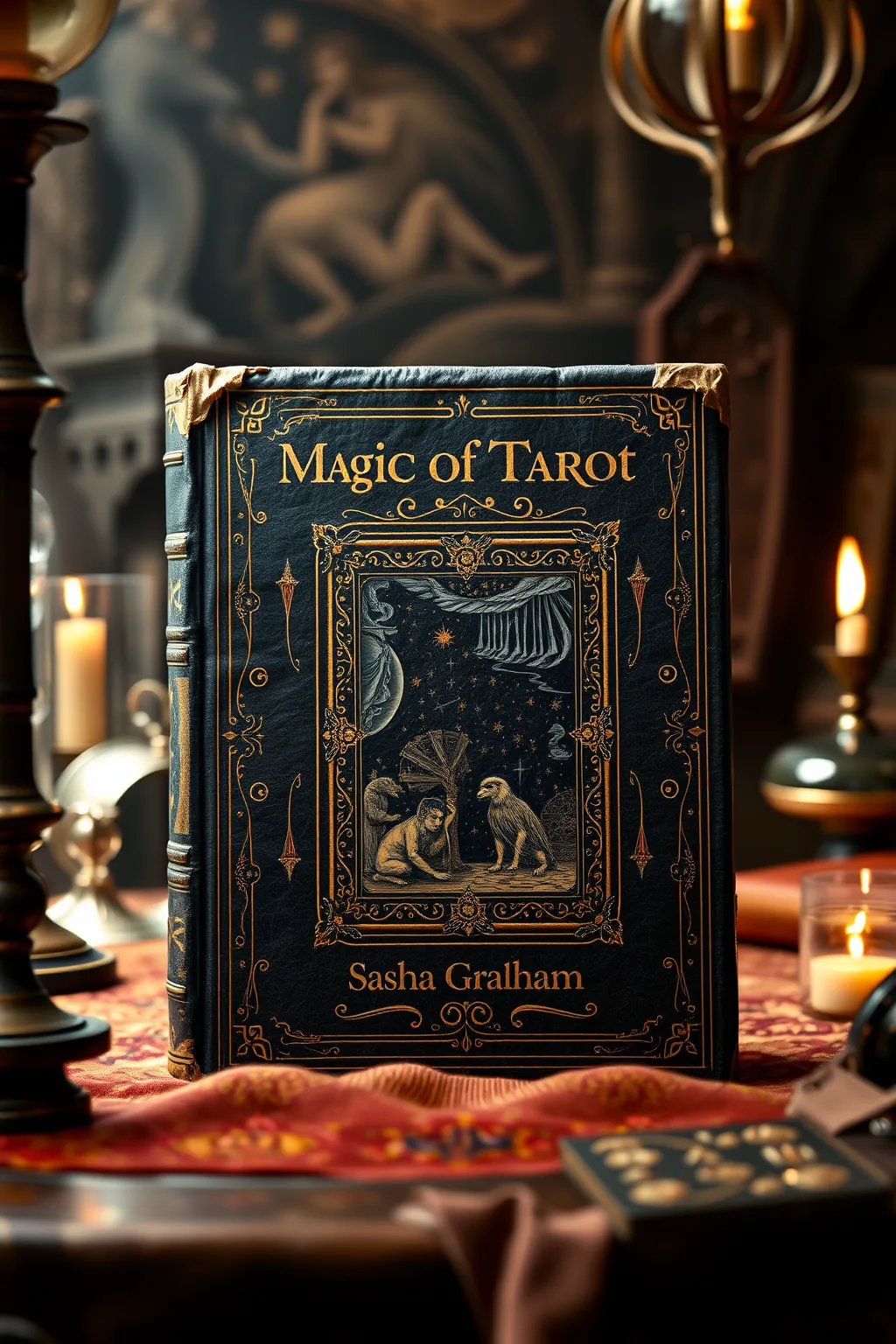
Magic of Tarot



Ophelia Vance, a respected voice in mystical literature, hails Sasha Graham's "Magic of Tarot" as an essential compendium for navigating the esoteric landscape. Graham's profound understanding of Tarot's psychological and spiritual dimensions is evident on every page. She skillfully bridges the gap between ancient symbolism and modern application, offering practitioners a robust toolkit for divination and self-exploration. This work stands out for its clarity, depth, and the palpable sense of reverence with which Graham approaches the cards. It is a must-have for anyone seeking to deepen their connection to this sacred art, whether a nascent student or an experienced oracle.
📝 Description
61
Sasha Graham's 2018 book, "Magic of Tarot," deciphers the symbolism of each card.
Sasha Graham's "Magic of Tarot" goes beyond simple card reading. It examines the Tarot's archetypes and symbols, showing how they relate to human experience. The book explains the meanings within both the Major and Minor Arcana.
Graham guides readers to understand the Tarot as a tool for self-reflection and accessing inner knowledge. The text aims to connect the user with deeper subconscious insights and a sense of the divine. It is written for those who seek to enhance their intuition and gain a more thorough grasp of Tarot's symbolic language.
This book sits within the Western esoteric tradition, which views Tarot as more than a divination tool. It is seen as a system of spiritual and psychological symbolism, often connected to Kabbalah, astrology, and hermetic philosophy. Graham’s work engages with this view by focusing on the archetypal meanings and their application to understanding the self and the greater patterns of existence. It aligns with a practice that uses Tarot for personal growth and inner illumination.
💡 Why Read This Book?
Uncover the Tarot's profound connection to the human psyche and universal archetypes. "Magic of Tarot" offers an unparalleled exploration of symbolism, empowering you with intuitive insights for divination and personal growth. Ideal for seekers of hidden knowledge, students of esoteric traditions, and practitioners aiming to elevate their card readings to new depths of understanding.
⭐ Reader Reviews
Honest opinions from readers who have explored this book.
❓ Frequently Asked Questions
What makes Sasha Graham's "Magic of Tarot" unique?
Graham's unique approach intertwines psychological depth with esoteric wisdom, presenting the Tarot not just as a divination tool, but as a profound mirror to the soul and a map for self-discovery.
Is this book suitable for beginners?
Absolutely. While rich in depth, the book is structured to guide newcomers through the fundamental meanings and symbolism of the Tarot with clarity and accessible language.
How does the book explore the psychological aspects of Tarot?
It delves into how Tarot archetypes resonate with universal human experiences and the subconscious mind, offering insights into personal challenges and growth pathways.
What kind of esoteric traditions are referenced?
The book draws from a broad spectrum of esoteric thought, including Hermeticism, Kabbalah, and Jungian psychology, weaving them into a cohesive understanding of Tarot.
Can this book be used for practical divination?
Yes, it provides comprehensive guidance on reading cards, interpreting spreads, and developing intuitive skills for accurate and insightful divination.
🔮 Key Themes & Symbolism
The Tarot as a Mirror of the Psyche
This theme explores the profound psychological resonance of the Tarot, positing that each card's archetype acts as a symbolic representation of facets of the human consciousness. Graham illustrates how understanding these archetypes can unlock subconscious patterns, reveal inner conflicts, and illuminate pathways to personal integration and healing. The Tarot becomes a sacred dialogue with the self, offering useful insights into motivations, fears, and aspirations, thereby fostering a deeper connection to one's inner landscape and facilitating transformative growth.
Unveiling Esoteric Symbolism and Archetypes
Examine the rich, multi-layered symbolism embedded within the Tarot deck. This section unpacks the ancient wisdom and esoteric currents that inform the cards, from the Hermetic principles guiding the Major Arcana to the elemental forces shaping the Minor Arcana. Graham illuminates how these universal archetypes, drawn from mythology, astrology, and spiritual traditions, serve as a potent language for understanding the mysteries of life, death, and rebirth. It's an invitation to decipher the sacred geometry and cosmic connections that empower the Tarot as a divinatory and spiritual tool.
Practical Application and Intuitive Development
Beyond theoretical exploration, this theme focuses on the practical application of Tarot for divination and personal empowerment. Graham provides actionable guidance on reading spreads, interpreting card combinations, and cultivating intuitive abilities. The emphasis is on developing a personal relationship with the cards, allowing them to become trusted guides for navigating life's challenges and opportunities. This section empowers readers to move from passive observation to active engagement, transforming the Tarot into a dynamic tool for insight, decision-making, and spiritual evolution.
💬 Memorable Quotes
Direct passages from the work, attributed to the author.
“Each card whispers a universal truth.”
— This suggests that the symbolism within Tarot cards holds profound, timeless wisdom that appeals to the human experience across cultures and eras, inviting deep contemplation.
“The Fool's journey is our own.”
— This highlights the archetypal journey of growth, initiation, and self-discovery represented by The Fool, drawing a direct parallel to the reader's own life path and potential.
“Shadows revealed, light embraced.”
— This speaks to the Tarot's capacity to illuminate hidden aspects of the self (shadows) and guide the user towards integrating them, leading to greater wholeness and spiritual illumination.
“The cards are keys to the subconscious.”
— This positions the Tarot as a powerful conduit for accessing deeper layers of the mind, unlocking hidden motivations, desires, and understanding that may not be readily apparent.
💡 Key Ideas
Editorial paraphrase of the work's core concepts — not direct quotes.
The Tarot is not a fortune-teller, but a mirror.
This quote emphasizes the Tarot's role as a reflective tool for self-understanding rather than a deterministic predictor of the future, highlighting its psychological and introspective power.
🌙 Esoteric Significance
Tradition
This work is deeply rooted in the Hermetic tradition and Western esoteric practices, drawing heavily from Kabbalistic Tree of Life symbolism, astrological correspondences, and alchemical principles. It aligns with the Neoplatonic concept of the Tarot as a visual representation of divine emanations and the journey of the soul. The emphasis on archetypes connects it to Jungian psychology, itself influenced by esoteric thought, positioning the Tarot as a bridge between the conscious and unconscious, the material and the spiritual.
Symbolism
The core of the Tarot's esoteric significance lies in its profound symbolism. Each card, from the primal Fool to the triumphant World, represents a distinct archetype, cosmic principle, or stage of spiritual development. The numerical and elemental associations, the visual narratives, and the intricate details within the imagery are all designed to convey complex metaphysical truths and psychological insights, acting as a symbolic language for the ineffable.
Modern Relevance
In contemporary society, the "Magic of Tarot" finds profound relevance as a tool for reading through the complexities of modern life. It offers a sanctuary for introspection amidst constant external stimuli, providing a framework for understanding personal challenges, fostering intuition, and promoting emotional well-being. Its psychological underpinnings resonate with the modern quest for self-awareness and authenticity, making it an invaluable resource for personal growth, spiritual exploration, and finding meaning in an often chaotic world.
👥 Who Should Read This Book
This informative text is a treasure for a diverse audience. **Beginners** will find clear, accessible pathways into the Tarot's vast landscape, clarifying its symbolism and offering practical starting points. **Scholars of esoteric traditions** will appreciate the deep dives into historical influences and symbolic connections, enriching their understanding of Western mysticism. **Spiritual seekers** will discover a profound tool for self-reflection, intuition development, and personal growth, finding guidance on their unique journeys. **Practitioners of divination** will gain advanced insights and new perspectives, elevating their readings with greater depth and psychological acuity.
📜 Historical Context
The "Magic of Tarot" emerges from a rich lineage of esoteric practices, particularly flourishing in the late 19th and early 20th centuries, a period marked by a resurgence of interest in mysticism, occultism, and spiritual exploration. Influenced by figures like Eliphas Lévi and the Hermetic Order of the Golden Dawn, Tarot decks were not merely tools for fortune-telling but were imbued with complex symbolic systems, often linked to Kabbalah, astrology, and alchemy. This era saw a deliberate effort to systematize and intellectualize occult knowledge, integrating it into a framework that aimed at personal spiritual development and the unlocking of hidden potentials. Sasha Graham builds upon this foundation, reinterpreting these ancient symbols through a modern lens, particularly integrating psychological insights.
📔 Journal Prompts
Reflect on the archetype that resonates most strongly with you this week and why.
How does the concept of 'The Fool's Journey' mirror a current transition in your life?
Choose a card that feels challenging and explore its potential lessons for your growth.
What hidden messages or subconscious patterns are the Tarot cards revealing to you today?
Consider the elemental energies at play in your life and how they relate to the Minor Arcana.
🗂️ Glossary
Archetype
Universal, archaic patterns and images that derive from the collective unconscious and are the psychic counterpart of instinct. In Tarot, these are embodied by the figures and situations in the cards.
Cartomancy
The practice of divination using a deck of cards. Tarot is a specific form of cartomancy that employs a deck of 78 cards divided into the Major and Minor Arcana.
Esoteric
Intended for or likely to be understood by only a small number of people with a specialized knowledge or interest; relating to the occult.
Hermeticism
A religious, philosophical, and esoteric tradition based primarily upon writings attributed to Hermes Trismegistus. It emphasizes mystical knowledge and the interconnectedness of all things.
Major Arcana
The 22 trump cards of the Tarot deck, representing significant life lessons, spiritual influences, and major themes or archetypal situations encountered on the path of life.
This book appears in 3 collections
🔮 Readers Also Liked
Browse all →
More by Sasha Graham
All books →
From the “Tarot” Collection
View all →
More Free Divination & Tarot Books
View all →