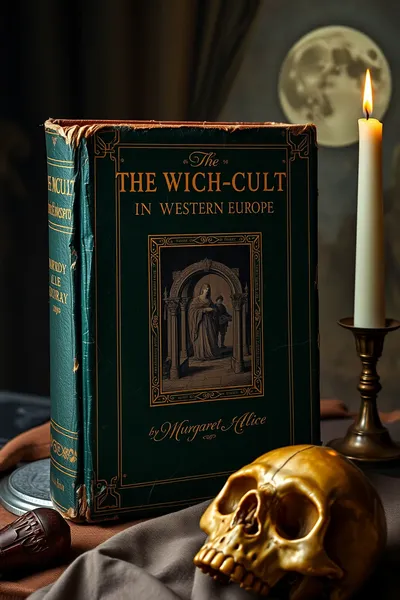
Cassell dictionary of witchcraft

 77
77

Cassell dictionary of witchcraft
Pickering's "Cassell Dictionary of Witchcraft" is a commendable effort at comprehensiveness, acting as a broad-strokes atlas for the labyrinthine world of magic and occultism. Its strength lies in its sheer breadth, touching upon an impressive range of topics from ancient Sumerian incantations to figures like Aleister Crowley. The entry on Agrippa, for instance, provides a concise yet informative summary of his influence. However, the dictionary's ambition occasionally outstrips its depth. Entries can feel overly brief, particularly for complex philosophical concepts or nuanced historical movements. For example, while it mentions Gnosticism, it struggles to convey the intricate dualistic cosmology central to many Gnostic sects. Despite these limitations, it remains a valuable starting point for the uninitiated. It's a useful, if sometimes superficial, inventory of the arcane.
📝 Description
77
David Pickering's Cassell Dictionary of Witchcraft, published in 1996, is a reference volume cataloging magical terms and figures.
This dictionary provides definitions for a wide range of subjects related to witchcraft and occultism. It covers concepts such as elemental magic and divination methods like scrying, alongside historical figures prominent in occult history. The work also touches on various traditions, including Celtic and Greek magic, as well as ceremonial practices. Its scope extends to folklore, cryptozoology, and the symbolism within magical traditions. The book is organized alphabetically, making it a practical tool for looking up specific terms or individuals. It aims to offer accessible explanations for those interested in esoteric topics, from ancient rituals to contemporary interpretations.
Intended for newcomers to witchcraft and occultism, this reference is useful for students of esoteric history and folklore enthusiasts. It helps demystify the terminology and historical foundations of magical belief systems. The mid-1990s saw a rise in public interest in paganism and alternative spiritual paths, and this dictionary emerged during that period. Pickering's work consolidates information for a field that was becoming more accessible to a wider audience.
Published in 1996, this dictionary arrived during a period of increased public engagement with paganism, Wicca, and other non-traditional spiritual paths. This era marked a shift where occult subjects moved beyond specialized academic circles into broader popular discussion. Pickering's work fits this trend by consolidating information on a diverse and often misunderstood field, making it more accessible to a general readership interested in esoteric subjects and folklore.
💡 Why Read This Book?
• Gain clarity on the diverse terminology of witchcraft and occultism, with specific entries defining terms like 'Aether' and 'Book of Shadows', allowing for precise understanding of these concepts. • Understand the historical trajectory of magical practices by referencing specific dates and figures mentioned, such as the influence of Agrippa in the 16th century, providing a grounded historical perspective. • Explore the symbolic language of esoteric traditions through concise explanations of key symbols like the 'pentagram' and 'runes', offering insights into their meaning and application.
⭐ Reader Reviews
Honest opinions from readers who have explored this book.
❓ Frequently Asked Questions
When was the Cassell Dictionary of Witchcraft first published?
The Cassell Dictionary of Witchcraft by David Pickering was first published in 1996, reflecting a growing interest in occult and esoteric subjects during that era.
What kind of witchcraft does this dictionary cover?
The dictionary covers a wide spectrum, including historical witchcraft, ceremonial magic, Wicca, folklore-related magical practices, and figures associated with occultism across various cultures and time periods.
Is this book suitable for beginners in occult studies?
Yes, its alphabetical format and clear definitions make it an accessible resource for beginners seeking to understand the basic terminology and historical context of witchcraft and related fields.
Does the dictionary include information on specific magical rituals?
It provides definitions and brief explanations of various magical rituals and practices, such as divination and spellcasting, but typically does not offer step-by-step instructions for performing them.
Who is David Pickering, the author of this dictionary?
David Pickering is an author known for his works on mythology, folklore, and esoteric subjects. He has compiled several reference books in these areas, including this comprehensive dictionary.
Are there entries for famous occultists in the book?
Yes, the dictionary includes entries for numerous influential figures in the history of occultism and witchcraft, such as Aleister Crowley and Heinrich Cornelius Agrippa.
🔮 Key Themes & Symbolism
Historical Witchcraft Traditions
The work meticulously documents historical beliefs and practices attributed to witchcraft, tracing lineages from ancient European folk magic to the witch trials of the early modern period. It examines the societal fears and accusations that shaped perceptions of witches, distinguishing between historical persecution and later neopagan reconstructions of witchcraft, such as those influenced by Gerald Gardner's coven activities in the mid-20th century.
Magical Systems and Divination
Central to the dictionary is an exploration of diverse magical systems and methods of divination. Entries cover techniques ranging from astrology and Tarot to more obscure practices like geomancy and runic divination. The book details the symbolic frameworks underpinning these systems, explaining how practitioners sought to understand or influence events through various esoteric means.
Key Figures in Occultism
The dictionary provides concise biographies and contextual information on key individuals who shaped occult philosophy and practice. Figures like Heinrich Cornelius Agrippa, whose "Three Books of Occult Philosophy" became a foundational text, and Aleister Crowley, a controversial 20th-century occultist, are presented with their contributions and significance to various esoteric movements.
Symbolism and Archetypes
Understanding the symbolic language of magic is crucial, and this dictionary addresses numerous symbols, creatures, and archetypes prevalent in esoteric lore. From the pentagram and ouroboros to fae creatures and elemental spirits, the entries explain their meanings within different magical and mythological contexts, offering insight into the visual and conceptual grammar of the occult.
💬 Memorable Quotes
Direct passages from the work, attributed to the author.
“The dictionary defines 'Book of Shadows' as a witch's personal grimoire.”
— This entry highlights the individualistic nature of modern witchcraft, emphasizing the personal collection of spells, rituals, and lore that guides a practitioner's magical path.
“Agrippa's work is noted for its synthesis of Hermeticism, Kabbalah, and Neoplatonism.”
— This points to the syncretic nature of Renaissance occultism, showing how figures like Agrippa drew from multiple ancient and medieval esoteric traditions to create a comprehensive magical philosophy.
“Scrying is described as a form of divination using reflective surfaces.”
— This defines a specific divinatory practice, illustrating the practical applications of esoteric knowledge and the use of everyday objects for seeking insight or prophecy.
“The term 'Coven' is linked to gatherings of witches, often cited in folklore and modern Wicca.”
— This entry addresses the communal aspect of witchcraft, distinguishing between historical accusations and the structured, often ritualistic, gatherings of contemporary witchcraft practitioners.
“Elementals are explained as spirits associated with the classical elements.”
— This explains a concept found across various magical traditions, detailing the belief in distinct elemental beings (like salamanders for fire) and their role in the spiritual ecosystem.
🌙 Esoteric Significance
Tradition
This dictionary primarily draws from the Western Esoteric Tradition, encompassing elements of Hermeticism, Kabbalah, Neoplatonism, and folk magic. It functions as a compendium rather than a proponent of a single lineage, offering definitions that bridge historical witchcraft, ceremonial magic, and modern Wicca, reflecting the syncretic tendencies common in late 20th-century esoteric scholarship.
Symbolism
Key symbols like the 'pentagram' are explained as representing the five elements and human microcosm, a concept central to Pythagorean and Hermetic thought. The 'Ouroboros', the serpent eating its tail, signifies cyclicality, infinity, and the unity of creation, a motif found in Gnosticism and alchemy. 'Runes' are presented as ancient Germanic alphabetic symbols imbued with magical and divinatory significance.
Modern Relevance
Contemporary practitioners of Wicca, traditional witchcraft, and general occultists frequently reference dictionaries like Pickering's for quick definitions and historical context. Its accessible approach makes it a valuable tool for comparative religion students and those exploring modern paganism, providing a foundational understanding of terms and concepts that continue to be relevant in spiritual and magical discourse today.
👥 Who Should Read This Book
• Aspiring practitioners of Wicca and modern witchcraft seeking to understand core terminology like 'Coven' and 'Book of Shadows'. • Students of folklore and comparative mythology interested in the historical evolution of beliefs about magic and supernatural figures. • Researchers in Western Esotericism needing a quick reference for figures such as Agrippa and concepts spanning Hermeticism to divination.
📜 Historical Context
Published in 1996, "Cassell Dictionary of Witchcraft" emerged during a period of burgeoning public interest in esoteric subjects, fueled by the internet's accessibility and a growing dissatisfaction with mainstream spiritual offerings. This era saw a significant rise in neopaganism and Wicca, making resources that codified these beliefs and their historical antecedents highly sought after. The work navigated a landscape where figures like Gerald Gardner had already popularized modern Wicca, and scholars like Ronald Hutton were providing critical historical analyses of witchcraft. Pickering's dictionary synthesized information from various sources, aiming to be an accessible reference point amidst a diverse and sometimes contradictory field. It participated in the wider cultural moment of the 1990s, where occult and magical themes permeated popular culture, from literature to film, contributing to a more mainstream understanding, or at least awareness, of these traditions.
📔 Journal Prompts
The definition of 'Grigori' and its relation to celestial beings.
Symbolism of the 'Mandrake' across different traditions.
The historical context of the 'Witch Trials' and its impact on belief.
The concept of 'Elemental Spirits' and personal resonance.
Comparing different divination methods, such as 'Tarot' versus 'Runes'.
🗂️ Glossary
Aether
In esoteric philosophy, often considered the fifth element or the pure essence from which the other four (earth, air, fire, water) are derived. It represents the subtle, spiritual realm.
Agrippa
Heinrich Cornelius Agrippa (1486–1535), a German magician, occult writer, astrologer, and alchemist. His influential work, 'Three Books of Occult Philosophy', synthesized much of the Renaissance magical tradition.
Book of Shadows
A personal grimoire or spellbook kept by a witch, containing rituals, spells, recipes, and magical knowledge specific to the individual or their tradition.
Coven
A group or assembly of witches, typically consisting of thirteen members in modern Wicca, though the term has historical roots and varied meanings.
Divination
The practice of seeking knowledge of the future or the unknown by supernatural means, employing methods like astrology, Tarot cards, scrying, or runes.
Elementals
Spirits or beings believed to inhabit and govern the classical elements: Undines (water), Sylphs (air), Salamanders (fire), and Gnomes (earth).
Grigori
In some esoteric and apocryphal traditions, refers to a group of fallen angels who descended to Earth, taught forbidden knowledge, and are associated with giants and demons.
🔮 Readers Also Liked
Browse all →





![CIA Reading Room cia-rdp75-00149r000200590003-6: PROTECTING [PRIVACY AND FREEDOM]](/img/thumb/cia-reading-room-cia-rdp75-00149r000200590003-6-protecting-privacy-and-freedom-cia-reading-room.webp)

More by Pickering, David, David Pickering
All books →

More Free Witchcraft & Paganism Books
View all →