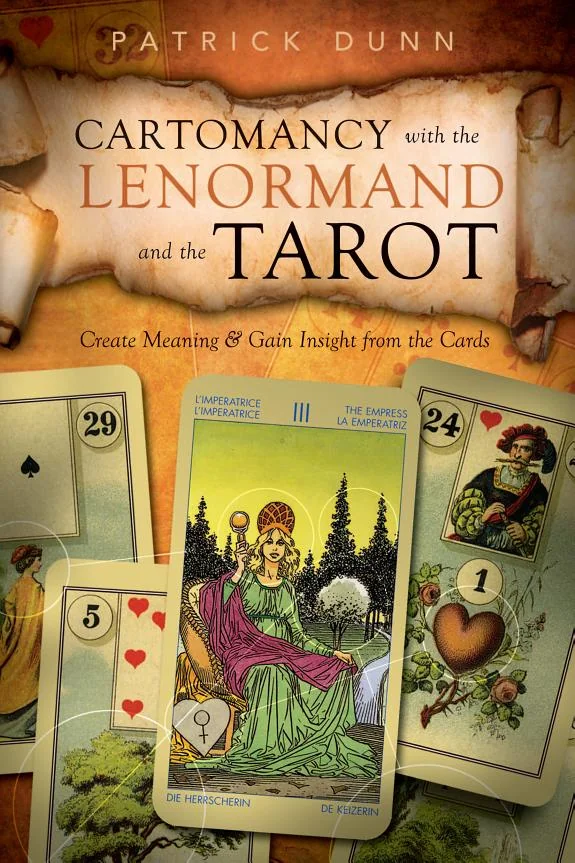
Cartomancy with the Lenormand and the Tarot
 71
71

Cartomancy with the Lenormand and the Tarot
Patrick Dunn's "Cartomancy with the Lenormand and the Tarot" offers a refreshing, pragmatic departure from overly embellished divination guides. His insistence on treating the Lenormand as a distinct, powerful system rather than a mere adjunct to Tarot is its primary strength. The comparative approach, where he meticulously details each Lenormand card before drawing parallels to its Tarot counterparts, is methodical and illuminating. I found the section on constructing one's own Lenormand deck particularly valuable, grounding the symbolic work in a tangible practice. However, the book occasionally feels more like an academic treatise than a spiritual exploration. While the structure is logical, the tone can sometimes lack the evocative spark that draws many to esoteric literature. The limitation lies in a certain dryness that might not appeal to readers seeking a more mystical or emotionally resonant experience. Despite this, Dunn provides a solid framework for developing robust cartomantic skills. The verdict: a well-researched, highly practical guide for serious students of divination.
📝 Description
71
Patrick Dunn's 2013 book merges Lenormand and Tarot for structured divination.
Cartomancy with the Lenormand and the Tarot presents a methodical way to approach divination by combining the Lenormand deck's predictive power with the Tarot's symbolic richness. Dunn's technique focuses on using both systems together, allowing readers to benefit from each deck's unique strengths. The book explains how to interpret the 36 Lenormand cards, suggests creating your own decks, and then compares these cards systematically with the 78 Tarot cards.
This comparative study aims to improve understanding and the accuracy of predictions for those who practice divination. It is suitable for both beginners and experienced readers looking to enhance their skills. Newcomers will find the introduction to the Lenormand system straightforward, while established Tarot readers may appreciate the fresh perspective gained by incorporating another distinct system. The work also appeals to those interested in the history of divination tools and those who enjoy hands-on projects, including instructions for making personal Lenormand decks. It is for the student who values a structured method alongside intuition.
Published in 2013, this book arrives during a renewed interest in esoteric practices like cartomancy, echoing the occult revivals of the late 19th and early 20th centuries. The Lenormand system, named after Marie Anne Lenormand, became popular in the early 19th century, separate from the Tarot's older history. Dunn's work connects these two traditions, which often developed independently. It engages with the contemporary resurgence of interest in divination, standing with other authors who examined Tarot's applications and historical background.
💡 Why Read This Book?
• Learn a unique method for combining Lenormand and Tarot readings, enhancing predictive accuracy by understanding the synergy between concrete significations and archetypal imagery, as detailed in Dunn's comparative analysis of card meanings. • Gain practical skills in constructing your own Lenormand deck, a process Dunn guides you through, fostering a deeper personal connection with the divination tools you use. • Master specific spread techniques, including adaptations for using both decks simultaneously, offering a more comprehensive divination experience than single-deck methods allow, as demonstrated with examples in the text.
⭐ Reader Reviews
Honest opinions from readers who have explored this book.
❓ Frequently Asked Questions
What is the primary advantage of combining Lenormand and Tarot as described by Patrick Dunn?
Dunn's approach leverages the Lenormand's direct, predictive clarity with the Tarot's deep symbolic and archetypal resonance, creating a more nuanced and comprehensive reading.
Can I use this book if I only know Tarot or only know Lenormand?
Yes, the book introduces the Lenormand system from its basics and compares it to Tarot, making it beneficial for those familiar with only one system or neither.
Does the book provide instructions on how to create a Lenormand deck?
Yes, Patrick Dunn includes guidance on making your own Lenormand deck, encouraging a personalized connection with the cards.
What types of spreads are covered in Cartomancy with the Lenormand and the Tarot?
The book covers numerous spreads, including the Lenormand's 'Grand Tableau' and methods adapted for using both decks in tandem, as well as intuitive and collaborative reading techniques.
Who is the author, Patrick Dunn, and what is his background?
Patrick Dunn is an author and practitioner who focuses on comparative divination systems, bringing a methodical and analytical approach to cartomancy.
When was Cartomancy with the Lenormand and the Tarot first published?
The book was first published in 2013, reflecting a modern engagement with traditional divination practices.
🔮 Key Themes & Symbolism
Dual System Integration
This work champions the fusion of the Lenormand and Tarot, two distinct cartomantic systems, into a unified practice. Dunn argues that the Lenormand's concrete, almost 'pictographic' language for everyday matters complements the Tarot's profound archetypal and psychological narratives. The book provides a structured methodology for readers to navigate both systems, highlighting how their combined application can yield richer, more detailed, and accurate divinatory insights than either deck might offer in isolation. It’s about synergistic divination.
Personalized Divination Tools
A significant aspect of Dunn's approach involves empowering the reader to create their own Lenormand deck. This process is presented not merely as a craft project but as a crucial step in developing an intimate relationship with the cards. By engaging in the creation of the 36 Lenormand images, practitioners are encouraged to imbue the deck with their own understanding and energy, thereby enhancing the intuitive connection and the efficacy of readings performed with their personalized tools.
Methodical Reading Techniques
The book offers a structured framework for cartomancy, moving beyond purely intuitive guesswork. Dunn details specific spreads, including the comprehensive 'Grand Tableau' for the Lenormand, and provides adaptable methods for using both decks together. He emphasizes a systematic approach to interpretation, blending the symbolic meanings with the practical application of the cards within a spread, fostering a logical yet flexible divination practice.
Intuitive and Collaborative Practice
While advocating for methodical approaches, Dunn also integrates the importance of intuition and collaborative interpretation. He guides readers on how to hone their intuitive faculties in conjunction with the card meanings and spread structures. Furthermore, the concept of collaborative readings is introduced, suggesting that group interpretation can lead to deeper insights and a more well-rounded understanding of the divinatory message, fostering community and diverse perspectives.
💬 Memorable Quotes
Direct passages from the work, attributed to the author.
“Sharing his vast knowledge of symbols and symbolism, he introduces the Lenormand cards and even shows you how to make your own deck.”
— This points to Dunn's expertise in symbolic language and his practical, hands-on approach, emphasizing the educational and creative aspects of learning cartomancy through the Lenormand.
“Then he compares this with the tarot and teaches numerous spreads—to be used with either or both decks—in addition to methods of intuitive and collaborative readings.”
— This captures the comparative element of the book, detailing its utility for learning various spreads applicable to both decks individually and in combination, alongside techniques for intuitive and group divination.
“The Lenormand system is known for its directness and its ability to provide clear, often predictive, answers, whereas the Tarot is celebrated for its rich symbolic depth and psychological insights.”
— This interpretation clarifies the fundamental distinction Dunn draws between the two decks, setting the stage for his argument on how their combined use offers a more complete divinatory picture.
“The act of creating your own deck can significantly deepen your understanding and connection to the cards, making your readings more personal and potent.”
— This emphasizes the practical, experiential learning component of the book, suggesting that the physical creation of a Lenormand deck is integral to mastering its use and enhancing reading efficacy.
💡 Key Ideas
Editorial paraphrase of the work's core concepts — not direct quotes.
Combining the simplicity of the traditional but little-known Lenormand deck with the familiarity of the tarot, Dunn creates a unique learning format blending these two powerful systems.
This paraphrased summary highlights the core innovation of Dunn's work: bridging the gap between the often-overlooked Lenormand and the widely recognized Tarot to create a unified, powerful divination method.
🌙 Esoteric Significance
Tradition
Dunn's work fits within the broad lineage of Western esoteric traditions that utilize cartomancy for divination and self-reflection. While not explicitly tied to a single school like Hermeticism or Kabbalah, it draws from the practical application of symbolic systems for insight, a common thread across many esoteric paths. It departs from purely mystical or ceremonial approaches by focusing on a clear, pedagogical method for integrating two distinct, yet related, divinatory tools, emphasizing practical application and comparative analysis.
Symbolism
The book explores the symbolism of both the 36 Lenormand cards and the 78 Tarot cards. Key motifs include the 'House' card in Lenormand, representing stability and environment, and the 'Fool' in Tarot, symbolizing new beginnings and potential. Dunn's comparative approach highlights how similar concepts are represented differently, e.g., the 'Letter' card in Lenormand versus the 'Page of Cups' in Tarot, offering layered interpretations by examining the distinct symbolic languages.
Modern Relevance
Dunn's methodical integration of Lenormand and Tarot speaks to contemporary diviners seeking structured yet flexible systems. Modern practitioners interested in comparative cartomancy, digital divination tools, and pedagogical approaches to esoteric subjects find his work valuable. The emphasis on creating personalized decks also aligns with the modern resurgence of craft and embodied spiritual practices, making his 2013 publication relevant to current trends in self-help and esoteric learning.
👥 Who Should Read This Book
• Aspiring cartomancers seeking a structured introduction to both Lenormand and Tarot, who benefit from Dunn's comparative methodology for understanding card meanings and spread applications. • Experienced Tarot readers looking to expand their divinatory repertoire with the direct predictive power of the Lenormand system, gaining new perspectives on card combinations. • Students of comparative divination who wish to understand the historical and symbolic relationships between different cartomantic decks and develop versatile reading skills.
📜 Historical Context
Published in 2013, Patrick Dunn's "Cartomancy with the Lenormand and the Tarot" emerged during a period of significant resurgence in esoteric studies and divination practices. The early 21st century saw a growing popular and academic interest in cartomancy, moving beyond niche occult circles. Dunn's work engages with this trend by offering a structured, comparative approach. He places the Lenormand system, which gained traction in the 19th century following its association with figures like Marie Anne Lenormand, alongside the older, more widely known Tarot tradition. This integration addresses a desire for comprehensive divination methodologies. In contemporary discourse, authors like Rachel Pollack were also exploring Tarot's expansive narrative and historical dimensions, making Dunn's methodical comparison a timely contribution to the evolving field of cartomancy.
📔 Journal Prompts
The Lenormand card 'The House' and its Tarot parallels: Reflect on how environmental symbolism manifests in your readings.
Collaborative reading practice: Document a session where you interpreted cards with another person, noting differing perspectives.
Personal Lenormand deck creation: Sketch a symbol for the 'Key' card that represents unlocking opportunities in your life.
Intuitive reading exercises: After a structured reading, note any intuitive impressions that went beyond the standard card meanings.
Comparing 'The Rider' (Lenormand) and 'The Chariot' (Tarot): How do messages of movement and progress differ symbolically?
🗂️ Glossary
Lenormand Deck
A deck of 36 cards featuring simple, often allegorical or symbolic images, known for its direct and predictive interpretations in cartomancy. Popularized in the early 19th century.
Tarot Deck
A deck typically consisting of 78 cards, including the Major and Minor Arcana, rich in symbolism and used for divination, introspection, and spiritual guidance. Its origins date back to the 15th century.
Grand Tableau
A comprehensive reading spread used primarily with the Lenormand deck, typically involving laying out all 36 cards to provide a holistic overview of a situation.
Cartomancy
The practice of divination using playing cards or, more commonly, specialized decks like the Tarot or Lenormand. It involves interpreting card meanings and combinations.
Symbolism
The use of symbols to represent ideas, qualities, or meanings. In cartomancy, each card carries layers of symbolic interpretation crucial for divination.
Intuitive Reading
A method of divination where the reader relies heavily on personal insights, feelings, and psychic impressions alongside or in place of traditional card meanings.
Collaborative Reading
A divination session involving two or more individuals interpreting the cards together, pooling their perspectives to gain a richer understanding of the reading.
This book appears in 1 collection
🔮 Readers Also Liked
Browse all →







From the “Cartomancy” Collection
View all →






More Free Divination & Tarot Books
View all →