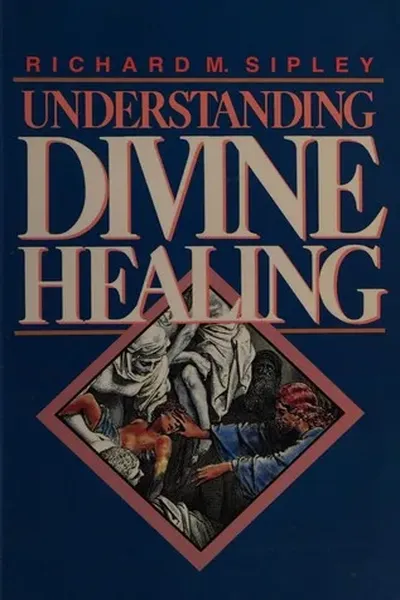
The Tarot Guide to Love and Relationships
 80
80

The Tarot Guide to Love and Relationships
Nancy Shavick’s 1993 volume, The Tarot Guide to Love and Relationships, tackles the often-daunting task of applying Tarot to the nuances of human connection. Its strength lies in the creation of specific spreads designed to dissect relational dynamics, moving beyond generic interpretations to offer concrete insights. The chapter on "The Karmic Relationship Spread," for instance, provides a structured way to examine patterns that extend beyond a single lifetime, a concept that feels particularly potent. However, the book occasionally leans towards a somewhat dated New Age earnestness in its prose, which may feel less grounded to a contemporary reader accustomed to more clinical or psychological approaches. Despite this, its practical, problem-solving orientation remains a significant asset. Shavick’s work offers a valuable, if stylistically of-its-time, toolkit for relationship analysis via Tarot.
📝 Description
80
Nancy Shavick's 1993 book applies Tarot to the complexities of human connection.
Published in 1993, The Tarot Guide to Love and Relationships moves beyond general divination to concentrate on interpersonal dynamics. Shavick presents structured methods for analyzing romantic partnerships, friendships, and family ties using specific card spreads. The book advocates for Tarot as a diagnostic tool to understand and resolve conflicts, not solely for prediction.
This guide is for Tarot readers who want to apply card knowledge to personal relationships. It suits those with a basic understanding of Tarot symbolism seeking practical frameworks for relational challenges. Readers interested in actionable advice for improving interactions will find value here. The work emerged during the 1990s, a time of increased interest in New Age spirituality and self-help literature. Shavick grounded Tarot in the domain of relationships, differentiating it from purely predictive texts and aligning with a broader cultural focus on personal growth.
This book emerged in the early 1990s, a period when esoteric systems like Tarot saw broader integration into self-help and personal development movements. While many texts focused on prediction or spiritual guidance, Shavick's work distinguished itself by grounding Tarot interpretation in psychological understanding and practical relationship dynamics. It reflects a trend of applying ancient divination tools to contemporary life challenges, particularly in the realm of interpersonal connection and emotional intelligence.
💡 Why Read This Book?
• Learn to utilize specific Tarot spreads, like the "Karmic Relationship Spread" detailed in Chapter 5, to diagnose and address conflicts within romantic, familial, or platonic connections. • Gain interpretive skills focused on relational dynamics, moving beyond generalized meanings to understand how card combinations reveal interpersonal patterns and compatibility. • Discover how the 1993 publication date and Shavick's approach position this guide within the self-help and psychological Tarot movements of the late 20th century.
⭐ Reader Reviews
Honest opinions from readers who have explored this book.
❓ Frequently Asked Questions
When was The Tarot Guide to Love and Relationships first published?
The Tarot Guide to Love and Relationships by Nancy Shavick was first published in 1993, positioning it within the early wave of practical, self-help oriented Tarot literature.
What kind of relationships does the book cover?
The book addresses various close relationships, including romantic partners, friends, and family members, offering specific spreads for each dynamic.
Does the book require advanced Tarot knowledge?
While a foundational understanding of Tarot is helpful, the book provides specific spreads and interpretations, making it accessible for enthusiasts looking to apply their knowledge to relationships.
What is the primary goal of using Tarot for relationships according to Shavick?
Shavick's aim is to use Tarot as a tool for understanding and resolving conflicts inherent in relationships, fostering personal happiness and improved connections.
What makes Shavick's approach to Tarot unique?
Her approach emphasizes a psychological and problem-solving perspective, viewing Tarot readings as a means to gain insight into internal states and relational patterns rather than solely for predictive purposes.
Who is Nancy Shavick, the author?
Nancy Shavick is also known for her book 'The Tarot' and 'Traveling the Royal Road,' indicating a consistent focus on Tarot and spiritual or psychological journeys in her work.
🔮 Key Themes & Symbolism
Relational Dynamics Analysis
This work centers on the application of Tarot to decipher the intricate web of human connections. It moves beyond individual readings to focus on the interplay between two or more people. Shavick introduces specialized spreads, such as those designed to explore compatibility or karmic ties, enabling readers to gain a structured understanding of relationship challenges. The emphasis is on using the cards as a diagnostic tool to identify underlying issues, communication breakdowns, or unexpressed emotions that affect partnerships, friendships, and family bonds.
Psychological Tarot Interpretation
Shavick advocates for a psychological lens when interpreting Tarot cards in the context of relationships. This perspective views the cards not merely as predictive symbols but as mirrors reflecting the querent's inner landscape and relational patterns. The book guides readers to explore their own motivations, fears, and desires as they manifest in their interactions. By focusing on the internal dynamics that shape external relationships, this approach empowers individuals to enact change and foster healthier connections from within.
Conflict Resolution Through Tarot
A primary function of this guide is to equip readers with the means to resolve conflicts that are endemic to close relationships. Through detailed sample spreads and interpretive strategies, Shavick demonstrates how Tarot readings can illuminate the root causes of disputes and misunderstandings. The book provides a framework for understanding differing perspectives and navigating difficult conversations, using the symbolic language of the Tarot to foster empathy and constructive dialogue between individuals.
Personal Happiness and Connection
Ultimately, The Tarot Guide to Love and Relationships aims to guide individuals toward greater personal happiness by improving their interpersonal connections. Shavick posits that understanding and harmonizing relationships is a key pathway to overall well-being. The book's practical exercises and interpretive methods are designed to foster self-awareness and enhance relational skills, leading to more fulfilling and stable bonds with others. This focus aligns with the broader self-help ethos of the early 1990s.
💬 Memorable Quotes
Direct passages from the work, attributed to the author.
“The Tarot offers pathways to personal happiness through understanding the dynamics of our closest relationships.”
— This core idea suggests that improving our connections with others, illuminated by Tarot insights, is a direct route to achieving a more fulfilling personal life.
“Sample spreads teach Tarot enthusiasts to use readings to solve conflicts inherent in all close relationships.”
— This highlights the book's practical, problem-solving orientation, emphasizing that Tarot is a tool for actionable resolution, not just passive observation of relational issues.
“Interpretations should focus on the underlying dynamics and patterns, not just surface-level events.”
— This points to a deeper, psychological approach to Tarot, encouraging readers to look beyond immediate circumstances to understand the root causes of relational behaviors.
“Whether with romantic partners, friends, or family, the principles apply.”
— This demonstrates the broad applicability of the book's methods, showing that the core insights into relationship dynamics are transferable across different types of close bonds.
“The book reveals how to use Tarot readings as a diagnostic tool for interpersonal challenges.”
— This frames the Tarot not as a fortune-telling device, but as an analytical instrument for understanding the health and functioning of relationships.
🌙 Esoteric Significance
Tradition
This work operates within the broader Hermetic tradition's interest in symbolic systems for understanding human experience, though it leans heavily towards modern psychological interpretation rather than strict adherence to historical Hermetic doctrines. It draws from the Western Esoteric tradition's use of Tarot as a divinatory and introspective tool, adapting its application to a specific, practical domain: interpersonal relationships. Shavick's approach can be seen as a contemporary evolution, integrating psychological theory with esoteric symbolism.
Symbolism
Key symbols explored include the Lovers card, often interpreted in relationship readings to signify choice, union, and communication, and the Two of Cups, representing mutual affection, partnership, and emotional connection. The book likely examines how the archetypes represented by the Major Arcana and the elemental forces of the Minor Arcana manifest within the context of relationship dynamics, offering interpretations for harmony, discord, and growth.
Modern Relevance
Shavick's book continues to be relevant for modern practitioners of psychological Tarot, relationship coaches, and therapists who integrate esoteric tools into their work. Its emphasis on structured spreads for specific issues speaks to contemporary interests in evidence-based or demonstrably applicable spiritual practices. Thinkers and practitioners focusing on embodied cognition and archetypal psychology within Tarot studies might find her foundational work a useful starting point for comparison.
👥 Who Should Read This Book
• Tarot enthusiasts seeking to move beyond general readings to specifically analyze and improve their personal relationships, including romantic partnerships, friendships, and family dynamics. • Individuals interested in a psychological and problem-solving approach to divination, who wish to use Tarot as a tool for self-awareness and conflict resolution in their interactions. • Readers exploring the intersection of esoteric symbolism and modern self-help, particularly those drawn to practical applications of Tarot within the context of emotional and relational well-being.
📜 Historical Context
Nancy Shavick’s *The Tarot Guide to Love and Relationships*, published in 1993, emerged during a period of significant expansion for esoteric studies and self-help literature. The early 1990s saw a cultural embrace of psychological introspection and practical applications of ancient wisdom, moving beyond purely spiritual pursuits. This book fit squarely within that trend, offering a concrete, problem-solving approach to Tarot that distinguished it from more mystical or predictive texts. Contemporary authors like Rachel Pollack were also exploring the psychological depths of Tarot, though Shavick’s specific focus remained on relational dynamics. The burgeoning New Age movement provided a receptive audience for such guides, eager to integrate esoteric tools into daily life. While not facing overt censorship, books like Shavick's navigated the mainstreaming of occult topics, often reviewed within the context of popular psychology and spiritual wellness rather than academic occultism.
📔 Journal Prompts
The 'Karmic Relationship Spread' and its implications for present-day connections.
Interpreting the Lovers card's role in a specific relationship conflict.
Reflecting on the Two of Cups as a symbol of partnership dynamics.
Analyzing recurring patterns identified through relationship Tarot spreads.
How the 'Traveling the Royal Road' concepts might apply to relational growth.
🗂️ Glossary
Spread
A specific arrangement of Tarot cards laid out in a pattern designed to address a particular question or situation, such as a relationship reading.
Querent
The person for whom a Tarot reading is performed; the individual seeking insight or answers from the cards.
Karmic Relationship
A relationship believed to carry lessons or patterns from past experiences or lifetimes, often involving challenges that foster significant personal growth.
Major Arcana
The 22 trump cards of the Tarot deck, representing significant life lessons, archetypal themes, and spiritual journeys.
Minor Arcana
The 56 cards of the Tarot deck divided into four suits (Wands, Cups, Swords, Pentacles), representing everyday events, challenges, and experiences.
Archetype
A universal, archaic pattern or image that is part of the collective unconscious, often represented by figures or situations in Tarot cards.
Divination
The practice of seeking knowledge of the future or the unknown by supernatural means, such as through Tarot card readings.
This book appears in 1 collection
🔮 Readers Also Liked
Browse all →









From the “Tarot Reading” Collection
View all →






More Free Divination & Tarot Books
View all →