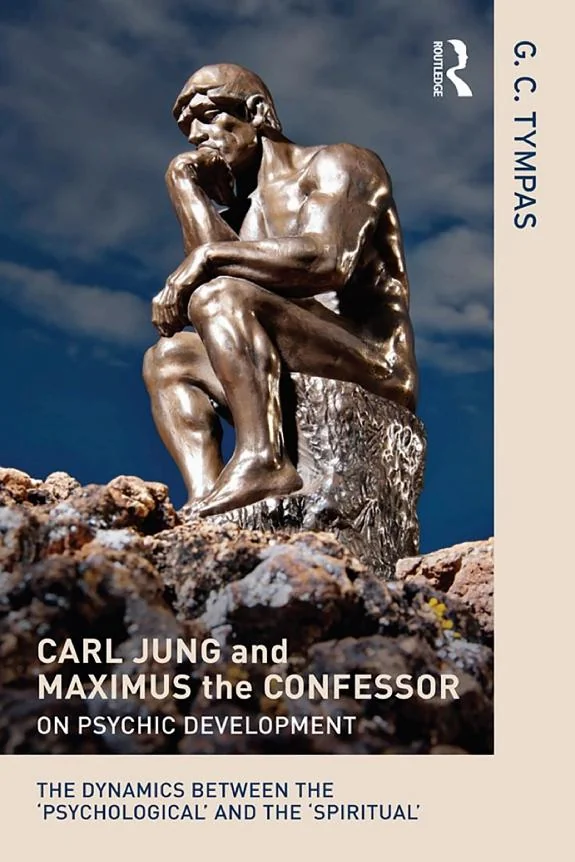
Carl Jung and Maximus the Confessor on Psychic Development
 81
81

Carl Jung and Maximus the Confessor on Psychic Development
G. C. Tympas's "Carl Jung and Maximus the Confessor on Psychic Development" offers a compelling juxtaposition of two monumental figures in the study of the human psyche and spirit. The strength of this work lies in its ambitious attempt to create a "trans-disciplinary framework" that harmonizes Jung's psychological constructs with Maximus's theological asceticism. Tympas skillfully navigates the dense theological language of Maximus and the complex analytical psychology of Jung, highlighting their shared concern with the integration of the self, albeit through different lenses. A particular point of interest is the exploration of how Jung's concept of the Self might map onto Maximus's vision of deification, a comparison rarely undertaken with such rigor. However, the book's dense academic prose might present a barrier for readers not already steeped in both Jungian analysis and Patristic studies. While the "evolutional" relationship proposed is intriguing, its full implications could benefit from further elaboration. Ultimately, Tympas provides a valuable scholarly bridge for those seeking to understand the profound similarities in the human drive towards wholeness, whether framed psychologically or spiritually.
📝 Description
81
G. C. Tympas's 2014 study compares Carl Jung's psychic development with Maximus the Confessor's spiritual progress.
This book examines the distinct yet related paths of psychic development as conceptualized by psychoanalyst Carl Jung and spiritual progress as articulated by the 5th-century Byzantine monk Maximus the Confessor. G. C. Tympas proposes a trans-disciplinary framework to analyze the evolution of consciousness, positing an 'evolutional' relationship between psychological and spiritual experiences. The work aims to bridge the perceived gap between internal psychological states and external spiritual pursuits, offering a unified perspective on human development.
The study is intended for advanced students and scholars in comparative psychology, religious studies, and esoteric traditions. It appeals to those interested in the intersection of depth psychology and Christian mysticism, particularly those seeking to understand the structural similarities and divergences between Jungian individuation and Maximus's ascetic path. Readers with a background in Jungian analysis or Patristic theology will find particular value.
The central concepts revolve around comparing Jung's model of psychic development, especially his ideas on the Self and individuation, with Maximus the Confessor's hierarchical ascent towards deification (theosis). Tympas introduces the idea of an 'evolutional' relationship between these psychological and spiritual experiences.
Published in 2014, this work engages with a contemporary academic environment receptive to dialogue between psychology and religion. It builds upon ongoing scholarly interest in Carl Jung's theoretical output and a renewed focus on early Christian contemplative practices. Maximus the Confessor represents a significant pre-modern model of spiritual ascent within Eastern Orthodox theology. The book situates itself within discussions on consciousness and human fulfillment.
💡 Why Read This Book?
• Gain a unique comparative perspective on the human drive toward wholeness, learning how Carl Jung's individuation process (a core concept in his analytical psychology) relates to Maximus the Confessor's model of spiritual ascent towards theosis. • Understand the "evolutional relationship" between psychological and spiritual development, a concept proposed by Tympas that offers a dynamic interpretation of spiritual experience beyond purely religious or psychological definitions. • Explore the theological underpinnings of Maximus the Confessor's model of spiritual progress, including his mystical theology, and see how it provides a historical counterpoint to modern psychological theories of development.
⭐ Reader Reviews
Honest opinions from readers who have explored this book.
❓ Frequently Asked Questions
What is the primary goal of G. C. Tympas's comparison between Jung and Maximus?
The primary goal is to establish a "trans-disciplinary framework" that elucidates the relationship between psychological development (Jung) and spiritual progress (Maximus), proposing an "evolutional" connection between the two.
When was "Carl Jung and Maximus the Confessor on Psychic Development" first published?
The book by G. C. Tympas was first published on March 26, 2014.
What specific psychological concepts of Carl Jung are discussed?
The book engages with Jung's theories on psychic development, particularly his concept of the Self and the process of individuation.
What aspect of Maximus the Confessor's work is central to this study?
The study focuses on Maximus the Confessor's model of spiritual progress, often referred to as his path to deification or theosis.
What is the proposed 'evolutional' relationship?
The "evolutional" relationship suggests a dynamic, potentially sequential or complementary, connection between psychological maturation and spiritual unfolding, offering a unified view of human development.
What kind of reader would benefit most from this book?
Advanced students and scholars in comparative psychology, religious studies, and esoteric traditions, especially those interested in the intersection of Jungian psychology and Christian mysticism, will find this book highly beneficial.
🔮 Key Themes & Symbolism
Psychic vs. Spiritual Development
This theme critically examines the distinction and potential convergence between internal psychological growth, as theorized by Carl Jung, and the transcendent spiritual ascent described by Maximus the Confessor. Tympas posits that these are not mutually exclusive but can be viewed as interconnected stages or parallel processes in the human journey towards integration and fulfillment. The work explores how the ego's complex structures and the pursuit of individuation relate to the soul's striving for union with the divine.
The Self and Theosis
The book draws parallels between Carl Jung's concept of the Self – the archetype of wholeness and the central organizing principle of the psyche – and Maximus the Confessor's doctrine of theosis, or deification. This involves understanding how the realization of the Self in Jungian terms can be seen as a psychological correlate to, or a necessary precursor for, the spiritual transformation and divine union that Maximus describes as the ultimate human telos.
Trans-Disciplinary Framework
Fundamentally, the work establishes a novel 'trans-disciplinary framework' to bridge the fields of analytical psychology and Eastern Orthodox theology. By moving beyond traditional disciplinary boundaries, Tympas seeks to offer a more holistic understanding of human consciousness and its developmental potential. This approach allows for a dynamic interpretation of spiritual experience, integrating insights from both modern psychological inquiry and ancient mystical traditions.
Evolutional Relationship
A central thesis is the proposal of an 'evolutional' relationship between the psychological and the spiritual. This concept suggests that psychic development is not merely a separate domain but can be understood as part of a broader developmental trajectory that includes spiritual progress. It implies a dynamic interplay where psychological maturation can facilitate or inform spiritual growth, and vice versa, leading to a more integrated and comprehensive view of human potential.
💬 Memorable Quotes
Direct passages from the work, attributed to the author.
“In what ways does psychological development differ from spiritual development and psychological experience from spiritual experience?”
— This foundational question sets the stage for the entire comparative analysis, highlighting the central inquiry into the distinctions and potential overlaps between the inner world of the psyche and the transcendent field of the spirit.
“Bringing together two disparate theories under a trans-disciplinary framework, G. C. Tympas presents a comparison of Carl Jung’s theory of psychic development and Maximus the Confessor’s model of spiritual progress.”
— This statement articulates the book's methodological approach, emphasizing its unique contribution in bridging seemingly distinct fields of study through a novel conceptual structure.
“An ‘evolutional’ relationship between the ‘psychological’ and the ‘spiritual’ is proposed for a dynamic interpretation of spiritual experience.”
— This expresses the core thesis of the work, introducing a key concept that re-frames the understanding of spiritual experience as an evolving process potentially intertwined with psychological maturation.
“The work explores the structural similarities and divergences between Jungian individuation and Maximus's ascetic path.”
— This highlights a specific analytical focus, indicating that the book will dissect the foundational elements and differences between Jung's psychological goal of wholeness and Maximus's monastic path towards spiritual perfection.
💡 Key Ideas
Editorial paraphrase of the work's core concepts — not direct quotes.
The comparison aims for a unified perspective on human development, integrating insights from depth psychology and Christian mysticism.
This paraphrased concept underscores the ultimate aim of the book: to synthesize disparate understandings of human growth into a cohesive whole, bridging the secular and the sacred.
🌙 Esoteric Significance
Tradition
This work engages with the esoteric dimensions of both analytical psychology and Christian mysticism. While Carl Jung's concepts, particularly archetypes and the collective unconscious, have been adopted by various esoteric movements, his primary framework was psychological. Maximus the Confessor, however, is a central figure in the esoteric tradition of Eastern Orthodox hesychasm and apophatic theology. Tympas places Jungian psychology within a lineage that, in esoteric circles, is often seen as a modern articulation of ancient wisdom, and juxtaposes it with a deeply established mystical tradition, seeking common ground in the human quest for transformation.
Symbolism
Within the framework of Jungian psychology, the Self is a primary symbol of wholeness. In Maximus the Confessor's theology, the ultimate symbol is theosis – a transformative union with God, often understood as the deification of humanity. Tympas explores how Jung's archetypal symbols, such as the anima/animus or the shadow, might function as psychological correlates to the spiritual trials and purifications Maximus describes on the path to God. The integration of these symbolic realms is key to the book's comparative project.
Modern Relevance
Contemporary thinkers and practitioners in fields like depth psychology, spiritual direction, and comparative religion continue to draw on both Jung and Maximus. This book is relevant for modern therapists seeking to understand the spiritual dimension of their clients' lives and for spiritual seekers interested in the psychological dynamics of their own path. It speaks to a modern yearning for integrated models of human development that acknowledge both the material and the transcendent aspects of existence, resonating with movements that blend psychological insight with spiritual practice.
👥 Who Should Read This Book
• Students of Jungian psychology: Those seeking to understand the potential spiritual implications and historical parallels of Jung's theories on individuation and the Self will find this comparative analysis informative. • Scholars of comparative religion and mysticism: Researchers interested in the intersection of Western psychology and Eastern Orthodox contemplative traditions will benefit from the rigorous theological and psychological scholarship. • Esoteric practitioners and spiritual seekers: Individuals exploring paths of inner transformation who wish to understand how psychological development can inform or complement spiritual growth will find valuable frameworks for self-reflection.
📜 Historical Context
G. C. Tympas's "Carl Jung and Maximus the Confessor on Psychic Development," published in 2014, emerged during a period of significant interdisciplinary engagement in both psychology and religious studies. Carl Jung's analytical psychology, a potent force since the mid-20th century, continued to be a subject of extensive scholarly re-evaluation and application. Simultaneously, there was a growing academic and spiritual interest in the contemplative traditions of early Christianity, particularly the Patristic era. Maximus the Confessor (c. 580–662 AD), a key figure in Byzantine theology and mysticism, represented a profound, pre-modern model of spiritual attainment. The book arrives in a context where scholars like Karen Armstrong were popularizing ancient religious practices, and academic circles were increasingly open to integrating psychological frameworks with theological inquiry, moving beyond earlier positivist critiques. The work can be seen as contributing to a broader trend of exploring the perennial questions of human consciousness and fulfillment through the lens of both historical spiritual masters and modern psychological theorists.
📔 Journal Prompts
Maximus the Confessor's model of spiritual progress and Jung's individuation process: Identify one point of divergence in their ultimate goals.
The concept of the Self in Jungian psychology and its potential parallel to theosis in Maximus's theology.
Analyze the 'evolutional relationship' proposed by Tympas: How might psychological maturity support spiritual striving?
Consider the primary questions posed by Tympas regarding psychic versus spiritual experience. What is your current understanding?
Reflect on the trans-disciplinary framework: How can bridging psychology and theology offer a more complete picture of human development?
🗂️ Glossary
Individuation
In Carl Jung's analytical psychology, the process by which an individual becomes a whole, integrated personality, realizing their unique potential and reconciling conscious and unconscious aspects of the psyche.
Theosis
A core concept in Eastern Orthodox theology, referring to the process of becoming like God, or deification, through union with God's divine energies, a transformative spiritual goal.
Trans-disciplinary Framework
An approach that moves beyond the boundaries of individual academic disciplines to integrate knowledge and methodologies from multiple fields, creating a more holistic understanding.
Psychic Development
The process of psychological growth and maturation, encompassing the development of the ego, the integration of complexes, and the realization of the Self, as theorized by Carl Jung.
Spiritual Progress
The journey of the soul towards greater spiritual awareness, virtue, and union with the divine, as articulated in religious and mystical traditions, such as Maximus the Confessor's model.
Evolutional Relationship
A concept proposed by Tympas suggesting a dynamic, potentially sequential or complementary, connection between psychological and spiritual development, viewing them as part of a broader human unfolding.
Archetype
Universal, archaic patterns and images that derive from the collective unconscious and are the psychic counterpart of instinctual behavior, as defined by Carl Jung.
This book appears in 1 collection
🔮 Readers Also Liked
Browse all →









From the “Psychic Development” Collection
View all →



More Free Occult Philosophy Books
View all →