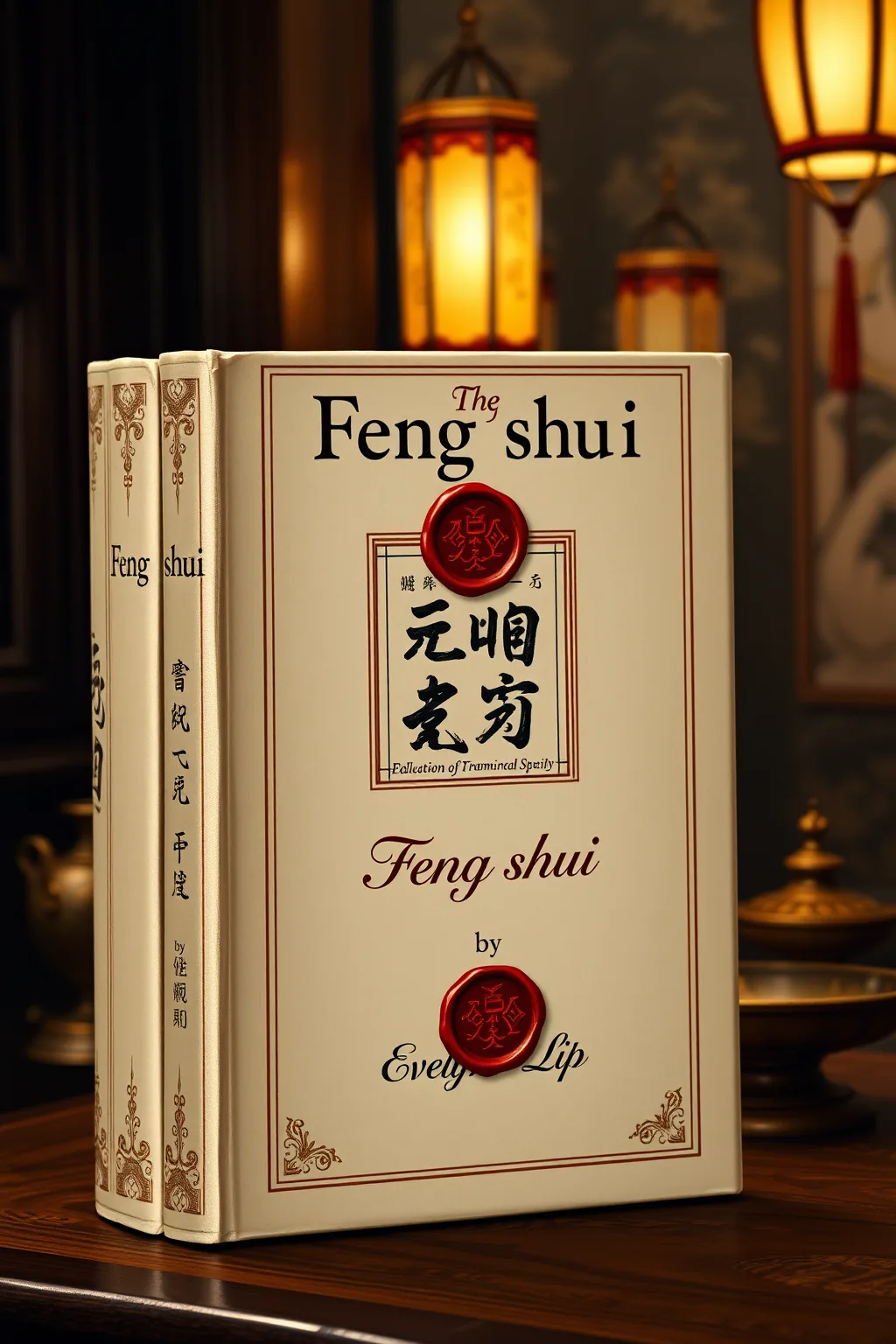
Feng Shui
 80
80

Feng Shui
Evelyn Lip's "Feng Shui" offers a refreshingly direct exposition of a complex art. Unlike many contemporary works that lean heavily on New Age jargon, Lip’s approach, first published in 1987, grounds the reader in the practical application of geomantic principles. The strength of this book lies in its clarity; it doesn't shy away from the technicalities of qi flow or the Five Elements, yet presents them without overwhelming the uninitiated. A particular passage detailing the optimal placement of a desk to enhance career prospects feels grounded and actionable, a far cry from vague pronouncements. Its limitation, perhaps, is the absence of deeper philosophical or historical context that later works might provide, focusing more on the 'how' than the 'why' of ancient practice. Nevertheless, for its intended audience, "Feng Shui" serves as a solid, no-nonsense primer.
📝 Description
80
Evelyn Lip's "Feng Shui" (1987) makes the ancient Chinese art of geomancy accessible to Western readers.
Evelyn Lip's "Feng Shui" serves as a clear introduction to the Chinese practice of arranging living spaces to harmonize with natural energy flows, known as 'qi'. The book breaks down the core principles into understandable parts for those new to the subject. It explains how elements in our environment, from furniture placement to building orientation, affect personal well-being and success.
This work is especially suited for individuals unfamiliar with feng shui, providing a straightforward entry point. It appeals to those who want to apply geomantic ideas to their homes and offices. Readers interested in the underlying theories of creating balanced and positive environments will find it useful. It also speaks to those curious about traditional Chinese views on nature and living spaces.
Published in 1987, Evelyn Lip's "Feng Shui" arrived during a time of growing Western interest in Eastern spiritual practices. It offered a structured explanation of geomancy, an art with thousands of years of history in China. The book aimed to guide an emerging audience beyond superficial understandings, presenting a coherent framework for an practice that predates modern architecture and psychology.
💡 Why Read This Book?
• Learn the foundational principles of 'qi' flow and the 'Five Elements' as detailed in Lip's 1987 guide, understanding how these ancient Chinese concepts directly influence the energy of your personal spaces. • Discover practical methods for analyzing your home or office using the 'Bagua' map, a core geomantic tool, enabling you to identify and adjust areas for improved well-being and prosperity. • Gain a clear, step-by-step understanding of environmental adjustments, such as furniture placement and orientation, that Evelyn Lip explains are crucial for harmonizing your living or working conditions with natural forces.
⭐ Reader Reviews
Honest opinions from readers who have explored this book.
❓ Frequently Asked Questions
When was Evelyn Lip's "Feng Shui" first published?
Evelyn Lip's "Feng Shui" was first published in 1987, making it an earlier accessible guide to the art of geomancy for Western audiences.
What is 'qi' in the context of Feng Shui?
'Qi' (or 'chi') is the fundamental concept of vital life force energy in Chinese philosophy. In Feng Shui, it refers to the flow of this energy through spaces, which practitioners aim to balance for well-being.
Are the 'Five Elements' important in Feng Shui?
Yes, the 'Five Elements' – Wood, Fire, Earth, Metal, and Water – are central. Their interactions and balance are key to understanding how to arrange environments for optimal energy flow and harmony.
Does this book cover the 'Bagua' map?
Yes, Evelyn Lip's "Feng Shui" explains the 'Bagua' map, a fundamental tool used in geomancy to divide a space into nine areas, each corresponding to different aspects of life such as wealth, health, and relationships.
Is Evelyn Lip's book suitable for absolute beginners?
Absolutely. The book is specifically designed for those unfamiliar with feng shui, offering clear explanations of its core principles and practical applications without assuming prior knowledge.
What is 'geomancy' as explained by Evelyn Lip?
Geomancy, in Lip's explanation, is the ancient art of understanding and harmonizing with the earth's energies. Feng Shui is the Chinese practice of geomancy, focusing on the arrangement of spaces to foster positive energy.
🔮 Key Themes & Symbolism
Harmony and Energy Flow
The core of feng shui lies in achieving harmony with the environment by understanding and manipulating the flow of 'qi,' or vital life force energy. Evelyn Lip's work emphasizes that this energy is not abstract but tangible, influenced by the physical layout of homes and workplaces. The book details how elements like the placement of doors, the orientation of buildings, and the arrangement of furniture can either promote a smooth, beneficial flow of qi or create blockages and negative currents, impacting the inhabitants' well-being and fortune.
The Five Elements Theory
Central to feng shui is the theory of the 'Five Elements': Wood, Fire, Earth, Metal, and Water. Lip explains how these elements are interconnected through productive and destructive cycles. Understanding these relationships is crucial for balancing the energies within a space. For instance, Wood fuels Fire, Fire creates Earth (ash), Earth bears Metal, Metal collects Water (condensation), and Water nourishes Wood. Applying this knowledge allows for the strategic use of colors, materials, and shapes to create auspicious environments.
Geomantic Analysis of Space
Lip introduces readers to the practical application of geomancy, particularly through the 'Bagua' map. This octagonal or square grid is overlaid onto a floor plan to analyze different life areas—such as wealth, health, career, and relationships. The book guides readers on how to interpret the energies within each sector of their home or office and suggests remedies or adjustments to enhance positive influences and mitigate negative ones, making the space more conducive to success and happiness.
Yin and Yang Balance
The principle of Yin and Yang, representing complementary opposing forces, is fundamental to achieving balance in feng shui. Lip illustrates how spaces can exhibit characteristics of either Yin (passive, dark, soft) or Yang (active, bright, hard). An ideal environment maintains a dynamic equilibrium between these two energies. The book provides examples of how to identify imbalances, such as a room being too brightly lit or too stagnant, and offers methods to restore a harmonious interplay between Yin and Yang elements.
💬 Memorable Quotes
Direct passages from the work, attributed to the author.
“The arrangement of your dwelling influences the energy that surrounds you.”
— This highlights the core tenet of feng shui: that physical space is not inert but actively shapes the energetic environment of its inhabitants, affecting their lives.
“Qi is the breath of the earth, and it must flow freely.”
— This metaphor emphasizes the dynamic and life-giving nature of 'qi' and the importance of avoiding stagnation or obstruction in its movement through a living space.
“Understanding the cycles of the Five Elements allows for harmonious integration.”
— This points to the practical application of the Five Elements theory, suggesting that by recognizing their interrelationships, one can design environments that are naturally balanced and supportive.
“A balanced space supports balanced living.”
— This concise statement expresses the ultimate goal of feng shui – to create environments that foster equilibrium in all aspects of a person's life, from health to prosperity.
“The Bagua map reveals the energetic potentials of each area.”
— This indicates that the 'Bagua' is not merely a decorative tool but a diagnostic instrument for understanding the specific influences present in different parts of a home or office.
🌙 Esoteric Significance
Tradition
Feng Shui, as presented by Lip, originates from ancient Chinese Taoist cosmology and philosophy. It is deeply intertwined with concepts like 'qi,' 'Yin and Yang,' and the 'Five Elements,' which form the bedrock of much East Asian esoteric thought. While not strictly Hermetic or Kabbalistic, its emphasis on understanding and manipulating unseen energies to influence material reality shares common ground with Western esoteric traditions. Lip's work fits within the broader esoteric library by providing a practical, Earth-focused system for spiritual and material well-being, bridging the gap between the mundane and the mystical through environmental design.
Symbolism
Key symbols in feng shui include the 'Bagua,' an octagonal or square diagram representing eight trigrams and correlating with life areas, directions, and elements. The 'Dragon' is another potent symbol, representing powerful 'qi' and good fortune. The 'Five Elements' (Wood, Fire, Earth, Metal, Water) themselves are symbolic, representing fundamental forces and transformations in the universe. Lip's work implicitly or explicitly engages with these symbols to explain how to arrange spaces for optimal energetic balance and auspicious outcomes.
Modern Relevance
Evelyn Lip's foundational work continues to influence contemporary feng shui practitioners and designers. Modern schools and consultants often build upon the principles she outlined, integrating them with newer understandings of psychology, environmental science, and even quantum physics concepts. Thinkers and practitioners in areas like sustainable design, wellness architecture, and intuitive interior decorating often draw from the core ideas of 'qi' flow and elemental balance that Lip helped popularize in the West during the late 20th century.
👥 Who Should Read This Book
• Individuals new to Eastern philosophies and geomancy seeking a clear, practical introduction to feng shui principles, avoiding overly complex jargon. • Homeowners and renters interested in tangible methods for improving the energy and atmosphere of their living or working spaces using established techniques. • Students of comparative esoteric traditions looking to understand a significant non-Western system for harmonizing human life with the natural environment.
📜 Historical Context
Evelyn Lip's "Feng Shui," first published in 1987, arrived during a period of burgeoning Western interest in Eastern spiritual and practical philosophies, often termed the 'New Age' movement. While concepts like the I Ching and Taoism had been introduced earlier by scholars and figures like Alan Watts, accessible guides to practical geomancy like Lip's were less common. The book offered a clear, structured introduction to a practice with roots stretching back millennia in China, predating many contemporary Western architectural and psychological theories about environmental influence. It provided a tangible alternative to purely scientific or materialist approaches to living spaces. In an era where Eastern philosophies were often filtered through Western interpretations, Lip's work aimed for a more direct exposition of Chinese geomantic principles, positioning it as a practical guide for individuals seeking to actively shape their environments, contrasting with the more passive or theoretical engagement with Eastern thought prevalent at the time.
📔 Journal Prompts
The concept of 'qi' flow in your primary living space.
Applying the 'Five Elements' to a specific room.
Assessing the Yin and Yang balance in your bedroom.
Mapping your home with the 'Bagua' for career insights.
Identifying and mitigating 'sha qi' in your entryway.
🗂️ Glossary
Qi (Chi)
The fundamental life force energy believed to flow through all living things and the environment. In feng shui, its smooth and balanced flow is essential for well-being.
Yin and Yang
Two complementary, opposing forces that represent the dualistic nature of reality in Taoist philosophy. Yin is associated with passivity, darkness, and femininity; Yang with activity, light, and masculinity.
Five Elements
The foundational components of the universe in traditional Chinese philosophy: Wood, Fire, Earth, Metal, and Water. Their interactions and cycles are crucial in feng shui.
Bagua
An energy map, typically octagonal or square, used in feng shui to divide a space into nine areas, each corresponding to a specific aspect of life (e.g., wealth, health, relationships).
Geomancy
The art and practice of divination by geographic features or the interpretation of land formations and energies. Feng Shui is the Chinese form of geomancy.
Sha Qi
Negative or harmful energy that can arise from sharp corners, long corridors, or other environmental features. Feng shui aims to mitigate or deflect 'sha qi'.
Harmonious Arrangement
The goal of feng shui, referring to the optimal placement and configuration of objects and structures within a space to promote positive energy flow and balance.