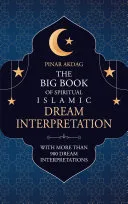
The Big Book of Spiritual Islamic Dream Interpretation
 80
80

The Big Book of Spiritual Islamic Dream Interpretation
Pinar Akdag’s compilation, *The Big Book of Spiritual Islamic Dream Interpretation*, is a remarkable undertaking, providing an accessible entry point into a vast and intricate field. Its strength lies in its sheer breadth, cataloging interpretations systematically. A passage discussing the symbolism of water, for instance, offers a compelling glimpse into how a single element can carry multiple, context-dependent meanings within the Islamic tradition. However, the sheer volume of information, while comprehensive, can occasionally feel overwhelming, lacking a more deeply analytical framework to guide the reader through the disparate interpretations. While the book succeeds admirably as a reference, a more focused exploration of the theoretical underpinnings of Islamic dream interpretation, perhaps drawing more explicitly on figures like Ibn Sirin, might have elevated it further. It serves as an essential, if dense, resource for those seeking to understand this tradition.
📝 Description
80
Published in 2023, The Big Book of Spiritual Islamic Dream Interpretation compiles centuries of lore.
Pinar Akdag's extensive reference work gathers and organizes Islamic dream interpretation across centuries. It provides English-speaking readers direct access to a rich spiritual tradition. The book structures interpretations alphabetically, starting with 'A' for Abdest (ritual ablution), to help decipher dream symbolism within an Islamic framework. It shows how dreams historically functioned as warnings, good news, and inspiration in Islamic cultures.
The volume collects and assesses knowledge from various Islamic dream interpreters across different eras. Akdag's multi-year effort results in a comprehensive survey of this esoteric subject. It clarifies Islamic dream interpretation practices for those new to its spiritual nuances. The work is intended as a primary resource for this specific area of esoteric knowledge, making historical wisdom available. It aims to give readers tools to understand the spiritual meaning of their own dreams, presenting them as divine guidance.
This book sits within the long-standing Islamic tradition of dream interpretation, which views dreams as a potential channel for divine guidance or self-reflection. This practice is rooted in the Quran and the Hadith, with significant figures throughout Islamic history dedicating scholarly attention to cataloging and analyzing dream symbolism. It is distinct from Western psychological approaches, focusing instead on spiritual significance and theological implications.
💡 Why Read This Book?
• Gain direct access to centuries of Islamic dream symbolism, as documented in Akdag's systematic collection, which moves beyond generalized dream dictionaries to offer culturally specific interpretations. • Understand the spiritual function of dreams within Islam, learning how they are viewed as potential sources of divine guidance or self-reflection, a concept explored extensively through the book's organized entries. • Explore the historical development of Islamic dream interpretation by examining the collected knowledge spanning various centuries, offering a unique perspective not readily available in Western esoteric literature.
⭐ Reader Reviews
Honest opinions from readers who have explored this book.
❓ Frequently Asked Questions
What is the primary focus of 'The Big Book of Spiritual Islamic Dream Interpretation'?
The book's primary focus is to compile and present a comprehensive reference of Islamic dream interpretations gathered from centuries of Islamic scholarship, making this knowledge accessible to a wider audience.
Who is the author of 'The Big Book of Spiritual Islamic Dream Interpretation'?
The author is Pinar Akdag, who first published this extensive work on November 15, 2022, after years of meticulous research and compilation.
What is 'Abdest' as mentioned in the book's blurb?
Abdest, as referenced in the book, refers to the Islamic ritual ablution performed before prayer, signifying purification and readiness for spiritual connection.
Does the book only cover basic dream symbols?
No, the book aims for comprehensiveness, covering interpretations from 'A' for Abdest and extending through a wide range of symbols and concepts within the Islamic dream interpretation tradition.
Is this book suitable for beginners in dream study?
Yes, the book is designed to provide access to centuries-old knowledge, making it a valuable resource for both beginners and those with prior interest in esoteric or Islamic studies.
What languages are available for this book?
The book provides access to centuries-old knowledge for both German and English-speaking countries, indicating it is available in both languages or translated.
🔮 Key Themes & Symbolism
Dreams as Divine Communication
The work explores the Islamic perspective that dreams can serve as a direct channel for divine messages, warnings, or guidance. This theme is illustrated through numerous interpretations where specific dream imagery is understood as a form of spiritual communication from Allah, offering admonitions or good tidings. The book details how recognizing these divine signals can profoundly impact an individual's life path and spiritual development within the Islamic tradition.
Symbolic Language of the Unconscious
Central to the book is the idea that dreams operate through a rich symbolic language, reflecting the state of the dreamer's soul and their connection to the spiritual world. Each symbol, from common objects to specific actions like performing Abdest, carries layers of meaning rooted in Islamic theology and cultural understanding. The book meticulously decodes these symbols, providing readers with a framework to interpret their own unconscious narratives.
Historical Compendium of Interpretation
This theme highlights the book's function as a historical archive of Islamic dream interpretation. Akdag has gathered knowledge from diverse centuries and scholars, presenting a cumulative understanding of the practice. It showcases the evolution and consistency of interpretive methods within the Islamic sphere, offering a scholarly yet accessible overview of a significant esoteric tradition that has persisted for over a millennium.
Spiritual Admonition and Inspiration
The book consistently frames dreams not merely as random occurrences but as potent forces for spiritual growth. Many interpretations presented serve as admonitions, cautioning dreamers about potential pitfalls or spiritual deviations. Conversely, dreams are also depicted as sources of inspiration, encouraging virtuous actions and strengthening faith. This dual role of dreams as guides for behavior and belief is a recurring motif.
💬 Memorable Quotes
Direct passages from the work, attributed to the author.
“Dreams are an admonition and good tidings – and above all an inspiration for our lives!”
— This opening statement sets the core premise: dreams within the Islamic tradition are not passive experiences but active forces carrying spiritual weight, serving as both cautionary tales and sources of divine encouragement.
“Collected knowledge of Islamic dream interpreters from various centuries.”
— This phrase emphasizes the book's function as a repository of historical wisdom, highlighting the author's effort to synthesize diverse interpretations across time into a single, accessible reference work.
“Access to the centuries-old knowledge of the Islamic cultural sphere.”
— This points to the book's goal of bridging cultural and temporal divides, making a significant body of esoteric Islamic thought available to a contemporary, global audience.
“Interpretations, from A for Abdest (Islamic ritual ablution)...”
— This specific example illustrates the systematic and comprehensive nature of the book's cataloging, showing how even foundational practices like ritual purification are analyzed for their dream symbolism.
“Meticulously collected, evaluated and written down over many years.”
— This highlights the scholarly rigor and dedication behind the book's creation, assuring readers of the depth of research and the author's commitment to presenting accurate and well-sourced information.
🌙 Esoteric Significance
Tradition
This work firmly sits within the esoteric traditions of Islam, often referred to as Sufism or Islamic mysticism, though its focus on dream interpretation also draws from jurisprudence (fiqh) and hadith studies. It represents a lineage that views the spiritual realm as accessible through various means, including dreams, as a form of divine communication or inner revelation. Unlike purely philosophical or legalistic interpretations of Islam, this tradition emphasizes the experiential and visionary aspects of faith.
Symbolism
Key symbols explored include water, often representing purity, knowledge, or divine mercy depending on its state (clear, murky, flowing). Animals frequently appear, carrying specific connotations – a lion might symbolize power or danger, while a bird could represent spiritual freedom or divine messages. The act of performing 'Abdest' (ritual ablution) itself is symbolic of purification and readiness for spiritual engagement, indicating that even preparatory religious acts hold profound meaning in the dreamscape.
Modern Relevance
Contemporary thinkers and practitioners interested in comparative spirituality, Sufism, and depth psychology find value in this work. Scholars of religion and cultural studies utilize it to understand the historical and ongoing role of dreams in Islamic societies. Furthermore, individuals seeking alternative frameworks for self-understanding and spiritual growth, beyond Western psychological models, may turn to this book for its culturally specific and spiritually oriented approach to dream analysis.
👥 Who Should Read This Book
['• Students of Islamic Esotericism: Those exploring Sufism, Islamic mysticism, or the spiritual dimensions of Islamic practice will find a direct and comprehensive resource on a key area of contemplative life.', '• Comparative Religion Scholars: Researchers interested in cross-cultural perspectives on dreams and their interpretation will benefit from this detailed look at a specific, influential tradition.', '• Individuals Seeking Spiritual Guidance: Readers looking for meaning and direction in their own dreams, particularly those with an interest in Islamic culture or a desire for a spiritually grounded interpretive framework.']
📜 Historical Context
The practice of dream interpretation within Islam has a profound history, deeply intertwined with theological scholarship and spiritual seeking. Figures like Ibn Sirin (died c. 728 CE) laid foundational work, treating dreams as a form of prophecy or divine communication. This tradition flourished through the medieval Islamic world, producing extensive literature that sought to codify and systematize dream symbolism. The book by Pinar Akdag taps into this rich lineage, offering a modern compilation of knowledge that reflects the meticulous scholarship of earlier eras. It emerges in a contemporary landscape where interest in esoteric traditions is growing, yet often lacks direct access to the specific intellectual currents of Islamic mysticism and jurisprudence that shaped these interpretations. Unlike the more individualized, psychological approaches to dream analysis prevalent in Western contexts since Freud, Islamic dream interpretation historically remained more tethered to religious and ethical frameworks, viewing dreams through the lens of divine will and moral guidance.
📔 Journal Prompts
Reflecting on the symbolism of water in your dreams, as discussed within Islamic tradition.
Analyzing the dream of performing Abdest: what spiritual purification might it signify?
Considering dreams as 'admonitions' or 'good tidings' based on the book's framework.
Exploring the historical context of Ibn Sirin's interpretations and their relation to modern concepts.
Interpreting a recurring animal symbol from your dreams through an Islamic lens.
🗂️ Glossary
Abdest
The Islamic ritual ablution performed before prayer (Salat) to achieve a state of ritual purity. It involves washing specific body parts in a prescribed order.
Ibn Sirin
A renowned early Islamic scholar (died c. 728 CE) whose comprehensive work on dream interpretation is considered a foundational text within the Islamic tradition.
Ru'ya
An Arabic term for a dream or vision, often distinguished from 'Hulm' (a dream originating from Satan or the lower self).
Hulm
An Arabic term for a dream, typically one considered to be misleading, distressing, or originating from negative influences, as opposed to a divine vision (Ru'ya).
Tafsir al-Ru'ya
The science or art of dream interpretation within the Islamic tradition, seeking to understand the meanings and implications of dreams.
Admonition
A warning or gentle reprimand, often implying guidance or a call to correction, a function attributed to certain types of dreams in Islamic thought.
Good Tidings
Positive news or divine encouragement conveyed through dreams, seen as a form of blessing or confirmation within the Islamic spiritual framework.