By Names and Images
 72
72

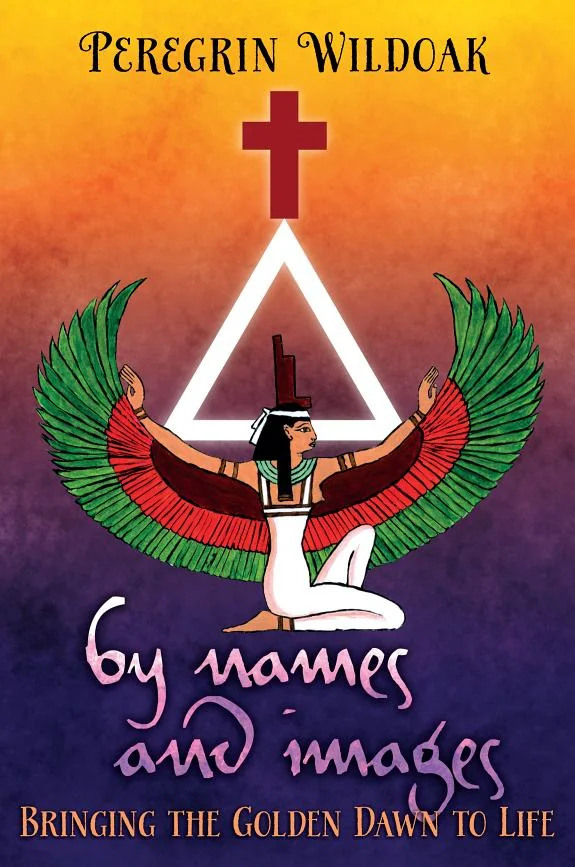
By Names and Images
Peregrin Wildoak's *By Names and Images* offers a much-needed practical exegesis on the Golden Dawn system, focusing on the often-neglected internal work. Where many texts present GD rituals as historical curiosities or dry theoretical frameworks, Wildoak insists on their potent efficacy when coupled with rigorous visualization and spiritual communion. The strength of this book lies in its clarity; it demystifies complex techniques for invoking divine and angelic presences, making them accessible to dedicated practitioners. A particular passage detailing the imaginative construction of angelic forms within the astral light is exceptionally well-executed. However, its intense focus on internal mechanics might leave some readers wanting more historical or comparative analysis of the GD's broader influence. For those seeking to move beyond rote memorization of rituals to genuine spiritual engagement within the GD framework, this book is an invaluable, if demanding, resource.
📝 Description
72
Peregin Wildoak's By Names and Images dissects the Golden Dawn system's inner mechanics in 1998.
This 1998 book examines the esoteric workings of the Golden Dawn system. It goes beyond the publicly known rituals and teachings, which have been available since their initial publication, to uncover the visual and spiritual techniques that give them power. The text offers clear, practical instructions for the visualization and spiritual connection needed to make these magical practices effective.
By Names and Images is intended for dedicated students of Western Esotericism, particularly those already familiar with or involved in Golden Dawn or similar magical traditions. It is for individuals who want to improve their understanding and practical use of magical correspondences, angelic invocations, and the spiritual principles behind ceremonial magic, moving from theory to application. The book focuses on how the practitioner's mind and spirit actively engage with these practices.
The core ideas involve the practitioner's active mental and spiritual involvement. This includes guidance on creating and filling the imagination with divine and angelic figures, understanding the energetic qualities of divine names, and using 'images' not just as symbols but as centers for spiritual energy and awareness. The work stresses that ritual effectiveness comes not only from the prescribed actions but also from the internal states of the practitioner.
The Golden Dawn, founded in the late 19th century, significantly influenced modern Western esotericism. Its initially secret teachings started appearing in the early 20th century. While many books have discussed its rituals and organization, few have systematically detailed the visualization and spiritual connection methods, the 'inner workings', that are key to its effectiveness. This book fills that gap. It builds upon the work of figures like Aleister Crowley and Israel Regardie, but concentrates on the user's internal experience and imaginative capacity.
💡 Why Read This Book?
• Learn concrete methods for activating divine names and angelic correspondences, moving beyond theoretical Kabbalah to applied spiritual connection, as detailed in the book's exploration of "Names and Images" for invocatory magic. • Gain practical instruction in the visualization techniques essential for effective Golden Dawn ritual, specifically how to imbue imagined forms with spiritual energy, a core component of the work. • Understand the 'inner workings' of Western ceremonial magic, specifically the Golden Dawn system, by learning how to establish direct spiritual connections through disciplined imagination, as presented in the book's practical exercises.
⭐ Reader Reviews
Honest opinions from readers who have explored this book.
❓ Frequently Asked Questions
What is the Golden Dawn system of magic?
The Golden Dawn system is a magical tradition established in late 19th-century Britain. It synthesized Western esoteric knowledge, including Kabbalah, Hermeticism, and Rosicrucianism, into a structured curriculum of rituals and teachings for spiritual development and magical practice.
Why is 'By Names and Images' significant for Golden Dawn practitioners?
This book addresses the practical, internal techniques—visualizations and spiritual connections—that empower Golden Dawn rituals, elements often omitted or underdeveloped in publicly available texts. It focuses on the 'how-to' of spiritual engagement within the system.
What does the book mean by 'visualizations and spiritual connections'?
It refers to the deliberate and focused use of the imagination to construct and interact with spiritual entities, divine forces, and symbolic forms. These mental and spiritual acts are presented as crucial for manifesting magical intent.
Is this book suitable for beginners in magic?
While it offers clarity, the book assumes a foundational understanding of esoteric principles and magical practice. It is best suited for those with some experience in Western Esotericism or the Golden Dawn tradition seeking to deepen their practice.
Who is Peregrin Wildoak?
Peregrin Wildoak is an author and practitioner focused on Western Esotericism. 'By Names and Images,' first published in 2012, is recognized for its in-depth exploration of practical Golden Dawn techniques.
What is the difference between the 'rituals' and the 'inner workings' discussed in the book?
The 'rituals' are the prescribed ceremonial actions and spoken words, often published. The 'inner workings' are the internal, energetic, and imaginative processes the practitioner undertakes to make those rituals effective, such as visualized divine forms and invoked connections.
🔮 Key Themes & Symbolism
The Power of Divine Names
The work emphasizes that divine names are not mere labels but potent energetic keys. It instructs practitioners on how to understand and invoke the spiritual forces associated with specific divine appellations, moving beyond rote recitation to a profound energetic communion. This involves visualizing the names themselves as luminous constructs and understanding their resonance within the practitioner's own spiritual anatomy.
Imaginative Spiritual Forms
A central theme is the creation and animation of spiritual forms within the imaginal realm. The book provides detailed guidance on constructing the 'images' of divine beings, angels, and elemental forces with clarity and intent. This practice is presented as essential for establishing contact and directing spiritual energies, transforming abstract concepts into tangible spiritual presences for magical work.
The Mechanics of Ritual Efficacy
This book dissects why Golden Dawn rituals, and ceremonial magic in general, function. It posits that efficacy stems from the practitioner's focused visualization, energetic projection, and the establishment of authentic spiritual connections, rather than solely from the external performance of ceremonies. It serves as a manual for cultivating these internal faculties.
Bridging Inner and Outer Worlds
The core teaching is about bridging the gap between the mundane and the divine through disciplined inner work. By mastering the techniques of visualizing and connecting with spiritual realities, practitioners can effectively manifest changes in the outer world. The book details how the focused intent and energetic work within the practitioner's consciousness directly influence the subtle realms.
💬 Memorable Quotes
Direct passages from the work, attributed to the author.
“The effectiveness of the rituals lies not just in their structure but in the inner work of the operator.”
— This highlights the book's core thesis: that magical success in traditions like the Golden Dawn hinges on the practitioner's internal skill in visualization and spiritual connection, rather than solely on the prescribed external actions.
“Divine names are keys to spiritual forces, to be understood and invoked.”
— This concept underscores the book's focus on the active, intelligent engagement with divine names. It suggests they are not static pronouncements but dynamic conduits for spiritual energy that require comprehension and focused invocation.
“Energies must be directed through visualized spiritual connections.”
— This reflects the book's practical instruction on channeling magical power. It stresses that the flow and focus of energy are guided by the practitioner's ability to consciously establish and maintain connections with spiritual beings or forces.
“The 'images' are not mere symbols but focal points for spiritual energy.”
— This interpretation clarifies the book's view of symbolic representations. They are presented as active, energetic centers that practitioners can use to anchor and direct their magical intentions and spiritual work.
💡 Key Ideas
Editorial paraphrase of the work's core concepts — not direct quotes.
The imagination is the crucible where spiritual forms are made manifest.
This paraphrased concept emphasizes the active role of the practitioner's imagination as the primary tool for creating the spiritual realities and entities that are central to magical operations within the Golden Dawn system.
🌙 Esoteric Significance
Tradition
This work is firmly rooted in the Western Esoteric Tradition, specifically the Hermetic Kabbalah lineage as codified by the Hermetic Order of the Golden Dawn. It serves as a practical commentary and expansion upon the foundational teachings of that order, focusing on the experiential and energetic aspects of its initiatory system and magical practices.
Symbolism
Key symbols include divine names, which are treated not just as words but as sonic and energetic keys to spiritual realms and beings. Angelic forms and divine figures are also central, visualized not as static images but as dynamic, conscious presences to be invoked and communed with, representing specific spiritual forces and archetypes.
Modern Relevance
Contemporary practitioners of Golden Dawn-derived systems, as well as those interested in practical Kabbalah and ceremonial magic, find significant value in Wildoak's work. It speaks to a modern need for clear, experiential techniques that can be applied to deepen one's magical practice in an age saturated with information but often lacking in practical guidance.
👥 Who Should Read This Book
• Dedicated practitioners of the Golden Dawn system or related ceremonial magic traditions seeking to enhance their ritual efficacy through advanced visualization and spiritual connection techniques. • Students of Hermeticism and Kabbalah interested in the practical application of divine names and angelic invocation beyond theoretical study. • Esoteric researchers focused on the experiential and 'inner workings' of magical systems, aiming to understand the psychological and spiritual mechanics that underpin ritual practice.
📜 Historical Context
The Golden Dawn, founded in 1888, rapidly became a core part of modern Western esotericism, synthesizing Hermetic, Kabbalistic, and Masonic traditions. Its teachings, initially guarded, began to surface publicly through figures like Aleister Crowley and Israel Regardie in the mid-20th century. While numerous books have since analyzed its ritual structure and philosophical underpinnings, *By Names and Images*, published in 2012, addresses a specific lacuna: the detailed mechanics of internal visualization and spiritual communion that animate the order's ceremonies. This work emerges in an era where interest in practical magic has resurged, often seeking to move beyond the theoretical discussions prevalent in earlier esoteric literature and engage directly with the experiential core of traditions like the Golden Dawn, contrasting with purely academic or historical analyses of the movement.
📔 Journal Prompts
The active visualization of divine names as energetic constructs.
The process of imbuing imagined spiritual forms with consciousness and intent.
How the practice of visualizing angelic presences impacts personal spiritual development.
The relationship between disciplined imagination and the efficacy of ritual workings.
Connecting specific divine names to their corresponding energetic signatures.
🗂️ Glossary
Golden Dawn
A late 19th-century magical order that synthesized Western esoteric traditions into a structured system of ritual and spiritual development, profoundly influencing modern occultism.
Visualization
The practice of forming mental images or scenes, used in esoteric traditions to connect with spiritual forces, deities, or invoke specific energies and beings.
Spiritual Connection
The establishment of a conscious link or communion between the practitioner and spiritual entities, divine forces, or higher planes of existence.
Divine Names
Appellations used in magical and religious contexts believed to hold inherent spiritual power, acting as keys to invoke specific divine attributes or beings.
Angelic Forms
Visual representations or conceptualizations of angels, used in ceremonial magic as focal points for invocation and interaction with celestial intelligences.
Inner Workings
The internal, psychological, and energetic processes undertaken by a practitioner during magical or spiritual rituals, as distinct from the external ceremonial actions.
Esotericism
Teachings or practices concerned with the hidden, inner, or secret aspects of knowledge, often focused on spiritual transformation and direct experience of the divine.
This book appears in 1 collection
🔮 Readers Also Liked
Browse all →









From the “Golden Dawn” Collection
View all →







More Free Occult Philosophy Books
View all →