The Yogi and the Mystic

 71
71

The Yogi and the Mystic
Karel Werner’s "The Yogi and the Mystic" offers a rigorous comparative analysis of Indian spiritual traditions. Its strength lies in Werner's meticulous dissection of structural patterns in mystical experiences, drawing clear lines between seemingly disparate schools. He successfully demonstrates how concepts like *samadhi* manifest similarly across yogic and Buddhist contexts, a feat of scholarly acumen. A notable passage details the yogic concept of *kundalini* not as mere esoteric energy, but as a psycho-physiological process described within specific tantric texts. However, the book's academic density, while a virtue for scholars, might prove challenging for the casual reader seeking a more devotional or experiential account. The prose, while precise, rarely evokes the wonder it describes. Ultimately, Werner provides an indispensable scholarly framework for understanding the architecture of Indian mysticism.
📝 Description
71
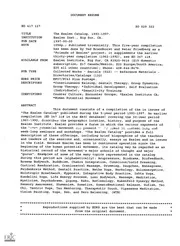
Karel Werner's 1989 book examines Indian mystical traditions, mapping commonalities and divergences.
Karel Werner's "The Yogi and the Mystic" offers a scholarly look at Indian spiritual paths, first published in 1989. The book traces structural similarities and differences among various traditions seeking spiritual realization in India. Werner's academic approach sought to identify underlying patterns, distinguishing his work from the popular New Age interpretations of Eastern spirituality common at the time of its initial release. This careful delineation makes it a valuable resource for those interested in a rigorous comparative study of mysticism.
The book is aimed at serious students of comparative religion, philosophy, and mysticism. It will appeal to readers wishing to understand the common threads in spiritual experiences across different Indian schools, from Advaita Vedanta to Tantra. It also touches on the interaction between Eastern esoteric thought and its Western reception. Werner's analysis focuses on core concepts such as *moksha* (liberation), the role of the *guru*, and the nature of mystical insight compared to doctrine.
Published in 1989, "The Yogi and the Mystic" emerged during a period of growing Western interest in Eastern religions. Werner's scholarship provided a more academic counterpoint to popular, often less rigorous, engagements with yoga and meditation. The book's focus on structural analysis within traditions like Advaita Vedanta and Tantra aimed to offer a deeper understanding of these paths beyond superficial trends. It stands as a contribution to the academic study of religion, particularly concerning comparative mysticism.
💡 Why Read This Book?
• Understand the structural parallels in yogic and mystical paths, as Werner details the recurring stages of spiritual ascent described in texts predating the modern era. • Gain insight into the concept of *moksha* beyond simplistic definitions, by examining its varied interpretations within different Indian philosophical schools detailed in chapter 3. • Explore the academic discourse on Eastern spirituality, as Werner engages with the scholarly context of Indian religious studies as it stood in 1989.
⭐ Reader Reviews
Honest opinions from readers who have explored this book.
❓ Frequently Asked Questions
When was Karel Werner's 'The Yogi and the Mystic' first published?
Karel Werner's 'The Yogi and the Mystic' was first published on August 4, 2005. However, its initial publication date was earlier, in 1989.
What are the main subjects covered in 'The Yogi and the Mystic'?
The book covers various aspects of Indian mysticism, the structural patterns of mystical experiences, different mystical paths within Indian traditions, and comparative mysticism between Eastern and Western thought.
Does the book focus on a single Indian mystical tradition?
No, the book embraces a wide range of Indian mystical traditions, displaying structural patterns and mystic paths across different schools and lineages rather than focusing on just one.
What is meant by 'comparative mysticism' in the context of this book?
Comparative mysticism, as explored by Werner, involves identifying and analyzing similarities and differences in mystical experiences and paths across various traditions, particularly comparing Indian and Western esoteric frameworks.
Is 'The Yogi and the Mystic' suitable for beginners in mysticism?
While informative, the book's scholarly approach and detailed analysis of structural patterns might be more suited for those with some existing knowledge or a serious academic interest in mysticism rather than absolute beginners.
What is the significance of the 1989 publication date mentioned?
The 1989 date signifies the original release of the work, indicating its foundational status in the field of comparative mysticism before its later republication in 2005.
🔮 Key Themes & Symbolism
Structural Patterns of Mystical Experience
Werner systematically identifies recurring structural elements within the diverse field of Indian mystical traditions. This includes mapping common phases in spiritual ascent, the nature of visionary experiences, and the integration of insights. The book argues that despite the varied terminologies and practices across schools like Yoga and Vedanta, a discernible underlying architecture connects these disparate paths, offering a framework for understanding the universality of spiritual striving.
Comparative Mysticism: East and West
A significant contribution of the work is its engagement with comparative mysticism. Werner does not merely describe Indian traditions in isolation but actively seeks parallels and divergences with Western esoteric thought. This involves analyzing how concepts of divine union, liberation, or gnosis are expressed differently yet structurally echo across cultural divides, providing a bridge between seemingly distinct spiritual methodologies.
The Mystic Paths in Indian Traditions
The book details various specific paths within Indian spirituality, such as the yogic disciplines, the devotional Bhakti movement, and the philosophical inquiries of Vedanta. It elucidates the unique methodologies, the role of scripture, and the typical progression described within each tradition. Werner's analysis highlights both the internal coherence of each path and their shared underlying principles concerning the transformation of consciousness.
Phenomenology of Liberation
Central to Werner's exploration is the concept of liberation (*moksha*) and the subjective experiences associated with achieving it. The work examines the phenomenology of these states, drawing from textual accounts and philosophical exegeses. It probes the nature of self-realization, the dissolution of ego, and the attainment of ultimate knowledge as described by practitioners across different Indian lineages.
💬 Memorable Quotes
Direct passages from the work, attributed to the author.
“The structural patterns in mystical experiences are displayed across different traditions and schools.”
— This statement expresses Werner's core thesis: that beneath the surface diversity of Indian spiritual paths lie common frameworks governing the nature and progression of mystical consciousness.
“The work contributes to comparative mysticism, examining Eastern and Western traditions.”
— This highlights the book's methodological approach, emphasizing its role in bridging the study of Indian spirituality with Western esoteric and religious thought through systematic comparison.
“The mystic paths are analyzed for their structural similarities and differences.”
— This points to Werner's analytical focus on the underlying mechanics and sequential stages of spiritual development, irrespective of specific cultural or doctrinal contexts.
“The book explores the phenomenology of spiritual realization.”
— This indicates a focus on the subjective, experiential dimension of achieving spiritual goals like enlightenment or liberation, as described within various Indian traditions.
💡 Key Ideas
Editorial paraphrase of the work's core concepts — not direct quotes.
Indian mysticism encompasses a wide range of aspects, not confined to a single doctrine.
This paraphrase suggests the book's breadth, indicating that Werner explores the complex nature of Indian spiritual practice and philosophy, acknowledging its internal variety and richness.
🌙 Esoteric Significance
Tradition
While not strictly confined to a single lineage, Werner's work is deeply rooted in the academic study of Indian traditions, particularly Yoga, Vedanta, and Tantra. It fits within the broader hermeneutic tradition of understanding esoteric texts through comparative analysis. It departs from purely devotional or occult interpretations by focusing on the structural and phenomenological aspects of mystical experience, providing a framework that can be appreciated by scholars and practitioners alike.
Symbolism
The book analyzes concepts central to Indian mysticism, such as *kundalini*, often depicted as a coiled serpent energy at the base of the spine, representing latent spiritual power. It also discusses *chakras*, described as energy centers within the subtle body, crucial for yogic and tantric practices aimed at spiritual transformation and awakening. These symbols are presented not merely as esoteric imagery but as integral components of specific psycho-physiological and spiritual pathways.
Modern Relevance
Werner's meticulous structural analysis continues to inform contemporary scholarship in religious studies and comparative mysticism. Thinkers and practitioners interested in the underlying architecture of spiritual practice, regardless of tradition, can draw from his work. His approach provides a valuable lens for modern meditation practitioners and philosophers exploring consciousness and the phenomenology of spiritual experience, bridging ancient Indian concepts with contemporary intellectual frameworks.
👥 Who Should Read This Book
• Students of comparative religion seeking to understand the commonalities and divergences in global mystical traditions. • Practitioners of Yoga and meditation who wish to contextualize their practice within the broader philosophical and experiential field of Indian spirituality. • Scholars of esoteric studies interested in the structural analysis of consciousness and spiritual development across different cultures and historical periods.
📜 Historical Context
Karel Werner's "The Yogi and the Mystic," first published in 1989, emerged within a milieu of increasing Western engagement with Eastern spiritualities. While popular movements often simplified yoga and meditation, Werner’s work stood apart by offering a rigorous academic analysis. It appeared during a time when scholars like Mircea Eliade had already explored comparative religion and myth, but Werner focused specifically on the structural patterns within Indian mysticism. His approach contrasted with the more devotional or therapeutic interpretations prevalent in New Age circles. The book contributed to the academic discourse on the comparative study of religion, positioning Indian mystical traditions as subjects for systematic structural analysis rather than purely cultural artifacts or esoteric secrets.
📔 Journal Prompts
The concept of *moksha* as presented across different Indian schools.
Structural patterns identified in yogic versus other Indian mystical paths.
The role of the *guru* in facilitating mystical experience.
Comparison of Eastern mystical frameworks with Western esoteric concepts.
The phenomenological description of altered states of consciousness in the text.
🗂️ Glossary
Moksha
The ultimate goal in many Indian religions, signifying liberation from the cycle of birth and death (*samsara*) and the attainment of spiritual freedom or enlightenment.
Samadhi
A state of deep meditative consciousness or absorption, often considered the culmination of yogic practice, characterized by profound concentration and inner stillness.
Guru
A spiritual teacher or master in Hinduism, Sikhism, and other Indian traditions, who guides disciples on the path to spiritual realization through instruction and example.
Advaita Vedanta
A prominent school of Hindu philosophy emphasizing the non-dual nature of reality, positing that the individual soul (*Atman*) is identical with the ultimate reality (*Brahman*).
Tantra
A complex body of spiritual traditions originating in India, often involving ritual, meditation, and the use of the body and senses as a means to achieve spiritual liberation.
Kundalini
A form of primal spiritual energy, often depicted as a coiled serpent, believed to reside at the base of the spine and to be awakened through yogic practices for spiritual advancement.
Chakras
Energy centers within the subtle body according to yogic and Tantric traditions, believed to influence physical, mental, and spiritual well-being when balanced and activated.
This book appears in 1 collection
🔮 Readers Also Liked
Browse all →









From the “Yoga” Collection
View all →





More Free Occult Philosophy Books
View all →