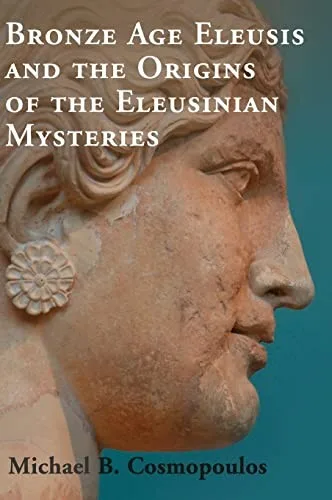
Bronze Age Eleusis and the Origins of the Eleusinian Mysteries
 79
79

Bronze Age Eleusis and the Origins of the Eleusinian Mysteries
Cosmopoulos’s "Bronze Age Eleusis" is a commendable scholarly effort to pierce the fog surrounding the Eleusinian Mysteries' origins. The book’s strength lies in its rigorous archaeological interpretation, particularly its detailed examination of the sanctuary's earliest phases. Cosmopoulos effectively uses ceramic typologies and settlement analysis to argue for a significant Bronze Age foundation. However, the very nature of the subject means that definitive conclusions are elusive. While the author presents compelling hypotheses, the absence of direct textual evidence from the era under scrutiny leaves ample room for alternative interpretations, which the book sometimes downplays. The discussion of Mycenaean connections, while logical, feels slightly speculative. Overall, this work offers a solid, evidence-based foundation for understanding the deep past of the Eleusinian cult, even if the ultimate enigma of its precise inception remains.
📝 Description
79
Michael B. Cosmopoulos reconstructs the Bronze Age origins of the Eleusinian Mysteries using archaeology.
Michael B. Cosmopoulos's "Bronze Age Eleusis and the Origins of the Eleusinian Mysteries" investigates the beginnings of one of antiquity's most significant religious cults. For over a thousand years, initiates at Eleusis sought a blessed afterlife through ceremonies honoring Demeter and Kore. The cult's genesis, however, lies in a pre-literate past, making its earliest phases difficult to trace.
Cosmopoulos uses archaeological evidence from Eleusis, focusing on the Bronze Age settlement. He analyzes ritual deposits and architectural remains, comparing them with sites like Mycenae. This work argues that the Mysteries emerged from older, local traditions predating Hellenic influence. The book also considers parallels with other fertility cults in the Aegean and Near East. It examines how early agricultural practices and earth veneration may have formed the basis for the later, formalized Mysteries. Cosmopoulos addresses the challenges of reconstructing ritual from periods without written records, integrating archaeology, mythology, and linguistic analysis.
This book examines the historical and archaeological roots of the Eleusinian Mysteries, a central cult in ancient Greek religion. While not occult in a modern sense, its focus on initiation, death, rebirth, and a secret afterlife for the blessed placed it at the esoteric edge of Greco-Roman spirituality. Understanding its origins in the Bronze Age offers insight into the deep continuity of ritual practices that influenced later esoteric thought.
💡 Why Read This Book?
• Gain a grounded understanding of the Eleusinian Mysteries’ origins by examining Bronze Age archaeological evidence from Eleusis, moving beyond later textual accounts. • Appreciate the comparative religious context, learning how early fertility cults and earth veneration in the Aegean may have influenced the Demeter and Kore rites. • Understand the scholarly methods used to reconstruct pre-literate ritual, specifically the integration of archaeology and mythology to interpret the cult's development before written records.
⭐ Reader Reviews
Honest opinions from readers who have explored this book.
❓ Frequently Asked Questions
What is the earliest period discussed in "Bronze Age Eleusis and the Origins of the Eleusinian Mysteries"?
The book primarily focuses on the Bronze Age, a period in ancient Greek history roughly spanning from 3200 BCE to 1100 BCE, as the crucial era for the cult's formative development.
Which deities are central to the Eleusinian Mysteries discussed in the book?
The central deities are Demeter, the goddess of grain and agriculture, and her daughter Kore (Persephone), whose myth explains the cycle of seasons and life, death, and rebirth.
What kind of evidence does Michael B. Cosmopoulos use to study the origins of the Mysteries?
Cosmopoulos relies heavily on archaeological findings at the sanctuary of Eleusis and comparative analysis of other ancient Aegean and Near Eastern religious practices and symbols.
Why are the origins of the Eleusinian Mysteries so difficult to determine?
Their origins are lost in a pre-literate era, meaning there are no written records from the time the cult likely began, forcing scholars to rely on indirect evidence.
How does this book connect Eleusis to broader Bronze Age cultures?
It explores potential connections and influences from other contemporary cultures and religious traditions in the Aegean and Near East, suggesting a shared cultural substratum.
What is the significance of the Eleusinian Mysteries in the Greco-Roman world?
For over a thousand years, initiates sought hope for a blessed afterlife through these Mysteries, making them one of the most venerable and popular cults of antiquity.
🔮 Key Themes & Symbolism
Bronze Age Foundations
This theme centers on the book's primary argument: that the Eleusinian Mysteries have deep roots in the Aegean Bronze Age (c. 3200-1100 BCE). Cosmopoulos scrutinizes archaeological evidence from Eleusis and related sites, seeking to identify the earliest ritual practices and settlement patterns that predated the classical Greek accounts. The focus is on material culture – pottery, architectural remnants, and cultic deposits – as a means to reconstruct the nascent stages of a religious tradition that would later become immensely influential.
Demeter and Kore Mythology
The book explores the mythological underpinnings of the Eleusinian cult, specifically the narratives surrounding Demeter, the goddess of agriculture, and her daughter Kore (Persephone). It examines how these myths, particularly Kore's descent into the underworld and subsequent return, likely informed the cult's central themes of death, rebirth, and the promise of an afterlife. The interpretation of these myths is closely tied to the archaeological findings and the agricultural cycle.
Comparative Religious Practices
Cosmopoulos situates the Eleusinian Mysteries within a broader context of ancient Mediterranean and Near Eastern religious traditions. The work investigates parallels with other fertility cults, chthonic deities, and initiation rites prevalent in the Bronze Age. This comparative approach aims to illuminate shared cultural elements and potential influences that contributed to the unique development of the Eleusinian cult, suggesting a common substratum of belief and practice.
Reconstruction of Pre-Literate Ritual
A core challenge addressed is the reconstruction of ritual practices from a period lacking written records. The book outlines the methodologies employed, blending archaeological interpretation with comparative mythology and linguistic analysis. It grapples with the transition from oral traditions to the earliest written accounts, emphasizing the inherent difficulties and the scholarly approach taken to infer the nature and evolution of the Eleusinian rites.
💬 Memorable Quotes
Direct passages from the work, attributed to the author.
“The origins of the Eleusinian Mysteries are lost in an era without written records.”
— This statement highlights the central challenge of the book: reconstructing a religious cult from a pre-literate period. It underscores the reliance on indirect evidence like archaeology and comparative mythology to understand its earliest phases.
“Initiation into the Mysteries offered hope for a blessed afterlife.”
— This captures the profound appeal and significance of the Eleusinian cult for individuals across the Greco-Roman world. It points to the eschatological dimension and the promise of salvation that drew adherents for over a millennium.
“Bronze Age Eleusis can only be reconstructed through archaeological investigation.”
— This emphasizes the methodological approach of the book. It asserts that understanding the cult's earliest beginnings requires a deep dive into the material remains and physical evidence of the Bronze Age settlement.
“The cult's venerability stems from its antiquity.”
— This explains why the Eleusinian Mysteries were considered so ancient and respected. Their long history, stretching back into pre-classical periods, contributed to their status as the oldest and most revered mystery cult.
“Demeter and Kore rites formed the core of the Eleusinian tradition.”
— This identifies the key divine figures and mythological narrative that defined the Eleusinian cult. The relationship between the mother and daughter and their associated myths are central to the cult's meaning and practice.
🌙 Esoteric Significance
Tradition
While not fitting neatly into a single modern esoteric lineage like Theosophy or Hermeticism, "Bronze Age Eleusis" speaks to a deep, perennial interest in ancient mystery traditions. Its focus on chthonic deities, initiation rites, and the promise of an afterlife aligns with the foundational concerns of many Western esoteric paths that seek wisdom from antiquity. The work offers a scholarly, evidence-based perspective on the historical roots of practices that later esoteric movements often mythologize or reinterpret.
Symbolism
The symbolism of the Eleusinian Mysteries, as explored through its Bronze Age origins, is rich. The grain (wheat or barley) is a primary symbol, representing fertility, the agricultural cycle, death, and rebirth – themes central to Demeter's myth and the initiates' hoped-for afterlife. The underworld itself, represented by Kore's descent, symbolizes death and the hidden realms. The torch, often depicted in later iconography, likely symbolized enlightenment and the passage from darkness (ignorance) to light (initiation).
Modern Relevance
Contemporary practitioners of earth-based spirituality, neo-paganism, and witchcraft often draw inspiration from ancient fertility cults and mystery traditions. While this book focuses on scholarly reconstruction rather than practice, it provides essential historical and archaeological context for the Eleusinian Mysteries. Thinkers and groups interested in the roots of shamanistic practices, ecstatic rituals, and the symbolism of death and regeneration can find valuable grounding in Cosmopoulos's analysis of these ancient rites.
👥 Who Should Read This Book
• Students of comparative religion and ancient Mediterranean cultures seeking to understand the deep historical roots of major cults. • Archaeologists and historians specializing in the Bronze Age Aegean who are interested in the development of religious practices and sanctuaries. • Individuals fascinated by the Eleusinian Mysteries and their significance, who desire a scholarly, evidence-based account of their potential origins beyond later textual sources.
📜 Historical Context
Michael B. Cosmopoulos's work emerged in 2015, a period of continued scholarly interest in ancient Greek religion and mystery cults. The book's focus on the Bronze Age origins of Eleusis positions it against scholarship that might have previously emphasized later, Classical Greek developments. While not directly engaging in a public debate or facing censorship, the field of ancient history itself is a space of ongoing discourse, with scholars like Walter Burkert having previously laid significant groundwork in understanding Greek religious practices and mystery cults. Cosmopoulos’s contribution is to push the evidence further back, integrating new archaeological findings with established methodologies. His approach contrasts with purely textual analyses, grounding the cult’s origins in material culture from a period predating extensive written records, thus offering a distinct perspective within the broader study of ancient Mediterranean religions.
📔 Journal Prompts
The archaeological evidence of Bronze Age Eleusis and its implications for early ritual.
Demeter and Kore myth as a framework for understanding death and rebirth cycles.
Comparative analysis of Bronze Age fertility cults and their connection to Eleusis.
The challenge of reconstructing pre-literate ritual practices and its scholarly solutions.
The concept of a blessed afterlife as perceived by initiates of the Eleusinian Mysteries.
🗂️ Glossary
Eleusis
An ancient Greek city and sanctuary site west of Athens, famous as the center of the cult of Demeter and Kore and the Eleusinian Mysteries.
Demeter
The Greek goddess of agriculture, grain, harvest, and fertility, whose grief over her daughter's abduction caused the seasons.
Kore
Meaning 'maiden,' this was an epithet of Persephone, daughter of Demeter. She was abducted by Hades and became queen of the underworld.
Mysteries
Secret religious rites or ceremonies, particularly those of ancient cults like Eleusis, that promised initiates a better afterlife.
Bronze Age
A prehistoric period characterized by the use of bronze for tools and weapons, roughly 3200 BCE to 1100 BCE in the Aegean region.
Chthonic Deities
Gods and goddesses associated with the underworld, the earth, and fertility, often linked to death and rebirth cycles.
Greco-Roman World
The geographical and cultural area influenced by ancient Greek and Roman civilizations, encompassing the Mediterranean and parts of Europe and North Africa.