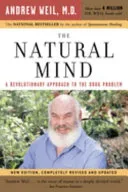
The Natural Mind
 73
73

The Natural Mind
Andrew Weil’s 2004 debut, The Natural Mind, functions less as a medical manual and more as a philosophical manifesto for his career. It's here that the seeds of his "guru of alternative medicine" persona are clearly sown, though the prose lacks the polished accessibility of his later bestsellers. The book asserts a powerful, almost mystical, belief in the mind's innate capacity for healing, a concept that, while compelling, sometimes feels presented with more conviction than concrete, step-by-step guidance. A notable strength is its ambitious scope, attempting to reframe health not as the absence of disease, but as a dynamic state of being. However, its primary limitation lies in its abstractness; readers seeking practical, actionable protocols might find themselves wanting. For instance, Weil's discussion of "intelligent self-healing" is conceptually rich but leaves one questioning the precise mechanisms for activating it. Ultimately, The Natural Mind is a crucial, if somewhat dense, articulation of Weil's core philosophy, best appreciated as the intellectual blueprint for his subsequent, more digestible, contributions to natural health.
📝 Description
73
Andrew Weil first articulated his holistic philosophy of health and consciousness in The Natural Mind.
Published in 2004, The Natural Mind lays out the philosophical framework for Andrew Weil's approach to health. He argues that the human mind has an innate capacity for healing, a capacity often suppressed by modern life and conventional medicine. The book calls for a reevaluation of how we relate to our bodies and surroundings.
This work is for readers interested in the deep connection between mental states and physical well-being. It addresses those curious about the philosophical roots of wellness, the mind's role in illness, and how to blend traditional knowledge with current scientific thought. Weil encourages an active role in personal health management through conscious awareness and natural approaches.
Appearing as interest in complementary and alternative medicine grew, The Natural Mind contributed a distinct perspective. While others focused on mind-body links, Weil offered a view rooted in ethnobotany and cross-cultural healing practices. He bridged ancient remedies with contemporary health discussions.
The Natural Mind sits within a tradition that views the mind as central to physical well-being, a concept found in various spiritual and philosophical systems. It echoes ideas present in Western vitalism and Eastern philosophies that emphasize the body's inherent intelligence and the power of consciousness to influence health. Weil's integration of ethnobotany and cross-cultural healing practices connects to a long history of exploring natural therapies and their underlying spiritual or energetic principles.
💡 Why Read This Book?
• Gain insight into the philosophical origins of Andrew Weil's holistic health approach, as articulated in his first book, The Natural Mind (2004), understanding his early vision for integrating mind-body wellness. • Explore the concept of "intelligent self-healing," a central tenet Weil developed, and consider its implications for personal health management beyond conventional medical frameworks. • Discover Weil's foundational arguments for natural methods and lifestyle choices as primary tools for well-being, setting the stage for his later, more widely disseminated, health principles.
⭐ Reader Reviews
Honest opinions from readers who have explored this book.
❓ Frequently Asked Questions
When was Andrew Weil's first book, The Natural Mind, originally published?
The Natural Mind, Andrew Weil's foundational text on health and consciousness, was first published in 2004. This book serves as the philosophical basis for all his subsequent work on natural healing and alternative medicine.
What is the central argument of The Natural Mind?
The central argument of The Natural Mind is that the human mind possesses an inherent capacity for healing and well-being. Weil posits that this innate ability is often suppressed by modern life and conventional medical approaches, and advocates for its conscious cultivation.
Who is considered the 'guru of alternative medicine' as mentioned in relation to this book?
Andrew Weil is referred to as the 'guru of alternative medicine,' a title that reflects his significant influence and the widespread popularity of his approach to health, which blends traditional and alternative methods.
What does 'intelligent self-healing' mean in the context of The Natural Mind?
'Intelligent self-healing' refers to the body's innate biological capacity to repair itself, guided by the mind. The book suggests that by fostering a state of optimal mental and physical balance, individuals can activate and enhance this natural healing potential.
How does The Natural Mind relate to Weil's later books?
The Natural Mind is the philosophical bedrock for all of Andrew Weil's subsequent books. It establishes the core tenets and beliefs about health, healing, and the mind that he further developed and popularized in later, best-selling works.
What kind of blend does The Natural Mind offer regarding health practices?
The Natural Mind offers a blend of traditional healing methods and alternative approaches to health. It seeks to synthesize ancient wisdom with contemporary understanding to promote better health in the modern world.
🔮 Key Themes & Symbolism
Mind-Body Synergy
The Natural Mind strongly emphasizes the inseparable link between mental states and physical health. Weil argues that consciousness is not merely a byproduct of the brain but an active force capable of influencing biological processes. This perspective challenges the Cartesian dualism prevalent in Western medicine, suggesting that true healing requires addressing the whole person—mind, body, and spirit. The book explores how beliefs, emotions, and intentionality can directly impact physiological well-being, laying the groundwork for understanding concepts like the placebo effect and psychoneuroimmunology from a philosophical standpoint.
Intelligent Self-Healing
A core part of Weil's philosophy presented here is the concept of 'intelligent self-healing.' This refers to the body's inherent, sophisticated mechanisms for maintaining health and recovering from illness, which he believes are often dormant or suppressed. The book posits that through specific lifestyle choices, conscious awareness, and a supportive internal environment, individuals can tap into and amplify this innate healing intelligence. It’s not about overriding the body, but rather about creating optimal conditions for its natural restorative processes to function effectively.
Critique of Conventional Medicine
While not overtly dismissive, The Natural Mind implicitly critiques the limitations of a purely reductionist, symptom-focused approach to medicine. Weil suggests that conventional paradigms often overlook the lasting impact of psychological factors, environmental influences, and lifestyle choices on health outcomes. He advocates for a more comprehensive system that integrates preventative care, natural remedies, and an understanding of the patient's subjective experience, moving beyond a model primarily concerned with disease management to one centered on promoting vitality and well-being.
The Power of Natural Methods
This work champions the efficacy of natural methods for achieving and maintaining health. Weil draws upon a blend of ethnobotanical knowledge, traditional healing practices, and observations of diverse cultures to illustrate the potency of natural interventions. The book suggests that nature itself offers a vast pharmacopeia and a blueprint for healthy living that modern society has largely neglected. It encourages readers to reconsider their relationship with the natural world as a source of healing and resilience.
💬 Memorable Quotes
Direct passages from the work, attributed to the author.
“The mind has an inherent capacity for healing.”
— This core assertion highlights Weil's belief in the body's intrinsic ability to restore itself, with consciousness playing a key role. It suggests that mental states and beliefs are not separate from physical health but are integral to the healing process.
“Health is a state of dynamic balance.”
— This interpretation emphasizes that health is not static but an ongoing process of adaptation and equilibrium. Weil suggests that achieving optimal well-being involves actively maintaining balance across various aspects of life, rather than simply reacting to illness.
“Natural methods offer a powerful path to wellness.”
— This signifies Weil's conviction in the efficacy of nature-based healing strategies. It suggests that traditional and alternative remedies, alongside lifestyle adjustments, possess significant potential for restoring and enhancing health.
“The philosophical basis for health resides within consciousness.”
— This interpretation underscores Weil's view that our understanding and perception of health are fundamentally rooted in our mental framework. It implies that altering one's consciousness and beliefs is a critical step in achieving true well-being.
💡 Key Ideas
Editorial paraphrase of the work's core concepts — not direct quotes.
We must learn to listen to the body's signals.
This paraphrase points to Weil's encouragement for individuals to develop greater somatic awareness. It implies that the body communicates its needs and imbalances through subtle cues that are often ignored in a fast-paced, disconnected modern lifestyle.
🌙 Esoteric Significance
Tradition
While not strictly adhering to a single esoteric lineage, The Natural Mind draws heavily from Hermetic principles concerning the correspondence between the microcosm (human being) and the macrocosm (universe), particularly emphasizing the mind's role as a bridge. It echoes Gnostic ideas about inherent knowledge and the potential for inner awakening leading to healing. The work can be seen as a modern, secular interpretation of ancient mind-body healing traditions found across various mystical paths, aiming to reclaim an innate spiritual or vitalistic capacity often suppressed by materialistic worldviews.
Symbolism
The 'mind' itself functions as a central symbol, representing not just intellect but consciousness, awareness, and the vital force that animates the body. The concept of 'natural' methods can be seen as symbolic of returning to an original, uncorrupted state of being, aligning with archetypal narratives of paradise or primal health. Furthermore, the idea of 'intelligent self-healing' symbolizes an inherent divine spark or innate wisdom within the individual, capable of guiding them towards wholeness and balance.
Modern Relevance
The Natural Mind's concepts remain highly relevant today, influencing contemporary thinkers and practitioners in fields like integrative medicine, positive psychology, and mindfulness-based stress reduction. Its emphasis on the mind's role in health continues to inform discussions on psychosomatic illness and the benefits of meditation and contemplative practices. Weil's foundational ideas resonate with modern wellness movements that prioritize preventative care, holistic approaches, and the empowerment of individuals in their health journeys, bridging the gap between esoteric wisdom and mainstream health discourse.
👥 Who Should Read This Book
• Individuals interested in the philosophical underpinnings of holistic health and the mind-body connection, seeking to understand the origins of Andrew Weil's influential ideas. • Aspiring practitioners or students of alternative medicine and wellness who wish to explore foundational texts that shaped the modern integrative health movement. • Anyone questioning the limitations of conventional medical approaches and seeking a more comprehensive, proactive framework for personal health and vitality.
📜 Historical Context
First published in 2004, The Natural Mind emerged during a period of significant expansion for the complementary and alternative medicine (CAM) movement in the United States. Andrew Weil, already gaining recognition through his work at the University of Arizona's Program in Integrative Medicine (founded 1994), was solidifying his position as a leading proponent of a mind-body approach to health. This era saw a growing public skepticism towards the perceived limitations and side effects of conventional pharmaceuticals, fueling interest in holistic practices. Weil's work was often discussed alongside that of Deepak Chopra, though Weil's approach tended to be more grounded in ethnobotany and empirical observation rather than purely spiritual or metaphysical frameworks. While the book itself may not have generated major controversy, Weil's broader influence challenged the established medical orthodoxy, which, while increasingly open to integrative concepts by the early 2000s, remained largely centered on biomedical models.
📔 Journal Prompts
The concept of 'intelligent self-healing': how might it apply to a specific challenge you've faced?
Reflect on the mind-body synergy described in The Natural Mind; identify one aspect of your life where this connection is particularly strong.
Consider the critique of conventional medicine presented; what specific limitations resonate with your own experiences?
Explore the 'natural methods' Weil champions; which ones have you previously overlooked or underestimated?
Analyze the 'philosophical basis for health' as presented; how does your current worldview align or diverge?
🗂️ Glossary
Intelligent Self-Healing
The inherent biological capacity of the human body to repair itself and maintain health, guided by consciousness and optimal physiological conditions. Weil posits this capacity can be consciously activated and enhanced.
Mind-Body Synergy
The interconnectedness and mutual influence between mental states (thoughts, emotions, beliefs) and physical health. This concept challenges the separation of mind and body in understanding illness and wellness.
Holistic Health
An approach to health that considers the entire person—physical, mental, emotional, social, and spiritual aspects—rather than focusing solely on symptoms or disease.
Alternative Medicine
Health treatments used instead of standard medical treatments. Weil's work integrates this with conventional medicine, often termed 'integrative medicine'.
Natural Methods
Healing practices and lifestyle choices derived from nature, including diet, herbs, and environmental factors, which Weil advocates for promoting well-being.
Consciousness
In the context of the book, consciousness refers not just to awareness but to the active, influential force of the mind that can impact biological processes and health outcomes.
Vitality
A state of energy, health, and enthusiasm for life. Weil's philosophy aims to foster this optimal state beyond mere absence of disease.