Thelema
 80
80

Thelema
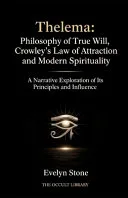
Evelyn Stone's *Thelema*, presented by The Occult Library, offers a necessary corrective to the popular, often sensationalized, understanding of this complex philosophy. The work's strength lies in its methodical deconstruction of Aleister Crowley's foundational writings, particularly the Book of the Law, separating the potent ideas from the biographical noise that often surrounds them. Stone meticulously unpacks the concept of True Will, presenting it not as arbitrary desire but as a profound, divinely ordained purpose. A particular passage that stands out is the detailed explanation of the "Great Work" as an internal, alchemical process of self-discovery, which serves as a vital counterpoint to simplistic interpretations. However, the book occasionally suffers from a degree of academic dryness, which may prove a barrier for readers seeking a more immediately experiential approach. Despite this, *Thelema* provides a lucid and well-researched entry point for serious study.
📝 Description
80
Evelyn Stone's *Thelema*, published January 23, 2026, clarifies a religious system centered on individual sovereignty.
This volume by Evelyn Stone and The Occult Library examines the philosophical and religious system of Thelema. It focuses on the principles of individual sovereignty and the pursuit of one's authentic purpose. The book moves past sensational interpretations to clearly explain the doctrine's core ideas, its foundational texts, and its ethical structure. It is written for serious students of Western esotericism, comparative religion, and philosophy. Readers interested in personal liberation, self-realization, and the historical development of occult thought will find this work valuable. It addresses those willing to confront complex ideas regarding freedom and responsibility.
The central concept is the "Law of Thelema," "Do what thou wilt shall be the whole of the Law." This directive urges the discovery and enactment of one's True Will, not simple hedonism. The book analyzes this principle, as well as the Great Work, the nature of the Holy Guardian Angel, and the system's Gnostic roots. It also discusses the symbolic language and rituals associated with Thelema.
Thelema's emergence is tied to Aleister Crowley and his impact on 20th-century occultism. This book places Thelema within Western esotericism, connecting it to traditions like the Hermetic Order of the Golden Dawn and Theosophy. It addresses how Crowley's ideas were received and the continuing discussions about his influence.
💡 Why Read This Book?
• Gain a nuanced understanding of the "Law of Thelema" beyond simplistic interpretations, learning how "Do what thou wilt" is presented as a directive for discovering one's True Will, as detailed in the book's exploration of core principles. • Comprehend the historical trajectory of Thelema by examining its connections to earlier esoteric movements and the specific context of Aleister Crowley's life and work, as discussed in the historical sections. • Grasp the practical application of Thelemic concepts in modern life, moving from abstract philosophy to actionable self-realization strategies presented within the book's framework.
⭐ Reader Reviews
Honest opinions from readers who have explored this book.
❓ Frequently Asked Questions
What is the central philosophy of Thelema as presented in Evelyn Stone's book?
The central philosophy is the "Law of Thelema," encapsulated by "Do what thou wilt shall be the whole of the Law." This is interpreted not as license for selfish indulgence, but as a profound call to discover and execute one's unique, divinely appointed purpose, or True Will.
Who was Aleister Crowley and what is his connection to Thelema?
Aleister Crowley (1875-1947) was a British occultist, ceremonial magician, and poet who founded Thelema. This book explores his life and writings, aiming to differentiate myth from reality and understand his profound, though controversial, influence on the system.
Does the book discuss the practical application of Thelemic principles?
Yes, the book explicitly addresses how Thelemic principles, such as the pursuit of True Will, can be applied in contemporary life. It bridges the gap between theoretical philosophy and personal development.
What is the "True Will" in Thelemic philosophy?
True Will is the core concept, representing an individual's authentic, ultimate purpose or destiny. Discovering and enacting this True Will is considered the primary goal of a Thelemic life, a path of profound self-realization.
When was Thelema first published?
The book *Thelema* by Evelyn Stone and The Occult Library was first published on January 23, 2026. The philosophy of Thelema itself originated with Aleister Crowley's reception of the Book of the Law in 1904.
What esoteric traditions influenced Thelema?
Thelema draws from various esoteric traditions, including Hermeticism, Gnosticism, Kabbalah, and Eastern philosophies. The book explores these connections, situating Thelema within the broader context of Western esotericism.
🔮 Key Themes & Symbolism
The Law of Thelema
This book meticulously examines the "Law of Thelema," articulated as "Do what thou wilt shall be the whole of the Law." It clarifies that this is not an endorsement of hedonistic license, but rather a profound ethical and metaphysical imperative to discover and actualize one's unique, intrinsic purpose, or True Will. The exploration studies the philosophical underpinnings and the spiritual mandate of aligning one's actions with this ultimate calling.
True Will and Self-Realization
Central to the text is the concept of True Will, presented as an individual's highest potential and unique life path. The work details the process of identifying and living in accordance with this True Will, framing it as the Great Work of spiritual attainment. This pursuit is described as the ultimate expression of individual autonomy and the key to authentic fulfillment, moving beyond societal conditioning.
Aleister Crowley's Legacy
The book confronts the figure of Aleister Crowley, the founder of Thelema, aiming to provide a balanced perspective on his life and contributions. It separates the man from the myth, critically analyzing his role in developing and disseminating Thelemic philosophy and practices. The work acknowledges his controversial nature while highlighting his undeniable impact on 20th-century occultism and esoteric thought.
Modern Application of Thelemic Principles
Beyond historical and theoretical exposition, *Thelema* addresses the practical relevance of its core tenets for contemporary life. It offers insights into how individuals can apply the principles of self-discovery, personal sovereignty, and the pursuit of True Will in their daily lives. This section bridges esoteric philosophy with actionable self-improvement and spiritual development in the modern world.
💬 Memorable Quotes
Direct passages from the work, attributed to the author.
“Do what thou wilt shall be the whole of the Law.”
— This foundational maxim of Thelema is presented not as a license for unrestricted action, but as a directive to discover and enact one's authentic life purpose, or True Will, as the guiding principle of existence.
“Every man and every woman is a star.”
— This statement emphasizes the inherent divinity and autonomy of each individual. It suggests that every person possesses a unique destiny and a sovereign nature, akin to a celestial body moving according to its own laws.
“The Great Work is the discovery and accomplishment of one's True Will.”
— This interpretation defines the central spiritual endeavor within Thelema not as an external achievement, but as an internal process of uncovering one's deepest purpose and aligning one's life with its fulfillment.
“Love is the law, love under will.”
— This expands upon the primary law, suggesting that all actions, particularly those driven by love or connection, must be guided by the understanding and execution of one's True Will to be authentic and purposeful.
“The Book of the Law was received by Aleister Crowley in Cairo in 1904.”
— This factual statement anchors the origin of Thelema to a specific historical event and location, marking the inception of the philosophy through a divinely inspired text revealed to its founder.
🌙 Esoteric Significance
Tradition
Thelema occupies a unique position within Western esotericism, drawing significantly from Hermetic and Gnostic traditions while forging its own distinct path. It integrates Kabbalistic concepts of divine manifestation and Neoplatonic ideas of emanation with a radical focus on individual sovereignty. Unlike more hierarchical systems, Thelema places paramount importance on the individual's direct relationship with the divine, often conceptualized as the Holy Guardian Angel, and the enactment of their unique True Will.
Symbolism
Key symbols in Thelema include the Ouroboros, representing cyclical existence and the unity of all things, and the Scarlet Woman, symbolizing the feminine principle, ecstatic experience, and the receptive gateway for divine manifestation. The Eye of Horus (or Ra-Hor-Khuit) is also prominent, signifying divine protection, royal power, and good health, often interpreted as the divine eye that witnesses and guides the Great Work.
Modern Relevance
Contemporary thinkers and practitioners in fields ranging from transhumanism to psychological self-actualization find resonance in Thelema's emphasis on individual potential and self-creation. Modern occultists, artists, and writers continue to engage with Crowley's legacy, reinterpreting Thelemic principles for new eras. Its focus on personal liberation and the pursuit of one's unique path continues to appeal to those seeking alternatives to conventional spiritual or philosophical frameworks.
👥 Who Should Read This Book
• Students of Aleister Crowley and 20th-century occultism: Gain a structured understanding of the philosophical and religious system he founded, separating historical fact from sensationalized myth. • Seekers of alternative spiritual philosophies: Explore a system that champions individual autonomy, self-realization, and the discovery of one's unique life purpose. • Comparative religion scholars: Analyze Thelema's synthesis of Hermetic, Gnostic, and Eastern influences within the broader context of Western esoteric traditions.
📜 Historical Context
The emergence of Thelema in the early 20th century occurred within a fertile range of Western esoteric revival. Aleister Crowley, the system's principal architect, was deeply influenced by his earlier involvement with the Hermetic Order of the Golden Dawn, a prominent magical organization active in the late 19th century. This period saw a surge of interest in Hermeticism, Kabbalah, and Eastern philosophies, exemplified by figures like Madame Blavatsky and the Theosophical Society. Thelema, however, distinguished itself with its radical emphasis on individual will and its unique cosmology derived from the *Liber AL vel Legis* (The Book of the Law), purportedly received by Crowley in Cairo in 1904. The reception of these ideas was polarized; while some occultists embraced Crowley's teachings, many mainstream religious and societal groups viewed his work with suspicion and condemnation, leading to periods of controversy and marginalization.
📔 Journal Prompts
The concept of True Will as presented in the book: how does it differ from ordinary desire?
Aleister Crowley's role in disseminating Thelema: what aspects of his life are most relevant to understanding the philosophy?
The Law of Thelema: "Do what thou wilt." What are the potential societal implications of this principle?
Reflecting on the symbol of the Ouroboros within the context of Thelemic cyclical understanding.
How can the idea of "every man and every woman is a star" inform one's personal sense of purpose?
🗂️ Glossary
Thelema
A philosophical and religious system developed by Aleister Crowley, based on the "Law of Thelema," which posits that one's unique purpose (True Will) is the guiding principle of life.
True Will
The unique, intrinsic purpose or destiny of an individual, as opposed to their ego-driven desires or societal conditioning. Discovering and enacting True Will is the central aim of Thelemic practice.
The Great Work
The overarching spiritual endeavor in Thelema, synonymous with the discovery and accomplishment of one's True Will. It is often understood as an internal, alchemical process of self-transformation and realization.
Liber AL vel Legis
The Book of the Law, the central sacred text of Thelema, purportedly received by Aleister Crowley in Cairo in 1904. It contains the fundamental principles of the Law of Thelema.
Holy Guardian Angel
In Thelemic cosmology, the personal divine intelligence unique to each individual, often seen as the source or guide of one's True Will. Establishing contact is a primary goal.
Ouroboros
An ancient symbol depicting a serpent or dragon eating its own tail, representing cyclicality, unity, and the eternal return. It is a significant symbol within Thelemic iconography.
Scarlet Woman
A symbolic figure in Thelema representing the feminine principle, ecstasy, and the receptive aspect of divine manifestation. She is often associated with Babalon and the mystical union.