Irish witchcraft and demonology
 82
82

Irish witchcraft and demonology
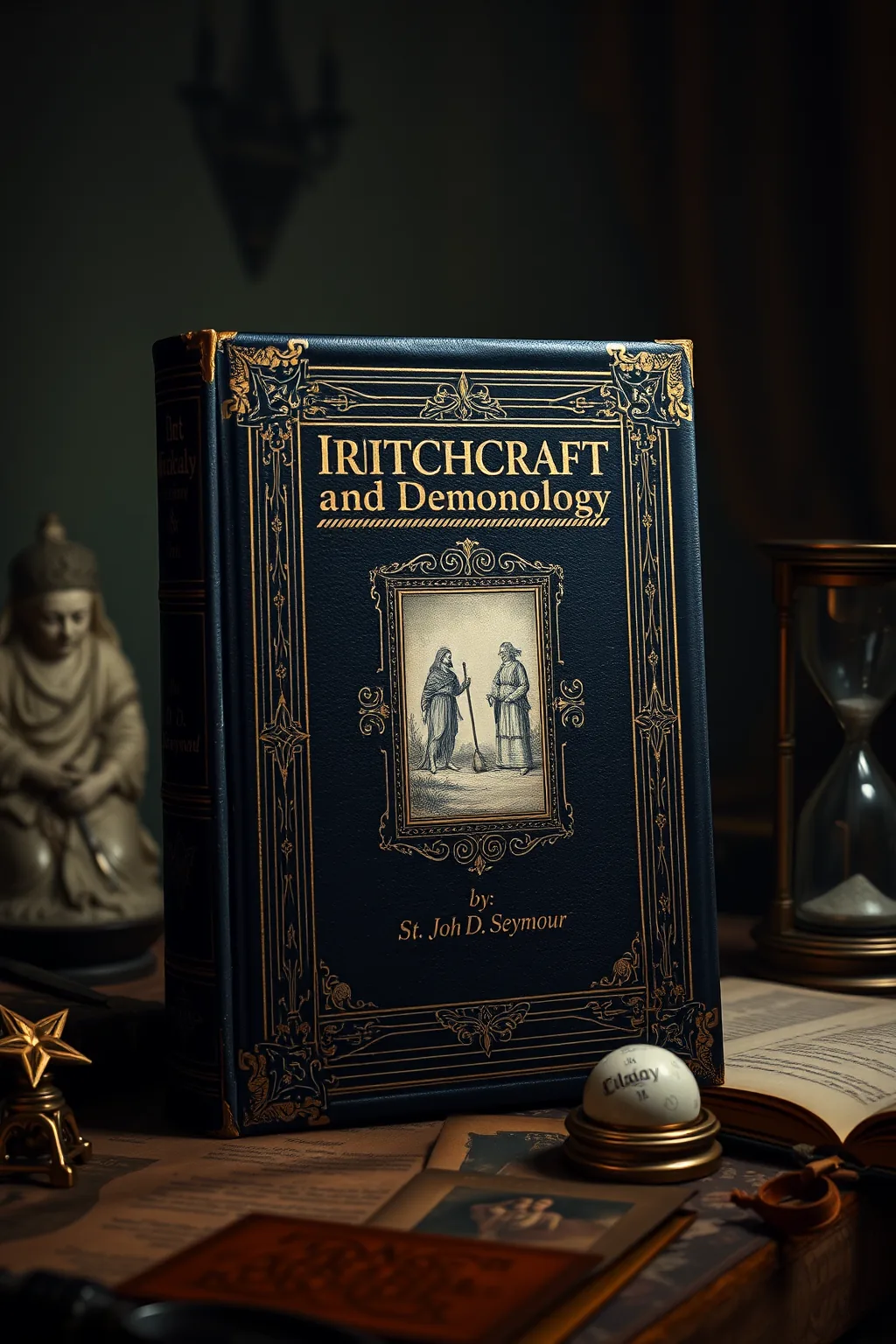
St. John D. Seymour's Irish Witchcraft and Demonology offers a sober, academic survey of a topic often shrouded in sensationalism. The book's strength lies in its exhaustive cataloguing of historical records and folklore, providing a robust evidentiary base for its claims. Seymour meticulously details practices and beliefs, moving beyond mere anecdote to present a structured understanding of how witchcraft was perceived and prosecuted. A notable passage details the legal proceedings against individuals accused of witchcraft, demonstrating the intersection of folk belief and juridical systems. However, the work’s academic tone, while commendable for its rigor, can sometimes render the subject matter less accessible to the casual reader seeking occult lore. It prioritizes historical analysis over speculative interpretation. This rigorous, evidence-based approach makes it a solid reference, if not a sensational read.
📝 Description
82
St. John D. Seymour's 2016 study examines Irish folk beliefs and perceived diabolical influences.
Irish Witchcraft and Demonology is a scholarly examination of folk beliefs, magical practices, and perceived diabolical influences that permeated Irish society. The work meticulously catalogues historical accounts and folklore, presenting a detailed picture of how witchcraft was understood and dealt with in Ireland across centuries. This book is useful for students of European folklore, occult history, and comparative religion. It also appeals to those interested in the specific cultural and historical context of Irish supernatural beliefs, offering a text for understanding the island's unique relationship with magic and perceived malevolent forces.
Published in its first edition in 2016, this work enters a field of study that has seen renewed academic interest in the 20th and 21st centuries. It builds upon earlier investigations into European witchcraft, such as those by historians like Montague Summers and later, more critical analyses. The book situates Irish practices within broader European trends while highlighting distinct local manifestations.
The study covers concepts such as fairy lore, curses, healing charms, and the role of the church in demonizing popular magic. It distinguishes between different types of magical practitioners and the societal perceptions that shaped their roles, from village healers to those accused of malevolent sorcery.
This book fits within the broader study of European witchcraft and demonology, tracing specific manifestations within Ireland. It engages with the historical and folkloric traditions surrounding magic and supernatural beliefs, situating them within a wider context of societal anxieties and religious influence. The work details how popular beliefs about magic, fairies, and malevolent forces interacted with official doctrines and legal practices, offering insight into a particular national expression of a pan-European phenomenon.
💡 Why Read This Book?
• Gain a factual understanding of historical Irish beliefs surrounding magic and the supernatural, distinct from modern fantasy tropes, by examining Seymour's references to specific legal records from periods like the 17th century. • Explore the complex relationship between folk practices and religious doctrine as detailed in the book, understanding how concepts like 'diabolical influence' were applied to local healers and charms. • Uncover the distinct features of Irish fairy lore and its connection to witchcraft, as analyzed through Seymour's compilation of regional tales and superstitions.
⭐ Reader Reviews
Honest opinions from readers who have explored this book.
❓ Frequently Asked Questions
When was Irish Witchcraft and Demonology first published?
The book Irish Witchcraft and Demonology by St. John D. Seymour was first published in 2016, making it a contemporary academic work on historical subjects.
What historical periods does the book cover regarding Irish witchcraft?
The work examines accounts and beliefs spanning several centuries of Irish history, detailing practices and perceptions from medieval times through to more recent historical periods when such beliefs were actively recorded.
Does the book focus on specific regions within Ireland?
While providing a national overview, the book often draws on specific regional folklore and historical accounts, highlighting variations in beliefs and practices across different parts of the island.
Is this book suitable for beginners interested in occult studies?
It is an academic text, best suited for those with an existing interest in folklore or historical occultism. Beginners may find its scholarly approach dense but rewarding for a factual grounding.
What is the difference between witchcraft and demonology in the context of the book?
The book differentiates between the perceived practice of magic (witchcraft) and the theological concept of demonic influence or pacts (demonology), examining how these were understood and intertwined in historical Irish society.
Are there any specific legal cases mentioned in Irish Witchcraft and Demonology?
Yes, the book references historical legal proceedings and trials related to accusations of witchcraft, providing concrete examples of how the justice system interacted with folk beliefs.
🔮 Key Themes & Symbolism
Folk Magic and Healing
The work meticulously details the prevalent folk magic practices in Ireland, often intertwined with healing rituals and everyday life. Seymour documents the use of charms, amulets, and specific incantations believed to ward off illness, ensure good fortune, or protect against malevolent influences. These practices were not always viewed with suspicion, often existing alongside sanctioned religious observances, illustrating a complex layering of belief systems within Irish communities.
Fairy Beliefs and Otherworld Encounters
A significant portion of the book addresses the pervasive belief in the 'Otherworld' and its inhabitants, commonly known as fairies or the Sidhe. Seymour explores how these entities were perceived as active participants in human affairs, capable of bestowing blessings or curses. The line between fairy influence and witchcraft is often blurred in historical accounts, with certain individuals believed to have made pacts or maintained relationships with these supernatural beings.
Demonology and Accusations
The study examines the impact of official demonology on popular understanding of magic. Seymour analyzes how religious doctrines, particularly those emphasizing diabolical pacts, shaped the perception of accused witches. The book details instances where magical practices were reinterpreted through a lens of demonic allegiance, leading to accusations and persecutions, particularly during periods of heightened religious fervor or social anxiety.
Legal and Social Perceptions
Seymour investigates how Irish society and its legal structures responded to accusations of witchcraft. The book references historical trials and legal documents, illustrating the varying degrees of belief and skepticism among authorities. It highlights the social dynamics that contributed to accusations, often targeting marginalized individuals or those who deviated from societal norms, revealing the interplay between belief, fear, and social control.
💬 Memorable Quotes
Direct passages from the work, attributed to the author.
“The belief in fairies and their power was deeply ingrained in the Irish psyche.”
— This highlights how integral the concept of the Sidhe was to the Irish worldview, suggesting it informed not only magical beliefs but also daily life and social interactions.
“Accusations of witchcraft often stemmed from a mixture of fear, superstition, and social scapegoating.”
— This points to the many-sided origins of witch trials, indicating that beyond genuine belief in malevolent magic, societal anxieties and the need for a culprit played significant roles.
“The church's interpretation of certain folk practices as diabolical significantly altered their perception.”
— This emphasizes the influence of ecclesiastical doctrine in reclassifying and condemning practices that may have previously existed in a more neutral or even beneficial capacity within local communities.
“Legal records provide a stark glimpse into the reality of witch accusations and trials.”
— This underscores the value of primary source documents in understanding the historical context, suggesting that the book relies on tangible evidence rather than purely speculative accounts.
“Irish magical traditions show a combination of ancient pagan survivals and Christian influences.”
— This interpretation suggests the book explores the syncretic nature of Irish folk belief, where older indigenous practices merged with imported religious frameworks over time.
🌙 Esoteric Significance
Tradition
While not strictly a text *of* an esoteric tradition, this work serves as a vital historical and anthropological resource for Western Esotericism. It provides crucial context for understanding the folk magical underpinnings and perceived supernatural influences that often form the substratum of later magical systems. Its meticulous research into historical beliefs allows practitioners and scholars to trace the lineage of certain practices or symbolic understandings that may have persisted or been reinterpreted within Hermetic, ceremonial, or folk magic lineages.
Symbolism
The book explores numerous symbols and motifs integral to Irish folk belief. The **Fairy Forts** or 'raths' represent liminal spaces connecting the human and Otherworld realms, often sites of both danger and power. **Amulets and charms**, ranging from written inscriptions to natural objects, symbolize protective intent and the manipulation of unseen forces. The **Black Dog** motif, often associated with demonic familiars or dark entities, embodies malevolent spiritual presence and the perceived dangers lurking beyond the veil.
Modern Relevance
Contemporary practitioners of Celtic Reconstructionism, modern witchcraft, and neo-paganism draw upon works like Seymour's to understand the historical roots of their craft. Scholars of comparative religion and folklore utilize its detailed accounts to analyze the evolution of belief systems. Furthermore, authors exploring themes of myth, folklore, and the supernatural in modern fiction or psychological studies find valuable source material in its examination of Irish magical traditions and demonological fears.
👥 Who Should Read This Book
• Folklore enthusiasts and historians of European belief systems seeking rigorous, evidence-based accounts of magical practices and superstitions. • Students of comparative religion interested in the intersection of Christianity, pagan survivals, and folk magic in a specific cultural context. • Modern practitioners of witchcraft or neo-paganism looking to connect with the historical roots and cultural specificities of Irish magical traditions.
📜 Historical Context
Published in 2016, St. John D. Seymour's *Irish Witchcraft and Demonology* arrived in an academic landscape increasingly interested in the nuances of European occult history. The work builds upon the foundational, albeit sometimes sensationalist, scholarship of figures like Montague Summers, who published extensively on witchcraft in the early 20th century. Seymour's approach, however, is markedly more critical and evidence-based, situating Irish beliefs within broader European trends while meticulously detailing local manifestations. The era of intense witch trials in Europe, peaking in the 17th century, provides a crucial backdrop, though Seymour also examines earlier and later periods. The book engages with the academic discourse surrounding folk magic versus learned magic and the impact of Christian demonology on popular beliefs. Its reception likely benefited from the wider academic revival of interest in witchcraft studies, a field that had seen periods of neglect and controversy.
📔 Journal Prompts
The concept of the 'Fairy Fort' as a liminal space between worlds.
Seymour's analysis of the church's role in reinterpreting folk magic.
The social dynamics leading to accusations of witchcraft in historical Ireland.
The distinction between folk healing charms and perceived diabolical pacts.
Personal reflections on the enduring presence of fairy lore in modern culture.
🗂️ Glossary
Sidhe
An Irish term referring to a supernatural race in Irish mythology, often translated as 'fairies' or 'elves'. They are believed to inhabit an Otherworld and can interact with humans, sometimes benignly, sometimes malevolently.
Diabolical Influence
In theological terms, this refers to the power or agency attributed to the Devil or demons in affecting the world or individuals, often invoked in the context of witchcraft accusations.
Charm
A small object or spoken incantation believed to possess magical properties, often used for protection, healing, or to bring good luck.
Folk Magic
Traditional magical practices and beliefs that are part of the common culture of a community, often distinct from more formal or learned magical systems.
Witch-Trial
A legal process conducted to investigate and prosecute individuals accused of practicing witchcraft, common in Europe and colonial America during specific historical periods.
Otherworld
In Irish mythology, a parallel realm inhabited by supernatural beings like the Sidhe, distinct from the human world but capable of interacting with it.
Amulet
An object worn or carried as a charm to ward off evil, illness, or bad luck, often inscribed with symbols or containing specific materials.
🔮 Readers Also Liked
Browse all →









More by St. John D. Seymour
All books →

More Free Occult Philosophy Books
View all →