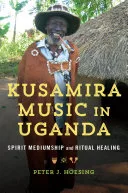
Kusamira Music in Uganda
 71
71

Kusamira Music in Uganda
Peter J. Hoesing’s Kusamira Music in Uganda offers a granular look at how sonic performance functions as a therapeutic modality in southern Uganda. The strength of the work lies in its detailed ethnographic approach, meticulously documenting the intricate relationship between music, ritual, and the lived experience of illness. Hoesing avoids romanticizing these traditions, instead presenting a clear-eyed analysis of their social and cultural work. A limitation, however, is the dense academic prose, which at times can obscure the vibrant immediacy of the performance culture it describes. The passage detailing the specific rhythmic patterns used to evoke different states of affliction and healing is particularly illuminating, demonstrating the sophisticated musical language at play. Ultimately, Kusamira Music in Uganda provides a valuable, if sometimes challenging, contribution to the study of ritual healing through sound.
📝 Description
71
Peter J. Hoesing's 2018 study examines the music central to Ugandan ritual healing.
Kusamira Music in Uganda, by Peter J. Hoesing, is an ethnomusicological study of ritual healing practices in southern Uganda. The book analyzes the role of music within traditions known as kusamira and nswezi, which communities use to address illness and promote well-being.
Hoesing's research details how these musical performances shape and communicate understandings of sickness, health, and recovery. The work draws on fieldwork conducted in southern Uganda, a region with long-standing traditions of spiritual and musical healing. These practices, like kusamira, have evolved over generations, adapting to changing social and economic conditions. Hoesing places these contemporary rituals within a historical continuum of indigenous African healing arts, highlighting their resilience and ongoing significance.
Central to the book are the concepts of kusamira and nswezi, understood as dynamic performance cultures. These traditions are examined as social processes that materialize and manage experiences of illness and wellness. Hoesing shows how participants use these rituals to articulate suffering, generate communal support, and enact strategies for maintaining or restoring health, thereby shaping the experience of well-being.
This work situates itself within the study of African spiritual traditions and their integration of music into healing. It examines how specific sonic practices, tied to concepts like kusamira and nswezi, function as mechanisms for addressing illness and maintaining communal health. The book illuminates the belief systems and performative actions that constitute these healing arts, viewing them not as mere cultural expressions but as vital social processes that directly influence the experience and management of sickness and recovery within their originating communities.
💡 Why Read This Book?
• Gain insight into the specific role of music in Ugandan healing rituals, understanding how kusamira and nswezi performances actively shape perceptions of illness and wellness, a perspective distinct from Western biomedical models. • Learn about the ethnomusicological methodology employed by Peter J. Hoesing, offering a model for analyzing the social functions of music in cultural contexts beyond your own, as demonstrated in his fieldwork. • Discover concrete strategies for understanding cultural performance as a therapeutic tool, as explored through the specific examples of how communities in southern Uganda navigate health challenges through ritual music.
⭐ Reader Reviews
Honest opinions from readers who have explored this book.
❓ Frequently Asked Questions
What are the primary healing traditions discussed in Kusamira Music in Uganda?
The book primarily focuses on two ritual healing traditions from southern Uganda: kusamira and nswezi. These traditions utilize music and performance as central components for addressing sickness and promoting overall well-being within their communities.
Who is the author of Kusamira Music in Uganda?
The author is Peter J. Hoesing. The work was first published in 2021, drawing on his extensive ethnomusicological fieldwork.
What is the geographical focus of the book?
The book's research and analysis are centered on southern Uganda, a region where the kusamira and nswezi healing traditions are practiced.
What is the main argument of Kusamira Music in Uganda?
Hoesing argues that kusamira and nswezi are performance cultures where music actively socializes the dynamic processes of illness, wellness, and health, demonstrating how these rituals are integral to community life and individual well-being.
What academic disciplines does this book appeal to?
The book appeals to scholars and students in ethnomusicology, medical anthropology, African studies, and those interested in the sociology of health and performance studies.
When was Kusamira Music in Uganda first published?
Kusamira Music in Uganda was first published on November 9, 2021.
🔮 Key Themes & Symbolism
Music as Therapeutic Performance
The core of Hoesing's work examines how music in the kusamira and nswezi traditions functions not merely as accompaniment but as an active agent in healing. These performances are understood as social processes where musical structures and sonic events directly engage with and influence states of illness and wellness. The book details how specific rhythms, melodies, and vocalizations are employed to articulate suffering, invoke spiritual assistance, and facilitate recovery, positioning music as a critical component of therapeutic efficacy within these cultural frameworks.
Socialization of Illness and Wellness
Kusamira Music in Uganda elucidates how ritual performances actively 'socialize' experiences of health and sickness. This means that the community, through participation in kusamira and nswezi, collectively constructs, interprets, and manages what it means to be ill or well. The book shows how these traditions provide a shared language and set of practices for individuals to navigate personal health crises, fostering communal support and shared understanding, thereby embedding individual well-being within a collective social fabric.
Performance as Strategy
Hoesing highlights how engaging in kusamira and nswezi provides participants with strategies for dealing with life's challenges, particularly health-related ones. These performances are not passive rituals but active engagements that allow individuals and communities to generate solutions, express resilience, and adapt to changing circumstances. The book explores how participating in these musical traditions empowers individuals to actively shape their health outcomes and maintain a sense of agency in their lives.
Cultural Continuity and Change
While focusing on contemporary practices, the book implicitly addresses the resilience of these traditions in the face of modernization and external influences. The continued practice and adaptation of kusamira and nswezi demonstrate a vital cultural continuity. Hoesing's analysis of how these traditions help people navigate changing environments suggests their capacity to absorb and respond to new social realities, ensuring their relevance for generations.
💬 Memorable Quotes
Direct passages from the work, attributed to the author.
“Ritual healing traditions called kusamira and nswezi rely on music to treat sickness and maintain well-being.”
— This foundational statement underscores the central thesis: music is not incidental but integral to the therapeutic efficacy of these Ugandan traditions, serving both curative and preventative functions.
“Peter J. Hoesing blends ethnomusicological fieldwork with analysis.”
— This highlights the methodology, combining deep empirical observation with scholarly interpretation to understand the complex interplay of music, culture, and health.
“Performance socializes dynamic processes of illness, wellness, and health.”
— This key concept suggests that the act of performance itself shapes and communicates communal understandings and experiences of health and sickness, making it a social rather than purely individual phenomenon.
“People participate for reasons that range from preserving ideas to generating strategies.”
— This points to the many-sided motivations behind participation, indicating that these rituals serve not only to uphold cultural values but also to provide practical means for navigating life's difficulties.
“The work examines how kusamira and nswezi performance socializes dynamic processes.”
— This emphasizes the active, ongoing nature of these traditions in shaping how individuals and communities understand and deal with the fluctuating states of their health.
🌙 Esoteric Significance
Tradition
While not explicitly tied to a single Western esoteric lineage like Hermeticism or Gnosticism, Kusamira Music in Uganda engages with the universal esoteric principle of sound as a force for healing and transformation. It aligns with traditions that view music and vibration as fundamental elements of creation and well-being. The work explores how specific sonic patterns can influence energetic states, a concept echoed in various mystical traditions that utilize chants, mantras, or harmonic frequencies for spiritual and physical restoration.
Symbolism
Within the kusamira and nswezi traditions, the music itself acts as a potent symbol. Specific rhythms might symbolize the onset of illness or the presence of particular spirits, while melodic lines could represent appeals for intervention or states of recovery. The performance space and the instruments used (though not detailed here) would also carry symbolic weight, representing the community, the spiritual realm, or the body's energetic pathways. The collective act of singing and drumming symbolizes unity and shared purpose in confronting affliction.
Modern Relevance
Contemporary practices in sound healing, vibrational therapy, and therapeutic music draw parallels with the principles explored in Hoesing's work. Thinkers and practitioners in these fields often look to non-Western traditions to understand the lasting impact of sound on consciousness and physiology. Modern approaches to trauma-informed care and mindfulness also resonate with the idea of performance as a means of processing difficult experiences and cultivating present-moment awareness, concepts central to the kusamira and nswezi rituals.
👥 Who Should Read This Book
• Ethnomusicologists and anthropologists studying African performance, ritual, and healing practices will find detailed ethnographic data and analytical frameworks. • Medical practitioners and researchers interested in complementary and alternative healing modalities will gain understanding of non-Western therapeutic systems and their social underpinnings. • Individuals exploring the intersection of spirituality, music, and well-being will discover how sonic performance can serve as a powerful tool for personal and communal health.
📜 Historical Context
Published in 2021, Peter J. Hoesing's Kusamira Music in Uganda emerges within a rich field of ethnomusicological and anthropological studies concerning African ritual and healing. The late 20th and early 21st centuries saw a growing academic interest in the efficacy of traditional healing systems, often in dialogue with or contrast to Western biomedicine. Scholars like Steven Feld had already explored the deep connections between sound, environment, and culture in various African contexts. Hoesing's work builds upon this foundation by focusing specifically on the performative dimensions of health in southern Uganda. While there were no widely reported censorship events or major prizes specifically for this 2021 publication, its contribution lies in its detailed ethnographic focus on the kusamira and nswezi traditions, offering a nuanced perspective that complements broader scholarship on African expressive cultures and medical practices.
📔 Journal Prompts
The performance of kusamira as a strategy for navigating health.
Music's role in the socialization of illness and wellness.
Understanding the specific functions of nswezi ritual practices.
Ethnomusicological analysis of Ugandan healing traditions.
The relationship between sound, community, and well-being.
🗂️ Glossary
Kusamira
A ritual healing tradition practiced in southern Uganda that relies heavily on music and performance to address sickness and promote well-being within the community.
Nswezi
Another significant ritual healing tradition in southern Uganda, often discussed alongside kusamira, which utilizes music and performance as integral components of its therapeutic practices.
Ethnomusicology
The scholarly study of music in its social and cultural contexts, examining how music is created, performed, and perceived by different peoples around the world.
Performance culture
A framework for understanding social practices, beliefs, and interactions as fundamentally shaped by and expressed through performance, encompassing rituals, music, dance, and storytelling.
Socializes processes
In this context, it means that the act of performance collectively shapes, communicates, and establishes shared understandings and experiences of phenomena like illness and wellness within a community.
Wellness
A holistic state of being characterized by good health, encompassing physical, mental, social, and spiritual well-being, often maintained or restored through cultural practices.
Therapeutic efficacy
The degree to which a treatment or practice, such as ritual music, is effective in producing a desired healing outcome or health benefit.