Book of Shadows

 76
76

Book of Shadows
Gardner's "Book of Shadows" presents a stark, functional outline of what he termed the Witch-cult. Its strength lies in its historical significance as the blueprint for Gardnerian Wicca, offering a glimpse into the late 1940s/early 1950s coven structure. However, its prose is often dry, more procedural manual than devotional text, reflecting its origins as working notes. The section detailing the "Law of Three" offers a particularly clear, albeit terse, statement of ethical principle that has echoed through Wiccan practice for decades. While not a work of literary merit, its documentary value for understanding the roots of modern witchcraft is undeniable. It serves as a primary source, albeit one that requires considerable contextualization.
📝 Description
76
Gerald Gardner's "Book of Shadows" codified Wiccan rituals and magical instructions for his covens.
Gerald Gardner's "Book of Shadows" is a central text in the development of modern Wicca. It was initially used as an operational manual for his Bricket Wood coven in the late 1940s or early 1950s. The book details religious rites and magical instructions, shaping the practices of Gardnerian Wicca and influencing other Neo-pagan traditions. Its publication provided a structured framework for a nascent religion, differentiating it from earlier forms of magic. The text is intended for transmission within an initiatory lineage.
Students of Western Esotericism, particularly those interested in the history of Neo-paganism and witchcraft, will find value in this work. It offers direct insight into the formative stages of Wicca and serves as a historical resource for understanding contemporary magical systems. The book outlines core tenets, rituals, spellcasting, consecration ceremonies, and the symbolic language of the Craft.
Published posthumously, Gardner's "Book of Shadows" emerged during a period of renewed interest in occult traditions. It distinguished itself from earlier ceremonial or folk magic by codifying practices for organized, initiatory witchcraft covens. This provided a distinct religious identity for a developing Neo-pagan movement, moving away from more solitary or less structured magical practices.
💡 Why Read This Book?
• Gain direct exposure to the foundational rituals and ethical precepts of Gardnerian Wicca, as codified by Gerald Gardner himself in the Bricket Wood coven. • Understand the historical development of modern witchcraft by examining the specific rites and organizational structures Gardner established in the late 1940s. • Appreciate the conceptual framework of Wiccan law, such as the "Law of Three" (or Threefold Law), which provides a distinct ethical orientation absent in earlier magical traditions.
⭐ Reader Reviews
Honest opinions from readers who have explored this book.
❓ Frequently Asked Questions
When was Gerald Gardner's Book of Shadows first published?
While created in the late 1940s or early 1950s, Gerald Gardner's "Book of Shadows" was first published posthumously on August 4, 2014, making its foundational Wiccan practices accessible to a wider audience.
What is a Book of Shadows in the context of Wicca?
A Book of Shadows is a personal or coven record containing religious texts, magical rituals, spells, and instructions for practitioners of Wicca. Gardner's version served as the operational manual for his covens.
Who created the first Book of Shadows for Wicca?
Gerald Gardner, an amateur archaeologist and anthropologist, is credited with creating the first known Book of Shadows for his Bricket Wood coven in the late 1940s or early 1950s.
What kind of rituals are found in Gardner's Book of Shadows?
The book details rituals for various purposes, including consecration, spellcasting, and initiation ceremonies, forming the core operational framework for Gardnerian Wicca.
How did Gardner's Book of Shadows influence Neo-paganism?
Gardner's work served as a template, influencing the formation of numerous other Wiccan traditions and Neo-pagan practices that adopted or adapted its ritual structures and concepts.
Is Gerald Gardner's Book of Shadows a historical document?
Yes, it is a significant historical document offering primary source material on the early development and practices of Gardnerian Wicca, dating from the mid-20th century.
🔮 Key Themes & Symbolism
Ritualistic Framework
The Book of Shadows meticulously outlines the structure for Wiccan rituals, from initiation rites to spellwork. It emphasizes sacred space creation, invocation of deities, and the use of tools like the athame and wand. Gardner's work provides a codified system designed for initiatory transmission, distinguishing it from more solitary or folk-based magical practices. The specific sequence of ceremonies, such as the Great Rite and various consecrations, forms the operational backbone of the tradition he founded.
The Law of Threefold Return
A central ethical and karmic principle within the text is the Law of Threefold Return, often interpreted as whatever energy one sends out returns threefold. This concept acts as a moral compass for practitioners, guiding their magical actions and intentions. It establishes a reciprocal relationship between the practitioner and the energies they engage with, promoting responsibility and caution in spellcasting and ritual work. This principle differentiates Wiccan ethics from purely utilitarian approaches to magic.
Initiatory Lineage and Coven Structure
Gardner's Book of Shadows is intrinsically linked to the concept of the coven and initiatory witchcraft. It details the hierarchical structure and the process of initiation, which is essential for entering the tradition. The text implies that magical knowledge and authority are passed down through direct lineage, emphasizing the importance of the High Priestess and High Priest. This focus on organized, secret societies contrasts with earlier, more decentralized forms of folk magic.
Symbolic Language and Deities
The work is replete with symbolic language and references to deities, primarily the Horned God and the Triple Goddess. These archetypal figures represent the masculine and feminine divine principles within Wicca. The book explains their roles in ritual and mythology, providing practitioners with a pantheon and cosmology. The use of specific symbols, such as the pentacle and the crescent moon, further enriches the symbolic field of the tradition.
💬 Memorable Quotes
Direct passages from the work, attributed to the author.
“The Book of Shadows contains religious texts and instructions for magical rituals.”
— This statement defines the core function of the text, positioning it as a practical guide for the religious and magical practices of Wicca, rather than purely theoretical discourse.
“It was used in his Bricket Wood coven and later founded covens.”
— This highlights the practical, operational nature of Gardner's Book of Shadows, emphasizing its role as a working document within specific, organized groups.
“The concept was adopted by other traditions.”
— This points to the significant influence of Gardner's creation, indicating its foundational status and widespread impact on the development of subsequent Neo-pagan and Wiccan paths.
“It contains manuscripts found in h”
— This fragmented reference suggests the compilation's origins may draw from various sources or existing texts, hinting at a synthesis of prior esoteric knowledge.
“The first Book of Shadows was created by Gerald B. Gardner.”
— This establishes Gardner's authorship and pioneering role in formalizing the Book of Shadows concept for the nascent religion of Wicca.
🌙 Esoteric Significance
Tradition
This work is central to the Gardnerian tradition of Wicca, a lineage within modern Neo-paganism. It departs from earlier Hermetic or Theosophical systems by focusing on nature-based worship, the polarity of male and female deities (Horned God and Triple Goddess), and initiatory coven structure. While drawing inspiration from various occult sources, Gardner synthesized them into a distinct religious practice focused on immanent divinity and seasonal cycles.
Symbolism
Key symbols include the athame (ritual knife), representing will and the element of fire, used for directing energy and consecrating space rather than physical cutting. The pentacle, often worn or used in rituals, symbolizes the five elements (Earth, Air, Fire, Water, Spirit) and protection. The imagery of the Horned God and the Triple Goddess embodies the divine masculine and feminine, cycles of life, death, and rebirth, and the primal forces of nature.
Modern Relevance
Contemporary Wiccan and Neo-pagan practitioners, particularly those within Gardnerian and related traditions (Alexandrian, Algard), continue to draw directly from this text for ritual structure and theological concepts. Its influence extends to eclectics and other witchcraft paths that adopt elements like the Law of Threefold Return or the focus on deity polarity. Modern scholars of religion and esotericism also utilize it as a primary source for understanding the foundational period of modern witchcraft.
👥 Who Should Read This Book
• Aspiring practitioners of Gardnerian Wicca seeking to understand the core tenets and rituals as originally laid out by the tradition's founder. • Students of Western Esotericism and comparative religion interested in the historical development and codification of Neo-pagan witchcraft in the mid-20th century. • Researchers of magical traditions who need to consult primary source material regarding the origins of organized Wiccan covens and their operational frameworks.
📜 Historical Context
Gerald Gardner's "Book of Shadows" emerged in the post-World War II era, a period marked by a resurgence of interest in esoteric traditions and a growing dissatisfaction with established religious norms. While figures like Aleister Crowley had already explored occultism extensively, Gardner's work sought to establish a distinctly pagan and nature-based witchcraft tradition, separate from ceremonial magic's often darker or more arcane associations. His efforts occurred during a time when occultism was often viewed with suspicion, and practices perceived as witchcraft faced legal and social challenges. The reception of Gardner's ideas was mixed; while embraced by a growing number of seekers, it also drew criticism and skepticism from both mainstream society and other esoteric practitioners who questioned its authenticity or lineage claims. Contemporaries like Doreen Valiente, who initially collaborated with Gardner, later offered critical perspectives on the evolution of his work.
📔 Journal Prompts
The specific rituals outlined for consecration, as detailed in the Book of Shadows, offer a starting point for personal practice.
Reflect on the ethical implications of the Law of Threefold Return in contemporary contexts.
Consider the role of the Horned God and Triple Goddess archetypes within your own spiritual understanding.
How does the concept of an initiatory lineage, as presented in Gardner's work, shape the transmission of spiritual knowledge?
Analyze the symbolic meaning of the athame as described in the Book of Shadows.
🗂️ Glossary
Book of Shadows
A personal or coven record containing magical rituals, spells, and religious texts central to Wicca. Gardner's version is the foundational text for Gardnerian Wicca.
Wicca
A modern Neo-pagan religion characterized by the worship of nature deities, particularly a Horned God and a Triple Goddess, and the practice of magic within an initiatory coven structure.
Coven
A group or congregation of witches, typically led by a High Priestess and High Priest, who practice Wiccan rituals and share magical knowledge.
Gardnerian Wicca
A specific tradition of Wicca founded by Gerald Gardner, characterized by its distinct rituals, initiatory structure, and the use of his Book of Shadows.
Law of Threefold Return
A principle stating that whatever energy or action a practitioner directs outwards will return to them threefold, serving as an ethical guideline.
Athame
A ritual dagger, typically double-edged and often made of metal, used for directing magical energy and consecrating sacred space, not for physical cutting.
Horned God
A principal deity in Wicca, often depicted with horns, symbolizing masculinity, fertility, the hunt, and the wild aspects of nature.
This book appears in 2 collections
🔮 Readers Also Liked
Browse all →








From the “Book of Shadows” Collection
View all →






More Free Occult Philosophy Books
View all →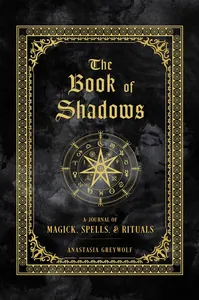





![Complete Tales and Poems [71 stories, 64 poems, 1 essay]](/img/thumb/complete-tales-and-poems-71-stories-64-poems-1-essay-edgar-allan-poe-293662.webp)