Black Order

 79
79

Black Order
James Rollins demonstrates a knack for crafting propulsive narratives in "Black Order." The novel's strength lies in its intricate plotting, expertly weaving together disparate historical threads into a cohesive and urgent mission for Sigma Force. The pacing rarely falters, propelling the reader through a series of escalating challenges. However, the character development, while functional for the thriller genre, sometimes feels secondary to the relentless plot mechanics. One particularly striking sequence involves the investigation into a series of seemingly unrelated historical artifacts that begin to reveal a terrifying pattern. While the exposition can occasionally feel dense, the sheer momentum of the story and its ambitious scope make it a compelling read. Ultimately, "Black Order" delivers a potent cocktail of history, action, and conspiracy that satisfies the craving for a high-stakes adventure.
📝 Description
79
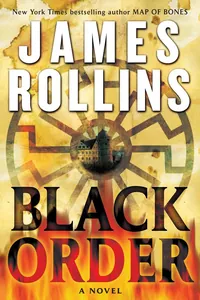
James Rollins published "Black Order" in 2006, a novel about a global conspiracy.
In James Rollins's 2006 novel, "Black Order," the Sigma Force, a unit of scientific and military experts, races against a global conspiracy. Their mission is to stop a catastrophic event, a task that sends them across continents. The story mixes historical puzzles with modern science, creating a quick plot that uncovers ancient secrets.
This book is for readers who like action thrillers with an intelligent edge. Those familiar with Dan Brown's "The Da Vinci Code" or Clive Cussler's Dirk Pitt stories will recognize the blend of historical puzzles, worldwide stakes, and heroic characters. It will interest anyone curious about hidden histories, secret groups, and the connection between science and the unknown.
Published in 2006, "Black Order" tapped into a public fascination with historical conspiracies and hidden societies. The novel reflects a period where popular fiction often explored the idea of secret groups influencing world events. It plays on the notion of powerful, unseen forces shaping history and the potential dangers of ancient knowledge falling into the wrong hands.
💡 Why Read This Book?
• Gain insight into how historical enigmas like the Cathars, a medieval Christian dualist movement, can be re-imagined within a modern conspiracy thriller, offering a unique perspective on their potential hidden legacies. • Experience the adrenaline of a global race against time, following Sigma Force's desperate efforts to thwart a catastrophic plot that draws upon forgotten medieval lore and advanced scientific concepts. • Understand the narrative technique of blending archaeological discovery with military action, a hallmark of James Rollins's writing, particularly in how the 2006 publication date reflects contemporary thriller trends.
⭐ Reader Reviews
Honest opinions from readers who have explored this book.
❓ Frequently Asked Questions
What is the main historical mystery explored in James Rollins's Black Order?
The novel centers on the historical mysteries surrounding the Cathars and the Knights Templar, exploring theories about hidden relics and secret knowledge passed down through these medieval groups.
Who are the main protagonists in Black Order?
The primary protagonists are the members of Sigma Force, a specialized unit of the U.S. government composed of scientists and special operatives, led by Commander Gray Pierce.
What kind of scientific concepts are featured in Black Order?
The book incorporates advanced scientific concepts, often in contrast to ancient mysteries, including genetics, nanotechnology, and bio-engineering, as Sigma Force uses science to uncover and combat threats.
Is Black Order part of a series?
Yes, "Black Order" is part of the Sigma Force series by James Rollins, first published in 2006, and it features the same core team of operatives.
What is the 'Black Order' mentioned in the book's title?
The 'Black Order' refers to a shadowy, malevolent organization that seeks to exploit ancient secrets for destructive purposes, posing a global threat that Sigma Force must neutralize.
Where does the plot of Black Order take place?
The narrative spans multiple international locations, from the historical heartlands of Europe, including the Pyrenees and France, to various other global sites as Sigma Force pursues the conspiracy.
🔮 Key Themes & Symbolism
Medieval Mysteries and Modern Science
The novel masterfully intertwines the secrets of medieval groups like the Cathars and the Knights Templar with contemporary scientific advancements. It posits that ancient knowledge, potentially powerful and dangerous, has been safeguarded or pursued through centuries. The narrative explores how modern science, in the hands of both protectors and villains, can either unravel or weaponize these historical enigmas, creating a dynamic tension between the past and the present. The year 2006 saw this blend become a popular trope in adventure fiction.
The Nature of Secret Societies
Central to "Black Order" is the exploration of clandestine organizations that operate beyond public scrutiny. The book posits the existence of a shadowy 'Black Order' driven by a destructive ideology, contrasting it with the more morally ambiguous but ultimately protective Sigma Force. It looks at the motivations, methods, and historical reach of such groups, questioning who truly holds power and how history might be manipulated by hidden hands.
The Ethics of Knowledge
Rollins examines the ethical implications of possessing and wielding profound knowledge, whether ancient or scientific. The narrative questions the responsibility that comes with uncovering world-altering secrets. Sigma Force grapples with the potential misuse of this knowledge, while the antagonists seek to exploit it for nefarious ends. This theme highlights the perpetual conflict between those who wish to preserve and understand and those who seek to control and dominate.
Global Conspiracy and Catastrophe
The book presents a high-stakes scenario where a global conspiracy threatens widespread destruction. This overarching theme drives the plot, pushing Sigma Force across continents to avert disaster. It taps into the popular fascination with the idea that key historical events or future catastrophes might be orchestrated by unseen forces. The narrative explores the potential consequences of unchecked ambition operating within the shadows of global affairs.
💬 Memorable Quotes
Direct passages from the work, attributed to the author.
“The blood of innocents cried out from the earth.”
— This phrase evokes the profound historical suffering associated with the Cathar crusades, suggesting that past atrocities carry a weight that continues to influence present events and secrets.
“Some secrets were buried for a reason.”
— This highlights the dangerous nature of forbidden knowledge and ancient artifacts. It suggests that certain discoveries, if unearthed without proper understanding or control, could unleash immense peril.
“History is written by the victors, but the true story lies in the shadows.”
— This concept underscores the novel's focus on hidden histories and suppressed truths. It implies that official accounts often obscure deeper, more complex realities that are only accessible through investigation and uncovering buried secrets.
“The past was never truly dead; it was merely waiting.”
— This interpretation speaks to the idea that historical forces, ideologies, and secrets remain potent and can resurface to impact the present, often in unexpected and dangerous ways.
💡 Key Ideas
Editorial paraphrase of the work's core concepts — not direct quotes.
Science had given them the tools, but faith had given them the motive.
This quote points to the intersection of scientific capability and ideological conviction. It suggests that even advanced technology can be wielded for destructive ends when driven by fanatical belief systems.
🌙 Esoteric Significance
Tradition
While not strictly an esoteric text, "Black Order" draws heavily from themes often explored within esoteric traditions, particularly those concerned with hidden histories and secret knowledge. It loosely engages with Gnostic ideas of suppressed truths and dualistic conflicts, as well as Hermetic concepts of ancient wisdom influencing contemporary events. The narrative positions itself within a lineage of adventure fiction that uses esoteric motifs—like the Knights Templar's alleged secret knowledge—as plot devices, rather than adhering to a specific, established esoteric lineage.
Symbolism
The novel frequently employs symbols associated with medieval secret societies and religious movements. The Cathars, representing a dualistic spiritual path persecuted by orthodox Christianity, symbolize hidden knowledge and resistance. The Knights Templar, with their association with the Holy Grail and alleged hidden treasures, represent the custodians of ancient secrets. The 'Black Order' itself functions as a symbol of malevolent, hidden forces seeking to exploit this esoteric legacy for destructive ends.
Modern Relevance
Contemporary thriller authors continue to draw inspiration from the narrative structures and thematic elements present in "Black Order," particularly the seamless integration of historical puzzles with cutting-edge science. Thinkers and practitioners interested in comparative religion and the historical influence of suppressed spiritual movements might find the novel's imaginative exploration of groups like the Cathars engaging, even if fictionalized. The work's enduring appeal lies in its ability to make ancient mysteries feel relevant and urgent in a modern context.
👥 Who Should Read This Book
• Thriller enthusiasts seeking intricate plots that blend historical enigmas with contemporary action will find "Black Order" a compelling read, particularly those who enjoyed works published around 2006. • Readers curious about speculative explorations of secret societies like the Knights Templar and the Cathars, and how their legacies might manifest in fictional global conspiracies. • Fans of James Rollins's Sigma Force series who wish to explore the early adventures of the team and their unique approach to combating threats rooted in history and science.
📜 Historical Context
Published in 2006, James Rollins's "Black Order" emerged during a period marked by popular fascination with historical conspiracies, a trend significantly amplified by works like Dan Brown's "The Da Vinci Code." This era saw a surge in interest in secret societies, religious mysteries, and ancient artifacts purportedly holding world-altering power. "Black Order" tapped directly into this zeitgeist, blending elements of the Knights Templar and the Cathars—subjects already ripe for speculative fiction—with contemporary scientific thriller tropes. It followed in the wake of a wave of blockbuster novels exploring similar themes, positioning itself within a competitive market for adventure fiction. While specific critical reception details for "Black Order" in 2006 are not widely documented, the broader genre it inhabited was characterized by rapid plotting and global settings, reflecting a contemporary appetite for escapist narratives that hinted at hidden truths behind historical events.
📔 Journal Prompts
The implications of secret knowledge held by groups like the Cathars.
Sigma Force's ethical navigation of dangerous historical discoveries.
The symbolic weight of ancient artifacts in modern conflict.
Motivations driving clandestine organizations such as the 'Black Order'.
The intersection of scientific capability and historical belief systems.
🗂️ Glossary
Sigma Force
A covert unit of the U.S. military composed of highly specialized operatives, including scientists and soldiers, tasked with investigating and neutralizing threats related to biological, technological, and historical anomalies.
Cathars
A medieval dualistic religious movement, primarily in southern France, considered heretical by the Roman Catholic Church. They were heavily persecuted during the Albigensian Crusade.
Knights Templar
A Catholic military order founded around 1119, prominent in the 12th and 13th centuries. They were known for their military prowess and financial activities, and were later suppressed amid accusations of heresy.
Black Order
A fictional clandestine organization within the novel, depicted as a malevolent force seeking to exploit historical secrets and ancient knowledge for destructive global aims.
Albigensian Crusade
A military campaign launched by the Roman Catholic Church in the 13th century to eliminate the Cathar movement in Southern France. It resulted in widespread violence and the suppression of Catharism.
Pyrenees
A mountain range in Southwestern Europe that forms a natural border between France and Spain. It is a region associated with historical mysteries and secret locations in the novel.
Holy Grail
In Arthurian legend, the dish, platter, or cup used by Jesus at the Last Supper and in which Joseph of Arimathea caught the blood of Christ. It is often depicted as a symbol of divine revelation or unattainable perfection.
🔮 Readers Also Liked
Browse all →









More by James Rollins
All books →




More Free Occult Philosophy Books
View all →