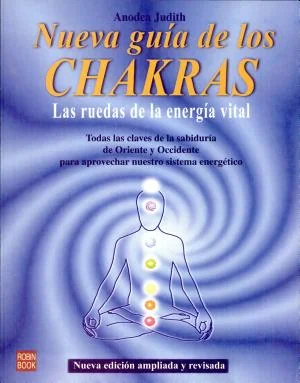
Nueva Guía de Los Chakras
 83
83

Nueva Guía de Los Chakras
Anodea Judith's "Nueva Guía de Los Chakras" offers a remarkably thorough mapping of the body's energetic centers, moving beyond simplistic color associations. Its strength lies in the intricate detail with which Judith connects each chakra to specific psychological states, developmental stages, and archetypal patterns, drawing a clear line from the Root chakra's grounding to the Crown chakra's spiritual connection. The work's depth is evident in its discussion of Kundalini and the subtle interplay between the energy centers. However, for readers new to esoteric concepts, the sheer volume of information and the specific terminology might present a steep learning curve. A passage detailing the archetypal 'Shadow' aspect of the Solar Plexus chakra, for instance, is illuminating but requires careful consideration. Ultimately, this is an indispensable resource for dedicated students of the chakra system.
📝 Description
83
Anodea Judith published Nueva Guía de Los Chakras in 2001, mapping the body's energy centers.
Published in 2001, Anodea Judith's Nueva Guía de Los Chakras maps the body's energetic centers, detailing their psychological and spiritual functions. The book provides a structured approach to understanding these energy points, moving beyond simple descriptions to show their interconnectedness and effects on physical, emotional, and spiritual health. This guide suits individuals seeking deeper knowledge of energy work and its practical uses. It appeals to students of esoteric traditions, yoga practitioners, therapists interested in somatic methods, and anyone curious about the subtle body. Those already familiar with basic chakra concepts will find expanded information, while newcomers will benefit from its clear presentation of complex ideas.
Judith's work emerged during a time of increased interest in Eastern philosophies and energy systems in Western spiritual communities. Following the New Age movement's popularization of chakras, her book offered a more structured, psychologically informed framework. It builds on earlier texts that introduced these concepts to Western readers, such as works by Alice Bailey and early Theosophists, while incorporating contemporary psychological understanding.
This book sits within the Western esoteric tradition's engagement with Eastern energy systems, particularly the Indian chakra model. It follows a lineage that includes early Theosophists and Alice Bailey, who brought these concepts to Western audiences. Judith's contribution is a synthesis that integrates contemporary psychology and somatic awareness, offering a systematic framework for understanding the chakras not just as spiritual symbols, but as maps for personal transformation and integration.
💡 Why Read This Book?
• Understand the energetic map of your being, learning how the Root chakra governs security and the Crown chakra connects to universal consciousness, offering a framework for personal integration unavailable in general wellness guides. • Explore the psychological archetypes associated with each chakra, such as the 'Inner Child' of the Sacral chakra, providing specific insights into emotional patterns that general psychology may overlook. • Grasp the dynamics of Kundalini energy as described in yogic traditions, learning how its ascent through the seven primary chakras can facilitate spiritual awakening, a concept detailed with specific energetic pathways.
⭐ Reader Reviews
Honest opinions from readers who have explored this book.
❓ Frequently Asked Questions
When was Nueva Guía de Los Chakras first published?
The original publication date for Nueva Guía de Los Chakras was 2001. This edition provided a comprehensive framework for understanding the human chakra system.
Who is the author of Nueva Guía de Los Chakras?
The author is Anodea Judith, a recognized authority on the chakra system and its psychological applications, known for her systematic approach to esoteric concepts.
What is the primary focus of Nueva Guía de Los Chakras?
The book's primary focus is the detailed exploration of the seven main chakras, their functions, symbolism, and their role in physical, emotional, and spiritual well-being, presented with psychological depth.
Does the book discuss Kundalini energy?
Yes, Nueva Guía de Los Chakras extensively discusses Kundalini energy, its nature, and its potential journey through the chakra system, offering insights into spiritual awakening.
Is this book suitable for beginners?
While comprehensive, the book's structured approach makes it accessible to beginners willing to engage with detailed energetic and psychological concepts. It provides a solid foundation.
What makes this guide different from other books on chakras?
Judith's work distinguishes itself by integrating psychological archetypes and developmental stages with the chakra system, offering a more nuanced and practical application than many introductory texts.
🔮 Key Themes & Symbolism
Chakra System Mapping
The core of the work lies in its detailed mapping of the seven primary chakras. Each center, from Muladhara at the base of the spine to Sahasrara at the crown of the head, is presented with its specific energetic qualities, elemental associations, colors, sounds, and corresponding psychological functions. Judith emphasizes how these centers form an interconnected system, influencing our physical health, emotional states, and spiritual awareness. The book provides a structured framework for understanding how blockages or imbalances in one chakra can affect the entire system, offering practical guidance for energy cultivation and healing.
Psychological Archetypes and Development
A significant contribution of Nueva Guía de Los Chakras is its integration of psychological archetypes and developmental stages with the chakra system. Judith posits that each chakra relates to specific life phases and psychological patterns, from the primal security needs of the Root chakra to the higher consciousness aspirations of the Crown chakra. This approach allows readers to identify personal challenges and growth opportunities by understanding the archetypal energies at play within their own energetic structure, linking esoteric concepts to tangible inner experiences.
Kundalini and Spiritual Ascent
The book examines the concept of Kundalini, the dormant spiritual energy often depicted as a coiled serpent at the base of the spine. Judith explains its potential for awakening and its subsequent ascent through the central energy channel (Sushumna Nadi) and the chakras. This process is presented not as a mystical event but as a path of profound personal transformation and integration, leading to higher states of consciousness. The work clarifies the energetic mechanics and psychological integration required for such an ascent.
Energy Imbalances and Healing
Nueva Guía de Los Chakras addresses the common phenomenon of energetic imbalances within the chakra system. Judith discusses how various life experiences, traumas, and belief systems can lead to blockages, overactivity, or underactivity in specific chakras. The book offers practical techniques and contemplative exercises aimed at restoring energetic equilibrium. This focus on practical application makes the esoteric concepts tangible, providing readers with tools to address personal issues and foster holistic well-being.
💬 Memorable Quotes
Direct passages from the work, attributed to the author.
“The chakras are maps of consciousness.”
— This concise statement expresses Judith's core thesis: that the energetic centers are not merely physical points but profound indicators of our psychological and spiritual landscape.
“Each chakra represents a stage of development.”
— This interpretation highlights the book's emphasis on the chakras as markers of human growth, from basic survival needs to higher spiritual realization, offering a developmental perspective.
“Understanding your energy system is key to wholeness.”
— This interpretation stresses the practical benefit of studying the chakras, framing it as essential for achieving a balanced and integrated state of being across all levels of existence.
“The Serpent Power moves through the central channel.”
— This directly references the path of Kundalini, indicating the book's detailed exploration of the energetic pathways involved in spiritual ascent and integration.
💡 Key Ideas
Editorial paraphrase of the work's core concepts — not direct quotes.
Kundalini awakens consciousness.
This paraphrased concept points to the transformative power of Kundalini energy, suggesting its role in expanding awareness and facilitating profound inner change as it moves through the energetic system.
🌙 Esoteric Significance
Tradition
This work primarily fits within the modern esoteric lineage of chakra studies, which has roots in Tantric Hinduism and was significantly adapted and introduced to the West through Theosophy and later New Age movements. Judith’s approach synthesizes these traditions with Western psychological concepts, creating a distinct interpretive framework that bridges Eastern energy models with Western psychological understanding of the self and consciousness.
Symbolism
Key symbols include the lotus flower, representing the unfolding of consciousness at each chakra, and the coiled serpent, symbolizing Kundalini energy. The colors associated with each chakra (e.g., red for Root, violet for Crown) function as powerful visual anchors for their specific energetic frequencies and psychological themes, acting as mnemonic devices and focal points for meditation.
Modern Relevance
Anodea Judith's model of the chakras is frequently cited and utilized in contemporary yoga instruction, energy healing modalities, and somatic psychology practices. Thinkers and practitioners exploring embodied cognition, trauma-informed care, and integrated consciousness often draw upon her detailed mapping of the energetic and psychological dimensions of the chakra system.
👥 Who Should Read This Book
• Aspiring practitioners of energy work seeking a structured, in-depth understanding of the chakra system beyond introductory concepts. • Yoga teachers and students looking to deepen their comprehension of the energetic anatomy and its connection to physical and mental well-being. • Therapists and counselors interested in somatic approaches and incorporating subtle energy concepts into their practice.
📜 Historical Context
Published in 2001, "Nueva Guía de Los Chakras" emerged at a time when interest in Eastern spiritual traditions and energy work had become firmly established in Western esoteric circles, building upon the foundations laid by earlier movements like Theosophy and the New Age. While authors like Alice Bailey had introduced complex chakra theories decades prior, Judith's work distinguished itself by integrating contemporary psychological frameworks and archetypal psychology, particularly the work of Carl Jung. This approach offered a more accessible and psychologically grounded understanding of these subtle energy centers, moving beyond purely spiritual interpretations. The book's systematic presentation and focus on practical application provided a valuable counterpoint to more diffuse or less structured approaches to energy work prevalent at the time, solidifying its place as a key text in modern esoteric studies.
📔 Journal Prompts
The Root chakra's grounding functions and personal security.
Archetypal shadow aspects of the Sacral chakra.
The throat chakra's connection to authentic expression.
The Solar Plexus chakra and personal power dynamics.
The Heart chakra's role in energetic exchange.
🗂️ Glossary
Chakra
Literally 'wheel' in Sanskrit, chakras are understood as energetic centers within the subtle body that regulate the flow of life force energy (prana) and correspond to various psychological and spiritual functions.
Kundalini
A dormant spiritual energy, often depicted as a coiled serpent at the base of the spine, believed to awaken and ascend through the central energetic channel, leading to expanded consciousness.
Prana
The vital life force energy that permeates all living beings, believed to be drawn in and regulated by the chakras.
Sushumna Nadi
The central energetic channel within the spine through which Kundalini energy is said to ascend, connecting the lower chakras to the higher ones.
Muladhara
The Root chakra, located at the base of the spine, associated with grounding, security, survival, and physical stability.
Sahasrara
The Crown chakra, located at the top of the head, associated with spiritual connection, universal consciousness, and enlightenment.
Archetype
In this context, refers to universal patterns of behavior and imagery within the collective unconscious, as described by Carl Jung, which are linked to specific chakra functions.
This book appears in 1 collection
🔮 Readers Also Liked
Browse all →









From the “Chakras” Collection
View all →
![Hindi Bangla Speaking Course[ S. P. Chakraborty]](/img/thumb/hindi-bangla-speaking-course-s-p-chakraborty.webp)




More Free Occult Philosophy Books
View all →